Every morning, across the globe, critical decisions are made that shape industries and impact lives, all predicated on a shared foundation: the weather forecast. From the granular choices of farmers tending their fields to the strategic maneuvers of airline dispatchers and the complex balancing acts of grid operators, weather predictions are far more than a casual glance at a smartphone app. They are instrumental in determining crop varieties, optimizing fertilizer application, guiding irrigation investments, and dictating livestock grazing patterns for agricultural communities. Energy utilities rely on them to strategically site solar and wind farms and to price wholesale electricity in a volatile market. Furthermore, weather forecasts are the bedrock of disaster preparedness, providing crucial warnings for extreme events and triggering essential emergency response measures. In recent years, an emergent industry, weather prediction markets, has added another layer of complexity, with individuals and entities wagering significant sums on the occurrence of specific weather phenomena.
The Unseen Stakes in Every Forecast
The seemingly innocuous act of checking the weather forecast belies its profound influence on global commerce, livelihoods, and even safety. For farmers, a forecast can dictate the success or failure of an entire season. Misjudging rainfall can lead to crop loss, while an inaccurate temperature prediction might result in the premature sowing of delicate seedlings, exposing them to frost. The economic implications are staggering; the global agricultural market is valued in trillions of dollars, with weather playing a pivotal role in its fluctuations.
For utility companies, weather forecasts are not merely informational; they are critical for operational and financial planning. The increasing integration of renewable energy sources like solar and wind power, which are inherently dependent on weather conditions, makes accurate forecasting paramount. A miscalculation of wind speed or solar irradiance can lead to power shortages or surpluses, causing significant financial losses in the wholesale electricity market. The global electricity market is a multi-trillion-dollar industry, and even minor inaccuracies in forecasting can translate to millions in financial exposure.
Beyond economic considerations, weather forecasts are a frontline defense against natural disasters. Warnings of impending hurricanes, tornadoes, or floods allow communities to evacuate, secure infrastructure, and prepare for the worst. The economic cost of natural disasters is immense, with annual losses often running into hundreds of billions of dollars globally. Effective forecasting and early warning systems are proven to mitigate these costs and, more importantly, save lives.
A New Frontier of Risk: Prediction Markets and Data Manipulation
However, this vital reliance on accurate weather data is facing a burgeoning threat. The confluence of lucrative opportunities in emerging weather prediction markets and the widespread adoption of AI-driven weather forecasting is creating a fertile ground for manipulation, potentially jeopardizing the reliability of these crucial predictions. While these risks may appear manageable in isolated incidents, experts warn of a snowball effect that could lead to systemic and far-reaching consequences.
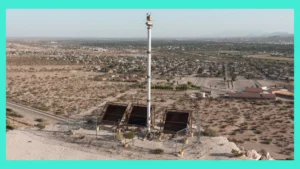
The fundamental building blocks of any weather prediction are accurate observations of current atmospheric conditions. These observations are meticulously gathered from a vast network of sources, including weather stations strategically located at airports, within utility infrastructure, and along transportation routes. Traditional operational forecasting systems, such as the Weather Research and Forecasting (WRF) model and the European Centre for Medium-Range Weather Forecast (ECMWF) Integrated Forecasting System, integrate these real-time observations with complex numerical approximations to generate estimates of future weather patterns. These sophisticated models represent decades of scientific advancement and are crucial for understanding and predicting the Earth’s dynamic atmosphere.
Safeguarding the Data: Traditional Controls and Emerging Vulnerabilities
Historically, the integrity of weather data has been maintained through robust quality control mechanisms. Weather stations, while generally reliable, can experience issues stemming from instrument failures or scheduled equipment upgrades. These anomalies are typically identified and corrected either in real-time through immediate checks and adjustments or retrospectively through data analysis. A critical safeguard embedded within traditional forecasting systems is data assimilation. This process involves a rigorous comparison of each incoming measurement against two benchmarks: the theoretical output of the physical model, which dictates what conditions should be like based on established scientific principles, and the readings from nearby weather stations, which provide a spatial context for validation.
These layered quality control measures have historically ensured the reliability of weather observations and the robustness of subsequent predictions. However, new and insidious threats are now emerging that target the very foundation of this system: the accuracy of observational data.
The Paris Airport Incident: A Wake-Up Call
Earlier this year, a concerning incident brought this vulnerability into sharp focus. News outlets reported that a weather station at Paris Charles de Gaulle Airport (CDG) had been tampered with, registering anomalous temperature spikes on April 6 and April 15, 2026. Authorities have speculated that the manipulation may have involved a readily available tool, such as a hand-held hairdryer or lighter, to artificially inflate the recorded temperature. This deliberate act had significant financial implications, leading to substantial payouts for online prediction market gamblers who had wagered on the temperature reaching 22°C (71.6°F) on these days. Official records indicate that the actual average temperature on those dates hovered around 18°C (64.4°F), a discrepancy that resulted in one individual reportedly winning $20,000.
Fortunately, in this specific instance, the manipulation was detected. Members of a French climate nonprofit association, through their own vigilance and analysis, stumbled upon the anomalies and sounded the alarm. This highlights the continued importance of human oversight in identifying and flagging suspicious data. However, the CDG incident serves as a stark warning about the potential for more sophisticated and harder-to-detect forms of manipulation.
The Escalating Threat: Coordinated Manipulation and AI Dependency
The critical question that arises from the CDG incident is what happens when human monitoring systems are absent or insufficient, and when manipulation takes on more subtle forms. What if, instead of a single, easily identifiable alteration at one station, an adversary remotely influenced the readings at multiple stations simultaneously? By introducing small, seemingly plausible changes at each location, coordinated manipulation could evade existing quality control protocols, which are often designed to catch individual outliers rather than a distributed, orchestrated effort.
The timeline of data verification also works against timely intervention. Comprehensive checks of data and metadata can take hours or even days to complete. However, weather forecasts are time-sensitive products, disseminated on a strict schedule to meet the operational needs of various industries and emergency services. This inherent time pressure creates a window of opportunity for malicious actors to introduce falsified data that may not be detected before it influences critical decisions.
The increasing integration of artificial intelligence (AI) into weather forecasting further amplifies these risks. AI-driven models, often referred to as "data-driven models," are exceptionally reliant on the accuracy and integrity of the observational data they ingest. Researchers at ECMWF, for instance, are investigating methods to generate high-quality forecasts directly from raw observations, potentially bypassing the data assimilation step that currently acts as a crucial quality filter. Other research efforts are pushing the boundaries even further, combining geospatial data, including weather station readings, with advanced AI techniques like large language models and agentic AI to enable real-time, autonomous decision-making during extreme weather events.
The potential benefits of these AI advancements are significant, promising improvements in forecast accuracy, efficiency, and speed. However, the prospect of removing human oversight from critical decision-making processes introduces a vast and complex landscape of new risks, particularly concerning data integrity and potential adversarial actions.
A Spectrum of Risks: From Individual Gain to National Security
The implications of compromised weather data span a wide spectrum of severity. At the lower end, as demonstrated by the CDG Airport case, an individual speculator might manipulate a single weather station for personal financial gain. While seemingly minor, such actions erode trust in the forecasting system.
A step up in the scale of risk involves coordinated efforts by groups of traders. Such a group could strategically bias forecasts of renewable energy output, thereby influencing wholesale electricity prices. This manipulation could lead to significant financial losses for those on the opposing side of these trades, creating market instability and unfair advantages.
At the most extreme end of the risk spectrum lies the potential for state-sponsored actors or saboteurs to manipulate one or multiple weather stations. Such actions could have dire consequences, ranging from triggering false early warning systems for natural disasters, leading to unnecessary evacuations and economic disruption, to intentionally silencing warnings when a genuine threat is present, potentially resulting in catastrophic loss of life. The progression of risk is clear: from localized fraud to compromised disaster preparedness and, ultimately, to matters of national security.
Charting a Course Forward: Securing the Future of Weather Forecasting
As long as financial incentives, or other motivations, exist to manipulate observational data, adversaries will undoubtedly continue to seek new avenues for exploitation. It is therefore imperative for the scientific and operational communities to remain proactive and stay ahead of these evolving threats. Several key strategies are essential to safeguarding the integrity of weather forecasts:
H2: Strengthening Observational Integrity and Oversight
1. Vigilant Station Monitoring and Anomaly Detection:
Data quality control must extend beyond statistical checks to encompass the physical security of weather stations. Robust protocols for anomaly detection and correction, coupled with continuous human oversight, are crucial. Weather stations should be subject to ongoing monitoring to deter tampering and to quickly identify any suspicious deviations from expected patterns. Furthermore, data homogenization methods, which are used to clean and standardize historical weather records, need to be accelerated. The ultimate goal is to achieve real-time problem detection, ensuring that any anomalies are flagged and addressed before they can influence forecasts. This becomes even more critical as agentic AI systems increasingly rely on this data for real-time decision-making. Human oversight remains indispensable for flagging questionable data and model outputs, as was evident in the CDG Airport incident.
H2: Fortifying the AI Pipeline Against Adversarial Attacks
2. Robust Data Defense Mechanisms for AI Systems:
Protecting the data used by AI models is paramount to safeguarding the integrity of the AI itself. Data defense mechanisms must be integrated throughout the entire AI pipeline, from data ingestion to model output. Tools for AI explainability and adversarial robustness are vital. Explainability allows researchers and operators to understand how AI models arrive at their conclusions, making it easier to identify when a model’s output might be influenced by flawed data. Adversarial robustness tools help in identifying vulnerabilities within the AI model itself and in developing defenses against deliberate attempts to mislead or disrupt the AI’s performance. By enhancing our understanding of the underlying data and the AI model’s behavior, we can build greater resilience against adversarial attacks.
H2: Ensuring End-to-End Accountability and Collaboration
3. Continuous Accountability Across the Data Chain:
The journey of observational data from its source to its final use in a forecast involves numerous stakeholders. This chain of custody includes the operators who manage the weather stations, the national weather services responsible for stewarding these records, and the forecasting centers that transform raw data into predictions. No single entity can guarantee data integrity in isolation. Each link in the chain must actively guard its segment, and any detected anomaly must be communicated promptly and effectively along the entire chain, from the initial station operators to the end-users who act upon the forecast. This collaborative approach fosters a shared responsibility for data accuracy and strengthens the overall security of the forecasting system.
A Collective Imperative for a Secure Future
While the situation at CDG Airport was fortunately identified and addressed, it should serve as a critical wake-up call for the global community. As the reliance on observational data in weather forecasting continues to grow, so too must our adaptive strategies to counter evolving threats. This necessitates a concerted effort to protect our data and our AI models by reinforcing existing oversight and accountability structures. Enhanced coordination and collaboration among key partners – including data providers, model developers, AI researchers, and end-users – are not merely advisable; they are essential for ensuring the continued accuracy and reliability of weather forecasts, which underpin so much of our modern world. The stakes, from economic stability to public safety and national security, are simply too high to ignore.