Last week, federal proceedings in Providence, Rhode Island, reached a significant milestone as Onix Eduardo, a local resident, entered a formal guilty plea for his participation in an expansive criminal conspiracy. The case, which spans multiple states across the Northeast and Mid-Atlantic, highlights a sophisticated, high-stakes operation involving the theft of luxury automobiles and high-performance motorcycles from commercial dealerships. Eduardo’s admission of guilt addresses his role in the interstate transportation of stolen goods, a charge that carries significant federal sentencing implications. His plea marks a critical turning point in a sweeping investigation spearheaded by the United States Attorney’s Office for the District of Rhode Island.
The scope of the operation, as detailed by United States Attorney Zachary A. Cunha following the initial arrests in 2024, was vast. Eduardo was one of four Rhode Island men identified as central figures in a ring that orchestrated the systematic theft of high-end inventory. Over the course of seven months, the group allegedly targeted prestigious dealerships in Massachusetts, New Hampshire, Connecticut, and Pennsylvania, creating a multi-state trail of financial loss and investigative complexity. Eduardo faces sentencing on January 21, 2027, with the legal proceedings serving as a stark reminder of the rigorous federal response to organized property crime.
Chronology of a Criminal Enterprise
The conspiracy, according to court documents filed by federal prosecutors, operated with a high degree of coordination between February 2023 and September 2023. During this window, the group allegedly burglarized approximately 12 dealerships, systematically removing roughly 120 high-value vehicles. The total estimated value of the stolen property stands at approximately $5 million, a figure that underscores the severe economic impact on the affected businesses.
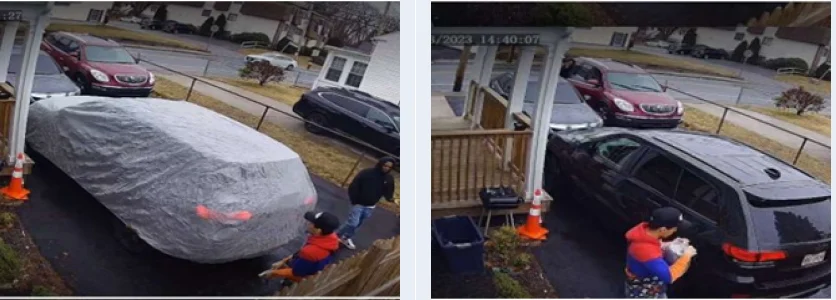
The chronology of these thefts reveals a pattern of rapid mobilization. In early 2023, the group began refining their methods, which often involved reconnaissance of dealership lots and the rapid extraction of vehicles under the cover of darkness. A notable incident occurred on March 13, 2023, when Providence Police obtained surveillance footage showing individuals matching the physical descriptions of the co-conspirators. In the video, the individuals were seen in the driveway of a Providence residence, placing a specialized cover over a Jeep Grand Cherokee Trackhawk. Investigations later confirmed this vehicle, valued at approximately $96,000, had been reported stolen just 24 hours prior from a dealership in Hampstead, New Hampshire, alongside three other vehicles.
By mid-2023, the operation had expanded to include high-performance recreational equipment. The conspiracy included the brazen theft of nineteen premium Husqvarna motorcycles from a Pennsylvania dealership. These vehicles, often difficult to track due to their off-road nature, were transported from Massachusetts back into Rhode Island, where investigators believe the group maintained a series of safe houses and holding locations to facilitate the sale or shipment of the stolen inventory.
Investigative Scope and Inter-Agency Collaboration
The investigation into this theft ring necessitated an unprecedented level of cooperation among municipal, state, and federal law enforcement agencies. Given the geographic dispersion of the thefts, the FBI took the lead, coordinating a task force that drew on the expertise of a vast array of regional departments.
Agencies involved in the exhaustive investigation included the Providence, Cranston, North Providence, Pawtucket, North Kingstown, and East Providence Police Departments, as well as the Rhode Island State Police. Outside of the Ocean State, the Massachusetts State Police, Connecticut State Police, and several local departments—specifically those in Easton, Hampstead, Waltham, and Somerset—contributed critical intelligence. The inclusion of the Internal Revenue Service’s Criminal Investigation division and the National Insurance Crime Bureau (NICB) suggests that the investigation went beyond mere physical theft, looking into the financial laundering and illicit trade networks that supported the conspiracy.
This collaborative effort led to the recovery of more than 40 vehicles and 11 dirt bikes. The recovery process itself proved to be a global investigative challenge; in one instance, a Range Rover stolen by the group was discovered inside a shipping container at the Port of Elizabeth in New Jersey. The vehicle was reportedly destined for an overseas market in Africa, providing evidence that the syndicate was operating as part of an international black-market pipeline for luxury goods.
The Economic and Security Implications of Luxury Auto Theft
The scale of this conspiracy—targeting brands such as Porsche, Mercedes-Benz, BMW, Rolls Royce, Bentley, and Land Rover—points to a shift in how organized crime groups approach asset theft. Unlike traditional vehicle theft, which often targets mass-market vehicles for parts or temporary use, this syndicate focused exclusively on premium inventory.
Financial analysts and security experts note that the theft of $5 million worth of high-end vehicles creates a ripple effect throughout the automotive retail sector. Dealerships that fall victim to such organized groups face not only the direct loss of inventory but also skyrocketing insurance premiums, the cost of increased security measures, and a significant disruption to business operations.
"The theft of high-end vehicles is rarely a victimless crime," noted an industry analyst familiar with the case. "When you have professional rings targeting vehicles valued at $100,000 or more, the insurance industry is forced to pass those losses onto consumers through higher premiums. Furthermore, these thefts often expose gaps in perimeter security that dealerships must then spend thousands to rectify, further straining the profit margins of legitimate businesses."
Legal Consequences and Regulatory Response
Eduardo’s guilty plea to conspiracy to commit interstate transportation of stolen property and the actual interstate transportation of stolen property carries severe weight under federal sentencing guidelines. The decision to prosecute at the federal level rather than the state level reflects the interstate nature of the crimes, which allows for broader sentencing powers and a more comprehensive view of the conspiracy.
The sentencing date of January 21, 2027, suggests that the judicial process for the remaining co-conspirators may be lengthy and involved. Prosecutors are likely utilizing this time to solidify evidence against the remaining defendants and to further investigate the potential international connections of the group. The recovery of the Range Rover in New Jersey is particularly telling; it indicates that the syndicate had connections to logistics and shipping infrastructure, suggesting a level of sophistication that law enforcement must now work to dismantle permanently.
For the regional law enforcement community, the case serves as a successful blueprint for future inter-agency collaboration. The ability to track a stolen vehicle from a rural New Hampshire dealership through to a shipping container in New Jersey requires seamless communication across jurisdictions. The success of this operation may lead to increased federal funding for regional task forces dedicated to organized auto theft, which has seen an uptick in frequency and organization across the United States in recent years.
Conclusion
As the legal proceedings continue, the case of Onix Eduardo remains a focal point for those monitoring the rise of sophisticated, multi-state theft rings. By targeting the upper echelon of the luxury automotive market, the perpetrators of this conspiracy brought significant heat upon themselves, leading to a massive, coordinated crackdown that successfully dismantled a major portion of their operations.
While the recovery of 40 vehicles is a victory for investigators, the case also serves as a warning to dealerships across the country. The transition from local crime to organized, interstate, and potentially international syndicates requires a new level of vigilance. With the upcoming sentencing, the justice system will provide the final chapter for the individuals involved, but the broader investigation into the networks that facilitate the movement of stolen luxury goods is expected to continue for some time, as federal authorities work to ensure that the pipelines used by this group remain closed. The legacy of this case will likely be the reinforcement of cross-jurisdictional intelligence sharing, which remains the most potent tool in combating modern, mobile criminal syndicates.