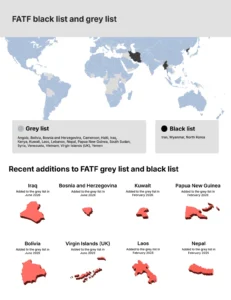
The Philippines’ exit from the Financial Action Task Force (FATF) grey list in February 2025 marked a significant turning point for the nation’s financial sector, signaling to international markets that systemic deficiencies in anti-money laundering (AML) and counter-terrorist financing (CTF) frameworks had been addressed. However, for domestic financial institutions (FIs), this milestone has not ushered in an era of deregulation. Instead, the regulatory environment has undergone a sharp contraction, characterized by an influx of stringent requirements from the Bangko Sentral ng Pilipinas (BSP) and a legislative shift that places the burden of proof squarely on the shoulders of banking compliance teams.
This evolving landscape was the primary focus of a recent industry session hosted by Iain Armstrong, Executive Director of Financial Crime Compliance (FCC) Strategy at ComplyAdvantage, alongside Edison Guevarra, AML Operations Manager at East West Banking Corporation. The discussion highlighted a critical transition: from passive, document-based compliance to a model defined by real-time prevention and demonstrable operational efficacy.
A Chronology of Regulatory Tightening
The legislative and regulatory trajectory of the Philippines over the last 18 months suggests that the government is preparing for the next FATF evaluation cycle, slated for 2027. The following timeline outlines the key pillars of this shift:
- Early 2024: The BSP intensified its oversight of Money Service Businesses (MSBs), resulting in the revocation of nine registrations due to persistent compliance failures.
- February 2025: The Philippines officially exited the FATF grey list, a move intended to restore investor confidence and streamline cross-border transaction flows.
- Mid-2025: The enactment of Republic Act 12312, which mandates a complete ban on offshore gaming operations (POGOs) to curtail the associated risks of money laundering and social engineering.
- Late 2025: The introduction of the Anti-Financial Account Scamming Act (AFASA), which fundamentally altered the legal liability of financial institutions regarding customer fraud.
- Ongoing 2026: The phased implementation of a centralized beneficial ownership registry, designed to provide law enforcement with granular data on corporate entities.
These measures are not isolated events; they represent a coordinated effort to modernize the Philippine financial ecosystem as it pivots toward a digital-first economy. With projections indicating that digital payments will account for over 70% of total payment volume by 2028, the regulatory focus has shifted from managing traditional institutional risk to policing the rapid, often volatile, digital transaction space.
The AFASA Paradigm: From Reporting to Prevention
The most transformative piece of legislation in this period is the Anti-Financial Account Scamming Act (AFASA). Historically, compliance programs in the Philippines functioned on an "observe and report" basis. Institutions were primarily concerned with the timely filing of Suspicious Transaction Reports (STRs) after a questionable movement of funds had occurred.
AFASA flips this model. Under the new statutory requirements, FIs are expected to act as the primary line of defense against financial scams, including money muling and social engineering. The law imposes restitution obligations and potential criminal liability on institutions that fail to implement sufficient preventative measures. As Edison Guevarra noted during the session, the question for compliance officers has shifted from "What is the cost of investigating this alert?" to "What is the total financial and reputational cost if this scam succeeds?"
This change necessitates a move toward real-time intervention. Firms can no longer rely on batch processing or end-of-day monitoring. Instead, they must deploy systems capable of intercepting fraudulent transactions at the point of initiation, requiring a level of technological integration that many legacy institutions currently struggle to maintain.
Foundational Identity: The First Line of Defense
Despite the industry’s fascination with artificial intelligence and advanced predictive analytics, experts argue that the most common failure in modern compliance is a disregard for the foundation: identity assurance.
According to data from the BSP, social engineering, identity theft, and account takeover remain the leading drivers of financial fraud in the Philippines, accounting for roughly 76% of all losses. Furthermore, TransUnion’s 2025 reporting indicated that the suspected digital fraud rate in the Philippines reached 4.1%, continuing a six-year trend where the country has consistently exceeded global averages.
Edison Guevarra emphasizes that technology is only as robust as the identity data powering it. "Every other financial crime control depends on knowing who your customer is," Guevarra stated. "If identity assurance is weak, then sanctions screening, watchlist monitoring, and transaction analytics all become compromised."
For institutions looking to strengthen their defenses, the path forward involves a shift toward a "continuous identity framework." This model moves beyond static onboarding verification. It incorporates liveness detection, biometric verification at the time of high-risk transactions, and dynamic risk-based authentication. The objective is to establish that the user initiating a transaction is, in fact, the same user who opened the account, and that their current behavior aligns with their historical risk profile.
The Shift from Assurance to Evidence
Supervisors have become increasingly skeptical of "check-the-box" compliance. During recent examinations, the focus has moved away from policy manuals toward empirical performance data. The BSP and other regulators now demand clear evidence that systems are not only operational but are being actively tuned and recalibrated to address emerging threats.
This requirement for "demonstrable compliance" involves rigorous tracking of key performance indicators (KPIs), including:
- Alert Volumes: Tracking the number of system-generated warnings versus the capacity of the human investigation team.
- Case Aging Reports: Measuring the time taken from alert generation to resolution.
- STR Filings: Analyzing the quality and accuracy of regulatory reporting to ensure they are actionable for the Anti-Money Laundering Council (AMLC).
- Control Reviews: Periodic, documented testing of detection rules to ensure they are not creating excessive false positives while failing to capture genuine criminal activity.
This shift has created a unique tension between human operations and automated systems. Iain Armstrong noted that while human expertise remains indispensable, the velocity of modern digital transactions often exceeds human capacity. "However good your human operations team might be, they cannot feasibly operate at sub-second timescales," Armstrong observed. This is where automation becomes mandatory—but the sequencing of that automation is critical.
The Strategy for Implementation: Visibility Before Automation
A common trap for FIs is the premature implementation of AI. Organizations often attempt to jump directly to sophisticated machine learning models to solve for fraud without first having full visibility into their underlying customer data or standardized investigation workflows.
The session proposed a four-stage roadmap for institutions:
- Visibility: Achieving a unified view of customer behavior across all channels.
- Standardization: Ensuring that processes, definitions, and case management workflows are consistent across the institution.
- Automation: Deploying rules-based systems to handle high-volume, low-risk tasks.
- Advanced Analytics: Integrating AI and machine learning to detect complex, non-obvious patterns of criminal activity.
Automating a flawed process simply accelerates the rate at which errors occur. By prioritizing visibility, firms can identify where their current controls are failing before attempting to scale them through technology.
Balancing Precision and User Experience
A lingering concern for financial institutions is that increased security will create friction, leading to customer churn. However, the expert consensus suggests that the "friction vs. security" dichotomy is a false choice. The goal of a modern compliance framework is precision—applying rigorous verification only when the risk profile of a transaction dictates it.
"The best controls are often the ones legitimate customers barely notice," Guevarra explained. By utilizing passive data—such as device fingerprinting, IP geolocation, and behavioral biometrics—institutions can verify identities without constantly interrupting the user experience.
Iain Armstrong further suggested that institutions should monitor abandonment rates alongside fraud detection metrics. If a bank’s fraud detection rate is high but its customer dropout rate is also soaring, it is a clear indicator that the controls are poorly calibrated. Security should build trust, not alienate the customer base.
The Road Ahead
As the Philippines looks toward the 2027 FATF evaluation, the mandate for financial institutions is clear: the regulatory window for catching up is closing. The next 90 days will be critical for institutions to audit their identity assurance protocols, pressure-test their case management workflows, and ensure that their compliance reporting is backed by hard data rather than theoretical policy.
The evolution from a reactive, manual-heavy environment to a proactive, data-driven system is no longer a strategic option; it is a regulatory requirement. For the Philippine banking sector, the ability to successfully navigate this transition will determine not only their regulatory standing but their long-term viability in an increasingly hostile digital threat landscape.