The modern application once used solely for executing trades of equities is undergoing a radical transformation, increasingly positioning itself as the central hub for an individual’s entire financial life. Today’s financial landscape is defined by the swift convergence of traditional investing, retail banking, revolving credit, cryptocurrency management, retirement planning, prediction markets, and AI-powered algorithmic trading. At the same time, contemporary consumers have grown accustomed to digital interfaces that are as responsive, intuitive, and frictionless as the top consumer technology products they interact with daily—all while maintaining the stringent security and absolute trust required when handling hard-earned capital.
Few corporate trajectories illustrate this seismic shift quite as clearly as that of Robinhood Markets. To unpack how these shifting consumer expectations and rapid technological breakthroughs are redefining the financial services sector, Abhishek Fatehpuria, Vice President of Product Management for Brokerage at Robinhood, is slated to take the Smart Money Stage at TechCrunch Disrupt 2026. His keynote session, titled Winning the Modern Financial Consumer, will delve into the complexities of scaling trusted financial products while meeting the demands of a digitally native generation.
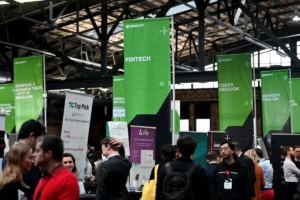
TechCrunch Disrupt 2026 is scheduled to run from October 13 to October 15 at Moscone West in San Francisco. The landmark event is projected to draw more than 10,000 technology founders, venture capital investors, and enterprise decision-makers. Attendees will gather to examine, vet, and connect with the cutting-edge companies, foundational technologies, and emerging business models that are actively shaping the future of global commerce and software development.
Charting the Evolution: From Commission-Free Trades to Multi-Product Ecosystems
Founded with the core mission of democratizing finance through commission-free stock trades, Robinhood has systematically expanded far beyond its initial product scope. Over the years, the platform has woven an intricate financial web that now encompasses standard brokerage accounts, high-yield banking services, credit card products, crypto asset exchange, retirement portfolios, and burgeoning prediction markets. Recent strategic maneuvers have pushed the company even further into advanced territory, including proprietary artificial intelligence implementations, private market access, and targeted international expansion.
The scale of this operational expansion is substantial. According to corporate disclosures, Robinhood closed out August with an impressive base of 28.6 million funded customers, while total platform assets under custody climbed to $384 billion. More importantly, engagement metrics demonstrate that users are readily adopting features well outside the platform’s original equity-trading proposition.
During its second-quarter earnings report, Robinhood revealed that its banking initiatives had successfully attracted more than $3 billion in customer deposits. Simultaneously, its proprietary credit card venture crossed a significant financial milestone, generating over $100 million in annualized revenue. Meanwhile, the platform’s foray into prediction markets experienced explosive growth, recording billions of traded contracts over the course of the year.
This multi-pronged expansion underscores a much larger strategic play: rather than merely serving as a transactional utility for occasional market trades, Robinhood is actively striving to capture the entire lifecycle of its customers’ financial management. For product architects and software engineers, this pivot introduces complex architectural and regulatory challenges, shifting the primary objective from maximizing trade frequency to building an enduring foundation of consumer trust across diverse financial verticals.

The Chronology of Modern FinTech Consolidation
To fully understand Robinhood’s current positioning, it is necessary to examine the chronological progression of the digital brokerage sector over the past decade.
In the mid-2010s, the advent of zero-commission trading disrupted legacy brokerages, forcing established financial institutions to eliminate fees and drastically lower barriers to entry for retail investors. Robinhood emerged as a pioneer of this mobile-first movement, capturing the attention of millennial and Gen Z demographics through gamified interfaces and frictionless onboarding.
By the late 2010s and early 2020s, the limitations of relying solely on transaction-based revenue models—such as payment for order flow (PFOF)—became apparent during periods of market volatility and regulatory scrutiny. This realization catalyzed a strategic imperative for diversification. Robinhood launched its cash management and banking features, rolled out cryptocurrency trading capabilities, introduced recurring investments, and established automated retirement account matching.
The milestone initial public offering (IPO) of Robinhood Markets in July 2021 provided the corporate capitalization necessary to accelerate these expansion efforts. Over the subsequent years, the company transitioned from a pure-play brokerage into a full-fledged financial services provider. The integration of credit products, automated wealth management tools, and event-based prediction markets marked the maturation of its ecosystem strategy, setting the stage for its current push into artificial intelligence and agentic workflows.
The Consumer Shift: Instant Access and Artificial Intelligence
Consumer expectations rarely evolve in isolated silos. When individuals experience instant access, hyper-personalized recommendations, and seamless digital interactions in consumer applications like social media or e-commerce, those behaviors quickly translate into baseline expectations for every other digital service they use.
Financial services have historically lagged behind consumer tech in terms of interface fluidity, but modern fintech platforms are rapidly closing that gap. Robinhood, for instance, has begun deploying sophisticated artificial intelligence tools under development initiatives known as Cortex and Agentic Trading. These systems are designed to redefine how users interact with complex financial markets.
In a testament to the swift adoption of these emerging technologies, Robinhood reported that nearly 100,000 customers had opened Agentic Trading accounts during the second quarter alone. These accounts empower users to execute trades across equities, options, and cryptocurrencies via autonomous AI-powered agents, signaling a transition from manual order entry to algorithmic delegation for retail investors.
Concurrently, prediction markets have transformed into an unexpected powerhouse for the platform. Driven by heightened interest in macroeconomic, political, and cultural event contracts, Robinhood registered 4.7 billion event contracts traded in the month of August alone—representing a staggering 15-fold increase compared to the same period in the previous year.

This explosive growth trajectory raises critical questions for the broader financial services industry. Analysts and institutional observers are closely monitoring these consumer behaviors to determine which features represent temporary speculative trends and which will permanently alter the standard expectations for consumer finance applications worldwide.
Industry Perspectives and Strategic Implications
The convergence of diverse financial products under single software umbrellas carries profound implications for various stakeholders across the technology and financial sectors.
For technology founders and product builders, the core takeaway centers on the delicate balance between rapid feature expansion and sustained user experience. Scaling an organization from a single-purpose utility to a multi-product ecosystem requires rigorous prioritization. Leaders must learn how to introduce complex financial instruments—such as options trading, high-yield savings, and digital assets—without overwhelming the end user or eroding the foundational trust necessary to safeguard personal wealth.
For venture capital and institutional investors, the evolution of platforms like Robinhood offers a clear view into the economics of customer lifetime value (LTV) and wallet share acquisition. By consolidating banking, credit, trading, and retirement planning into a unified application, fintech companies can significantly reduce customer acquisition costs while diversifying their revenue streams against cyclical market downturns. This ecosystem play represents the modern blueprint for sustainable profitability in consumer fintech.
For line-of-business executives outside of finance, the broader lessons involve adapting to hyper-connected consumer expectations. Regardless of the industry, today’s users demand personalization, speed, and absolute security, forcing enterprises to rethink their digital architecture and customer journey design.
Event Details and Participation
As the financial services industry navigates this period of unprecedented transformation, events like TechCrunch Disrupt serve as vital forums for cross-industry collaboration and strategic foresight. Abhishek Fatehpuria’s upcoming session on the Smart Money Stage promises to deliver actionable insights into the methodologies behind building resilient, trusted financial products at a massive, global scale.
TechCrunch Disrupt 2026 will take place from October 13 to October 15 at Moscone West in San Francisco. Industry professionals, entrepreneurs, and investors interested in attending can take advantage of early registration pricing. Organizers have noted that standard passes offer significant savings for those who register prior to the upcoming price adjustment deadline on September 25 at 11:59 p.m. Pacific Time. Additionally, discounted group ticketing options, providing up to 30% off for teams of four or more, are available to facilitate corporate attendance.
Ultimately, the modern financial consumer is undergoing a fundamental transformation in how they save, spend, invest, and plan for the future. As user expectations continue to accelerate, the applications and platforms competing for their attention must adapt in lockstep—balancing technological innovation with the enduring mandate of financial security and trust.