The Financial Action Task Force (FATF) concluded its October 2026 plenary in Paris on October 30, marking a significant milestone in the global effort to combat money laundering, terrorist financing, and the proliferation of weapons of mass destruction. This assembly, held from October 28 to 30, represented the first plenary session presided over by the United Kingdom’s Giles Thomson, who assumed the presidency in June 2026 with a mandate to sharpen the global focus on digital fraud, cross-border scams, and the pragmatic application of risk-based compliance measures.
With more than 200 jurisdictions and international observers in attendance, the plenary served as a critical forum for assessing the integrity of the global financial system. The event was particularly notable for the inclusion of Barbados, Namibia, and Thailand under the FATF Guest Initiative, signaling an effort to broaden the diversity of voices and perspectives in setting international standards for anti-money laundering (AML) and counter-terrorist financing (CFT).
A Shift in the Grey List: Strategic Progress and Stagnation
The FATF’s "grey list"—officially known as the list of jurisdictions under increased monitoring—serves as a primary barometer for country risk. Countries placed on this list are those that have demonstrated strategic deficiencies in their AML/CFT/CPF regimes but have committed to a time-bound action plan to rectify these issues.
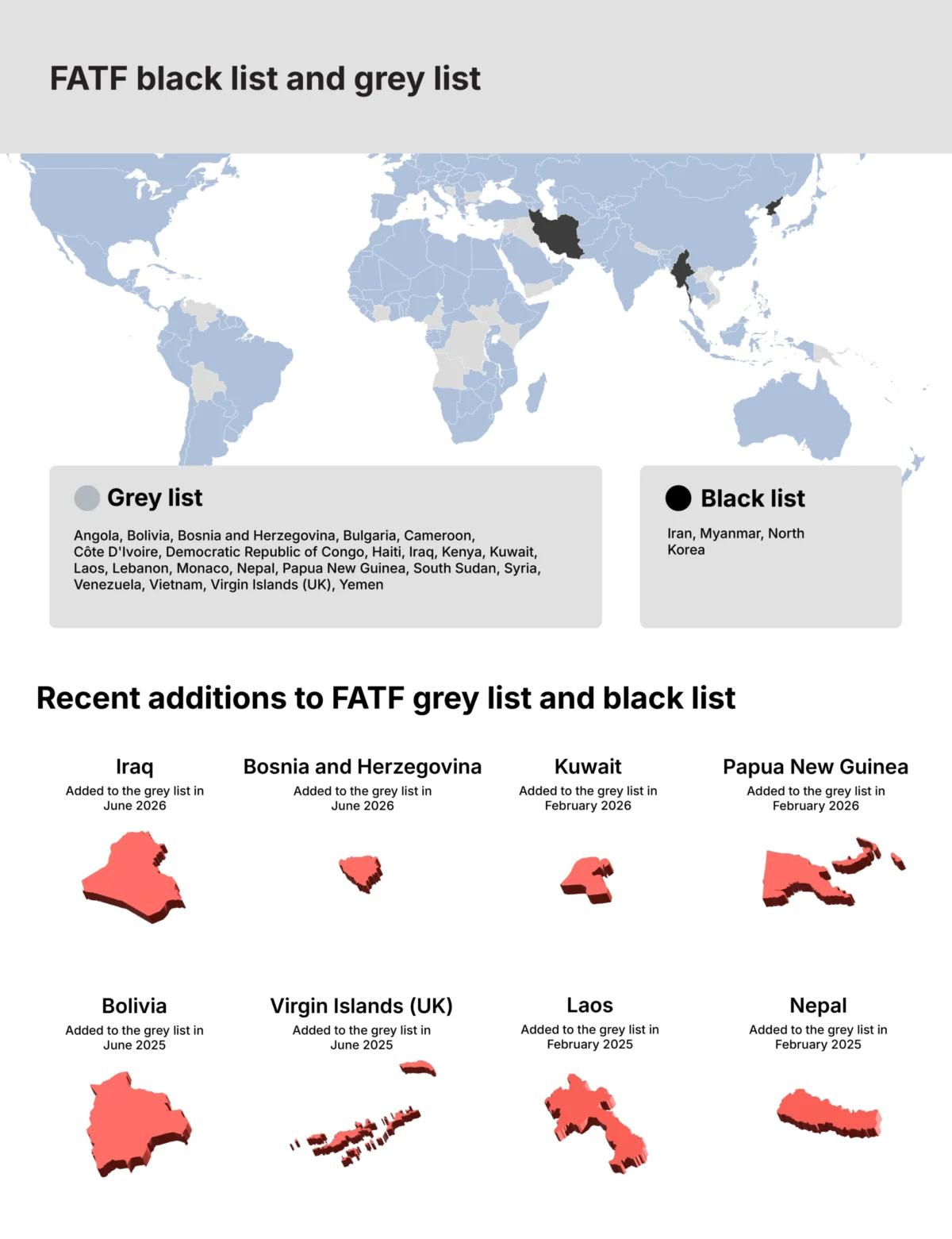
The October 2026 plenary resulted in a net reduction of the grey list from 22 to 18 jurisdictions. Four nations—Bulgaria, Côte d’Ivoire, the Democratic Republic of the Congo, and Monaco—were removed following successful on-site inspections that confirmed the completion of their respective reform agendas.
Bulgaria, which had been under monitoring since October 2023, successfully overhauled its national AML/CFT strategy. The nation implemented rigorous entry controls for virtual asset service providers (VASPs) and improved the accuracy of beneficial ownership registries. Similarly, Monaco’s removal follows significant legislative and operational investments made since June 2024, particularly in the areas of investigating cross-border tax fraud and enhancing the judicial capacity to seize criminal assets.
However, not all jurisdictions have maintained the pace of progress expected by the FATF. The plenary highlighted Vietnam as a point of significant concern. Having been on the grey list since June 2023, Vietnam failed to meet its reform deadlines, which expired in May 2025. The FATF issued a stern warning that the country’s lack of tangible improvement in virtual asset regulation and risk-based supervision could lead to more severe escalation by the February 2027 plenary. This serves as a cautionary tale for financial institutions: compliance teams should treat exposure to Vietnamese financial markets with heightened scrutiny until concrete policy shifts are observed.
The Black List: Sustained Pressure on High-Risk Jurisdictions
The "black list," or the list of high-risk jurisdictions subject to a call for action, remained unchanged in its composition. The Democratic People’s Republic of Korea (DPRK), Iran, and Myanmar continue to represent the highest level of risk to the global financial system. The FATF reiterated its call for members to apply effective countermeasures against the DPRK and Iran, citing the persistent and grave threat posed by their lack of transparency and refusal to align with international standards.
Iran’s situation remains stagnant. Despite an update provided to the FATF in September 2026, the organization concluded that the nation’s legal framework still fails to adequately criminalize terrorist financing. For global banking entities, this reinforces the necessity of maintaining the most stringent levels of enhanced due diligence (EDD) when dealing with entities or individuals connected to these jurisdictions.
Myanmar, while not currently under a formal call for countermeasures, remains subject to intensive monitoring. The FATF explicitly linked its ongoing concerns to the proliferation of cyber scams and financial fraud originating from within Myanmar’s borders. The organization has signaled that if no further progress is made by early 2027, the prospect of applying formal countermeasures will be seriously evaluated.
Addressing the New Frontier: Virtual Assets and Scam Compounds
A major thematic shift in the October 2026 plenary was the prioritization of digital financial risks. Under the UK Presidency, the FATF has moved to accelerate the implementation of its standards regarding virtual assets. As criminal networks increasingly pivot toward decentralized finance and crypto-assets to obscure the provenance of illicit funds, the FATF is implementing a new targeted review process. This initiative aims to close regulatory gaps in jurisdictions that host "materially important" virtual asset activity, with results expected to be published in phases throughout 2027.
Equally significant was the plenary’s focus on the "scam compound" economy. The FATF approved a comprehensive report detailing the illicit financial flows linked to these organized criminal operations. By mapping the "crime-as-a-service" business model—which involves human trafficking, cyber-enabled fraud, and money laundering—the FATF aims to provide law enforcement with a roadmap to dismantle these operations at their financial roots. This is expected to be a cornerstone of the UK’s broader strategy to modernize the global response to fraud.
Mutual Evaluations: The US and Mexico Under the Microscope
The plenary also saw the adoption of mutual evaluation reports for Mexico and the United States. These evaluations are essential for assessing how effectively these major economies implement FATF recommendations in practice. While the full findings are slated for publication in December 2026 following a final consistency review, both nations are expected to operate under a three-year "Roadmap of Key Recommended Actions."
The transition to a new round of mutual evaluations reflects the FATF’s pivot from a check-the-box compliance culture to one centered on "effectiveness." This approach requires countries to demonstrate that their AML/CFT laws are not merely present on paper but are actively resulting in investigations, prosecutions, and asset seizures.
Capacity Building and the Risk-Based Approach
Recognizing that a one-size-fits-all approach disadvantages developing nations, the FATF has introduced a series of "tailored assessments" for low-capacity jurisdictions. By simplifying the evaluation criteria and increasing training for assessors, the FATF hopes to foster a more sustainable path toward global compliance.
Furthermore, the upcoming "Learning and Development Forum," scheduled for December 2026 in Dallas, Texas, underscores the shift toward practical application. The forum aims to bridge the gap between policy and implementation, specifically regarding the risk-based approach (RBA). Financial institutions and supervisors are being encouraged to move away from overly defensive compliance—which can lead to "de-risking" or the mass exclusion of legitimate customers—toward a nuanced model that targets actual criminal threats.
Broader Implications for Global Compliance
For the global compliance community, the outcomes of the October 2026 plenary suggest a period of transition. The focus is moving away from purely technical compliance toward a more agile, intelligence-led, and technology-driven framework. The persistent threat of state-sponsored proliferation financing, combined with the rapid evolution of crypto-crime and global scam networks, has forced the FATF to adopt a more proactive, risk-aware posture.
The message to the private sector is clear: institutional risk assessments must be dynamic. The removal of four countries from the grey list is a positive development that may reduce the compliance burden for firms interacting with these markets, but the ongoing stagnation in nations like Vietnam and the continued isolation of the black-listed regimes require sustained vigilance. As the FATF prepares for its February 2027 plenary, the integration of these new standards into internal compliance programs will be a critical challenge for financial institutions operating on a global scale.
The FATF remains the linchpin of international financial security, and under the current UK leadership, its influence is being directed toward solving the most modern and complex challenges in the fight against illicit finance. Organizations that stay ahead of these regulatory shifts, particularly concerning virtual assets and the RBA, will be best positioned to navigate the increasingly complex global landscape of financial crime.