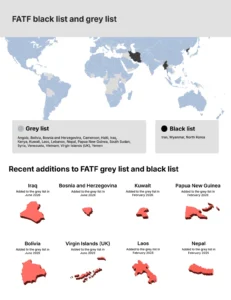
The Philippines’ official exit from the Financial Action Task Force (FATF) grey list in early 2025 stands as a watershed moment for the nation’s integration into the global financial system, yet it has simultaneously ushered in a period of unprecedented regulatory scrutiny for the country’s domestic financial institutions. As the nation pivots from remediation to sustainment, senior Risk and Compliance professionals—from traditional commercial banks and digital wallet providers to Virtual Asset Service Providers (VASPs)—are finding that maintaining a clean status is significantly more resource-intensive than achieving it. The removal of the “increased monitoring” designation by the FATF serves not as a signal to relax, but as a baseline expectation for operational excellence in an environment defined by aggressive digitalization and shifting geopolitical sanctions regimes.
A Chronology of Regulatory Remediation
To understand the current mandate, one must look at the timeline of the Philippines’ journey with the global anti-money laundering (AML) watchdog. The country was first placed on the FATF grey list in June 2021, a designation that prompted a comprehensive overhaul of its legal and regulatory framework. Over the next four years, the government, led by the Anti-Money Laundering Council (AMLC) and the Bangko Sentral ng Pilipinas (BSP), implemented a series of rigorous reforms.
Key milestones included the enactment of the Anti-Terrorism Act of 2020 and subsequent amendments to the Anti-Money Laundering Act (AMLA), which expanded the powers of regulators to conduct targeted financial sanctions (TFS) and investigations. Throughout 2023 and 2024, the Philippines focused on addressing technical deficiencies in its beneficial ownership transparency and the oversight of casinos and high-risk non-financial businesses. By February 2025, the FATF concluded that the Philippines had successfully addressed its strategic deficiencies, marking a successful exit from the list. However, this departure has effectively transitioned the focus of the AMLC and BSP from “corrective action” to “continuous enforcement.”
The Escalation of Transactional Complexity
The modern Philippine financial landscape is characterized by high-velocity growth. The proliferation of the InstaPay and PESONet payment rails has fundamentally changed how consumers and businesses interact with capital. According to recent data from the Bangko Sentral ng Pilipinas, the volume of digital transactions in the Philippines has grown at a double-digit compound annual growth rate (CAGR) since 2022. While this reflects a successful drive toward financial inclusion, it creates a massive surge in data that compliance departments must process.
For institutions handling cross-border remittances, the challenge is twofold. First, the sheer volume of transactions necessitates automated oversight that can operate at the speed of light. Second, the geographic diversity of these flows—linking the Philippines to traditional hubs in the Middle East, the United States, and emerging corridors in Southeast Asia—means that banks are frequently exposed to a tapestry of international sanctions regimes. When a remittance passes through a correspondent bank, it may be subject to the mandates of the U.S. Office of Foreign Assets Control (OFAC), the European Union, or the United Kingdom’s Office of Financial Sanctions Implementation (OFSI), in addition to domestic UN-mandated lists.
The Friction Between Compliance and Commercial Growth
At the heart of the current compliance dilemma is the inherent tension between "zero-tolerance" risk appetite and the demand for seamless user experiences. In the competitive digital wallet and VASP sectors, any lag in transaction processing—often caused by false-positive alerts in legacy screening systems—can lead to customer attrition.
Industry analysis suggests that many Philippine financial institutions are currently struggling with legacy software that relies on rigid, rule-based logic. These systems often trigger alerts for common name variations or incomplete data fields, forcing manual review queues to swell. In a 24/7 operating environment, a manual backlog is not merely a bureaucratic hurdle; it is a direct threat to institutional liquidity and market share. As institutions move away from static, tick-box compliance, the imperative is to adopt real-time, risk-based filtering that leverages advanced data analytics to distinguish between legitimate high-volume traffic and genuine sanctions-evasion vectors.
Defining the Future of Screening Operations
Effective sanctions compliance in this new era requires a shift toward a four-pillared operational strategy:
- Integrated Data Intelligence: Institutions must move beyond simple name-matching against static lists. Modern screening requires the integration of dynamic, real-time intelligence feeds that include alias detection, citizenship, and historical entity behavior to reduce the volume of noise in the screening process.
- Context-Aware Filtering: Screening systems must be calibrated to understand the context of the transaction. A payment involving a high-risk jurisdiction should be weighted differently than a low-value, domestic transfer. By applying risk-scoring models to the screening process, institutions can prioritize their limited human resources toward the highest-risk alerts.
- Automated Workflow Orchestration: The reliance on human analysts for low-level investigation is increasingly unsustainable. Automated case management, powered by machine learning, can resolve the majority of false positives, allowing compliance officers to focus on complex, high-stakes investigations that require qualitative judgment.
- Cross-Border Regulatory Alignment: Compliance departments must adopt a "widest-net" approach to sanctions. Rather than focusing solely on domestic lists, institutions must harmonize their internal controls to reflect the most stringent requirements of their international correspondent banking partners, effectively future-proofing their operations against extraterritorial enforcement actions.
The Broader Economic Implications
The economic stakes for the Philippines remain high. Maintaining an exit from the grey list is essential for preserving the integrity of the country’s correspondent banking relationships. Any perceived slippage in enforcement could lead to a "de-risking" scenario, where international banks terminate relationships with Philippine counterparts to avoid regulatory exposure. Such an outcome would effectively isolate parts of the Philippine economy, increasing the cost of trade and remittances for the average Filipino.
Official responses from the AMLC have emphasized that the post-grey list era requires a "culture of compliance" that permeates the entire financial sector. This means that responsibility cannot rest solely with the compliance officer; it must be embedded in the design of digital products and the selection of technology vendors. The Bangko Sentral ng Pilipinas has reinforced this stance by signaling that future audits will place greater weight on the effectiveness of systems rather than the existence of written policies.
Moving Forward: Vigilance as a Competitive Advantage
As the Philippines looks beyond 2026, the institutions that will succeed are those that treat compliance as an enabler rather than an impediment. The transition from a reactive posture—focused on fulfilling FATF requirements—to a proactive, technology-driven model represents the next logical step in the maturity of the Philippine financial sector.
In a globalized economy, regulatory compliance is no longer a peripheral function; it is a core business competency. By investing in scalable, automated, and intelligence-led screening architectures, Philippine institutions can ensure that they remain firmly off the grey list while continuing to foster the digital innovation that is central to the nation’s economic development. The victory of 2025 was the end of a specific chapter of oversight; the current chapter is about demonstrating that the Philippines possesses the internal infrastructure to maintain that standard indefinitely. The focus now must remain on the granular details of daily operations, ensuring that as the country’s financial system grows, its protective guardrails grow in tandem.