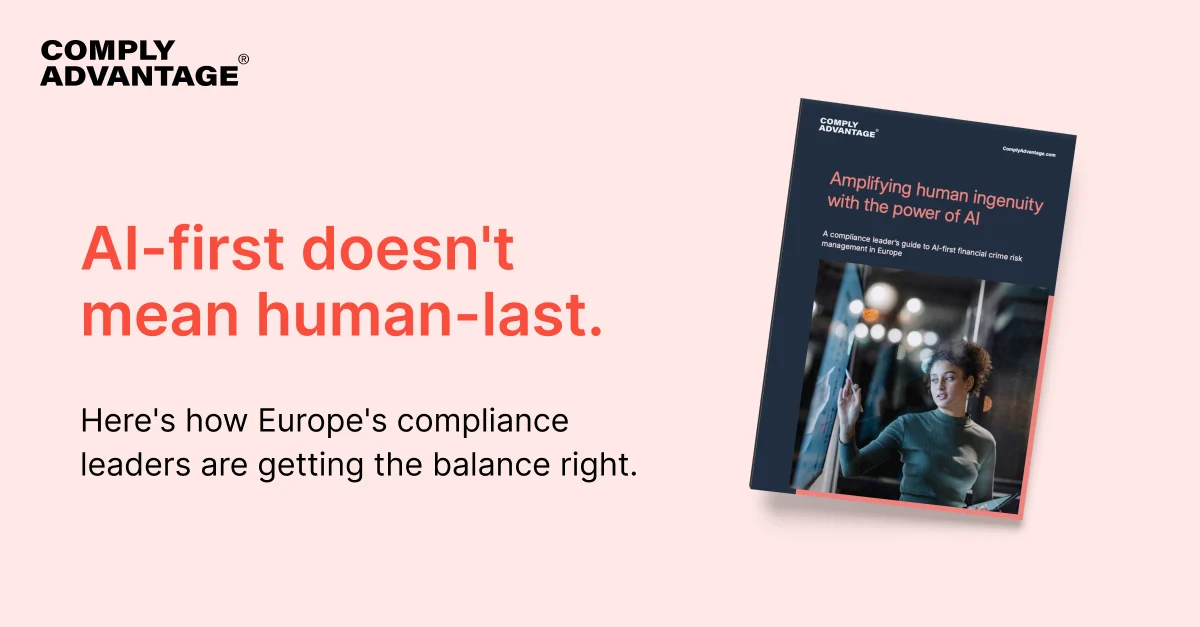
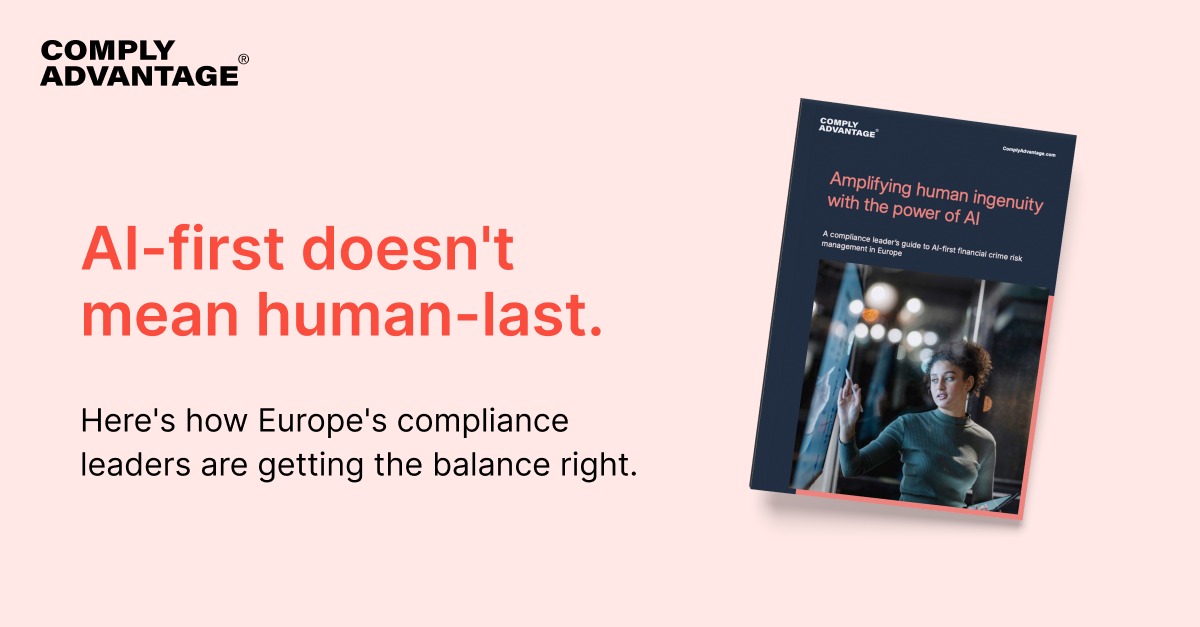
The financial services landscape is currently witnessing a transformative shift as Europe’s compliance leaders move beyond the theoretical benefits of artificial intelligence to practical, high-stakes implementation within financial crime risk management. A comprehensive new guide released by ComplyAdvantage, titled "Amplifying human ingenuity with the power of AI," reveals that the industry has reached a critical inflection point where the integration of advanced technologies is no longer a competitive advantage but a fundamental necessity for survival. Drawing from insights gathered at the Future of Compliance Europe summit, the report underscores a dual-front technological war: while transnational criminal organizations utilize AI to orchestrate sophisticated, high-speed attacks, financial institutions are leveraging the same technology to fortify their defenses without sacrificing the indispensable element of human judgment.
The release of this guide comes at a time when the European financial sector is grappling with increasingly complex regulatory demands and an unprecedented volume of digital transactions. The core premise of the findings suggests that the most successful compliance programs are those that treat AI not as a mere procurement decision—a software package to be installed and forgotten—but as a core design discipline that requires continuous refinement and human oversight. By placing human ingenuity at the center of the technological framework, firms are finding they can automate the mundane while empowering their analysts to focus on high-level strategic risk assessment.
Contextual Background: The Future of Compliance Europe Summit
The insights detailed in the new guide are rooted in the collective intelligence of the Future of Compliance Europe summit, a high-level gathering of Chief Compliance Officers (CCOs), risk management experts, and fintech innovators. The summit addressed the growing "compliance gap," a phenomenon where the speed of criminal innovation threatens to outpace the defensive capabilities of legacy banking systems. Historically, compliance departments relied on rules-based systems—rigid "if-then" logic that often resulted in high rates of false positives and overlooked subtle patterns of money laundering or terrorist financing.
The consensus among summit participants was that the era of manual, reactive compliance is over. The rise of "FinCrime-as-a-Service" on the dark web has enabled even low-level criminals to launch automated phishing, deepfake identity fraud, and rapid-fire transaction layering. In response, the European compliance community is pivoting toward proactive, AI-driven architectures. This transition, however, is fraught with ethical and operational questions regarding the "black box" nature of AI and the legal accountability of automated decisions. The ComplyAdvantage guide serves as a roadmap for navigating these complexities, emphasizing that the goal of AI is to amplify, not replace, the human expert.
A Chronology of Compliance Evolution: From Paper Trails to Predictive Algorithms
To understand the current state of AI in European compliance, it is necessary to examine the chronological evolution of anti-money laundering (AML) and "Know Your Customer" (KYC) practices over the last several decades.
- The Manual Era (Pre-1990s): Compliance was largely a paper-based exercise. Banks relied on physical documentation and the personal knowledge of branch managers to identify suspicious activity. Regulatory frameworks were localized and lacked global cohesion.
- The Rules-Based Era (1990s – 2010s): As digital banking took hold, institutions implemented automated rules-based systems. These systems flagged any transaction over a certain threshold (e.g., €10,000) or transactions involving high-risk jurisdictions. While efficient for their time, these systems were easily bypassed by criminals who learned to "structure" payments just below reporting limits.
- The Data Integration Era (2010s – 2020): Following the 2008 financial crisis and subsequent high-profile AML scandals, regulators demanded better data integration. Firms began using more sophisticated screening tools for Politically Exposed Persons (PEPs) and Sanctions lists, yet the volume of data often overwhelmed compliance teams, leading to massive backlogs.
- The AI and Machine Learning Era (2021 – Present): The current phase is defined by the move toward cognitive automation. AI models are now capable of analyzing vast datasets in real-time, identifying non-linear patterns that human eyes—and rules-based systems—would miss. The focus has shifted from "detecting the known" to "predicting the unknown."
Supporting Data: The Rising Cost of Financial Crime
The drive toward AI adoption is fueled by sobering statistics regarding the scale of global financial crime. According to the United Nations Office on Drugs and Crime (UNODC), it is estimated that between 2% and 5% of global GDP is laundered annually—amounting to roughly $800 billion to $2 trillion. Within Europe, the European Banking Authority (EBA) has consistently highlighted the need for more robust cross-border cooperation and technological adoption to stem the flow of illicit funds.
Furthermore, a study by LexisNexis Risk Solutions estimated that the total cost of financial crime compliance for UK and European financial institutions exceeds $50 billion annually. A significant portion of this expenditure is wasted on processing false positives; in many traditional systems, as many as 95% of alerts do not result in a suspicious activity report (SAR). The ComplyAdvantage guide highlights that by implementing AI-driven transaction monitoring, firms can reduce false positives by 30% to 50%, allowing human investigators to dedicate their time to the 5% of cases that represent genuine threats.
AI as a Design Discipline: The Four Pillars of Modern Compliance
The guide identifies four specific disciplines that separate industry leaders from laggards. These disciplines treat AI as an integral part of the organizational DNA rather than a siloed IT project.
1. Data Integrity and Holistic Visibility
AI is only as effective as the data it consumes. Compliance leaders are moving away from siloed data sets toward a "single source of truth." This involves integrating internal transaction data with external adverse media, sanctions lists, and corporate registry information. By ensuring high data quality, AI models can produce more accurate risk scores, reducing the noise that typically plagues compliance departments.
2. Model Explainability and Governance
In the European regulatory environment, "the AI made this decision" is not a valid legal defense. The guide emphasizes the importance of "Explainable AI" (XAI). Compliance teams must be able to demonstrate to regulators exactly why a model flagged a specific transaction. This requires a robust governance framework where AI models are regularly audited, stress-tested, and validated by human experts.
3. The Human-in-the-Loop Architecture
The concept of "handing over judgment" to a machine is a significant concern for CCOs. The most effective programs use AI to handle the "heavy lifting"—data gathering, pattern matching, and initial triaging—while leaving the final decision-making to human analysts. This "human-in-the-loop" approach ensures that the nuanced understanding of context, ethics, and complex corporate structures remains a human responsibility.
4. Adaptive Resilience
Criminal tactics evolve weekly. An AI system designed today may be obsolete by next year if it is not built for adaptability. Leading firms are utilizing machine learning models that can learn from new data patterns and feedback from human investigators, creating a virtuous cycle of continuous improvement.
Official Responses and Industry Reactions
While regulators have historically been cautious about the use of AI in financial services, the tone is shifting toward cautious encouragement. The European Union’s AI Act—the world’s first comprehensive AI law—classifies certain financial services applications as "high-risk," requiring strict transparency and oversight. However, regulators such as the Financial Action Task Force (FATF) have released guidance encouraging the use of technology to improve the effectiveness of AML/CFT (Countering the Financing of Terrorism) efforts.
Industry experts suggest that the ComplyAdvantage guide reflects a broader consensus within the European Central Bank (ECB) and other monitoring bodies. "The goal is not to remove humans from the process but to give them better tools," noted a participant at the Future of Compliance summit. "We are seeing a shift where the role of a compliance officer is evolving into that of a data scientist and a strategic risk manager. AI is the engine that allows this evolution to happen."
Broader Impact and Future Implications
The implications of AI-augmented compliance extend far beyond the walls of bank headquarters. For the general public, more effective financial crime detection means a reduction in the societal harms funded by money laundering, including human trafficking, drug smuggling, and terrorism. For the financial system, it promises a more stable and transparent environment that can facilitate faster, more secure cross-border payments.
However, the "AI arms race" also presents risks. As compliance teams become more reliant on technology, the threat of "model drift" or biased algorithms becomes a systemic concern. If multiple banks use similar AI models that share the same inherent biases, entire sectors of the population could be unfairly de-risked or excluded from the financial system. The ComplyAdvantage guide addresses this by advocating for diversity in data and constant human vigilance.
Looking ahead, the next frontier in compliance will likely involve the use of Generative AI to draft SARs and conduct complex "Know Your Business" (KYB) research. As these technologies mature, the gap between those who have successfully integrated AI and those still relying on legacy systems will widen. The message from Europe’s compliance leaders is clear: the future belongs to those who can master the synergy between machine speed and human insight.
In conclusion, "Amplifying human ingenuity with the power of AI" serves as both a warning and a blueprint. It warns that the traditional methods of fighting financial crime are no longer sufficient in an era of automated threats. Simultaneously, it provides a blueprint for a new era of compliance—one where technology does not replace the human element but serves to enhance the intuition, ethics, and expertise that have always been at the heart of effective risk management. As European firms continue to navigate this transition, the focus must remain on the responsible, transparent, and strategic application of AI to protect the integrity of the global financial system.