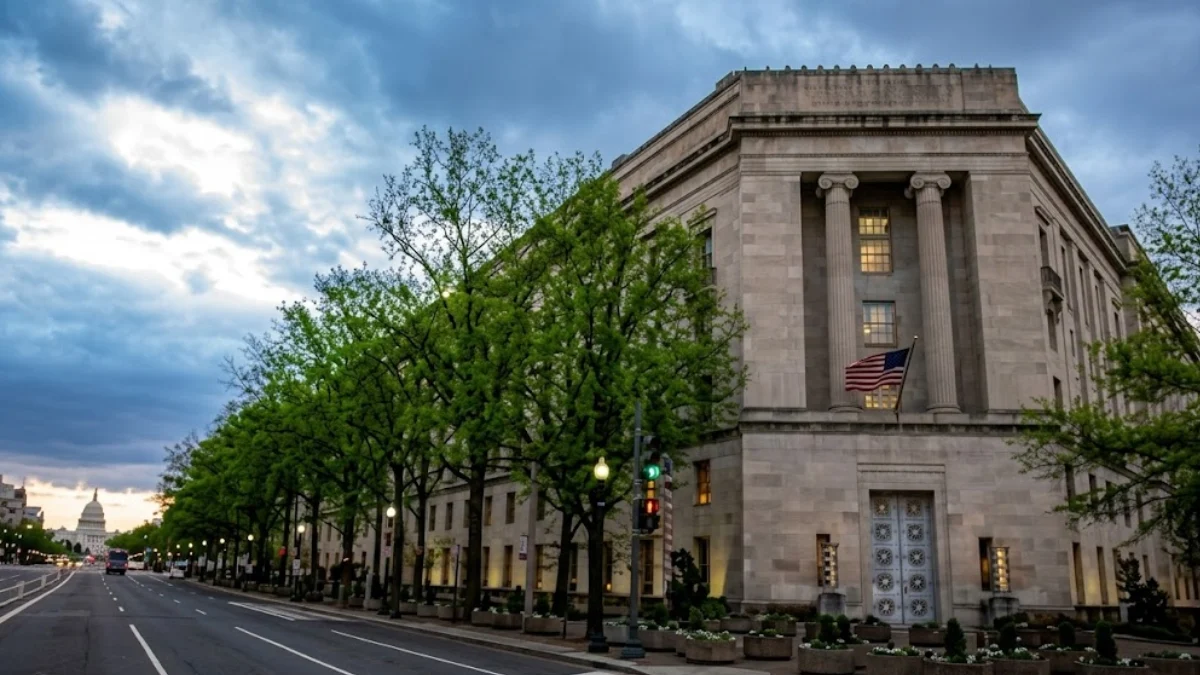
EyePoint Pharmaceuticals, Inc., a Massachusetts-based pharmaceutical company, has reached a formal agreement with the United States Department of Justice to pay a total of $4,657,463.18 to settle allegations that it violated the False Claims Act. The settlement addresses claims that the company engaged in an illegal kickback scheme designed to induce Ambulatory Service Centers (ASCs) to purchase and dispense the drug DEXYCU. The alleged misconduct took place over a four-year period, beginning shortly after the drug’s commercial launch in early 2019 and continuing through March 1, 2023.
The settlement resolves allegations that EyePoint utilized two primary methods to improperly influence medical providers: a financial "Assurance Program" and the distribution of excessive free samples. These actions were allegedly intended to bypass the competitive market and ensure that DEXYCU—a physician-administered injectable drug used to treat inflammation following cataract surgery—was favored by surgical centers, regardless of whether it was the most cost-effective or medically necessary option for the patient.
The Nature of the Alleged Kickback Scheme
The core of the government’s case against EyePoint Pharmaceuticals centers on the Anti-Kickback Statute, which prohibits pharmaceutical companies from offering or paying any form of "remuneration" to induce the purchase or recommendation of drugs covered by federal healthcare programs, such as Medicare and Medicaid. According to federal prosecutors, EyePoint’s "Assurance Program" functioned as a prohibited financial inducement.
Under this program, EyePoint reportedly offered to reimburse or compensate ASCs if a health insurance provider denied a claim for DEXYCU or if the reimbursement amount fell below the ASC’s actual purchase cost. By providing this financial safety net, EyePoint effectively removed the financial risk associated with stocking and administering the drug. This "spread" or "risk-free" guarantee created a powerful incentive for ASCs to choose DEXYCU over competing treatments, as they were insulated from any potential financial loss.
In addition to the Assurance Program, the United States alleged that EyePoint provided ASCs with an excessive number of free samples of DEXYCU. While the distribution of samples is a common practice in the pharmaceutical industry, the government contended that the volume provided by EyePoint went beyond legitimate clinical needs. These samples were allegedly used as a tool to induce providers to purchase the drug for their broader patient populations, further blurring the lines between clinical promotion and illegal financial inducement.
Chronology of Events and Investigative Oversight
The timeline of the case begins with the commercial launch of DEXYCU in 2019. DEXYCU (dexamethasone intraocular suspension) 9% was designed as a long-acting steroid treatment administered at the conclusion of cataract surgery. Because cataract surgery is one of the most frequently performed procedures among the elderly population in the United States, the drug targeted a massive market primarily funded by Medicare Part B.
Between January 1, 2019, and March 1, 2023, EyePoint allegedly aggressive marketed the drug through the aforementioned programs. The investigation into these practices was initiated following the filing of a "qui tam," or whistleblower, lawsuit by AFCE LLC. Under the False Claims Act, private parties (known as relators) can file lawsuits on behalf of the government if they have evidence of fraud against federal programs.
The investigation was a multi-agency effort involving:
- The Justice Department’s Civil Division, Commercial Litigation Branch, Fraud Section.
- The United States Attorney’s Office for the District of Massachusetts.
- The Department of Health and Human Services Office of Inspector General (HHS-OIG).
- The Federal Bureau of Investigation (FBI).
The resolution of the matter was led by Fraud Section Trial Attorney Margaret F. Thomas and Assistant U.S. Attorneys from the District of Massachusetts. Following the federal settlement, EyePoint also entered into separate agreements to pay an additional $21,518.68 to various participating states to resolve related claims involving state-funded healthcare programs.
The Role of the Whistleblower and Qui Tam Provisions
The False Claims Act remains the government’s most potent weapon in the fight against healthcare fraud. A critical component of the Act is its qui tam provision, which encourages individuals or entities with "inside" information to come forward. In this case, the relator, AFCE LLC, will receive a significant portion of the settlement proceeds as a reward for initiating the action.
Specifically, the relator is set to receive $791,768.74 from the federal portion of the settlement. This mechanism is designed to incentivize transparency and hold corporations accountable for complex financial schemes that might otherwise go undetected by federal regulators. The case is officially captioned as U.S. ex rel. AFCE LLC, et al., v. EyePoint Pharmaceuticals, Inc., No. 21-CV-12071 (D. Mass.).
Corporate Integrity and Future Compliance Mandates
As a condition of the settlement, EyePoint Pharmaceuticals has entered into a five-year Corporate Integrity Agreement (CIA) with the HHS-OIG. This agreement is a standard but rigorous requirement for healthcare entities involved in False Claims Act settlements.
The CIA imposes several strict obligations on EyePoint to ensure future compliance with federal healthcare laws:
- Independent Monitoring: The company must hire an external Independent Review Organization (IRO) to conduct regular audits of its physician relationships, marketing practices, and sample distribution protocols.
- Compliance Leadership: EyePoint is required to maintain a compliance officer and a compliance committee to oversee the implementation of the CIA.
- Training and Education: All employees and relevant third-party contractors must undergo mandatory training regarding the Anti-Kickback Statute and the False Claims Act.
- Reporting Requirements: The company must submit annual reports to the HHS-OIG detailing its compliance efforts and disclosing any potential violations found during internal or external audits.
This five-year period of oversight is intended to fundamentally change the corporate culture at EyePoint and prevent a recurrence of the behaviors that led to the $4.6 million penalty.
Official Statements and Government Response
Federal officials were clear in their condemnation of the practices alleged in the EyePoint case, emphasizing that kickbacks undermine the fiduciary duty doctors owe to their patients.
"Kickbacks by pharmaceutical companies increase the cost of drugs used by patients and paid for by federal health care programs," said Assistant Attorney General Brett A. Shumate of the Justice Department’s Civil Division. "The Civil Division will hold accountable anyone who pays unlawful kickbacks."
United States Attorney Leah B. (District of Massachusetts) echoed these sentiments, stating, "As we have for years, our Office will continue to hold pharmaceutical manufacturers accountable for paying illegal kickbacks. Through these efforts, we protect patients by removing providers’ financial incentives to prescribe or dispense products that may not be medically necessary for the patient and protect the public from fraud, waste, and abuse."
Acting Deputy Inspector General for Investigations Scott J. Lampert of the HHS-OIG added that such schemes "betray the patients who rely on them" and "corrupt medical decision-making." He emphasized that the OIG would remain aggressive in pursuing entities that attempt to boost profits through unlawful financial inducements.
Broader Impact on the Pharmaceutical Industry and ASCs
The EyePoint settlement serves as a warning to other pharmaceutical manufacturers and Ambulatory Service Centers. In recent years, the DOJ has increasingly focused on the relationship between drug makers and ASCs, particularly in the ophthalmic space. Cataract surgery is a high-volume, high-profit area for many clinics, and the introduction of new "J-code" drugs (injectables billed under Medicare Part B) has created numerous opportunities for improper financial arrangements.
The "Assurance Program" model is of particular interest to regulators. Any program that guarantees a provider against financial loss on a drug purchase is likely to be viewed as a kickback. This is because the provider’s choice of drug should be based on clinical efficacy and the best interests of the patient, rather than a guarantee that the clinic’s profit margins will remain intact.
Furthermore, the settlement highlights the risks associated with sampling programs. While samples are intended to allow physicians to gain experience with a new medication, they cannot be used as a "buy-in" or a reward for a provider’s loyalty to a specific brand.
The "War on Fraud" and the New Task Force
This settlement comes at a time when the federal government is intensifying its focus on white-collar crime and healthcare fraud. This year, the administration launched the "Task Force to Eliminate Fraud" and the "National Fraud Enforcement Division." These entities are designed to enhance the government’s ability to detect and prosecute waste and abuse in federal programs.
The DOJ has noted that when unscrupulous actors exploit Medicare and Medicaid for personal gain, they not only defraud the taxpayer but also disadvantage law-abiding American businesses. The Civil Division’s enforcement of the False Claims Act has recovered billions of dollars over the last decade, and officials indicate that healthcare fraud will remain a top priority for the foreseeable future.
Conclusion
The $4.6 million settlement with EyePoint Pharmaceuticals marks the end of a multi-year investigation into the marketing of DEXYCU. While the settlement is not an admission of liability by the company, the accompanying five-year Corporate Integrity Agreement ensures that EyePoint will operate under a microscope for the next half-decade. For the broader healthcare industry, the message is clear: financial arrangements that shield providers from risk or provide excessive inducements will be met with rigorous investigation and substantial financial penalties. As the DOJ continues to leverage the False Claims Act and support whistleblowers, the cost of non-compliance in the pharmaceutical sector continues to rise.