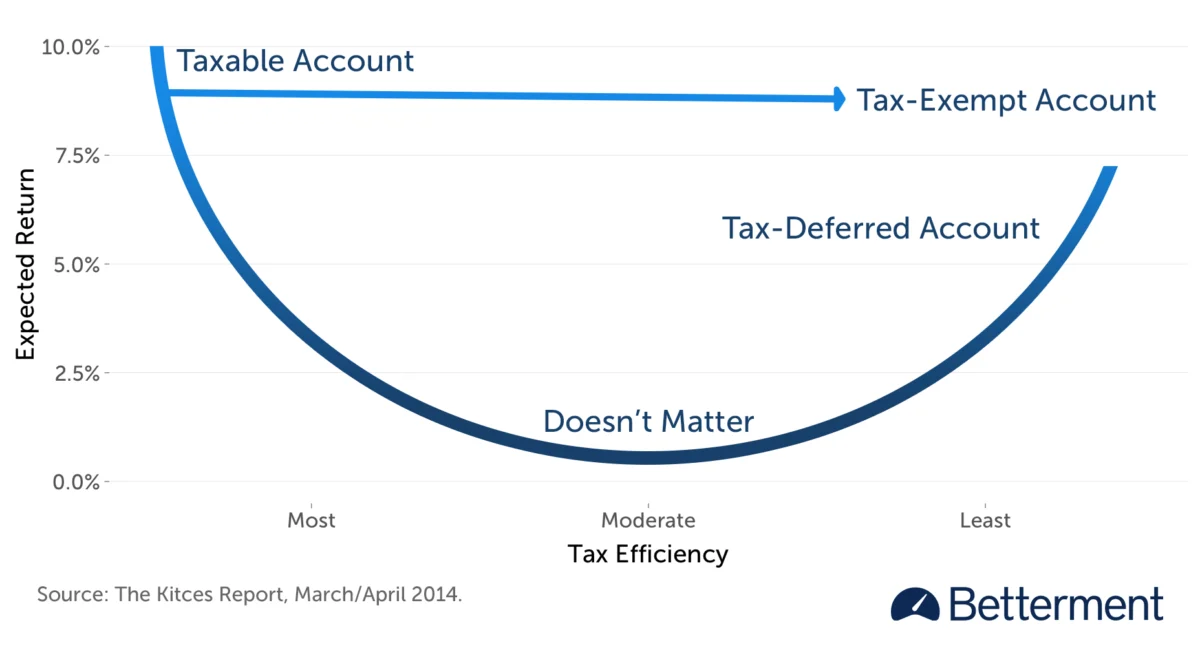
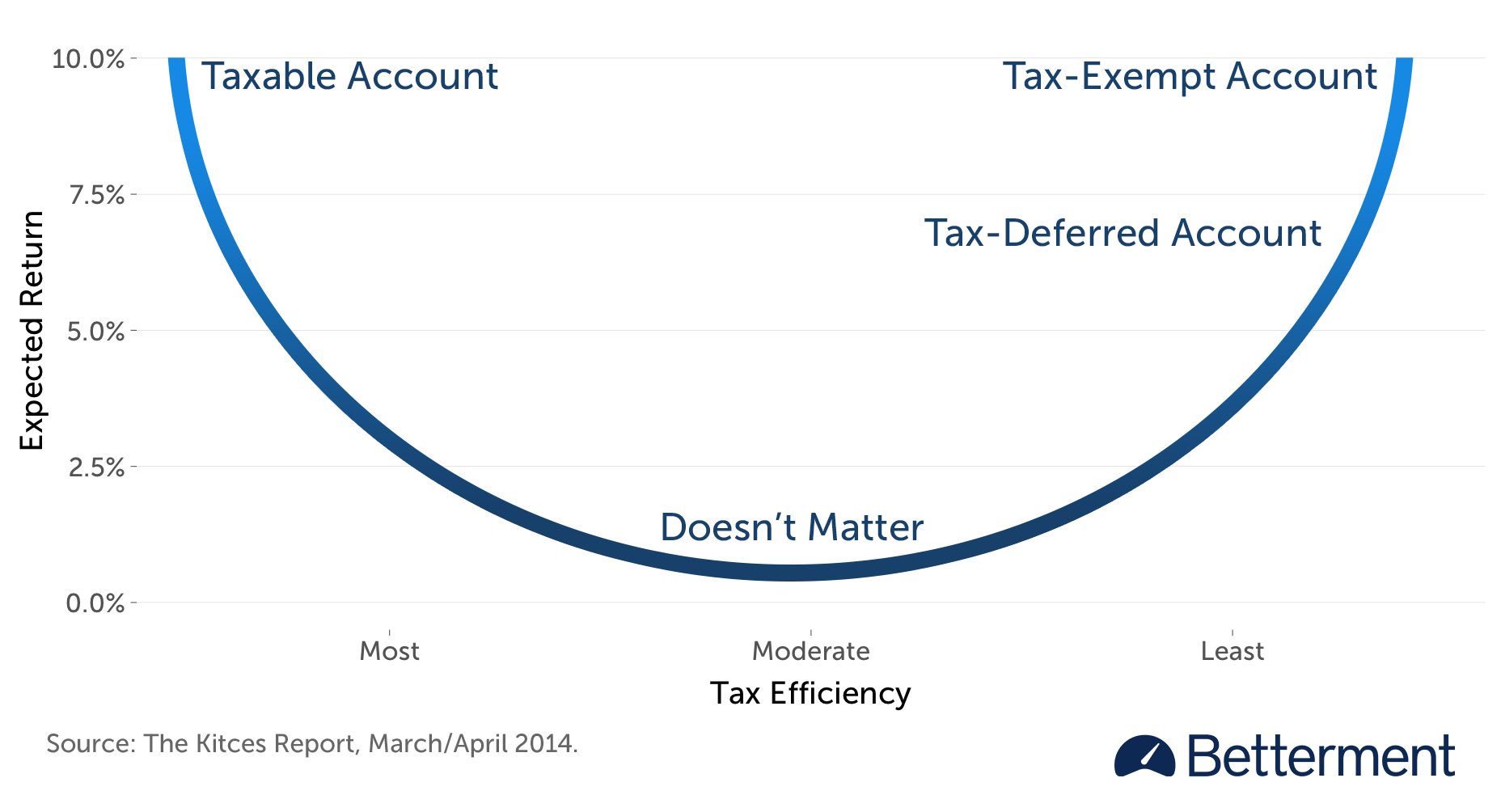
The intricate world of wealth management often seeks that elusive "free lunch," a concept that in this industry is most closely embodied by asset location. This sophisticated strategy, when implemented across at least two distinct account types—taxable, tax-deferred, and tax-exempt—offers a powerful mechanism to enhance after-tax returns without compromising the desired risk profile of an investment portfolio. At its core, asset location is about strategic placement: positioning less tax-efficient assets within the most tax-favorable accounts and, conversely, placing more tax-efficient assets in accounts that are taxed less favorably. This strategic orchestration ensures the overall asset allocation remains consistent while optimizing the net financial outcome for the investor.
The Nuances of Investment Taxation and Account Types
Navigating the complexities of investment taxation is a perennial challenge for investors. While the benefits of contributing to tax-advantaged accounts like IRAs and 401(k)s are widely recognized as a straightforward method to reduce the tax burden on retirement savings, the subsequent decision of what to invest in across these accounts often receives less attention. The differing tax treatments of taxable, traditional (tax-deferred), and Roth (tax-exempt) accounts significantly influence investment performance after taxes are considered. A well-executed asset location strategy can thus unlock substantial improvements in the net value of an investor’s savings.
The fundamental principle of asset location hinges on the differential tax efficiency of various investment vehicles and the varying degrees of tax shelter offered by different account types. By intelligently assigning assets to accounts, investors can effectively shelter returns from taxation, thereby increasing their after-tax yield. This strategy is universally applicable to investors holding multiple account types, offering a tangible benefit that is often overlooked.
Asset Allocation: The Foundation for Location Strategies
It is crucial to distinguish asset location from asset allocation. Asset allocation, the initial and foundational step, involves determining the optimal mix of asset classes—such as stocks and bonds—based on an investor’s goals, risk tolerance, and time horizon. For instance, a long-term retirement goal necessitates an asset allocation geared towards growth, typically involving a higher proportion of equities.

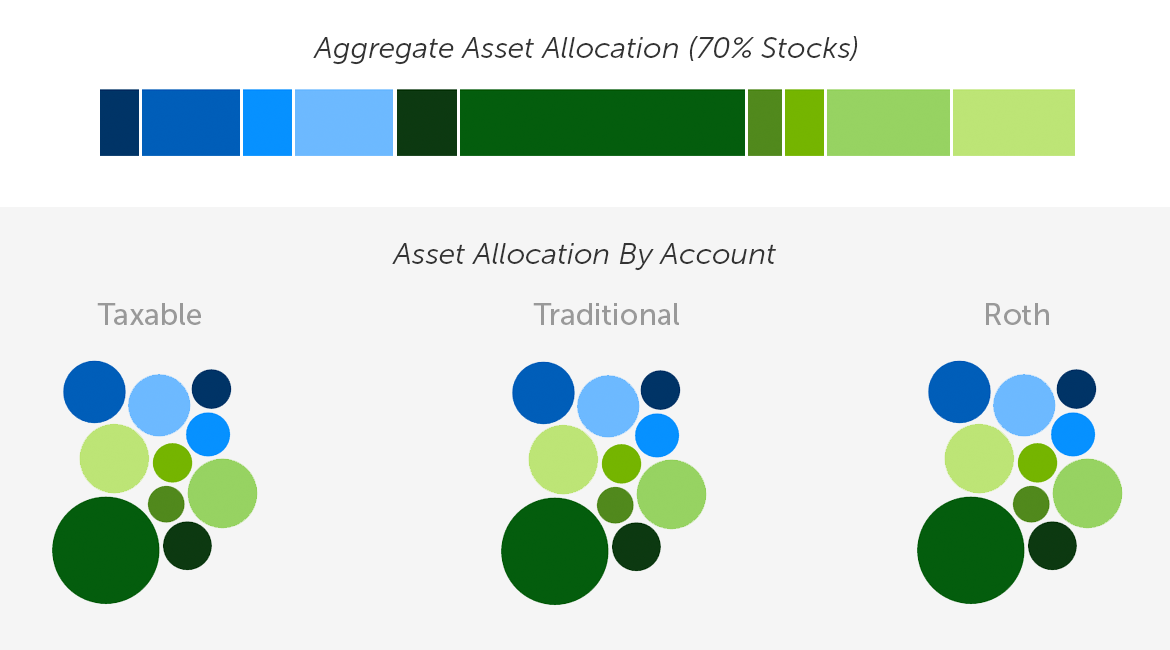
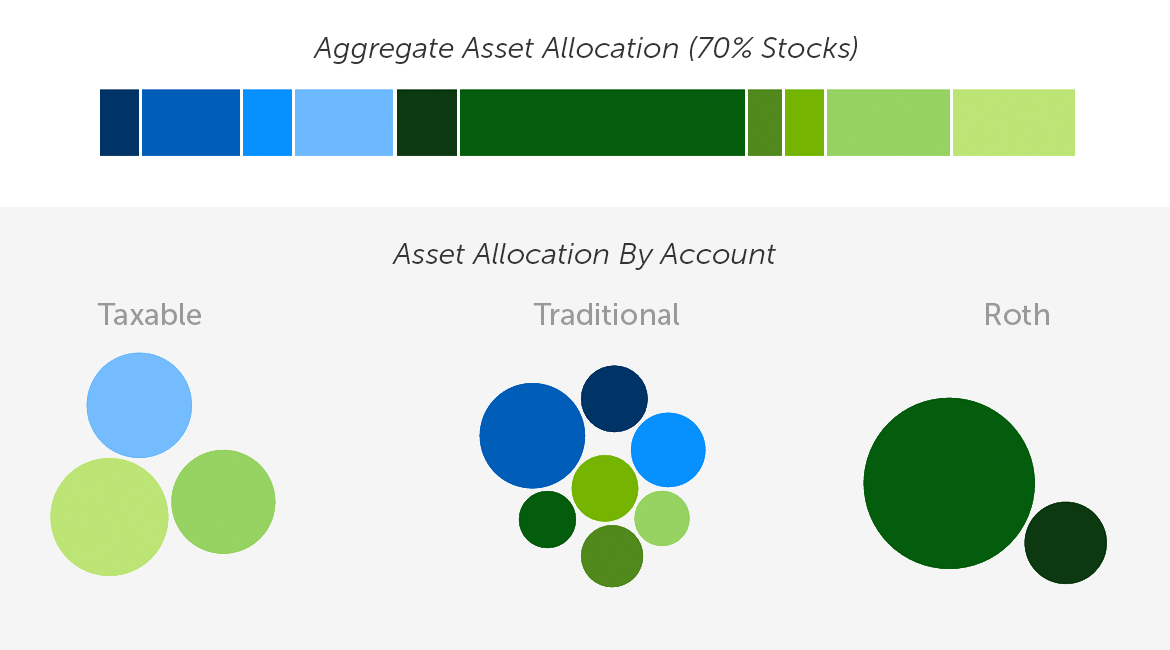
When an investor holds multiple accounts, a common pitfall is to replicate the desired asset allocation identically within each account. While this ensures the aggregate portfolio matches the target allocation, it forfeits the tax-optimization benefits of asset location. The true power of asset location emerges when assets are strategically distributed across accounts, rather than being uniformly allocated within each. This means that the aggregate portfolio’s desired asset mix is maintained, but the specific holdings within each account are adjusted to maximize tax efficiency.
For example, imagine an investor’s target asset allocation is 70% stocks and 30% bonds. Without asset location, each account might hold precisely 70% stocks and 30% bonds. With asset location, the overall 70/30 split is preserved, but the taxable account might hold a higher proportion of tax-efficient assets like municipal bonds, while tax-deferred or tax-exempt accounts might house less tax-efficient assets like high-dividend-paying stocks or taxable bonds.
Understanding "Tax Drag" and Tax Efficiency
A key concept in understanding asset location is "tax drag," which refers to the annual reduction in investment returns due to taxation. This drag is particularly pronounced for assets that generate income through dividends, as these are typically taxed in the year they are received in a taxable account. Tax-sheltered accounts, such as traditional IRAs and Roth IRAs, defer or eliminate this annual tax liability, thereby reducing tax drag.
Tax efficiency, a closely related term, describes assets that minimize this annual tax burden. Assets that generate most of their return through capital appreciation, particularly when held for longer than a year (long-term capital gains), are generally considered more tax-efficient than those that distribute frequent dividends or interest income. Understanding the tax treatment of different income streams—dividends, interest, and capital gains—is paramount.
In a taxable account, investment income falls into two main categories: dividends and capital gains. Dividends are typically taxed annually, either at ordinary income rates or preferential qualified dividend income (QDI) rates, depending on the nature of the stock. Capital gains are taxed only when an asset is sold. Long-term capital gains (assets held over a year) are taxed at preferential rates, while short-term capital gains (assets held for a year or less) are taxed at ordinary income rates. The timing of taxation—annual versus deferred—significantly impacts compounding returns. Tax deferral allows invested capital to grow unimpeded by taxes, leading to greater long-term wealth accumulation.
Differentiated Account Tax Treatment
Taxable Accounts: These accounts offer no upfront tax deduction, and investment income and capital gains are taxed annually or upon sale, respectively. The tax rates applied depend on whether the income is considered ordinary or qualified, and the holding period of the asset. For high earners, an additional 3.8% Net Investment Income Tax may apply.
Tax-Deferred Accounts (Traditional IRAs, 401(k)s): Contributions to these accounts are typically tax-deductible, and earnings grow tax-deferred. Taxes are paid upon withdrawal in retirement, usually at ordinary income tax rates. This deferral is a significant benefit, allowing for greater compounding over time. However, all distributions are eventually taxed, potentially at a higher rate than if the gains were realized in a taxable account and taxed at preferential capital gains rates.
Tax-Exempt Accounts (Roth IRAs, Roth 401(k)s): Contributions are made with after-tax dollars, but qualified withdrawals in retirement are entirely tax-free. This is the most tax-advantageous account type, as it eliminates all taxation on investment growth and income.
The "Target-Date Fund" Limitation
While target-date funds (TDFs) offer a simple "set it and forget it" approach to asset allocation, their inherent structure as a single, indivisible security prevents them from being strategically located across multiple accounts. This means TDFs, by their very nature, cannot deliver the additional after-tax returns achievable through asset location. Investors seeking to maximize their net returns while maintaining a hands-off approach may find a continuously managed portfolio that can straddle multiple accounts, akin to a "TDF 2.0," to be a more effective solution.
Debunking Asset Location Myths
Several common misconceptions surround asset location:
- Myth 1: Asset location is a one-time event. In reality, optimal asset location is a dynamic process. Factors such as changing market conditions, evolving tax laws, shifts in relative account balances due to contributions, rollovers, and conversions necessitate periodic adjustments to maintain tax efficiency.
- Myth 2: Asset location dictates contribution decisions. Asset location optimizes the placement of assets within existing accounts. It should not influence decisions about which accounts to fund. Contribution decisions should be based primarily on an individual’s current versus expected future tax rates.
- Myth 3: Asset location is ineffective with small accounts. While the impact might be less pronounced, even a small account can contribute to tax alpha. For instance, a small tax-exempt account can be a highly valuable location for tax-inefficient, high-growth assets, yielding disproportionate benefits.
- Myth 4: No value if only qualified accounts exist. Even with only traditional and Roth IRAs, asset location provides value. Placing higher-growth assets in the Roth (tax-exempt) account over the traditional (tax-deferred) account maximizes tax-free growth and can lead to lower required minimum distributions later in life.
- Myth 5: Bonds always belong in IRAs. This is an oversimplification. While bonds can be tax-inefficient due to interest income, their placement depends on a complex interplay of factors including expected returns, tax rates, and the availability of tax-exempt bond options in taxable accounts.
Advanced Asset Location Methodologies
Sophisticated approaches to asset location move beyond simple rules of thumb. One method involves maintaining separate, but coordinated, portfolios in each account. This strategy allows for tax-efficient substitutions, such as holding municipal bonds (federally tax-exempt) in taxable accounts and taxable bonds in qualified accounts.
More advanced models, like Betterment’s Tax-Coordinated Portfolio (TCP) feature, employ linear optimization to determine the precise allocation of each asset class across all available accounts. This methodology considers a multitude of variables, including expected returns, dividend yields, tax rates, and the relative balances of each account, to construct an objective function that maximizes the after-tax value of the entire portfolio. The output is a set of precise instructions for how much of each asset to hold in each account, ensuring the overall asset allocation is maintained while optimizing tax efficiency.
The TCP methodology relies on deriving account-specific after-tax returns for each asset. This involves calculating the total return (risk-free rate plus excess return), then adjusting it based on the tax treatment within each account type and the investor’s time horizon. This creates a complex optimization problem, solved mathematically to achieve the most favorable after-tax outcome.
Testing and Validation: The Monte Carlo Framework
To validate the effectiveness of sophisticated asset location strategies like TCP, rigorous testing is essential. Betterment employs a proprietary Monte Carlo simulation framework to model the long-term behavior of its TCP strategy. These simulations analyze portfolio performance down to the individual investment lot level, accounting for dividend reinvestment, rebalancing, and taxation.
The simulations compare the after-tax performance of a TCP-managed portfolio against a benchmark of uncoordinated portfolios. By running thousands of market scenarios, Betterment can estimate the incremental tax alpha—the additional after-tax return generated by TCP—under various market conditions and investor profiles. This robust testing provides empirical evidence of the strategy’s potential benefits.
Key Findings and Implications
Research and simulations consistently reveal that asset location can significantly enhance after-tax returns. The magnitude of this benefit is influenced by several factors:
- Asset Allocation: Portfolios with a higher allocation to tax-inefficient assets, such as bonds, tend to see a more dramatic improvement from asset location. This is because there is more "room" for optimization by moving these assets into tax-advantaged accounts. However, this does not negate the long-term growth potential of higher-equity allocations.
- Account Types: The presence of both taxable and tax-exempt accounts (like a Roth IRA) creates the most fertile ground for asset location strategies. The juxtaposition of highly taxed and completely untaxed accounts allows for the most aggressive "account arbitrage."
- Existing Taxable Accounts: For investors with existing taxable accounts that have already accrued capital gains, the immediate benefits of asset location might be tempered. TCP is designed to optimize as much as possible without realizing gains, but future contributions and rebalancing will progressively move the portfolio toward its optimal location.
Special Considerations and Limitations
While asset location offers substantial advantages, certain investor profiles and circumstances require careful consideration:
- Low Tax Bracket Taxpayers: Individuals in very low marginal tax brackets may not benefit significantly from traditional asset location strategies, as the tax arbitrage opportunities are diminished.
- Mismatched Time Horizons: Coordinating accounts with materially different intended withdrawal times (e.g., short-term savings versus long-term retirement) is not recommended, as it can lead to suboptimal asset allocation within individual accounts.
- Large Upcoming Transfers/Withdrawals: Significant account transfers or withdrawals can necessitate rebalancing, potentially triggering taxes. It may be prudent to delay enabling tax coordination until after such events.
- Behavioral Challenges: The differentiated volatility of assets across accounts can sometimes create behavioral challenges for investors, even if the overall portfolio allocation remains consistent.
Furthermore, the interaction between asset location and other tax-loss harvesting strategies is designed to be complementary. While asset location optimizes the placement of assets across all accounts, tax-loss harvesting focuses on realizing losses in taxable accounts to offset gains. The two strategies work in tandem, with asset location establishing the optimal asset mix for each account, and tax-loss harvesting then seeking tax efficiencies within the taxable component.
In conclusion, asset location is a powerful and often underutilized strategy for enhancing investment outcomes. By strategically placing assets across taxable, tax-deferred, and tax-exempt accounts, investors can significantly improve their after-tax returns, making it a cornerstone of sophisticated wealth management. As with any complex financial strategy, consulting with a qualified tax advisor is recommended to ensure it aligns with individual circumstances and goals.