The sudden loss of employment, a severe automobile collision, or an unexpected medical emergency can instantly shatter the fragile equilibrium of household finances. For the vast majority of individuals, the immediate shock of a crisis is rapidly compounded by a secondary, pervasive dread: the crushing anxiety of how to pay upcoming bills. Recent data underscores a sobering economic reality across the United States, revealing that financial fragility remains a pervasive baseline for millions of households. According to comprehensive findings from a recent Bankrate emergency savings report, only three in ten Americans possess enough liquid savings to comfortably cover a major unforeseen expense without going into debt or disrupting their long-term financial trajectory.
This stark vulnerability highlights a systemic challenge within personal finance. When an unexpected crisis strikes, individuals without a financial safety net are frequently forced into high-interest debt, such as maxing out credit cards or taking out predatory personal loans, or they must backtrack on vital, long-term money goals like retirement contributions and homeownership funds. Conversely, establishing a dedicated emergency fund does not merely prevent financial backtracking; it acts as a crucial psychological buffer, granting individuals one less thing to worry about during deeply trying times. To bridge this gap between vulnerability and security, financial experts and automated wealth management platforms increasingly advocate for a systematic, three-step approach to calculating, saving, and housing emergency reserves.
Understanding the Macroeconomic Backdrop of Modern Financial Insecurity
To fully comprehend why emergency savings remain exceptionally low across the United States, one must examine the broader macroeconomic conditions that have defined the past decade. Persistent inflationary pressures, elevated interest rates, and the lingering economic scars of global supply chain disruptions have severely strained household budgets. Even as employment figures fluctuate and wage growth attempts to keep pace with the rising cost of living, the average consumer’s capacity to accumulate discretionary savings has steadily eroded.
Historically, financial advisors have warned that systemic economic shocks disproportionately affect middle- and lower-income earners, yet recent surveys indicate that even segments of the population earning comfortable six-figure salaries live remarkably close to the financial edge. The rising costs of housing, healthcare, and higher education have fundamentally shifted the definition of financial stability. Consequently, when an unexpected life event occurs—be it a sudden corporate layoff in a volatile tech sector or an emergency room visit resulting in thousands of dollars in out-of-pocket medical expenses—the lack of cash reserves transforms a manageable hurdle into a full-scale financial emergency.
Financial sociologists and economists point out that the cultural shift away from traditional pension systems and toward defined-contribution plans has further placed the burden of risk management entirely onto the individual. In an era where corporate safety nets have largely vanished, personal liquidity is the ultimate defense against structural economic volatility. This reality has elevated the conversation surrounding emergency savings from basic personal budgeting advice to a critical matter of public financial health.
Step One: Tallying Monthly Living Expenses and Leveraging Modern Estimation Tools
The foundational challenge of building an emergency fund often begins with a seemingly simple question: Exactly how much money is required to sustain your household each month? Arriving at an accurate figure is rarely straightforward. Modern consumers typically juggle dozens of recurring expenses that fall into several broad, fluctuating categories, including housing costs, utility bills, transportation expenses, grocery budgets, insurance premiums, and minimum debt service payments.
Historically, calculating this figure required meticulous manual accounting—pulling months of bank statements, categorizing credit card receipts, and attempting to average out irregular expenditures. However, modern financial technology has radically streamlined this process. Platforms such as Betterment have integrated automated estimation features directly into their user onboarding flows. When a user creates an emergency fund goal within the application, the system can automatically estimate average monthly living expenses based on core data points extracted from the user’s broader financial profile.
While automated tools provide an invaluable shortcut for individuals intimidated by manual accounting, consumers retain the absolute freedom to input their own customized dollar figures. Financial planners universally emphasize that while precision is helpful, perfectionism should never become a barrier to action. The primary objective is to establish a realistic baseline of mandatory monthly outflows so that subsequent savings targets can be anchored in objective reality rather than vague guesswork.
Step Two: Determining the Ideal Timeline and Tailoring Your Savings Horizon
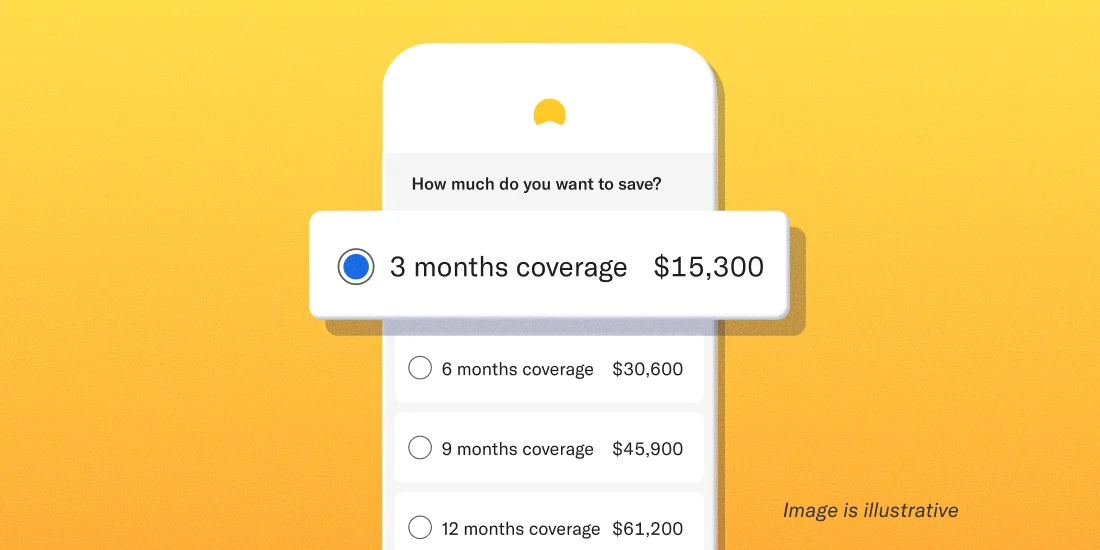
Once a reliable monthly expense baseline has been established, the next critical decision involves determining how many months of coverage are necessary to ensure genuine peace of mind. Standard financial consensus generally recommends maintaining a minimum of three months’ worth of essential living expenses in reserve. However, a rigid, one-size-fits-all approach rarely serves the diverse needs of the modern workforce.
Several distinct life scenarios warrant expanding an emergency fund beyond the standard three-month threshold:
- Job Market Volatility: Professionals working in industries prone to cyclical layoffs, such as technology, media, or contract-based fields, often benefit from a six-to-nine-month cushion to account for extended job searches.
- Health and Medical Status: Individuals with chronic health conditions or those navigating family planning frequently require larger liquid reserves to manage unpredictable out-of-pocket medical costs.
- Dependents and Sole-Earner Status: Households relying on a single income or supporting multiple dependents face higher systemic risk, making a larger cash buffer practically essential for psychological well-being.
Ultimately, the correct target amount comes down to individual risk tolerance—the precise financial cushion that enables a person to sleep soundly at night. Bankrate’s comprehensive survey data highlights this psychological diversity, revealing that nearly one-third of respondents believe a total of six months or more of living expenses is the absolute minimum required to feel secure.
To transform these sizable targets into manageable daily actions, modern financial platforms utilize predictive modeling. Once a user selects their target amount, algorithms can suggest tailored monthly recurring deposits designed to bridge the gap steadily over time. Many automated wealth managers project a four-year balance trajectory, factoring in initial deposits, scheduled recurring contributions, expected asset returns, and portfolio volatility.
Four years is widely considered a realistic, sustainable timeframe for accumulating three to six months of living expenses through disciplined, automated recurring deposits. If a saver manages to reach their target ahead of schedule, they are immediately positioned to pivot their capital toward other vital financial aspirations, such as maximizing retirement accounts, saving for higher education, or purchasing real estate.
Step Three: Strategic Placement—Choosing Where to House Your Emergency Fund
Determining how much to save is only half the battle; deciding where to store those vital funds is equally critical. Financial experts generally recommend housing an emergency fund in one of two distinct vehicles, depending entirely on an individual’s personal comfort with risk: a low-risk, high-yield cash account or a bond-heavy conservative investing account.
The primary advantage of a high-yield cash account is absolute capital preservation paired with immediate liquidity. These accounts, often provided through specialized brokerage platforms partnering with network banks (and thus backed by Federal Deposit Insurance Corporation protection up to statutory limits), allow savers to earn competitive interest rates on their liquid cash without exposing their principal to the volatile fluctuations of the stock market. For risk-averse savers who experience acute anxiety at the mere thought of seeing their account balances dip—even temporarily—a high-yield cash reserve is the optimal choice.
Conversely, individuals with a higher risk tolerance or those fighting the eroding purchasing power of long-term inflation may opt for a conservative, bond-heavy investing portfolio. While these accounts introduce a degree of market risk and the potential for short-term value fluctuations, they historically offer the potential for higher long-term yields compared to traditional savings vehicles.
Crucially, consumers are not forced into an exclusive binary choice. A popular and effective strategy involves a hybrid approach: splitting the emergency fund between a high-yield cash account for immediate, zero-risk accessibility and a conservative bond portfolio for growth. As financial advisors frequently emphasize, there is no single wrong answer; the ultimate test of a proper placement is whether it allows the account holder to navigate market turbulence without panicking.
The Broader Economic Implications and the Dynamic Nature of Financial Security
Financial health is not a static destination, and emergency funds naturally ebb and flow over the course of a lifetime. Economic conditions shift, career paths evolve, and family dynamics change. Over the years, an individual’s baseline monthly expenses will inevitably increase or decrease. Unforeseen life events will occasionally force savers to draw down their reserves, requiring subsequent phases of rebuilding. Alternatively, a growing sense of security or shifting personal responsibilities might reveal the need to expand one’s target savings threshold.
To maintain optimal financial fitness, experts recommend establishing a periodic review cadence. Re-evaluating one’s emergency fund numbers at least once a year—or immediately following major life milestones such as securing a salary raise, purchasing a home, welcoming a child, or undergoing a major career transition—ensures that the financial safety net remains accurately calibrated to current realities.
Ultimately, approaching emergency savings as a dynamic, evolving process rather than a rigid, one-time chore empowers individuals to navigate economic uncertainty with confidence. By systematically calculating expenses, tailoring savings horizons to individual risk profiles, and strategically placing funds in vehicles that balance growth with security, households can transform vulnerability into resilience, resting easy in the knowledge that they are actively conquering one of the most fundamental and vital challenges in personal finance.