In the contemporary landscape of digital finance, the difference between mediocre and superior investment performance often rests on tax efficiency rather than mere market timing. As tax codes grow increasingly complex and market volatility remains a constant variable, financial technology firms are deploying sophisticated software to bridge the gap between gross returns and the amount an investor actually retains. Wealthfront, a prominent player in the automated investment sector, has formalized a suite of tax-minimization strategies designed to systematically reduce the fiscal burden on retail and high-net-worth investors, effectively turning tax management into a core component of portfolio growth.
The mechanism at the heart of this approach is automated tax-loss harvesting (TLH), a process that Chief Investment Officer Burt Malkiel has famously dubbed the "crown jewel" of modern tax management. By leveraging algorithms to monitor portfolios in real-time, firms can identify assets that have dipped below their purchase price and execute sales to realize losses. These losses are then used to offset capital gains, significantly reducing the investor’s annual tax liability.
The Evolution of Tax-Loss Harvesting
Historically, tax-loss harvesting was a luxury reserved for the ultra-wealthy, often managed by boutique financial firms that charged significant premiums for manual oversight. The barrier to entry was high, and the process was typically relegated to an annual or semi-annual review. Wealthfront’s shift toward daily, software-driven monitoring represents a fundamental change in how retail investors engage with the markets.
The efficacy of this automated model was starkly demonstrated during the market turbulence of April 2025. Following the abrupt announcement of new international trade tariffs, global markets experienced a sharp, albeit short-lived, decline. While human advisors might have taken days or weeks to coordinate a comprehensive tax-loss harvesting strategy for their client base, Wealthfront’s automated systems identified and captured over $100 million in losses across its platform in just three market days. This rapid response underscores the primary advantage of machine-driven finance: the ability to process thousands of accounts simultaneously, reacting to market volatility with a speed that manual oversight simply cannot match.
Direct Indexing and the Granularity of Tax Savings
While traditional ETFs (Exchange-Traded Funds) provide a vehicle for diversified investment, they are limited by their structural nature. Investors who hold an index fund hold a bundle of stocks, meaning that individual losses within that index cannot be "harvested" individually. Wealthfront’s introduction of direct indexing addresses this limitation by allowing investors to hold individual stocks that comprise a specific index, such as the S&P 500 or the Nasdaq-100.
By holding the underlying securities, the system can harvest losses at the individual stock level, even when the broader index is performing well. Because individual equities tend to exhibit higher volatility than the indices they compose, the opportunities for tax-loss harvesting are statistically higher in a direct indexing portfolio. This granularity is particularly valuable for investors with significant capital gains from other sources, such as company-provided Restricted Stock Units (RSUs) or the sale of real estate assets, who need to offset those gains to keep their tax bill manageable.
Current platform data suggests that these products are becoming a standard requirement for tax-conscious portfolios. With minimum account thresholds as low as $5,000 for specific index-tracking products, the firm has democratized a strategy that was once the exclusive domain of institutional investors.
Strategic Portfolio Allocation and Tax-Aware Rebalancing
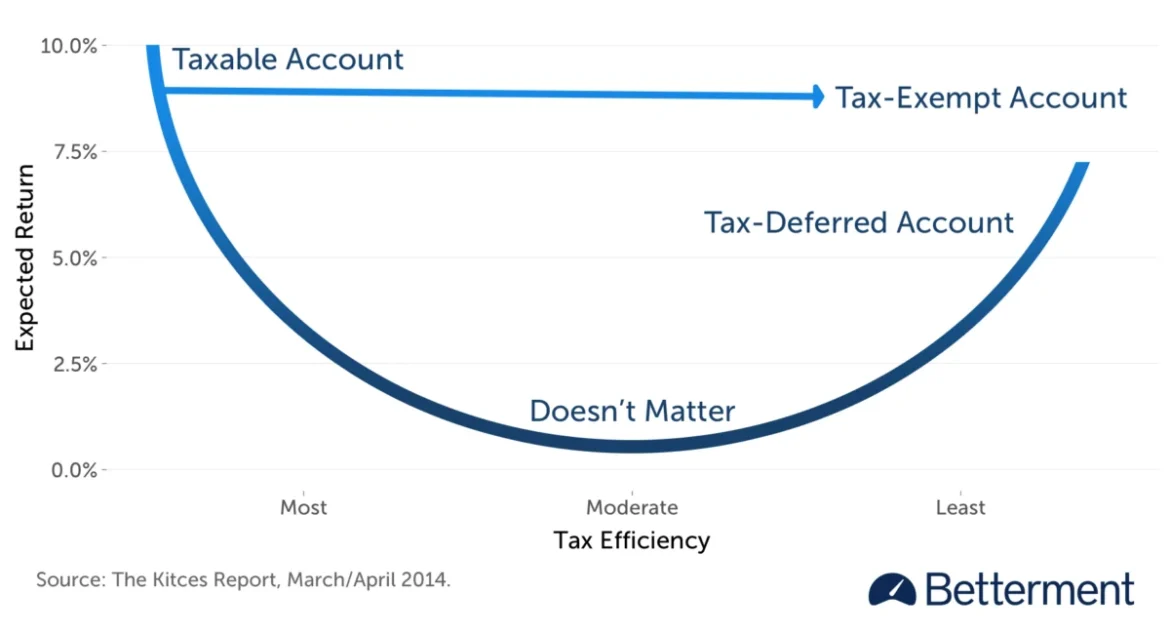
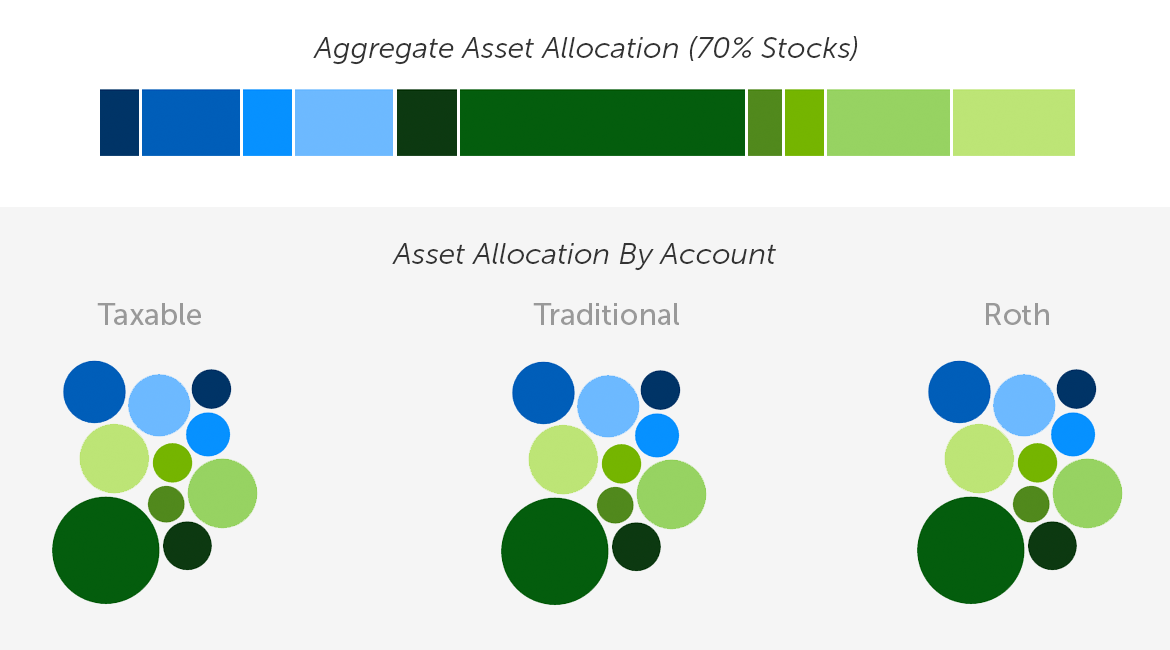
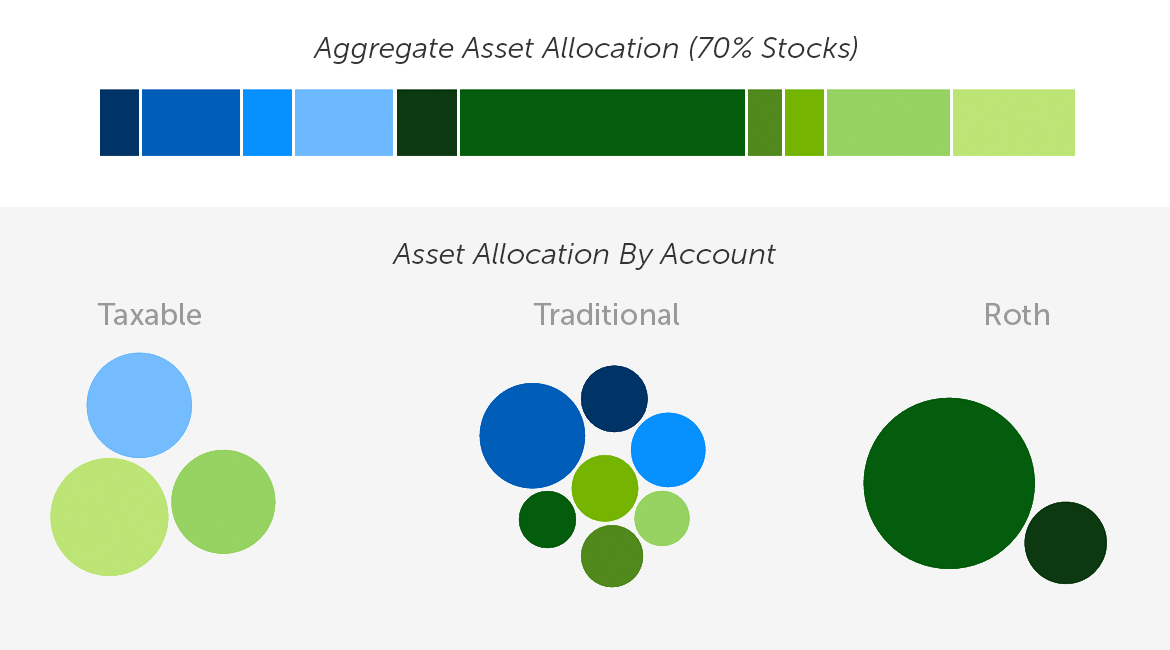
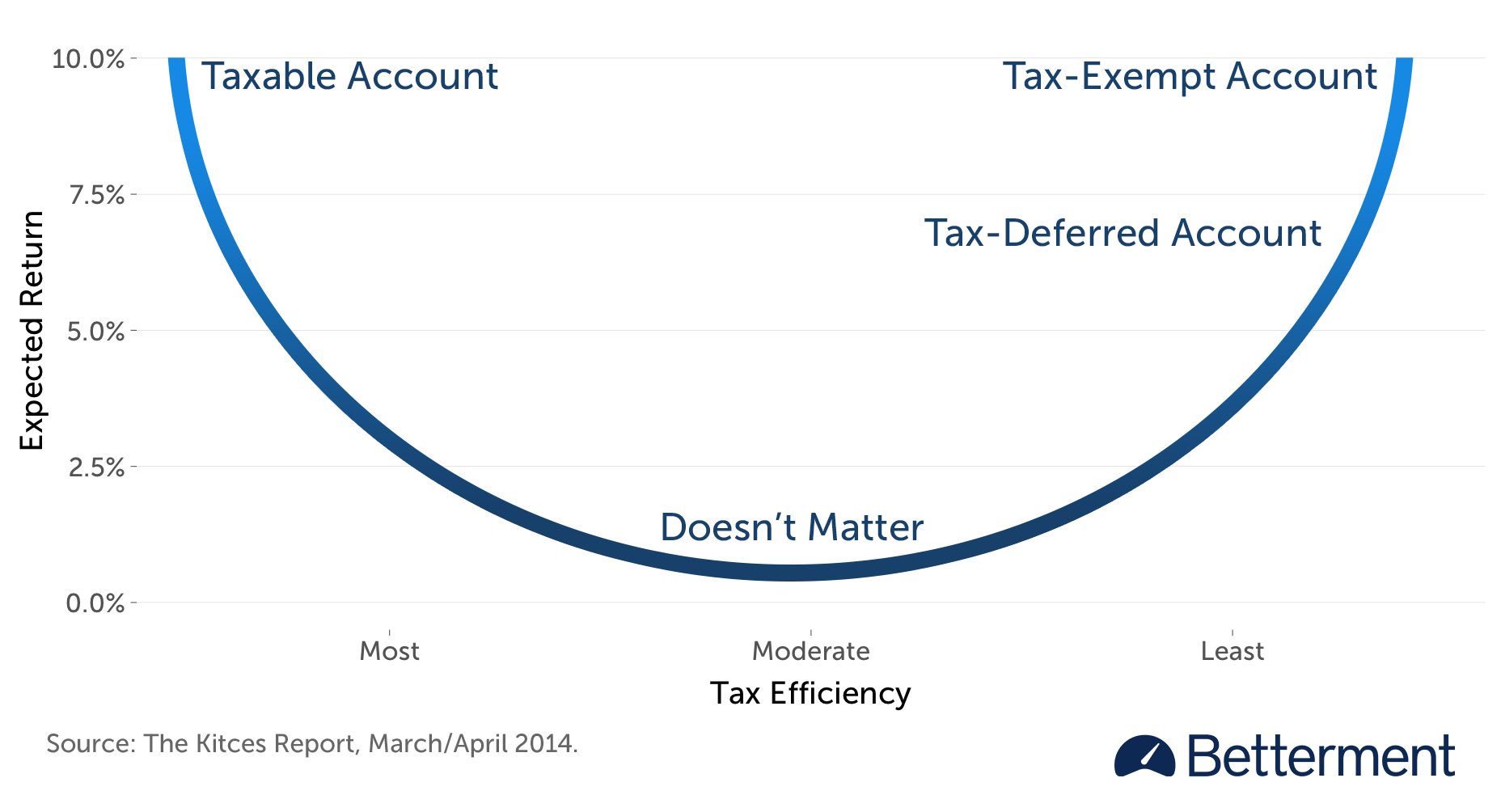
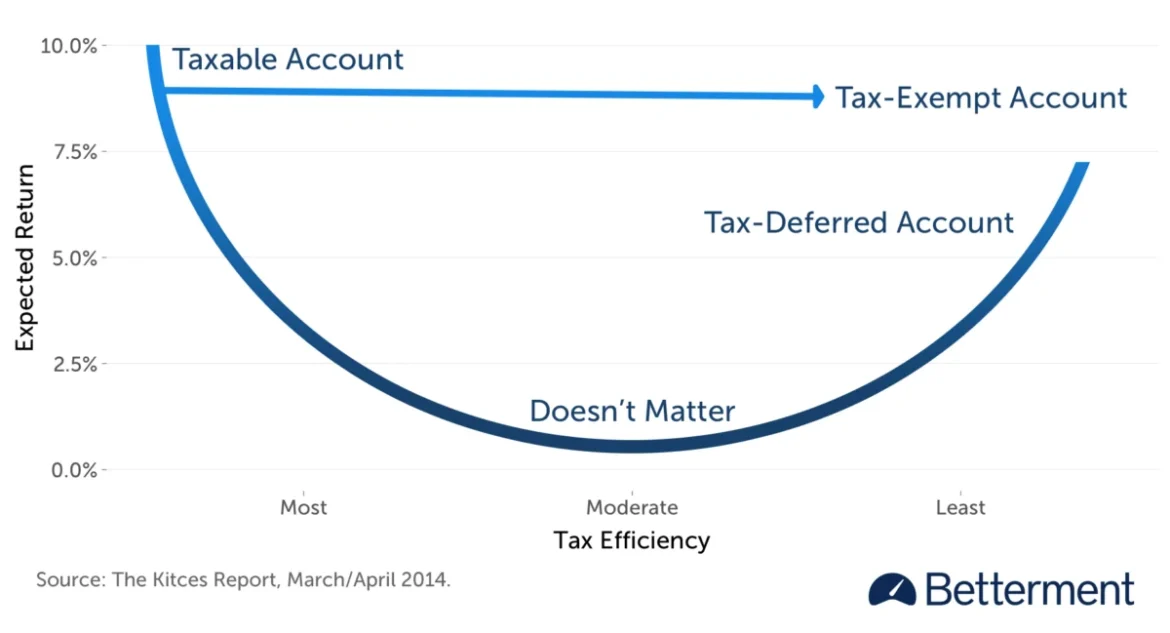
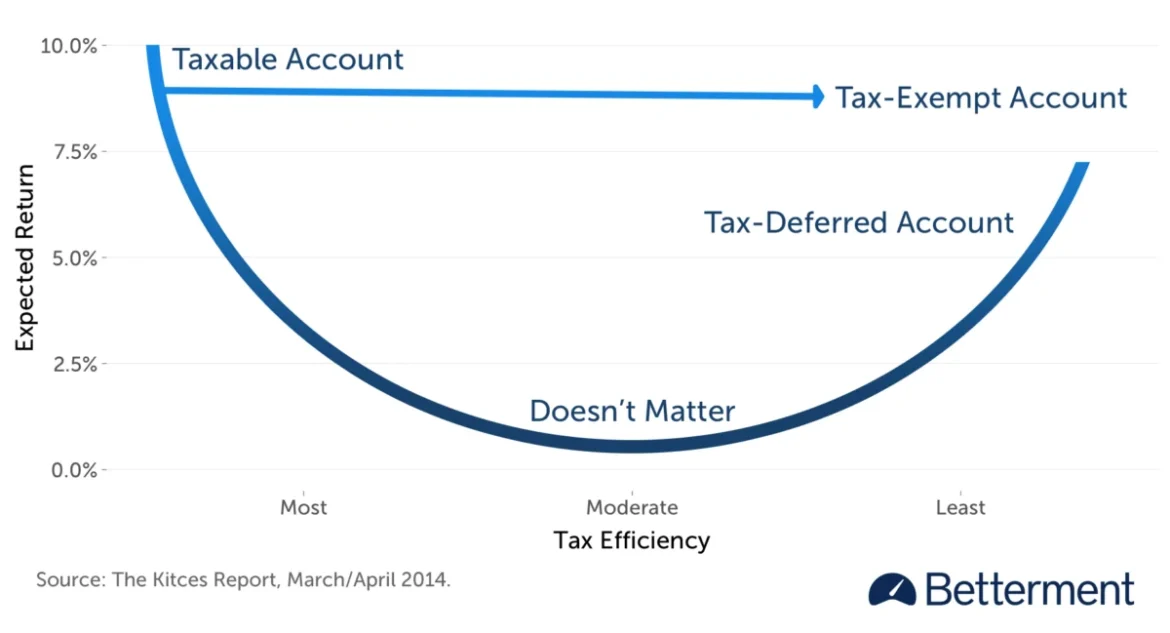
Beyond harvesting losses, tax efficiency is deeply embedded in the initial design of a portfolio. Different asset classes are subject to varying tax treatments, and a "one-size-fits-all" allocation can lead to unnecessary fiscal leakage. For instance, interest earned from municipal bonds is generally exempt from federal and, in some cases, state income taxes. Recognizing this, wealth management platforms have begun offering region-specific portfolios. For residents of high-tax states like California, the integration of state-specific municipal bond ETFs can prevent thousands of dollars in annual tax erosion.

Furthermore, the process of portfolio rebalancing—the act of selling outperforming assets to buy underperforming ones to maintain a target risk level—is inherently taxable. Traditionally, rebalancing requires selling securities, which can trigger capital gains taxes. Modern automated platforms now prioritize the use of dividends and new deposits to fund these rebalances. By utilizing cash inflows to purchase underweight assets, the firm avoids the need to sell assets, thereby deferring capital gains taxes indefinitely. This "tax-efficient rebalancing" is a silent contributor to long-term wealth compounding.
Bridging the Gap: Portfolio Lines of Credit
A common tax mistake involves selling long-term, high-growth investments simply to cover a sudden, short-term liquidity need. When an investor sells an asset that has appreciated significantly, they trigger a taxable event that can be avoided if they choose alternative financing methods.
To combat this, the firm provides a Portfolio Line of Credit. By allowing investors to borrow against their existing portfolio—typically up to 30% of the account value—the platform enables the user to access liquidity for expenses, such as a tax bill or home down payment, without liquidating their holdings. While the loan accrues interest, it prevents the immediate "tax hit" that would result from selling, potentially allowing the investor to hold onto their assets and continue benefiting from market appreciation. This strategy is particularly effective for high-earners who expect to replenish their cash flow in the short term.
The Role of Automated Bond Ladders
In an era of fluctuating interest rates, cash management has become a critical component of total return. Investors holding cash in traditional savings accounts often face high tax rates on the interest earned. Automated bond ladders, which consist of a series of US Treasury bonds with staggered maturity dates, offer a tax-advantaged alternative. Because Treasury interest is exempt from state and local taxes, these instruments often yield a higher after-tax return than many commercial savings vehicles. Automating the construction and reinvestment of these ladders removes the administrative burden, allowing investors to capture these tax benefits without the manual effort of monitoring maturity dates and bond auctions.
Broader Implications for the Financial Industry
The cumulative impact of these strategies is significant. Since the inception of its tax-loss harvesting program in 2012, Wealthfront estimates it has generated approximately $1.27 billion in total tax savings for its client base. While individual results vary based on market conditions, income levels, and state of residence, the aggregate figure highlights a shift in consumer expectations: investors are no longer content with "set it and forget it" portfolios. They are increasingly demanding that their financial service providers actively manage their fiscal footprint.
The implications for the wider financial industry are profound. Traditional brokerage firms and wealth managers are under increasing pressure to integrate tax-minimization software into their standard offerings. The era of the "passive advisor" is rapidly closing, replaced by a model where the advisor—or the algorithm—must act as an active guardian of the client’s after-tax wealth.
However, these strategies are not without risk. Tax-loss harvesting, for instance, can introduce "tracking error," where the portfolio’s performance deviates from the target index as the system sells and replaces assets. Additionally, high levels of trading activity can potentially lead to "wash sales," where an investor buys a substantially identical security shortly after selling one at a loss, disqualifying the loss for tax purposes. These complexities are why the industry emphasizes that these tools are not a substitute for professional tax advice but rather a powerful adjunct to it.
As software continues to integrate deeper into the financial lives of individuals, the focus on tax efficiency will likely remain a key differentiator. By automating the mundane, complex, and time-sensitive tasks of tax management, firms are providing investors with the opportunity to optimize their net returns, essentially providing a form of "alpha" that is not dependent on picking winning stocks, but on the disciplined, algorithmic protection of earned income. For the average investor, this represents a significant maturation of the market, moving the goalposts from simply trying to beat the market to the more pragmatic and effective goal of keeping more of what the market provides.