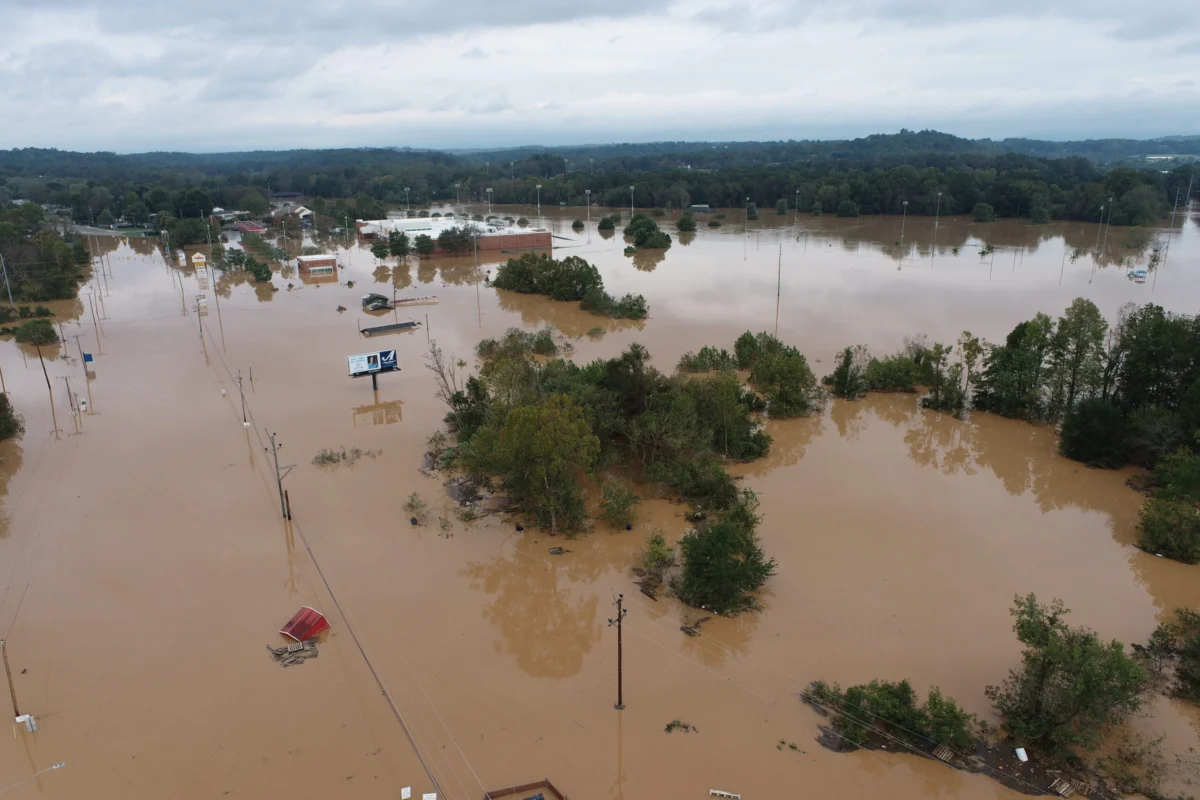
As the banking industry gathers to observe the Thanksgiving season, the spirit of community stewardship has taken center stage through the recognition of Aaron Slate, Senior Vice President and Market President at Truist Bank. Slate has been named the recipient of the 2026 American Bankers Association (ABA) Foundation’s George Bailey Distinguished Service Award, an honor that recognizes bankers who go above and beyond their professional duties to support the communities they serve. This year’s selection serves as a poignant reminder of the vital role financial institutions play in disaster recovery and resilience, specifically in the wake of the catastrophic Hurricane Helene, which decimated parts of western North Carolina in 2024.
The George Bailey Distinguished Service Award is named in honor of the fictional banker from the classic film "It’s a Wonderful Life," symbolizing the integrity, compassion, and community-focused nature of the profession. For Slate, the award highlights his leadership during one of the most challenging periods in the recent history of Asheville and the surrounding Appalachian region. His work during and after the storm exemplifies the modern banking mandate: moving beyond mere transactional services to serve as a pillar of stability when traditional systems fail.
The Anatomy of a Crisis: Hurricane Helene’s Impact on Western North Carolina
Hurricane Helene, which made landfall in late September 2024, brought unprecedented devastation to the inland mountains of North Carolina. Unlike coastal storms, where infrastructure is often built to withstand tropical systems, the mountainous topography of the region led to catastrophic flooding, landslides, and a total collapse of critical utility grids.
The physical destruction was staggering. Estimates from regional authorities and emergency management agencies indicated that hundreds of miles of roads were washed away or rendered impassable, isolating entire communities in the Blue Ridge Mountains. Power transmission lines were severed, leaving hundreds of thousands without electricity for weeks, while water infrastructure—crucial for both residential survival and commercial operations—suffered from widespread contamination and mechanical failure.
For the banking sector, the disaster presented a dual challenge: ensuring the safety of employees and their families while simultaneously maintaining the flow of capital in an economy where the primary industry, tourism, had come to a complete, sudden halt.
Truist’s Strategic Response: Mobilizing the $725 Million Truist Cares Program
When the storm subsided, the focus shifted from emergency survival to long-term economic stabilization. Aaron Slate, operating from the heart of the impacted area, became the primary architect of Truist Bank’s localized recovery effort. By leveraging the broader Truist Cares program—a massive corporate initiative backed by $725 million in resources—Slate was able to deploy tangible relief where it was needed most.
The response was multi-phased. In the immediate aftermath, the focus was on basic human necessities. Recognizing that traditional logistics were broken, Truist facilitated the delivery of potable water, food supplies, and hygiene kits. Perhaps most notably, the bank deployed mobile laundry and shower facilities to support first responders and displaced residents who were living without running water for an extended duration.
However, as a banker, Slate’s role extended into the economic recovery phase. The region’s tourism-heavy economy, which relies on the autumn leaf-peeping season, was obliterated by the timing of the storm. Slate worked closely with small business owners—many of whom had lost their physical storefronts—to navigate loan deferments, emergency lines of credit, and philanthropic grants. This financial triage prevented a localized liquidity crisis from turning into a long-term regional depression.
Chronology of the Recovery Effort
The timeline of the response underscores the difficulty of managing a disaster of this magnitude:

- Late September 2024: Hurricane Helene makes landfall, causing catastrophic flooding in western North Carolina. Asheville and surrounding towns are largely cut off from communication and supply chains.
- Early October 2024: Truist activates the emergency phase of the Truist Cares program. Aaron Slate begins coordinating on-the-ground volunteer efforts while assessing the damage to local branch locations and client assets.
- Mid-October 2024: The focus shifts to infrastructure repair and community stabilization. Mobile relief stations (laundry, showers) are deployed, and the bank begins processing emergency disaster loans to support small business payrolls.
- November 2024–2025: Long-term recovery planning begins. Slate engages in community forums to help design pathways for the tourism industry’s return, balancing the need for economic activity with the reality of rebuilding damaged tourist attractions.
- November 2026: The ABA Foundation announces Aaron Slate as the winner of the George Bailey Distinguished Service Award, citing his tireless dedication during the two-year recovery arc.
Analysis: The Role of Community Banking in Disaster Resilience
The recognition of Slate provides an opportunity to analyze the shifting expectations of the banking industry. Historically, commercial banks were viewed as neutral entities that provided capital. In the current environment, particularly in disaster-prone regions, they are increasingly viewed as essential infrastructure.
Data from the Federal Emergency Management Agency (FEMA) and various banking trade groups suggest that communities with active, engaged local bankers recover faster following natural disasters. The "banking-as-a-service" model during a crisis—where bankers act as financial navigators for displaced families and failing businesses—acts as a catalyst for federal and state relief programs.
Slate’s approach emphasized transparency and visibility. By being present in the community, he was able to provide real-time updates to bank leadership about which financial tools were effective and which were redundant. This feedback loop is essential for banks looking to refine their disaster-preparedness protocols.
Lessons for the Banking Industry
In his discussions regarding the recovery, Slate has emphasized several key takeaways for his peers in the banking sector. First, the importance of pre-disaster planning cannot be overstated. He advocates for banks to establish clear "disaster playbooks" that include pre-arranged agreements with third-party logistics providers to move supplies, as well as clear internal protocols for remote authentication of identity when digital banking tools are offline.
Second, he highlights the psychological aspect of disaster recovery. Financial stress is often a secondary trauma following the initial physical destruction of a home or business. Bankers who prioritize empathy and flexibility in their communication with clients during these times can significantly reduce the long-term impact on the community’s mental health and economic confidence.
Finally, Slate notes that regional market conditions dictate the type of response required. In Asheville, the reliance on tourism meant that recovery wasn’t just about rebuilding homes; it was about protecting the brand of the region as a viable, open destination. Bankers must understand the unique economic ecosystem of their markets to offer relevant advice and support.
The Broader Implications of the 2026 Award
The George Bailey Distinguished Service Award serves as a professional benchmark for the industry. As climate-related disasters continue to occur with increased frequency and intensity across the United States, the criteria for "distinguished service" are likely to evolve further. Bankers are increasingly expected to have a working knowledge of insurance claims, government grant programs, and public-private partnerships.
Aaron Slate’s work in North Carolina represents a model of success. By blending corporate resources with a deeply personal commitment to the community, he helped transform the bank from a place to deposit checks into a center for civic resilience. As the banking industry continues to navigate the complexities of the 21st century, the story of the recovery in western North Carolina will likely serve as a case study for future disaster mitigation and response.
The ABA Foundation’s selection of Slate is not merely a celebration of his individual efforts but a validation of the philosophy that, in times of crisis, the most effective financial institution is the one that views itself as an extension of the neighborhood it serves. As he continues his work in the region, the lessons learned during the aftermath of Hurricane Helene will undoubtedly shape the future of community banking for years to come.