The sudden arrival of a major financial disruption—such as a job termination, an automobile total loss, or an unexpected medical emergency—often triggers a cascade of secondary stress centered squarely on survival and debt accumulation. Beyond the immediate shock of the adverse event itself, individuals are frequently forced to confront the harsh reality of their liquid asset availability. Recent comprehensive data published by Bankrate highlights a persistent vulnerability across the United States economy: only three in ten Americans maintain a sufficient dedicated emergency savings fund to navigate unforeseen expenses without taking on high-interest debt or compromising long-term financial objectives.
Financial planners and economic analysts have long underscored the stabilizing power of an emergency reserve, noting that adequate liquidity acts as a crucial buffer against predatory lending and long-term financial regression. Yet, despite widespread acknowledgment of its importance, calculating the ideal target amount, determining the optimal holding vehicle, and establishing a disciplined accumulation strategy remain daunting tasks for a significant portion of the workforce. To address these structural hurdles, modern financial technology platforms and advisory services have introduced simplified, step-by-step methodologies designed to demystify the savings process and automate the path toward financial security.
Main Facts of Economic Vulnerability and Household Liquidity
Contemporary economic indicators reveal that household savings rates fluctuate wildly in response to inflation, wage growth, and macroeconomic volatility. According to consumer finance surveys conducted throughout the post-pandemic recovery period, a substantial majority of households live paycheck to paycheck, leaving them ill-equipped to absorb shocks exceeding several hundred dollars without external assistance. When an emergency strikes an unprepared individual, the immediate recourse is frequently high-interest credit cards, personal loans, or premature withdrawals from retirement accounts—all of which carry severe long-term penalties.
An emergency fund fundamentally alters this dynamic. By establishing a dedicated pool of capital explicitly reserved for critical, unforeseen contingencies, consumers can insulate their day-to-day budgets from sudden shocks. Furthermore, the psychological benefits of such a reserve are profound, alleviating the chronic anxiety associated with financial instability. Recognizing these challenges, automated financial management platforms have sought to streamline the three core pillars of emergency preparedness: calculating baseline expenses, establishing realistic target horizons, and selecting appropriate yield-generating storage vehicles.
Chronology and Evolution of Modern Savings Strategies
The approach to personal emergency preparedness has evolved significantly over the past several decades. Historically, financial literacy programs relied on rigid, generalized rules of thumb—such as the universally cited three-to-six-month expense rule—without providing actionable mechanisms for implementation. Consumers were left to manually audit bank statements, calculate monthly obligations, and navigate complex banking products to house their funds.
In recent years, the integration of algorithmic financial profiling has transformed how consumers approach this challenge. Rather than requiring hours of manual budgeting, modern digital wealth platforms can analyze a user’s income, spending patterns, and recurring obligations to estimate monthly living expenses automatically. This technological shift has shortened the timeline from financial goal conception to automated execution. By projecting multi-year savings trajectories based on expected yields and recurring deposits, these systems replace abstract goals with concrete, manageable milestones tailored to individual risk tolerances.
Supporting Data and Demographic Insights
Data from independent financial research institutions consistently underscores the disparity between recommended savings benchmarks and actual household balances. Bankrate’s comprehensive savings surveys indicate that while financial advisors universally recommend maintaining at least three to six months of essential living expenses, a remarkably small fraction of the population meets this threshold organically.
Demographic breakdowns within these surveys reveal stark contrasts across age groups and income brackets. Younger workers, burdened by student loan debt and entry-level compensation packages, report the lowest levels of emergency liquidity. Conversely, older demographics often possess higher balances but remain vulnerable to escalating healthcare costs. Notably, when asked about their ideal comfort zone, nearly one-third of survey respondents emphasize that a timeline of six months or more is necessary to achieve true peace of mind. This divergence between standard recommendations and consumer anxiety highlights the necessity of flexible, personalized savings targets rather than one-size-fits-all mandates.
Official Responses and Industry Perspectives from Financial Technologists
Financial advisors, consumer advocates, and wealth management executives have increasingly emphasized the intersection of behavioral psychology and automated finance. Industry leaders argue that traditional budgeting methods fail because they rely too heavily on continuous human willpower. By automating the allocation process—routing a predetermined percentage of income directly into a segregated reserve—savers can remove emotion from the equation.
Moreover, the debate surrounding where to house these emergency funds has prompted a significant evolution in product offerings. Financial institutions now compete aggressively on yield, offering high-yield cash accounts and specialized reserve portfolios that balance liquidity with modest growth. Representatives from digital advisory firms point out that while some consumers prefer the absolute capital preservation of FDIC-insured cash reserves, others are comfortable allocating a portion of their emergency fund to conservative, bond-heavy investment vehicles to outpace inflation. This dual-track approach reflects a broader industry consensus: the best emergency fund is one tailored to the individual’s specific psychological comfort with risk.
Broader Impact and Economic Implications on Household Stability
The implications of widespread household financial vulnerability extend far beyond individual stress; they represent a systemic risk to macroeconomic stability. When millions of households lack adequate emergency reserves, localized economic downturns, corporate layoffs, or inflationary spikes can rapidly translate into widespread consumer default, depressed retail spending, and heightened dependency on public assistance programs.
Conversely, robust household balance sheets enhance overall economic resilience. Consumers equipped with liquid emergency funds are better positioned to weather job transitions without catastrophic loss of housing or creditworthiness. This stability supports consistent consumer spending, reduces systemic financial sector risk, and fosters long-term wealth accumulation by preventing households from prematurely liquidating tax-advantaged retirement accounts during downturns.
Methodology for Establishing and Maintaining an Emergency Reserve
To effectively operationalize an emergency savings plan, financial experts recommend a structured, three-phase approach that integrates expense calculation, horizon planning, and asset allocation.
Step One: Quantifying Monthly Living Expenses
The foundational step in building an emergency reserve is determining baseline monthly expenditures. This requires categorizing spending into fixed obligations—such as housing, utilities, insurance, and debt service—and variable necessities like groceries and transportation. Because manual calculation can be cumbersome, automated financial tools can analyze historical transaction data to generate an accurate baseline estimate instantly. Savers are encouraged to use these data-driven shortcuts to bypass complex arithmetic and initiate the savings process promptly.
Step Two: Determining the Appropriate Savings Horizon
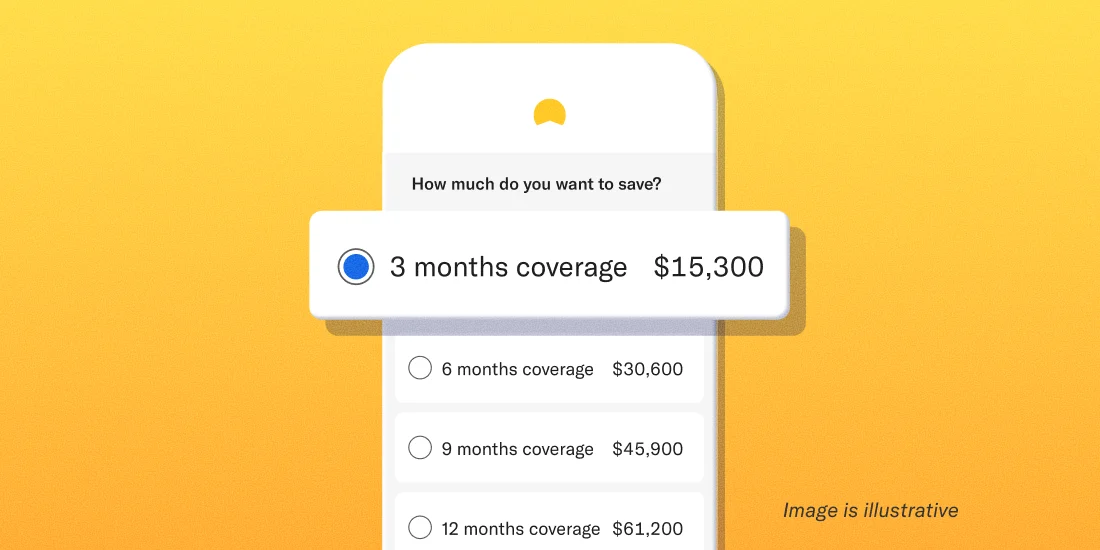
While standard guidelines suggest a minimum of three months of living expenses, the optimal target horizon varies based on individual circumstances. Factors that warrant a larger reserve—ranging from six to twelve months of expenses—include employment in volatile industries, single-income household structures, self-employment status, chronic health conditions, or dependents with specialized needs. Once a target figure is established, automated recurring deposits can be scheduled, with projection models mapping out multi-year trajectories to ensure realistic progress.
Step Three: Selecting the Optimal Holding Vehicle
The final consideration involves choosing where to store the accumulated capital. The primary objective of an emergency fund is immediate liquidity combined with capital preservation. Consequently, savers typically choose between two primary vehicles: low-risk, high-yield cash reserve accounts offering federal deposit insurance, or conservative, bond-heavy investment portfolios designed to generate modest returns while mitigating volatility. The ultimate choice depends entirely on individual risk tolerance; investors who experience anxiety over short-term market fluctuations generally gravitate toward cash equivalents, while others may choose a hybrid approach to balance growth and safety.
Ongoing Maintenance and the Dynamic Nature of Financial Goals
An emergency fund is not a static milestone to be achieved once and forgotten; it is a dynamic financial instrument that requires periodic reevaluation. As life circumstances evolve—through career promotions, geographic relocations, marriage, the purchase of real estate, or the arrival of children—baseline living expenses naturally fluctuate. Financial professionals recommend auditing emergency reserves annually, or immediately following significant life events, to ensure that the accumulated capital remains aligned with current household obligations. By maintaining a flexible, proactive approach to cash flow management, individuals can safeguard their financial autonomy and navigate economic uncertainties with confidence.