The enterprise software landscape underwent a significant transformation today as Salesforce officially completed its acquisition of Listen Labs, an emerging leader in artificial intelligence-driven market research and customer experience solutions. The strategic buyout brings an innovative, language-model-centric research platform into the tech giant’s expanding ecosystem, bridging a long-standing gap between static consumer data collection and real-time behavioral insights.
For decades, the global market research industry operated largely unchanged, functioning as a massive $100 billion services sector that remained virtually untouched by digital disruption. Traditionally reliant on manual methods—such as clipboard-wielding interviewers outside grocery stores or tedious online surveys that took up to a year to process—the industry stood ripe for transformation. Listen Labs answered that call by leveraging large language models (LLMs) to automate and elevate qualitative customer research, turning sporadic feedback loops into continuous, real-time interactive studies.
The Genesis of Listen Labs and Early Innovations
The foundation of Listen Labs was laid years prior to its acquisition, originating from a humble meeting at a tech hackathon where founders Alfred Wahlforss and Florian Juengermann first crossed paths with early investors. Recognized initially for their relentless work ethic—frequently remembered by peers as the reliable late-night contacts for anyone locked out of their shared coworking space—Wahlforss and Juengermann quickly translated their academic rigor from European coding competitions and Harvard graduate programs into commercial innovation.
In late 2022, following the watershed public release of foundational generative AI technologies, the founders recognized a rare market-technology fit. They observed that market research is built almost entirely on language—the fundamental mechanics of asking questions and interpreting qualitative answers. By utilizing LLMs to lead automated interviews and instantly synthesize unstructured responses, Listen Labs eliminated the friction of traditional surveys. Companies were no longer forced to wait twelve months for a traditional research report; instead, they could engage in continuous, automated dialogues with their customer base on a weekly or even daily basis.
Recognizing the immense potential of this approach, early venture capital backers led a seed funding round in 2023 before a fully realized product demo even existed. What began as a conceptual seed of an idea rapidly materialized into a high-utility enterprise tool.

Rapid Product Adoption and Scaled Growth
Securing an innovative technological concept is merely the initial hurdle in the lifecycle of an enterprise startup; execution dictates long-term survival. Listen Labs distinguished itself through relentless product craftsmanship, earning the praise of early enterprise users. Venture capital firm Sequoia Capital, which initially adopted the platform for internal peer feedback and partnership due diligence, watched the software spread organically across its internal network.
As Wahlforss and Juengermann transitioned from technical builders to effective enterprise evangelists, the startup’s client roster expanded rapidly. Within months of commercial deployment, industry heavyweights such as Google, Levi’s, and Microsoft integrated the platform into their customer feedback loops. This rapid market penetration inevitably attracted competitors, yet subsequent evaluations by institutional investors consistently positioned Listen Labs as the gold standard in the burgeoning AI-driven research space.
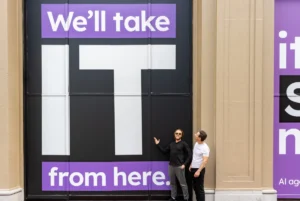
Fueling its expansion further, the company executed creative talent acquisition strategies, most notably a viral billboard coding challenge that cemented its reputation as a magnet for premier engineering talent. This momentum enabled the firm to secure subsequent Series A and Series B financing rounds, solidifying its market dominance before capturing the attention of enterprise software leader Salesforce.
Integration into the Salesforce Ecosystem
Under the terms of the acquisition, the Listen Labs team will integrate directly into Salesforce, bringing their specialized expertise in continuous customer dialogue to the corporation’s expansive product suites, including Marketing Cloud, Service Cloud, and the broader enterprise AI portfolio.
Industry analysts note that traditional customer relationship management (CRM) systems have historically excelled at tracking transactional data—such as purchase history, support ticket logs, and web traffic—while struggling to capture the qualitative "why" behind consumer behavior. By embedding Listen Labs’ conversational AI models into Salesforce, enterprise clients gain the capability to move beyond static data collection. The integration enables businesses to dynamically understand, analyze, and even simulate consumer responses, turning unstructured feedback into immediate, actionable operational strategies.

For consumers, this technological integration aims to foster more responsive brand interactions, ensuring that the products and services offered by major global enterprises are shaped by direct, continuous feedback rather than outdated annual focus groups.
Broader Industry Implications and Future Outlook
The acquisition of Listen Labs underscores a broader macro-trend across the technology sector: the rapid consolidation of specialized generative AI startups by legacy enterprise software giants. As enterprises increasingly demand turnkey AI solutions that integrate seamlessly into existing workflows, standalone point solutions face mounting pressure to scale within larger ecosystems.
For Salesforce, absorbing Listen Labs represents a calculated maneuver to outpace competitors in the race for advanced customer intelligence. By owning the conversational layer of market research, Salesforce positions itself not merely as a system of record for customer data, but as an active interpreter of consumer intent.
As Alfred Wahlforss, Florian Juengermann, and the core engineering team transition into their new roles at Salesforce, the transaction closes a pivotal chapter for the independent startup while opening a new frontier for AI-driven enterprise software. The long-term success of this integration will ultimately be measured by how effectively traditional CRM workflows can be transformed by real-time, language-based customer empathy on a global scale.