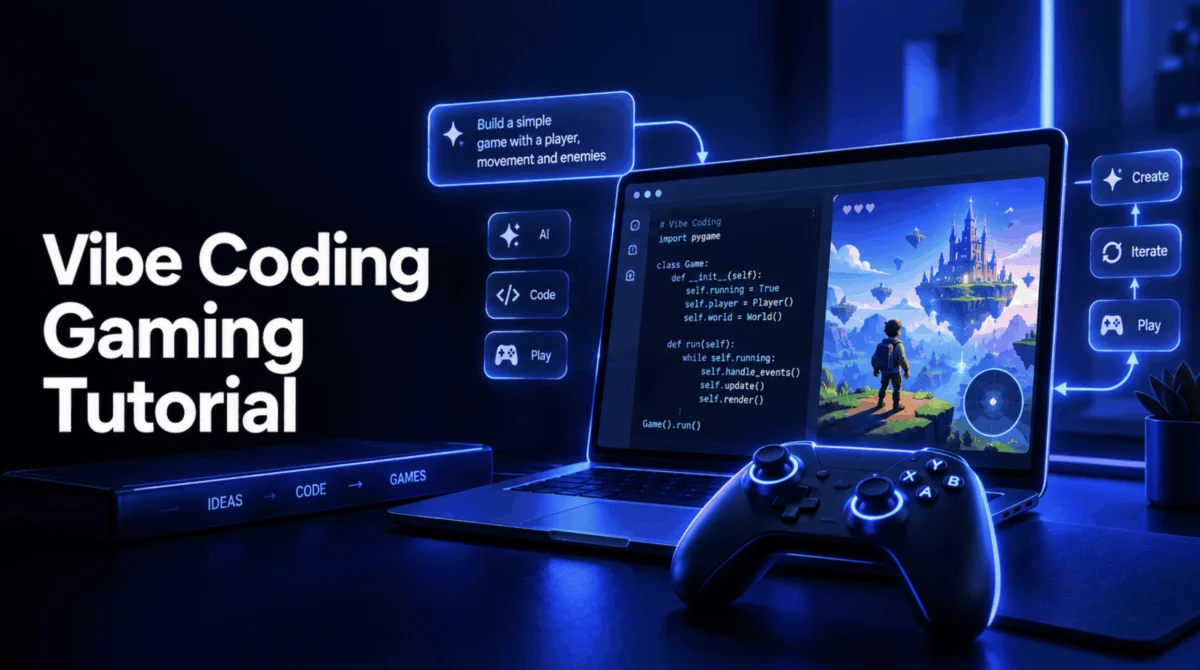
The software development landscape underwent a seismic shift in early 2025 when a new methodology, termed "vibe coding," moved from the fringes of niche developer discourse to the center of global engineering workflows. Coined by AI researcher Andrej Karpathy, the term describes a paradigm where developers transition from manual syntax production to high-level intent-based programming. In this workflow, a human architect describes desired outcomes in natural language, while sophisticated AI agents handle the recursive processes of code generation, execution, debugging, and iterative refinement. By the close of 2026, the term had become so deeply embedded in the lexicon of the tech industry that it was named the Word of the Year by the Collins English Dictionary, signaling its transition from a Silicon Valley novelty to a standard industrial practice.
The Chronology of an Industry Shift
The rise of vibe coding is inextricably linked to the rapid advancement of Large Language Models (LLMs) and their integration into Integrated Development Environments (IDEs). The evolution can be traced across a distinct timeline:
- 2023–2024 (The Assistive Era): Tools like GitHub Copilot established the baseline for AI-assisted coding, focusing primarily on autocomplete features and small-block suggestions. Developers remained firmly in control of the underlying logic, using AI as a productivity multiplier for repetitive tasks.
- Early 2025 (The Conceptual Pivot): Andrej Karpathy articulates the "vibe coding" philosophy. The focus shifts from typing individual lines to directing agents capable of reading entire codebases, managing cross-file dependencies, and executing terminal commands.
- Late 2025 (Standardization): Major enterprises begin adopting agentic workflows. Industry data indicates that AI is no longer merely helping to write code; it is managing significant portions of the application lifecycle.
- 2026 (Institutional Adoption): Corporations such as Airbnb announce that upwards of 60% of their new code is being generated by AI agents, confirming that the "vibe coding" workflow is now a cornerstone of enterprise-scale software engineering.
Understanding the Mechanics of Agentic Development
At its core, vibe coding represents a move toward declarative programming. Traditional software engineering required the developer to act as both the architect and the manual laborer, translating business logic into specific syntactical expressions. In a vibe coding environment, the developer functions as an editor and a systems verifier. The AI agent operates within a loop: it receives a natural language instruction, converts that intent into functional code, attempts to run the code, and utilizes feedback loops—such as error logs or test results—to self-correct.
This transition is not merely a change in convenience; it is a change in skill sets. Modern tools, including Claude Code, Cursor, and various Replit-integrated agents, possess the capability to perform "context-aware" edits. These agents can scan entire directories to ensure that a change made in one module does not negatively impact another, a feat that historically required significant manual overhead.
Case Study: The Retro-Arcade Build
To illustrate the practical application of this methodology, one can examine the construction of the classic arcade game Breakout. Originally conceptualized by Atari’s Nolan Bushnell and Steve Bristow in 1976, the game was famously engineered by Steve Wozniak, whose design was so optimized for chip count that it laid the foundational hardware logic for the Apple II.
Building a modern replica of Breakout serves as an ideal test for vibe coding because the requirements are well-defined: a canvas for rendering, paddle mechanics, ball physics, and state management for scores and lives. Using an AI assistant, the project follows a logical, modular progression:
- Skeleton Architecture: Establishing the DOM and the HTML5 canvas, ensuring the environment is prepared for rendering without adding complex logic.
- Input Handling: Implementing event listeners for user input, ensuring the paddle responds to user intent with smooth, frame-consistent movement.
- Physics and Collision: Developing the core math—velocity vectors for the ball and boundary-checking for the paddle and bricks.
- State Management: Implementing win and loss conditions, ensuring that the game loop accurately reflects the transition from an active state to a terminal state.
This project, which can be completed within a single file using no external frameworks, highlights that the efficacy of vibe coding relies on the developer’s ability to decompose complex problems into small, verifiable chunks. The most critical aspect of this process is not the generation of the code itself, but the rigorous verification of the resulting logic.
Data-Driven Implications for the Industry
The shift toward AI-generated software has sparked significant debate regarding the future of the workforce. Proponents argue that by automating the "boilerplate" aspects of programming, developers are freed to focus on high-level system design and creative problem-solving. Conversely, critics raise concerns regarding the "black box" nature of AI-generated code—if a system grows to a complexity level where a human cannot debug the generated output, the technical debt could become catastrophic.
However, the industry trend is clear. With major platforms reporting that the majority of new code is AI-assisted, the focus is shifting toward "AI-augmented verification." Organizations are increasingly investing in automated testing suites and observability tools to ensure that the AI agents operate within safe, predictable parameters. The consensus among lead engineers at major tech firms suggests that the role of the software developer is evolving into that of an "AI systems auditor."
The New Developer Competency
The mastery required for this new era of development is fundamentally different from the mastery of the previous two decades. While traditional syntax knowledge remains a foundation, the new competency is "algorithmic intuition." An engineer must possess the ability to:
- Decompose Problems: Break a complex system into atomic units that can be verified in isolation.
- Validate Assumptions: Recognize that an AI agent may write code that is syntactically correct but logically flawed, such as failing to implement a guard clause for a collision event.
- Maintain Oversight: Manage the integration of modular components, ensuring that the cumulative system behaves as intended.
As of late 2026, the ecosystem of tools supporting this work has reached a state of relative maturity. GitHub Pages and Netlify provide seamless deployment for static assets, while specialized platforms like itch.io have become hubs for the growing community of "vibe-coded" indie games.
Conclusion
Vibe coding has fundamentally altered the development lifecycle, moving the bottleneck from the act of writing code to the act of defining and verifying it. As tools continue to evolve, the distinction between a "programmer" and an "architect" will likely blur further. The successful engineer of the future will be the one who best understands the underlying logic of the software they build, not necessarily the one who writes the most lines of code. By prioritizing precision in intent and rigour in verification, developers can leverage AI to create complex, functional systems with a speed and efficiency that was, until very recently, entirely theoretical. The technology has arrived; the challenge now lies in the disciplined application of it to ensure that the software of tomorrow remains robust, maintainable, and reliable.