The rapid evolution of Large Language Models (LLMs) has transitioned AI from simple chatbots to autonomous agents capable of reasoning, utilizing external tools, and executing complex, multi-step workflows. Despite these advancements, a significant bottleneck remains: the "amnesia" inherent in standard LLM architectures. By default, most AI agents operate within a stateless environment, meaning that once a session concludes or a context window is cleared, the agent retains no record of previous user interactions, preferences, or historical data. This necessitates repetitive input from users, stifling productivity and limiting the potential for truly personalized, longitudinal assistance.
The integration of persistent memory systems represents a fundamental shift in how artificial intelligence interacts with human workflows. By decoupling memory from the immediate session context, developers are enabling agents to store, retrieve, and leverage historical context across indefinite timelines. This development is not merely a convenience; it is a critical requirement for building sophisticated AI agents that function as long-term collaborators in software development, project management, and personalized customer service.
The Mechanism of Persistent Agent Memory
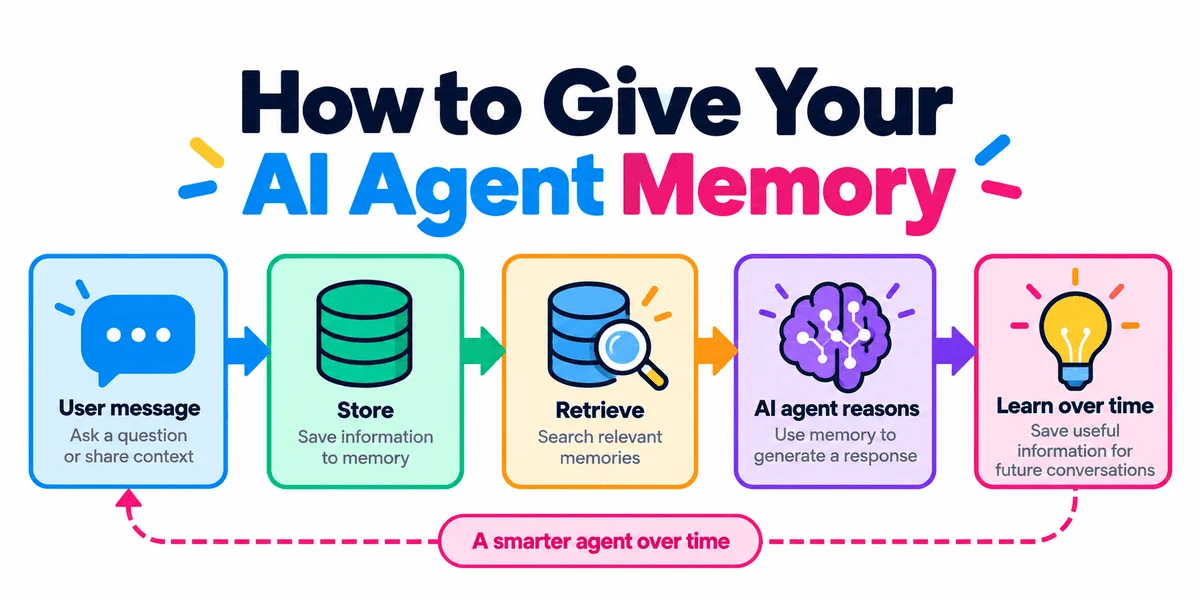
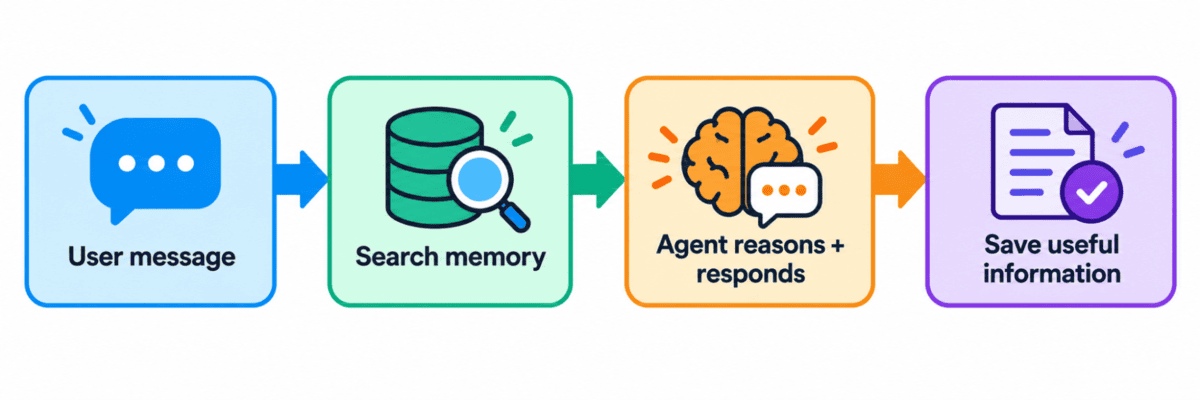
At its core, an AI memory system functions through a cyclical process: ingestion, semantic storage, retrieval, and contextual application. When a user transmits a message, the agent queries an external database—in this case, Mem0—to identify relevant historical data. Instead of flooding the agent’s prompt window with thousands of tokens of raw historical data, the system performs a semantic search to isolate only the information pertinent to the current request.
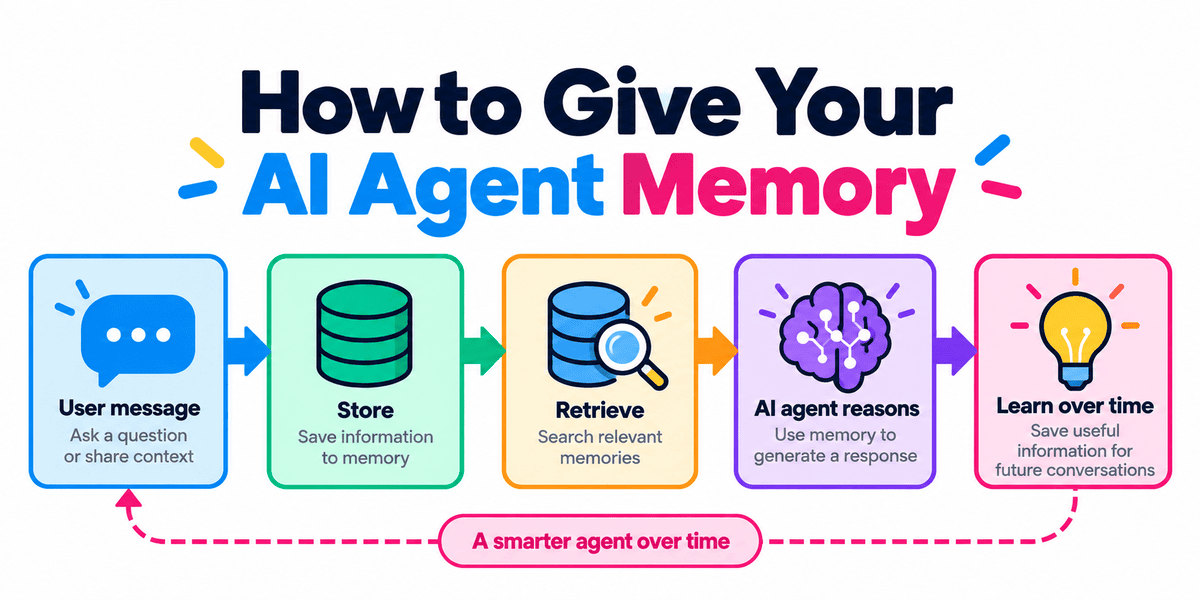
This approach addresses the "context window" constraint. By retrieving only high-relevance snippets, agents can maintain a lean prompt while still behaving as though they possess a deep, ongoing knowledge of the user’s preferences. This creates a stateful experience, effectively bridging the gap between isolated chat sessions and long-term intelligence.
Technical Implementation: Building the Foundation
Constructing a memory-enabled agent requires the synchronization of an agent framework with a specialized memory layer. In recent testing, the combination of the OpenAI Agents SDK and Mem0 has emerged as a robust standard for this implementation.
To initialize this architecture, developers must first establish an environment capable of managing API interactions. The installation process typically involves the deployment of the openai-agents and mem0ai packages via standard Python distribution channels. Once installed, the configuration of API keys for both the LLM provider and the memory service is required.
The architecture relies on two specific functional tools: search_memory and save_memory. The search_memory tool utilizes vector embeddings—a mathematical representation of data meaning—to ensure that even if a user’s query does not match the exact phrasing of a previously stored fact, the agent can still retrieve it based on semantic proximity. The save_memory tool, conversely, functions as a filter; it processes incoming conversations and abstracts durable facts—such as project requirements, preferred coding languages, or user-specific constraints—while discarding transitory information like greetings or temporary status updates.
Bridging the Gap: Integrating Memory into Development Environments
Beyond standalone scripts, the practical application of agent memory is perhaps most profound in integrated development environments (IDEs). Tools like OpenCode, which function as AI-powered coding assistants, benefit immensely from persistent memory. By leveraging the Model Context Protocol (MCP), developers can connect these environments to a centralized memory server without the need for custom-built middleware.
The integration process involves a standardized interface, allowing the IDE to communicate directly with the memory store via HTTP. Once connected, an agent can "remember" that a user prefers specific package managers—such as uv over pip—or adheres to specific testing frameworks. This persistent context allows the AI to suggest commands and refactor code that aligns with the user’s established habits, significantly reducing the friction involved in starting new software projects.
Market Context and Industry Implications
The emergence of persistent memory in AI agents arrives at a critical juncture in the tech industry. For years, the inability of LLMs to "remember" has been cited as a primary reason for the slow adoption of AI in enterprise-grade workflows. Industry analysts note that without memory, AI agents remain "consultants" that require a full briefing at the start of every meeting. With memory, they evolve into "associates" who possess institutional knowledge.
This transition mimics the evolution of human computing. Just as early computers relied on volatile RAM before the development of reliable hard drives, early LLMs relied on volatile context windows. The introduction of persistent memory layers like Mem0, alongside built-in memory features in platforms like ChatGPT, signals that the industry is prioritizing "long-term intelligence" over sheer parameter count.

Analysis of Technical Challenges
While the benefits are clear, the implementation of persistent memory is not without challenges. Data privacy and "memory bloat" are two primary concerns for developers. If an agent indiscriminately saves every piece of information, the database may eventually become cluttered with redundant or outdated facts.
To mitigate this, developers must implement strict logic for what constitutes a "durable" memory. The instructions provided to the agent in the OpenAI Agents SDK act as a safeguard; by explicitly directing the agent to "skip temporary info and duplicates," developers can maintain the hygiene of the memory store. Furthermore, the use of user_id identifiers ensures strict multi-tenancy, preventing the leakage of data between distinct users or workspaces—a critical requirement for enterprise security compliance.
The Path Forward
The integration of persistent memory is likely to become a standard feature in the next generation of autonomous agents. As these systems move from simple text generation to active agents capable of managing files, calendars, and complex codebases, the ability to maintain a consistent identity across sessions will be the defining factor in their utility.
Current industry trends suggest a move toward more granular control over memory, where users might eventually be able to edit, delete, or "forget" specific pieces of data held by their agents. This transparency will be vital for building user trust. As the technology matures, the distinction between "a chat with an AI" and "a session with a personal assistant" will continue to blur, ultimately resulting in agents that are as familiar with a user’s habits as they are with the data they are designed to process.

In summary, by implementing tools like the OpenAI Agents SDK and Mem0, developers are effectively equipping AI with a digital long-term memory. This development marks a significant milestone in the trajectory of machine learning, moving us away from ephemeral, one-off interactions toward a future of enduring, context-aware digital collaboration.