The landscape of enterprise data management is undergoing a seismic shift as organizations move away from legacy, manual reporting toward AI-augmented Business Intelligence (BI). For decades, the primary hurdle for businesses has not been the lack of data, but rather the inability to democratize it. Recent industry surveys indicate that while 90% of global enterprises have invested in some form of data analytics, less than 30% report achieving a data-driven culture. The primary culprits remain fragmented data architectures, the high latency of IT-dependent reporting, and a lack of accessible tools for non-technical staff. As AI technologies reach maturity, they are providing the bridge between complex back-end systems and the frontline decision-makers who require real-time clarity.
The Evolution of Enterprise Analytics: A Chronological Perspective
The trajectory of enterprise BI has historically been defined by a transition from static to dynamic models. In the early 2000s, organizations relied on centralized IT teams to run periodic batch reports, a process that often took days or weeks to complete. By the 2010s, the market shifted toward "Self-Service BI," characterized by dashboarding tools that allowed users to slice and dice data. However, these tools often hit a complexity ceiling, requiring users to possess advanced skills in SQL or data modeling.
The current era, beginning roughly around 2020 and accelerating in 2023, is defined by the integration of Generative AI and Large Language Models (LLMs) into the BI stack. This evolution marks a transition from "reading reports" to "conversing with data." By leveraging natural language processing (NLP), modern BI platforms are effectively lowering the barrier to entry, allowing business managers to query datasets using conversational English rather than specialized coding languages. This shift is not merely cosmetic; it is fundamentally altering the role of IT departments, moving them from "report builders" to "data architects and governance stewards."
Practical Applications: Bridging the Gap Between Data and Decisions
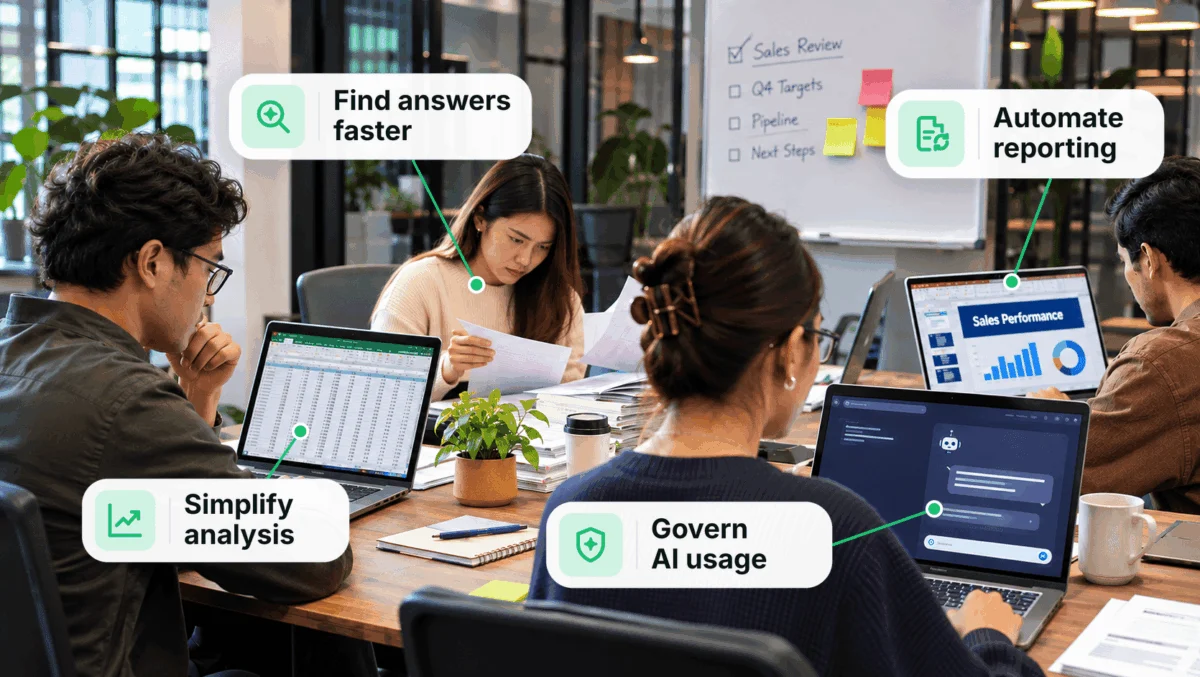
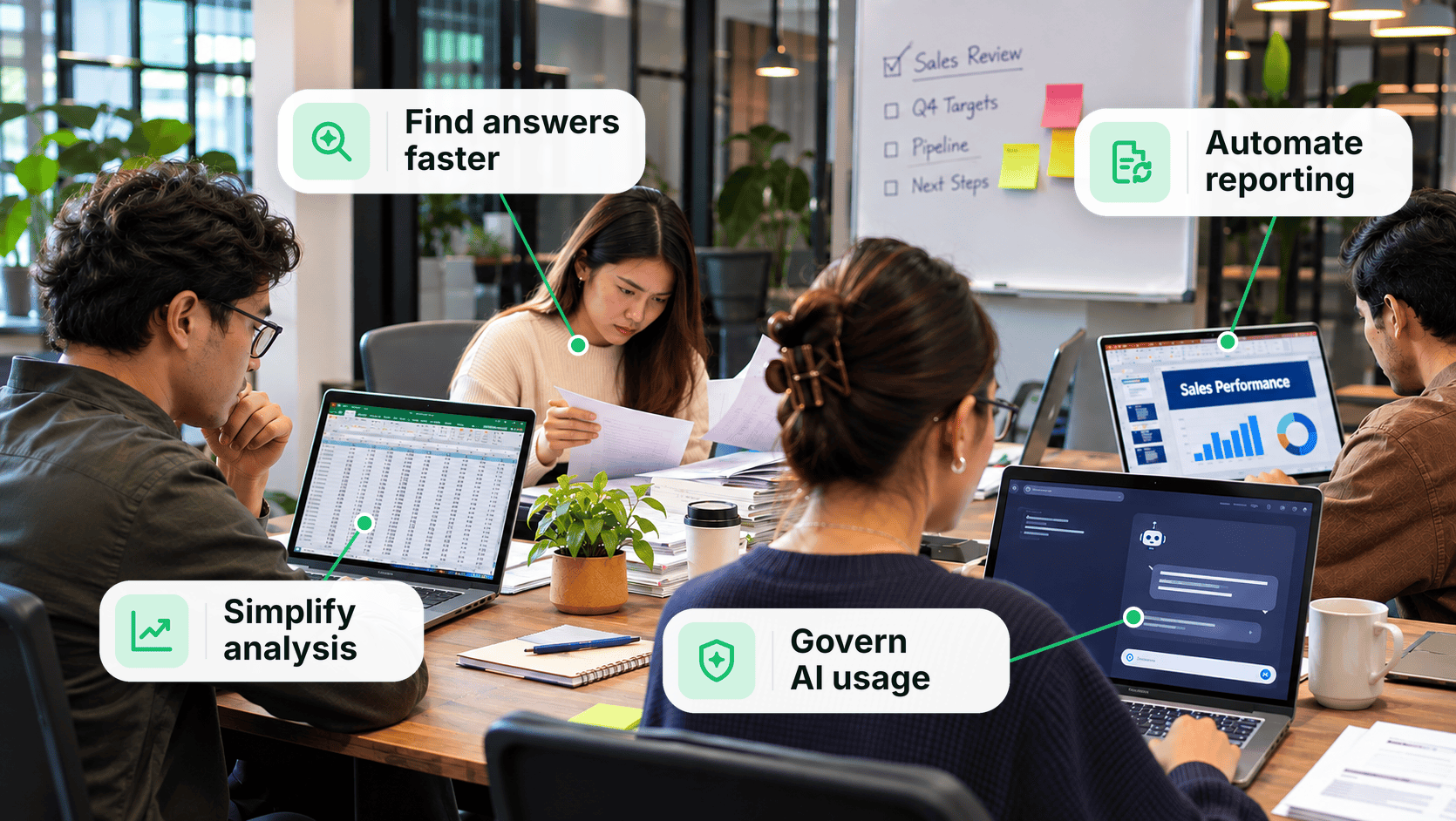
The integration of AI into BI workflows is most visible in three core areas: information retrieval, diagnostic analysis, and proactive alerting.
In traditional environments, a warehouse manager seeking to understand daily fulfillment rates might be forced to open a dashboard, filter by date, and manually correlate the findings with current stock levels. With AI-powered conversational interfaces, the manager can ask, "What is our current fulfillment lag compared to our Q3 average?" The system, connected to the enterprise’s live ERP and WMS data, generates an immediate, context-aware answer.
Furthermore, AI’s capability to perform multi-variate analysis significantly improves diagnostic depth. Where a human analyst might identify a decline in sales, AI can simultaneously parse hundreds of variables—including regional supply chain delays, seasonal demand fluctuations, and competitive pricing adjustments—to propose a root cause. This "augmented analysis" serves as a force multiplier for teams that are often overwhelmed by the sheer volume of enterprise data.
Finally, AI is reshaping how organizations respond to emerging trends. Instead of waiting for a scheduled review, AI-driven systems can monitor performance metrics in real-time. If key performance indicators (KPIs) deviate from historical norms, the system can automatically synthesize a narrative explanation and notify the relevant stakeholders, transforming raw data into a structured brief that includes actionable recommendations.
Establishing Guardrails: The Governance Imperative
While the utility of AI in BI is substantial, its implementation is fraught with risks related to data integrity and security. Industry analysts consistently warn that "AI is only as good as the data it is fed." If an organization feeds incomplete, siloed, or poorly defined data into an AI model, the result is the rapid generation of inaccurate—and potentially costly—business insights.
To mitigate these risks, organizations are adopting a "governance-first" approach to AI implementation. This strategy rests on four pillars:

- Data Provenance and Trust: Organizations must ensure that AI models are grounded in a "single source of truth." By utilizing a managed BI platform as the intermediary, firms can ensure that AI queries are executed against cleaned, reconciled, and current data rather than volatile raw inputs.
- Semantic Standardization: Inconsistent definitions are a significant threat to organizational alignment. If the finance department and the sales department define "revenue" differently, an AI query could yield conflicting figures. Modern platforms utilize semantic layers to standardize these definitions, ensuring that all AI-generated responses are anchored to enterprise-wide benchmarks.
- Strict Access Control: The move to natural language interfaces cannot come at the expense of data security. Organizations must map existing role-based access controls (RBAC) to their AI interfaces, ensuring that a user’s query results are strictly limited to the data they are authorized to see.
- Human-in-the-Loop Verification: Despite the sophistication of current models, AI remains a probabilistic tool. To maintain accountability, organizations must ensure that high-impact decisions are reviewed by human operators who can contextualize AI suggestions against real-world variables, such as market sentiment or strategic company objectives.
Case Study: Modernizing Legacy Operations
The shift toward modernized BI is already delivering tangible outcomes for early adopters. For example, prominent organizations—such as major retail distributors and specialized logistics providers—are currently replacing manual, spreadsheet-heavy reporting processes with integrated BI solutions. By automating the data retrieval process, these firms have reported a reduction in the time IT teams spend on ad-hoc reporting requests by up to 60%. This shift allows IT staff to focus on higher-value tasks, such as system optimization and long-term data architecture, while business users enjoy the autonomy of near-instant data access.
The transition process typically follows a three-phase timeline:
- Phase 1 (Preparation): Data cleansing and the establishment of a centralized semantic model.
- Phase 2 (Pilot): The implementation of AI interfaces for a specific, high-frequency use case, such as sales forecasting or inventory monitoring.
- Phase 3 (Scaling): Expanding access to departmental heads and integrating AI-driven alerts into existing operational workflows.
Broader Implications for the Enterprise
The broader implication of this technological shift is the commoditization of insight. When data becomes easily accessible to all levels of an organization, the competitive advantage shifts from "who has the data" to "who can act on the data fastest."
As AI-powered BI becomes the industry standard, firms that fail to modernize their analytics infrastructure risk falling into a "data deficit." Those that embrace this transition, however, position themselves to be more resilient, agile, and responsive to market changes. The integration of platforms—such as LANSA BI—with advanced AI models provides a blueprint for this transition. By embedding AI directly into business applications, these platforms enable a seamless user experience where insights are not just "viewed" but are woven into the very fabric of daily decision-making.
In conclusion, the convergence of AI and BI is not merely an IT upgrade; it is a fundamental reconfiguration of the modern enterprise. By focusing on data governance, standardizing business definitions, and maintaining rigorous human oversight, organizations can unlock the latent value trapped in their information systems. The goal is clear: to empower employees at every level of the organization with the intelligence needed to drive efficiency, reduce operational costs, and respond with precision to the complexities of the modern marketplace. As the technology continues to mature, the focus will likely shift from basic information retrieval to complex predictive modeling, further cementing AI’s role as the central nervous system of the modern, data-driven enterprise.