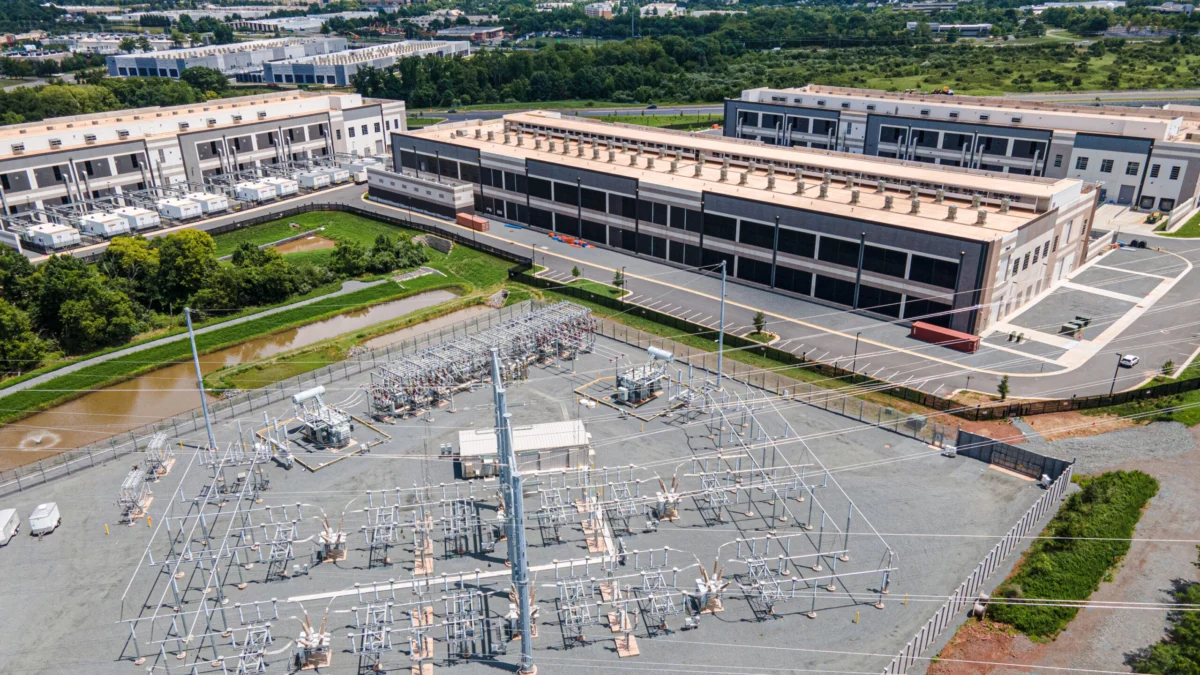
The rapid expansion of artificial intelligence infrastructure has collided with physical reality across the United States, transforming quiet suburban communities and rural outposts into ground zero for a fierce national debate. While tech executives frequently characterize the growing public resistance as a manifestation of broader cultural anxieties regarding corporate power and automation, a ground-level examination reveals a more fundamental conflict: an insatiable, unprecedented appetite for electricity that local power grids and municipal infrastructures are struggling to support.
This friction, visible from the monolithic server farms of Northern Virginia to sprawling rural developments in the American heartland, is reshaping state regulations, driving multi-billion-dollar private energy investments, and forcing the technology sector to rethink its domestic expansion strategies.
The Epicenter of Expansion: Data Center Alley and the Grid Connection Model
In Ashburn, Virginia—a cornerstone of Loudoun County and widely recognized as Data Center Alley, the world’s largest data center hub—the landscape is defined by concrete structures bearing utilitarian corporate monikers like Skybox and CloudHQ. Driving through the area offers a surreal view of the physical footprint required to sustain the modern digital economy.
Historically, data centers in this region have relied primarily on the established electrical grid managed by local utilities such as Dominion Energy. While these facilities feature massive diesel generators designed for emergency backup power, their standard operations draw heavily from regional transmission lines powered largely by natural gas.
The scale of these operations is staggering. According to industry metrics, the average data center currently operating in this portion of Virginia boasts a power capacity of roughly 54 megawatts. To put that figure in perspective, a single facility of this magnitude consumes more electricity than the entire Denver International Airport.
This reliance on shared public utility grids has direct economic and physical consequences for local populations. In response to recent protests and escalating grid strain, state regulators in Virginia implemented strict new rules stipulating that data centers must fully absorb the financial costs of constructing new transmission lines, ensuring these expenses are not shifted onto residential ratepayers. Furthermore, developers are anticipating impending regulations that could sever or throttle data center access to grid power during periods of peak public demand.
Local activists, however, warn that these measures only scratch the surface. Elena Schlossberg, a prominent anti-data center organizer in Virginia, notes that framing the dispute as a culture war obfuscates the core issue. For residents and community advocates, the debate has consistently centered on electricity—specifically, how an unprecedented surge in industrial power demand will impact grid stability, consumer utility rates, and environmental health.
Beyond the Grid: Behind-the-Meter Power Generation and Rural Expansion
While mature hubs like Loudoun County rely heavily on existing grid infrastructure, the next generation of artificial intelligence training facilities demands power on a scale that renders traditional grid connections obsolete. The smallest data centers deemed viable for advanced AI model training typically require at least 300 megawatts—equivalent to the electrical draw of a heavy industrial steel mill. However, industry leaders increasingly target facilities requiring up to 6,000 megawatts, a staggering capacity roughly matching the total electricity consumption of the city of Chicago, which relies on dozens of commercial power plants.
Because local grids cannot accommodate loads of this magnitude, AI and cloud computing companies are pivoting toward rural, remote locations where they can generate their own electricity "behind the meter." Rather than tapping into public utilities, these developers are constructing massive onsite power plants fueled by natural gas turbines, supplemented by fleets of diesel generators.
This shift toward independent power generation has triggered significant environmental and regulatory friction. In a landmark transaction highlighting the sheer scale of this trend, artificial intelligence startup Anthropic reportedly agreed to a $3.4 billion deal for natural gas turbines—marking one of the largest private power generation purchases by an AI enterprise to date.
Yet, decentralizing power generation brings heavy industrial pollutants directly into less-regulated environments. The rush to deploy computing clusters has occasionally led to severe regulatory infractions. Most notably, the U.S. Environmental Protection Agency cited Elon Musk’s xAI for operating dozens of unpermitted natural gas turbines to power a massive supercomputing data center in Memphis, Tennessee, in violation of local air quality laws. When private corporations build power plants of this magnitude outside the oversight of traditional public utility commissions, surrounding communities lose the established regulatory avenues traditionally used to contest heavy industrial zoning.
Industry Perspectives and the Culture War Narrative
Tech industry leadership has actively attempted to reframe public pushback against data infrastructure. Days after the congressional and gubernatorial midterms, OpenAI Chief Global Affairs Officer Chris Lehane published an essay arguing that data centers have "become a proxy for public unease about affordability, corporate power, and people losing control over their futures." In essence, Big Tech characterizes the resistance as a manifestation of a broader culture war directed at rapid technological advancement.
Corporate strategists argue that public concerns can be mitigated through targeted community engagement, increased tax contributions, local job creation, and strategic philanthropic investments—measures that several major firms, including OpenAI and Google, have recently pledged to standardize.
However, community leaders and independent energy analysts argue that reducing local opposition to mere cultural anxiety dismisses legitimate logistical grievances. Critics point out that asking a small town to absorb the industrial equivalent of an international airport, a steel manufacturing plant, and multiple heavy-duty power generating stations simultaneously is bound to provoke resistance, independent of partisan politics or technophobia. While misinformation regarding water consumption—often exaggerated in public discourse—clouds some local debates, the physical realities of air pollution, noise pollution, grid congestion, and escalating utility bills remain entirely factual.
Chronology of Regulatory and Market Shifts
The collision between artificial intelligence infrastructure and local resource limits has accelerated dramatically over a compressed timeline:
- Early Expansion Phase: Northern Virginia and traditional tech hubs absorbed initial waves of data center growth, relying primarily on local public utility grids with minimal initial public friction.
- The Generative AI Boom: The commercial explosion of large language models exponentially increased training and inference computing requirements, pushing power capacity demands from standard megawatts into gigawatt-scale requirements.
- Midterm Elections and State Policy Shifts: As voters headed to the polls, energy constraints emerged as a key localized political issue. State governments, exemplified by Virginia, began enacting rigorous cost-allocation mandates forcing tech firms to pay outright for grid upgrades.
- Post-Election Realignment: In the immediate aftermath of the midterms, tech executives publicly analyzed the backlash, while firms like Google announced multi-billion-dollar expansions overseas (such as a $15 billion commitment to Malaysian data infrastructure) to circumvent domestic grid limitations. Simultaneously, industry leaders floated novel long-term concepts, including space-based data centers designed to bypass terrestrial energy and zoning constraints entirely.
Broader Implications and Future Horizons
As the physical limitations of domestic energy grids become clearer, the strategic calculus governing artificial intelligence infrastructure is undergoing a fundamental transformation. Industry insiders increasingly acknowledge that their long-term growth is constrained not by a lack of capital, software breakthroughs, or even public skepticism, but by the sheer scarcity of accessible electricity.
To navigate these bottlenecks, developers are exploring alternative domestic frontiers. Regions with sparse populations and established fossil-fuel extraction networks—such as the Permian Basin, where landowners are actively pivoting properties toward industrial energy and data applications—are emerging as prime targets for behind-the-meter generation projects.
Concurrently, international markets with more flexible regulatory frameworks and aggressive infrastructure development incentives are capturing substantial capital expenditures. Google’s recent $15 billion investment in Malaysia underscores a growing willingness among tech conglomerates to scale operations outside the United States. Meanwhile, more speculative solutions, such as deploying server clusters into low Earth orbit to leverage uninterrupted solar power, highlight the desperate lengths to which the sector may go to evade terrestrial power constraints.
Ultimately, the data center backlash serves as an indicator of the physical toll of the digital revolution. As artificial intelligence continues to reshape the global economy, the ability of technology companies to secure clean, reliable, and socially acceptable sources of power will dictate the pace and geography of future innovation.