Global commerce is increasingly defined by a high-stakes technological arms race. As digital transactions surge across brick-and-mortar storefronts, e-commerce web shops, and mobile applications, the methods employed by malicious actors have undergone a radical transformation. Today, cybercriminals deploy artificial intelligence, machine learning algorithms, and automated botnets to execute sophisticated fraud schemes that bypass legacy rule-based detection systems. In response to this shifting threat landscape, global payments technology leader Verifone has announced a strategic partnership with Featurespace, an advanced anti-fraud innovator now operating under the Visa corporate umbrella. This integration embeds real-time, AI-driven behavioral analytics directly into Verifone’s massive processing infrastructure, establishing a new benchmark for enterprise-grade transaction security.
The collaboration brings Featurespace’s proprietary Adaptive Behavioral Analytics (ABA) engine into the core of Verifone’s risk-scoring architecture. By combining Verifone’s deep merchant relationships and colossal transaction processing capabilities with Visa’s cutting-edge fraud prevention assets, the partnership seeks to solve a persistent dilemma in modern retail: how to effectively neutralize financial crime without introducing friction that frustrates legitimate buyers and damages merchant conversion rates.
The Mechanics of Real-Time Risk Scoring
At the heart of the Verifone-Featurespace integration is a high-speed, multi-layered risk-scoring framework designed to evaluate incoming transactions in under 100 milliseconds. In the fast-paced ecosystem of digital and in-person payments, milliseconds matter. A delay of even a fraction of a second can degrade the checkout experience, leading to cart abandonment and lost revenue for merchants.
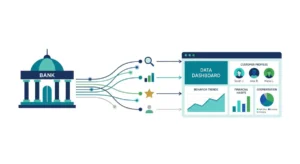
To prevent this while maintaining rigorous security, Verifone’s enhanced risk engine evaluates more than 1,800 distinct transaction attributes simultaneously. These variables encompass a wide spectrum of data points, including device fingerprints, geolocation coordinates, transaction amounts, velocity checks, historical spending habits, and behavioral biometrics where applicable.
Rather than relying solely on static blacklists or rigid, threshold-based rules—which often trigger false positives by incorrectly flagging legitimate customer purchases—Featurespace’s adaptive machine learning models establish dynamic behavioral baselines. The system continuously learns what constitutes "normal" behavior for individual cardholders, specific accounts, and distinct merchant categories. When an anomaly occurs—such as a sudden, unusually large purchase initiated from an unfamiliar geographical location in the middle of the night—the system instantly flags the transaction for review or decline. Because the underlying algorithms continuously retrain themselves on incoming data streams, the defense mechanism evolves in real time alongside emerging fraud patterns.
Industry Perspectives on the Integration
The partnership addresses a critical pain point for merchants operating across omnichannel environments. Fabian Ganster, Verifone’s Head of Global Fraud and Tooling, encapsulated the core philosophy driving the initiative during the announcement.
"Great payment security is invisible to the customer and unmistakable to the merchant," Ganster stated. "Fraud is increasingly shaped by AI, so the defense has to be, too. By combining Visa’s adaptive intelligence with our payments expertise, we can stay ahead of threats that change every day and give merchants and partners payments and protection from one provider they can trust."
From an operational standpoint, embedding Featurespace’s technology directly into Verifone’s payment gateways offers significant advantages to merchants and financial institutions. Historically, implementing enterprise-grade behavioral analytics required merchants to contract with separate third-party fraud-prevention vendors, configure complex Application Programming Interfaces (APIs), and manage multiple vendor relationships simultaneously. By baking this capability directly into Verifone’s native infrastructure—which supports over $8 trillion in transactions annually across more than 2,500 integrations—merchants gain access to elite-tier fraud screening out-of-the-box, significantly reducing operational overhead and integration complexity.
The Evolution of Featurespace: From Cambridge to Visa
The journey of Featurespace is a testament to the commercialization of academic research in artificial intelligence. The company was founded in 2008 by researchers at Cambridge University’s esteemed Department of Engineering. These innovators sought to apply advanced mathematical modeling and machine learning techniques—originally developed to analyze complex physical systems—to the financial sector to detect anomalies and fraudulent behavior in vast datasets.
Over the ensuing decade and a half, Featurespace established itself as a pioneer in behavioral analytics, serving major financial institutions, payment processors, and merchants worldwide. The company’s market traction caught the attention of global payment titan Visa, which recognized the strategic value of incorporating advanced adaptive AI into its broader security portfolio. Visa officially completed its acquisition of Featurespace in 2024, positioning the Cambridge-born technology as a cornerstone of its next-generation fraud prevention strategy.
For industry watchers, Featurespace’s trajectory has been visible for years. The company notably showcased its burgeoning technology at FinovateFall 2016 in New York, demonstrating how real-time machine learning could redefine risk management in financial services long before generative AI entered the mainstream corporate lexicon.
Verifone’s Scale and Market Footprint
To understand the far-reaching implications of this partnership, one must examine the sheer scale of Verifone’s operations. Founded in 1981, Verifone has evolved from a traditional point-of-sale (POS) hardware manufacturer into a comprehensive, global commerce enabler. Today, the company provides sophisticated payment technology to millions of merchants, fintech startups, and major financial institutions globally.
Verifone processes a staggering $8 trillion in transactions annually. Its open ecosystem supports a vast array of commerce channels, seamlessly bridging in-store terminal hardware with online checkout gateways and mobile application environments. Because Verifone sits at the critical intersection where consumer payment instruments meet merchant ledger systems, it occupies a unique vantage point for observing and intercepting fraudulent activity.
By integrating Visa-powered Featurespace technology across this vast footprint, the initiative immediately protects a substantial fraction of global retail and digital commerce traffic, amplifying the deterrent effect against organized financial crime syndicates.
Broader Implications for the Payments Ecosystem
The integration of adaptive AI into mainstream payment gateways arrives at a crucial juncture for the global digital economy. As e-commerce penetration deepens and mobile wallets become ubiquitous, financial fraudsters have industrialized their operations. Cybercriminal organizations now deploy automated scripts, synthetic identities, and AI-generated social engineering tactics to perpetrate account takeovers, friendly fraud, and first-party misuse on an unprecedented scale.
Traditional anti-fraud solutions, which depend on historical rules and post-breach analysis, are increasingly incapable of keeping pace with these dynamic threats. When merchants rely on outdated systems, they face a painful trade-off: either accept high chargeback rates and fraud losses, or tighten rules aggressively, resulting in high rates of false declines that alienate good customers and permanently damage brand loyalty.
By deploying Featurespace’s Adaptive Behavioral Analytics across Verifone’s network, the partnership directly targets this false-positive dilemma. Machine learning models capable of evaluating 1,800 attributes in milliseconds can discern subtle nuances that separate a legitimate traveler making an unusual purchase from a cybercriminal utilizing stolen credential sets.
Furthermore, this move signals a broader industry trend toward consolidation of security services within primary payment infrastructure providers. Rather than treating security as an afterthought or an external plugin, payment technology leaders are embedding institutional-grade defense mechanisms directly into the transaction processing pipeline. For merchants navigating an increasingly complex regulatory and threat environment, this unified approach simplifies compliance, reduces technology stack fragmentation, and lowers the total cost of ownership associated with risk management.
As the partnership rolls out across Verifone’s global network, it underscores the indispensable role that collaborative technological ecosystems play in safeguarding the future of digital commerce. By aligning the payment processing might of Verifone with the advanced adaptive intelligence of Visa and Featurespace, the initiative delivers a robust, scalable defense mechanism designed to protect merchants and consumers against the next generation of financial crime.