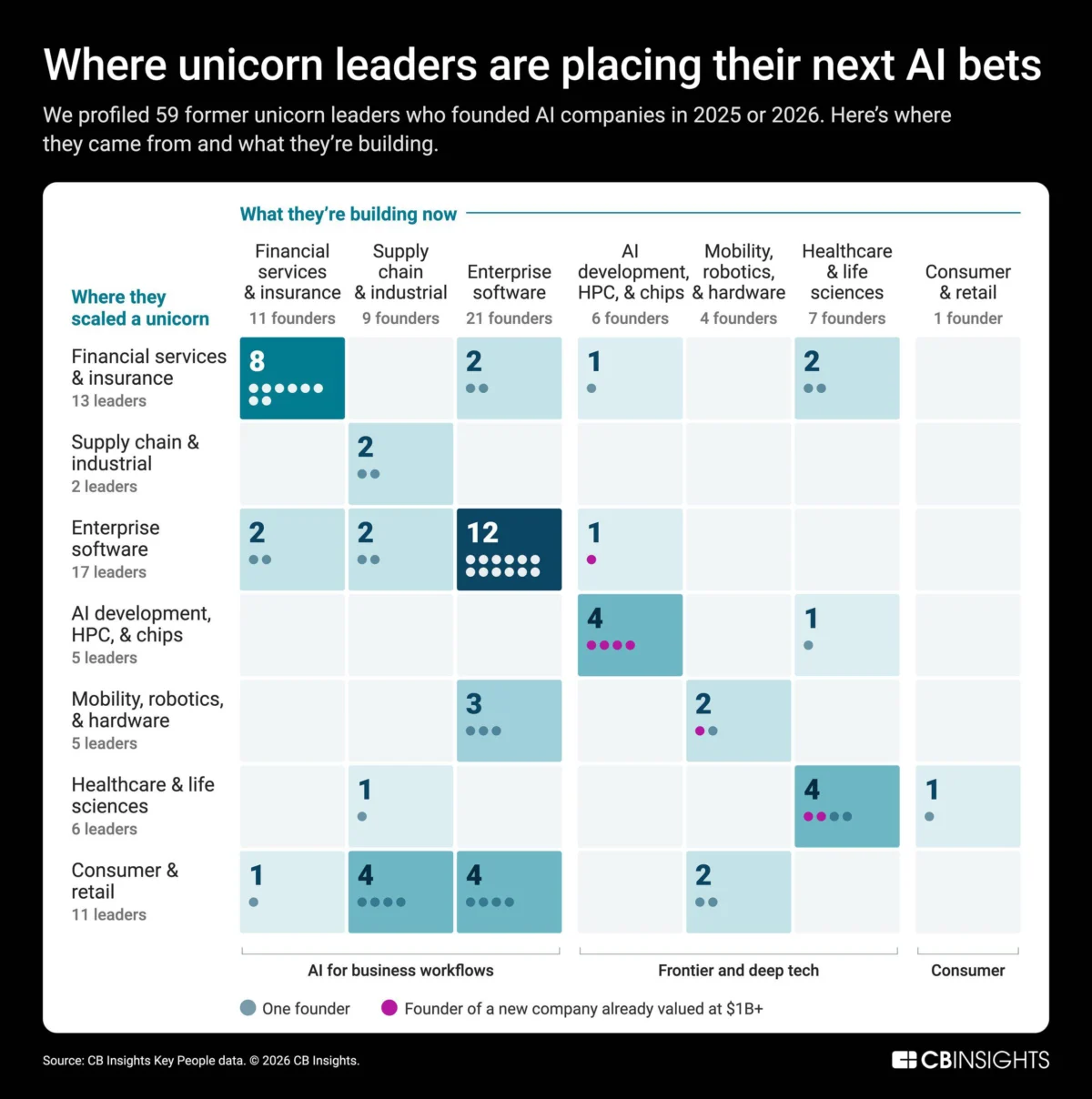
The landscape of global innovation is undergoing a profound structural shift as a wave of high-profile entrepreneurs, having successfully scaled their initial ventures to billion-dollar valuations, pivot their focus toward the next frontier of artificial intelligence. An analysis of 59 founders and executives across 48 newly established companies reveals a clear pattern: these industry veterans are not merely chasing the latest technological trends; they are applying the operational rigor learned in previous cycles to solve complex problems in deep tech, physical automation, and enterprise infrastructure.
This trend marks a departure from the "move fast and break things" ethos of the early 2010s. Instead, this cohort is prioritizing technical defensibility and sustainable business models. By tracking the migration of talent from established unicorns to nascent AI startups throughout 2025 and 2026, it becomes evident that the "second act" for many of these leaders is defined by a desire to optimize legacy industries rather than disrupt them with purely speculative consumer tools.
The Strategic Migration of Talent
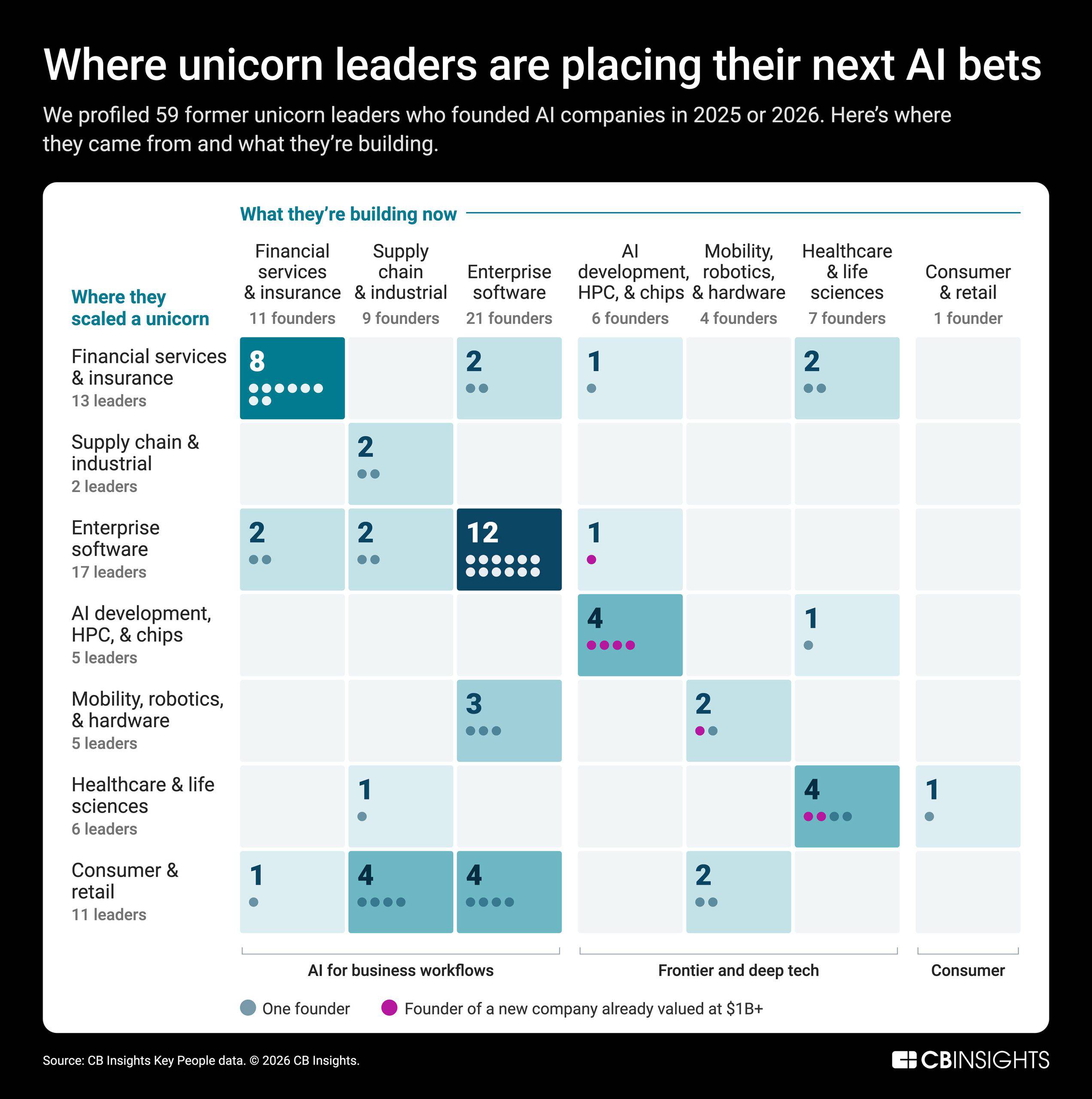
The movement of these 59 leaders serves as a barometer for where the smart money and technical talent are flowing. The data indicates that 12 out of 17 leaders who previously held high-ranking positions in enterprise software have chosen to remain within that sector. Similarly, eight out of 13 founders with backgrounds in financial services and insurance have opted to double down on their domain expertise, applying AI to refine the very processes they once mastered.
Ken Villum Klausen and Peter Andreasen, the co-founders of the digital banking giant Lunar, provide a primary case study in this trend. Their current venture, Repodo, represents a strategic evolution in financial technology. By utilizing AI to automate the labor-intensive requirements of audit records and documentation, they are shifting the focus from general-purpose consumer banking to the high-stakes world of professional services. This transition highlights a broader shift: successful founders are increasingly looking at the "boring" back-office infrastructure of global commerce as the most ripe territory for AI-driven transformation.
Chronology of the Shift
The acceleration of this trend can be traced back to the final quarter of 2024, when the initial excitement surrounding generative AI began to settle into a more practical, application-focused phase.
- Early 2025: The first wave of post-unicorn founders began to depart their initial ventures, citing the maturation of their original companies and a desire to address the "AI gap" in vertical industries.
- Mid-2025: Investment capital began to concentrate on companies led by "repeat offenders"—founders who had already demonstrated the ability to navigate regulatory hurdles and capital markets.
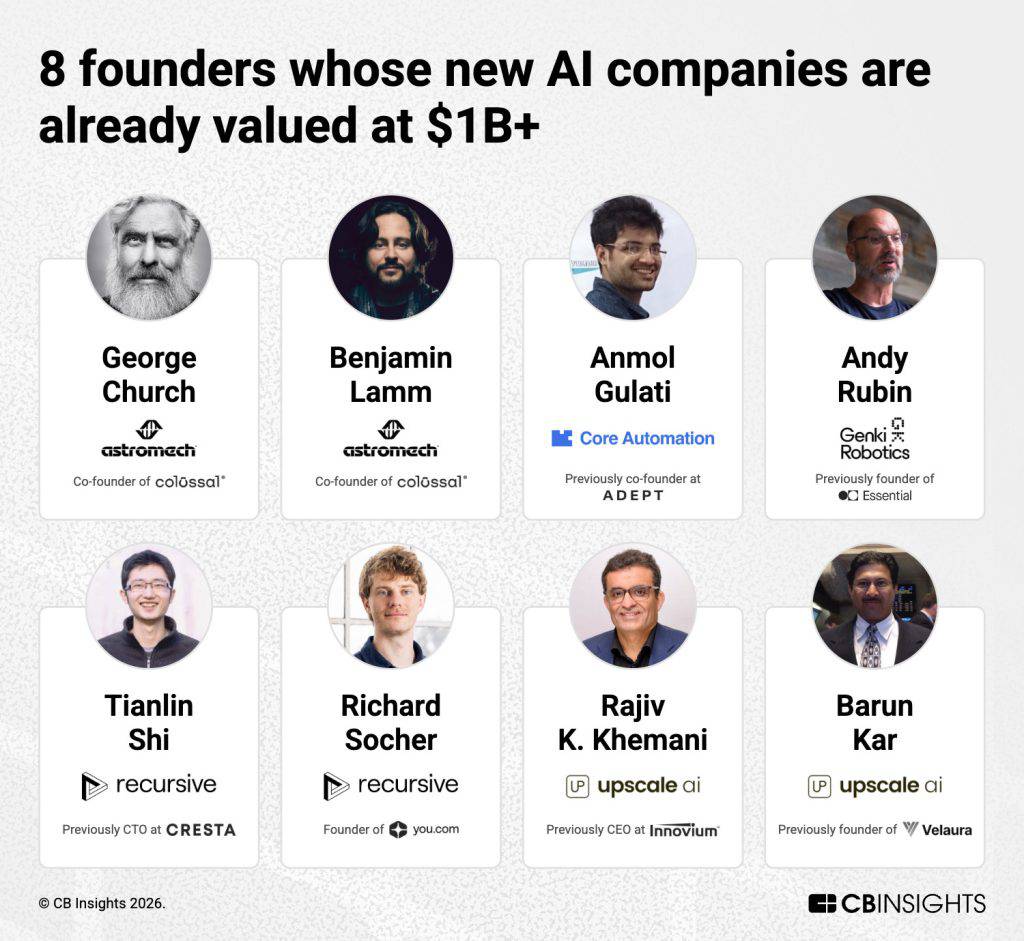
- Late 2025 to Early 2026: A surge in valuations for firms like Recursive Superintelligence and Core Automation signaled that the market was rewarding specialized, deep-tech applications over general large language models.
- Late 2026: The current period reflects a consolidation of strategy, where founders are actively shedding the high-headcount models of the past in favor of leaner, AI-augmented operational structures.
The Shift Toward Lean Operational Models
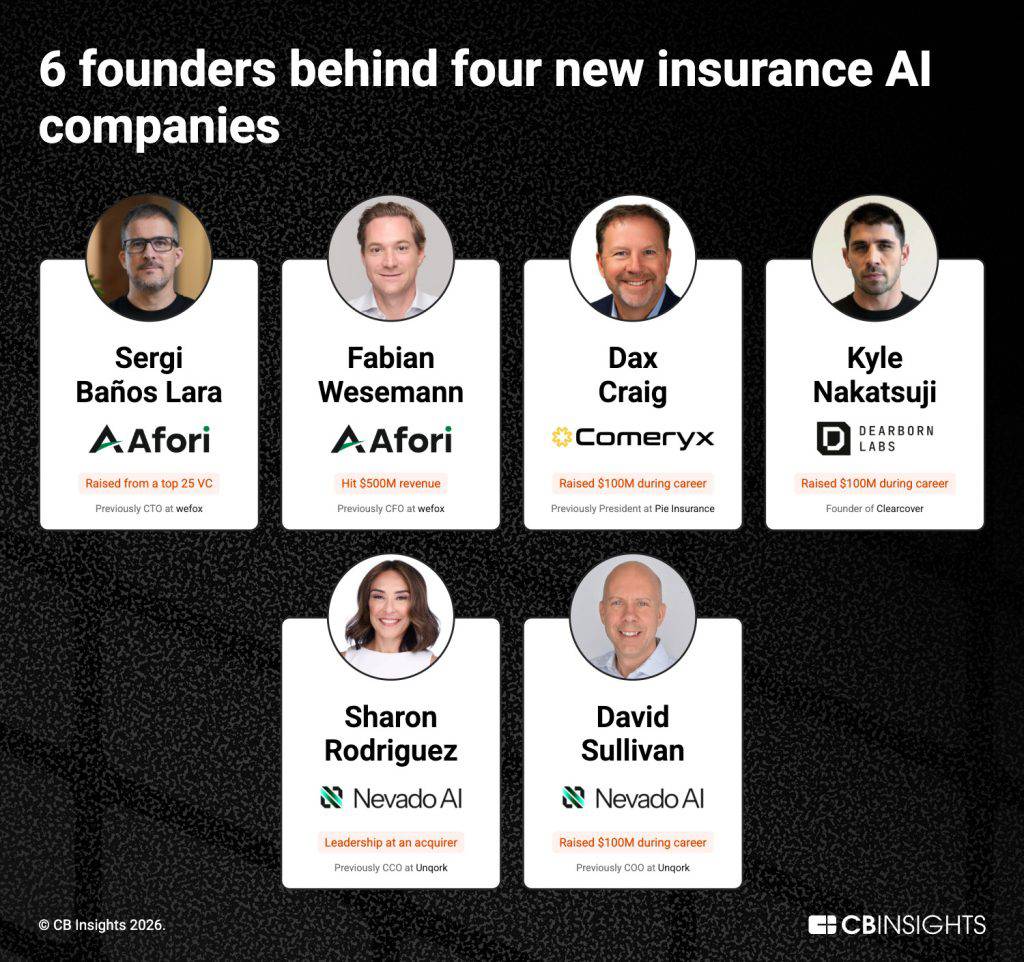
A recurring theme among these founders is a fundamental change in how they construct their organizations. David Sullivan, COO of NevadoAI, has been vocal about the lessons learned from his previous ventures. In a recent internal assessment, Sullivan noted that the era of aggressive, indiscriminate hiring is effectively over.
"Previously, we were hiring tens and hundreds of people in a quarter," Sullivan stated. "We don’t feel like we need as many people in order to do what we’re doing." This sentiment is shared across the cohort. By automating back-office functions—ranging from human resources and payroll to complex compliance reporting—these leaders are pivoting their capital expenditure toward engineering and customer-facing roles. The goal is to build high-revenue-per-employee organizations that can scale without the traditional burdens of massive administrative overhead.
Emerging Frontiers: Physical AI and Deep Tech
While enterprise software remains a safe harbor for many, a notable subset of the cohort is venturing into "Physical AI"—the intersection of artificial intelligence and robotics. This represents one of the most capital-intensive and intellectually demanding shifts in the current market.

Leaders like those behind Genki Robotics and Astromech are focusing on the tangible world. They are building machines, developing training data specifically for robotic movement, and creating software that allows for autonomous decision-making in manufacturing and logistics. This is a marked shift from the software-only models that dominated the previous decade. These founders recognize that while digital transformation was the hallmark of the 2010s, the next decade will be defined by the physical integration of AI into the real world.
Consumer Retail: From Sales to Operations
Perhaps the most surprising trend is the exit of 11 leaders from the consumer and retail sectors. Historically, these individuals would have moved on to build the next "lifestyle brand" or "social commerce" platform. Instead, every single one of these 11 leaders is now building B2B (business-to-business) software.
They are essentially turning their previous experience in managing complex retail supply chains and consumer behavior into proprietary software tools for other operators. By building the "picks and shovels" for the retail industry, these founders are leveraging their deep knowledge of consumer pain points to create high-value infrastructure tools that solve operational inefficiencies, such as inventory forecasting, autonomous merchandising, and automated customer service workflows.
Market Implications and Analysis
The rapid ascension of companies like Recursive Superintelligence and Upscale AI to billion-dollar valuations in such a short timeframe is indicative of a "flight to quality." Investors are increasingly hesitant to fund speculative AI startups, instead opting to back founders with a proven track record. This has created a bifurcated market: a small, elite group of companies led by veterans is seeing an influx of institutional capital, while the broader, less-experienced startup ecosystem is facing a more stringent funding environment.
This concentration of talent is not without its risks. The "founder-led" model of these new companies carries the danger of groupthink, where successful entrepreneurs repeat the strategies that worked in their previous roles rather than adapting to the unique challenges of the AI era. However, the data also suggests that these leaders are remarkably adaptable. The pivot from consumer-facing retail to B2B infrastructure software, for instance, shows a willingness to abandon outdated business models in favor of where the actual market value currently lies.
The Path Forward
For the broader tech ecosystem, the migration of these 59 leaders serves as a blueprint for the next wave of innovation. The focus is shifting away from the "platform-agnostic" AI models toward vertical-specific solutions that solve concrete, high-cost problems in insurance, auditing, robotics, and logistics.
As these 48 new companies continue to scale, the industry will likely see a further maturation of the AI sector. The reliance on human-in-the-loop systems—as evidenced by the Repodo audit model—suggests that the industry is moving toward a hybrid future where AI acts as the engine, but human expertise remains the essential final check. This balanced approach is likely to provide the stability and credibility required for AI to be integrated into the most critical sectors of the global economy.
For observers of the technology market, the takeaway is clear: the most successful entrepreneurs are no longer interested in building the "next big app." They are interested in rebuilding the foundational software that governs how the world works, trades, and moves. The age of the billion-dollar AI startup is here, and it is being built by the people who already know how to win.