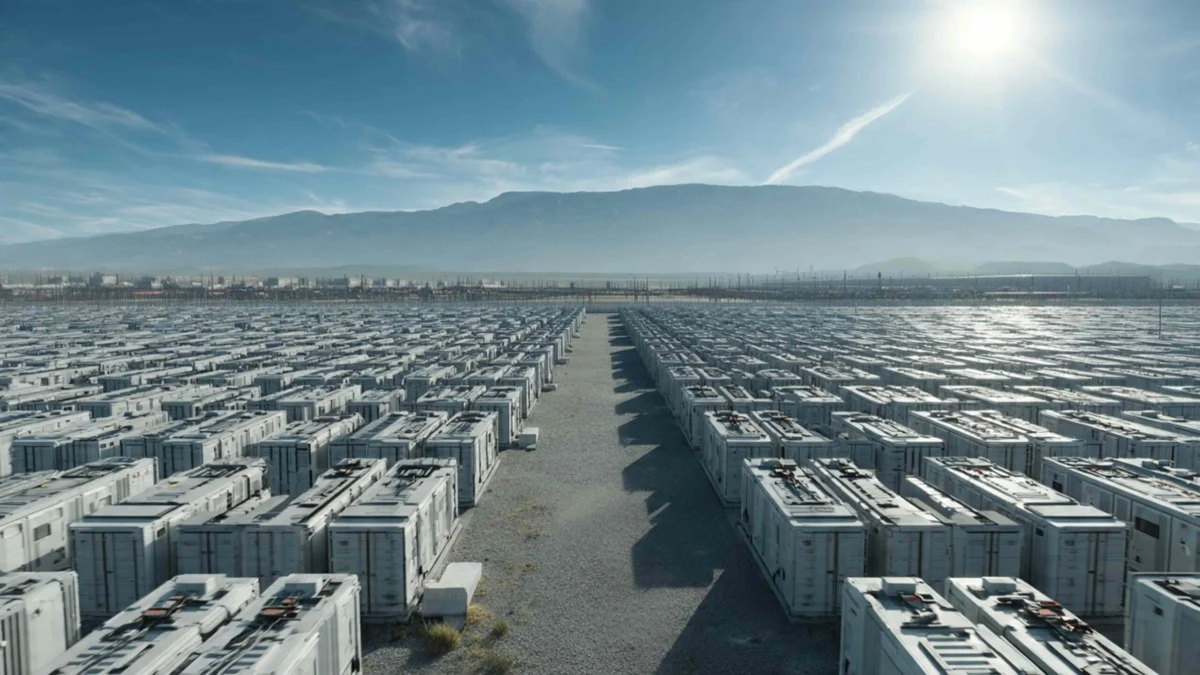
As the planet experiences increasingly intense and prolonged heat waves, a critical component of the global energy transition is undergoing a fundamental evolution to ensure grid stability. While grid-scale batteries have already established themselves as a vital mechanism for balancing the fluctuating supply of renewable energy, the limitations of current technology are becoming apparent under the pressure of extreme weather and surging demand. The transition from short-term lithium-ion storage to long-duration energy storage (LDES) represents a paradigm shift in how the world manages its electrical infrastructure.
For nearly a century, the backbone of the electrical grid has been its transmission infrastructure—the massive networks of high-voltage wires that carry power from centralized plants to consumers. However, as the global economy shifts from fossil fuels to electricity, and as renewable energy projects multiply, this aging infrastructure is struggling to keep pace. Building new transmission lines is a slow, expensive process often mired in regulatory and land-use hurdles. In contrast, battery storage offers a more agile solution. Modern grid-scale batteries are cheaper to deploy, faster to construct, and can be placed precisely where demand is highest, such as near energy-intensive artificial intelligence data centers or massive electric vehicle manufacturing hubs.
Despite the boom in grid battery capacity over the last five years—led by major projects in the United States, China, Australia, and Chile—the industry faces a technical bottleneck. According to the International Energy Agency (IEA), the majority of existing grid batteries are designed for "short-duration" storage, typically lasting between two and four hours. This capacity is insufficient to support the grid through an entire night or during multi-day weather events where solar and wind production might remain low. Furthermore, extreme heat is known to degrade the lifespan of standard lithium-ion cells, creating a reliability gap during the very moments when the grid is most vulnerable.
The Shift Toward Long-Duration Energy Storage
To address these vulnerabilities, the energy sector is moving beyond the lithium-ion default toward a suite of diverse technologies capable of providing 10 to 100 hours of continuous discharge. These long-duration technologies are moving out of the laboratory and pilot stages into large-scale commercial deployment. The objective is to create a "buffered" grid that can remain resilient even when the sun does not shine and the wind does not blow for several consecutive days.
The current market landscape features five primary technological contenders: iron-air, compressed-air, carbon dioxide, sodium-ion, and zinc-air batteries. Each offers unique advantages in terms of cost, material abundance, and discharge duration.
Iron-Air Batteries and the Promise of Multi-Day Storage
Form Energy, a U.S.-based startup, has emerged as a leader in the iron-air battery space. Their technology utilizes a process described as "reversible rusting." During discharge, the battery "breathes in" oxygen from the air, converting metallic iron into iron oxide (rust) and releasing electrons. When charging, an electrical current reverses the process, turning the rust back into metallic iron and "breathing out" oxygen.
The primary advantage of iron-air technology is its duration; it can store and discharge electricity for up to 100 hours. This is a significant leap over the four-hour limit of lithium-ion systems. In October 2024, Form Energy inaugurated its first high-volume manufacturing facility in West Virginia, a site that was once a traditional steel mill, signaling a symbolic shift from the old industrial economy to the new energy era.
The company’s commercial momentum is underscored by a landmark partnership with Xcel Energy and Google. Form Energy is set to build what is expected to be the world’s largest battery by energy capacity in Minnesota to support a Google data center. By providing carbon-free energy around the clock, this project addresses one of the tech industry’s biggest challenges: maintaining 24/7 operations on 100% renewable energy. Form Energy expects to reach a yearly production capacity of 500 megawatts by the end of 2028.
Advanced Compressed-Air Energy Storage (A-CAES)
While battery chemistry is one path, mechanical storage is another. Toronto-based Hydrostor is reviving and refining the ancient concept of compressed air. Their Advanced Compressed Air Energy Storage (A-CAES) system involves storing energy in the form of compressed air within underground rock caverns.
The process is essentially a giant air battery. To charge the system, surplus electricity from the grid is used to compress air, which is then pumped into a cavern, displacing water into a surface reservoir. When the grid needs power, the water is allowed to flow back into the cavern, forcing the compressed air through a turbine to generate electricity. This method is highly scalable; Hydrostor estimates that a single 500-megawatt facility can power a city the size of Boston for eight hours while occupying less than 100 acres of surface land.
Hydrostor has already proven the commercial viability of this tech at its facility in Goderich, Ontario. The company is now scaling up with the Willow Rock Energy Storage Center in Kern County, California. A 2026 agreement with California Community Power will see the facility provide eight hours of continuous, emission-free discharge to several local public energy agencies, helping California meet its aggressive decarbonization goals.
Carbon Dioxide as a Storage Medium
In Italy, the firm Energy Dome is taking a different approach by using carbon dioxide (CO2) in a closed-loop system. Unlike carbon capture technology which seeks to bury CO2, Energy Dome uses the gas as a working fluid for energy storage. When energy is abundant, CO2 is compressed and stored under pressure. When demand peaks, the pressure is released, and the expanding gas drives a turbine to generate power.
This system avoids the use of lithium or other rare minerals, relying instead on steel, water, and CO2. In July 2025, Energy Dome announced a strategic partnership with Google to provide carbon-free energy to the tech giant’s operations. Additionally, the company is collaborating with Alliant Energy to build a 200-megawatt-hour facility in Columbia County, Wisconsin. Scheduled for completion in late 2027, this project is designed to power approximately 18,000 homes for 10 hours on a single charge.
Sodium-Ion and Zinc-Air: The Quest for Abundant Materials
Two other technologies—sodium-ion and zinc-air—are gaining traction by focusing on material availability. China’s CATL (Contemporary Amperex Technology Co., Limited) is spearheading sodium-ion batteries, which replace expensive lithium with cheap, abundant sodium (salt). While sodium-ion batteries are currently less energy-dense than lithium-ion, they are more stable in extreme temperatures and significantly cheaper to produce. CATL expects its first sodium-ion energy storage systems to enter commercial deployment by September 2026.
Simultaneously, Toronto’s e-Zinc is utilizing zinc metal for long-duration storage. Zinc is a globally abundant and highly recyclable metal. e-Zinc’s technology provides 10- to 100-hour discharge capabilities at a lower cost than traditional batteries. The company’s pilot facility in Mississauga, Ontario, and partnerships with the California Energy Commission suggest that zinc-air could soon become a standard for microgrids and backup power for industrial facilities, potentially replacing diesel generators.
Chronology of Key Milestones in Long-Duration Storage
- 2010: Hydrostor is founded in Toronto, beginning the development of A-CAES technology.
- 2011: CATL is founded in China, eventually becoming the world’s largest battery manufacturer.
- 2020: Energy Dome is founded in Milan, Italy, focusing on CO2-based storage.
- July 2021: CATL unveils its first-generation sodium-ion battery, proving the chemistry’s viability.
- 2023: e-Zinc is named a World Economic Forum Technology Pioneer.
- October 2024: Form Energy begins production at its high-volume manufacturing facility in West Virginia.
- July 2025: Energy Dome and Google announce a strategic partnership for carbon-free energy.
- Early 2026: Hydrostor signs a 50-megawatt offtake agreement with California Community Power.
- September 2026: Expected commercial deployment of CATL’s first sodium-ion energy storage system.
- Late 2027: Expected completion of Energy Dome’s Wisconsin facility with Alliant Energy.
- End of 2028: Form Energy anticipates the delivery of iron-air battery modules to Google’s Minnesota data center.
Supporting Data and Technical Analysis
The shift toward LDES is supported by a growing body of data regarding the "duck curve"—a phenomenon where solar energy production peaks during the day when demand is low, and drops off in the evening just as demand spikes. Short-duration batteries can handle the initial evening ramp, but they cannot sustain the load through the night.
According to BloombergNEF, the global energy storage market is expected to grow 15-fold by 2030. To meet net-zero targets, the IEA suggests that the total installed capacity of battery storage must increase from less than 200 GW today to over 1,200 GW by the end of the decade. Crucially, as the percentage of renewables on the grid exceeds 50%, the requirement for storage durations of 10+ hours increases exponentially to prevent curtailment (wasted energy).
Cost is another driving factor. While lithium-ion costs have plummeted, the price of lithium remains volatile due to supply chain constraints. In contrast, iron, sodium, and zinc are widely available on every continent, reducing geopolitical risks and ensuring a more stable price floor for long-term infrastructure projects.
Broader Impact and Implications
The implications of these technological advancements extend far beyond the energy sector. For heavy industry, LDES provides a pathway to decarbonization without sacrificing the reliability of 24/7 operations. For developing nations, these technologies offer a way to build resilient grids without the need for massive investments in traditional transmission lines, which are often difficult to finance and protect.
Furthermore, the move toward LDES represents a significant win for environmental sustainability. By utilizing non-toxic, abundant materials like iron, air, water, and CO2, the next generation of batteries avoids many of the ethical and environmental pitfalls associated with the mining of cobalt and lithium.
As these projects move from the pilot phase to the commercial mainstream, the "energy transition puzzle" is finally receiving its most important piece. The ability to store the wind and the sun for days, rather than hours, transforms renewable energy from an intermittent resource into the reliable foundation of a modern, electrified global economy. With major tech firms like Google and utilities like Xcel and Alliant leading the way, the transition to a long-duration storage model appears not just likely, but inevitable.