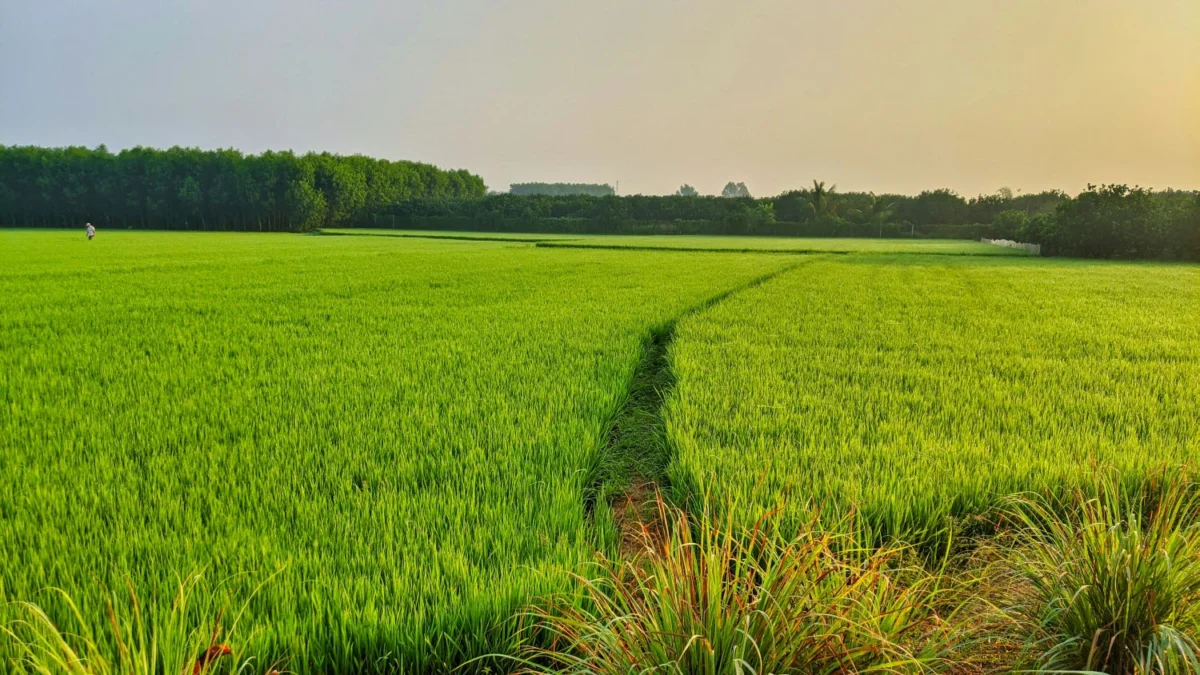
Singapore-based agritech startup Rize has successfully closed a $31 million Series B funding round, marking a significant milestone in the effort to decarbonize one of the world’s most essential but environmentally taxing food staples. The capital injection, which consists of $20 million in equity and $11 million in debt, is earmarked for the expansion of Rize’s sustainable farming platform across Southeast Asia and the entry into high-value export markets including Europe, Canada, and Australia. This funding round underscores a growing institutional appetite for "natural capital" investments that address the intersection of food security, climate change, and smallholder farmer livelihoods.
The equity portion of the round was led by the natural capital team at BNP Paribas Asset Management, a move that signals a strategic pivot toward financing nature-based solutions in emerging markets. Joining the lead investor were prominent climate and development-focused entities, including The Rockefeller Foundation, Temasek, and Breakthrough Energy Ventures (BEV), the investment firm founded by Bill Gates. The debt component, totaling $11 million, was provided by a consortium of regional financial institutions, including United Overseas Bank (UOB), the Bank for Investment and Development of Vietnam (BIDV), and the Temasek Foundation.
The Climate Challenge of Global Rice Production
Rice is the primary caloric source for more than 3.5 billion people worldwide, but its traditional cultivation method—flooding paddies—is a major driver of global warming. When rice fields are continuously submerged, the soil becomes anaerobic (oxygen-depleted). This environment facilitates the growth of methanogenic microbes that break down organic matter, releasing methane (CH4) into the atmosphere.
Methane is a potent greenhouse gas with a global warming potential (GWP) roughly 80 times higher than that of carbon dioxide over a 20-year period. According to data from the World Bank and the International Rice Research Institute (IRRI), rice cultivation is responsible for approximately 10% of global man-made methane emissions and roughly 1.5% of total global greenhouse gas emissions. In Southeast Asian nations like Vietnam and Indonesia, where rice is a cornerstone of the economy and culture, the environmental footprint of these paddies is a critical hurdle for meeting national net-zero targets.
Despite the environmental cost, smallholder farmers often lack the financial cushion or technical knowledge to transition to more sustainable practices. Traditional flooding is viewed as a reliable way to suppress weeds and ensure crop consistency. Rize’s mission is to bridge this gap by providing the financial incentives and technical infrastructure necessary to modernize the sector.
A Multi-Pronged Business Model for Sustainable Agriculture
Rize operates as a full-stack platform that targets the entire rice value chain. Rather than simply providing advice, the company offers a tangible incentive structure for smallholder farmers to adopt "Alternate Wetting and Drying" (AWD). This irrigation technique, developed by the IRRI, involves periodically allowing the water level in the fields to drop below the soil surface before re-flooding.
By introducing oxygen back into the soil during the drying phases, AWD inhibits the production of methane-producing bacteria. The results are scientifically significant: AWD can reduce methane emissions by up to 50% and decrease water consumption by 20% to 30%. Furthermore, Rize claims that through better resource management and the use of high-quality inputs, farmer incomes can increase by as much as 30% without a reduction in crop yields.
To facilitate this transition, Rize provides farmers with discounted high-quality seeds and specialized fertilizers. In exchange, farmers commit to following the AWD protocols, which are monitored via the company’s digital platform. The resulting "low-emission rice" is then tracked through the supply chain, allowing Rize to sell it at a premium to international buyers who are increasingly seeking traceable, ESG-compliant food products.
Strategic Timeline and Growth Trajectory
The journey of Rize began in late 2022 when it was co-founded by Temasek and Breakthrough Energy Ventures in collaboration with Wavemaker Impact, a Singapore-based venture builder now known as 100×100. The partnership was designed to create "gigacorn" companies—startups capable of mitigating a gigaton of CO2 emissions while remaining commercially viable.
In 2023, Rize raised a $14 million Series A round, which allowed the company to establish its footprint in the Mekong Delta of Vietnam and various regions across Indonesia. Since that initial capital raise, the company has scaled rapidly. It currently works with over 17,000 smallholder farmers, managing more than 50,000 hectares (approximately 124,000 acres) of rice paddies.
The newly secured $31 million Series B round represents a doubling down on this regional success. The company plans to use the funds to deepen its penetration in Vietnam and Indonesia while exploring new markets in South Asia and Southeast Asia. The inclusion of debt from regional banks like BIDV is particularly noteworthy, as it suggests that traditional financial institutions are beginning to see sustainable agriculture as a bankable sector with manageable risk profiles.
Investor Sentiment and Market Validation
The diverse group of investors behind Rize reflects a confluence of interests, from environmental conservation to financial returns and social impact. Alexandre Martin-Min of BNP Paribas Asset Management emphasized the importance of directing capital toward underserved markets to achieve measurable environmental outcomes.
"Capital deployed into high-impact, durable platforms in underserved markets can deliver meaningful and measurable environmental outcomes to help address climate challenges," Martin-Min stated. This sentiment is echoed by the involvement of The Rockefeller Foundation, which focuses on the intersection of human well-being and climate resilience. For smallholder farmers, who are often on the front lines of climate-induced weather volatility, the increased income and water security provided by Rize’s model offer a crucial safety net.
Temasek and Breakthrough Energy Ventures’ continued support indicates a long-term commitment to the decarbonization of the agricultural sector. As global food companies face increasing pressure from regulators and consumers to report on "Scope 3" emissions—those produced in their supply chains—traceable products like Rize’s low-emission rice become highly valuable assets.
The Role of Carbon Credits in Scaling Operations
Beyond the sale of physical rice, Rize is positioning itself as a significant player in the voluntary carbon market. The company is developing a carbon-credit business based on the avoided methane emissions from its AWD projects. By quantifying the methane reduction achieved by its 17,000-plus farmers, Rize can generate high-integrity carbon offsets.
The integrity of agricultural carbon credits has historically been a point of contention in the industry, with critics pointing to difficulties in verification and permanence. However, Rize’s first project recently received a provisional "A.pre" rating from BeZero Carbon, a leading global ratings agency for the voluntary carbon market. This rating suggests that the future credits are expected to have a high probability of successfully avoiding one metric ton of carbon dioxide equivalent per credit.
The "A.pre" rating is a vital signal to institutional buyers who are wary of "greenwashing" and are seeking credits with robust scientific backing and transparent monitoring. By integrating carbon finance into its model, Rize can further subsidize the costs of sustainable inputs for farmers, creating a virtuous cycle of adoption and environmental impact.
Broader Implications for Global Food Systems
The success of Rize’s funding round comes at a time when the global community is reassessing the sustainability of food systems. At the COP28 climate summit in Dubai, over 150 countries signed the "Emirates Declaration on Sustainable Agriculture, Resilient Food Systems, and Climate Action," pledging to include food and agriculture in their national climate plans.
Rize’s model provides a blueprint for how these high-level pledges can be translated into ground-level action. By focusing on the economic incentives of the individual farmer, the company addresses the primary barrier to sustainable transition: the risk of the unknown. When farmers see that AWD not only protects the planet but also increases their take-home pay and reduces their reliance on increasingly scarce water resources, the "green" choice becomes the logical economic choice.
The expansion into Europe, Canada, and Australia will test the global appetite for premium-priced, low-emission staples. While "sustainable" labels have long existed for coffee, cocoa, and timber, the application of such standards to a high-volume commodity like rice represents a significant shift in the retail landscape. If Rize can successfully establish a stable market for low-carbon rice in the West, it could pave the way for similar transformations in other major crops like wheat and corn.
As Rize moves into its next phase of growth, the challenge will be maintaining the integrity of its data and the loyalty of its farmer network across diverse geographic and political landscapes. However, with the backing of some of the world’s most influential climate investors and a scientifically validated method for emission reduction, the company is well-positioned to lead the charge in making rice farming a part of the solution to the climate crisis rather than a contributor to it.