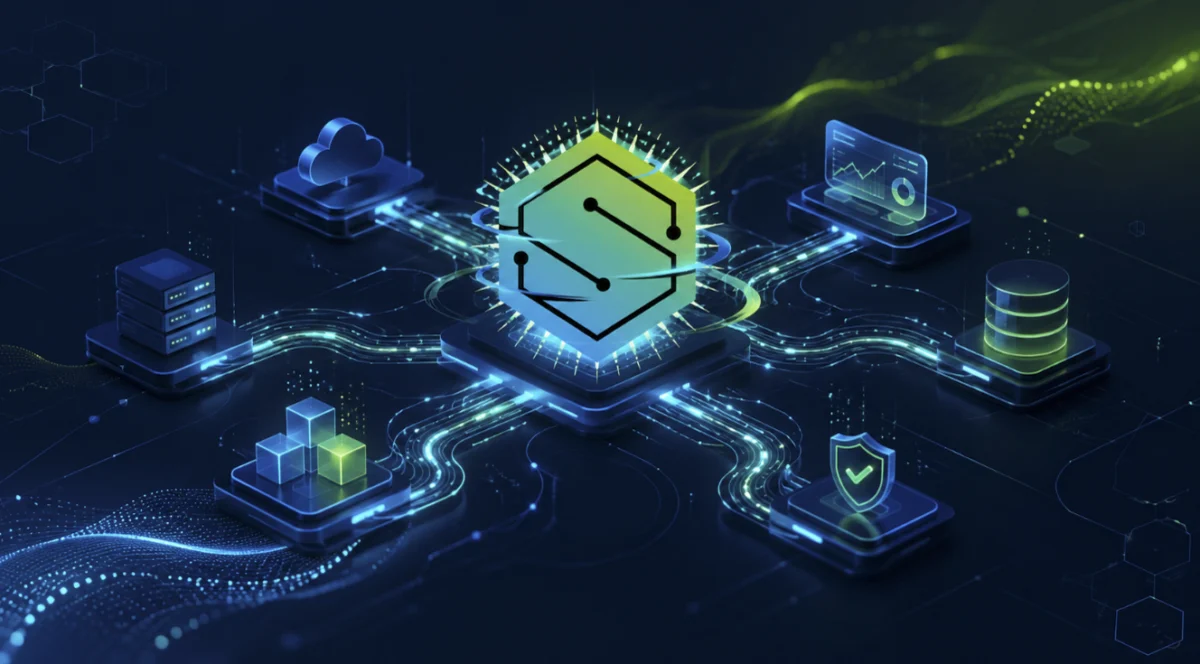
The global corporate landscape is currently navigating a pivotal transition point where the initial excitement surrounding generative and predictive artificial intelligence is being met with the harsh reality of enterprise-scale implementation. As organizations across the financial services, insurance, and logistics sectors attempt to integrate advanced automation into their daily operations, they are frequently met with the "pilot purgatory" phenomenon—a state where promising AI experiments fail to reach production due to the rigid nature of legacy infrastructure. Solvrays, an emerging leader in the intelligent orchestration space, has introduced a strategic framework designed to bridge this gap by acting as a central nervous system for the modern enterprise. By providing a sophisticated control layer that sits atop existing technology stacks, the company aims to modernize operations without the catastrophic costs and risks associated with "rip-and-replace" IT strategies.
The Crisis of Legacy Systems and the Integration Bottleneck
The primary obstacle to digital transformation in 2026 remains the persistence of siloed legacy systems. In industries like insurance, many core policy administration systems and CRM platforms are decades old, built on architectures that predated the cloud and modern API-first environments. According to recent industry benchmarks, nearly 70% of digital transformation projects in the financial sector fail to meet their original objectives, largely due to the complexity of integrating new AI tools with these antiquated back-ends.
Solvrays addresses this friction by positioning itself as an intelligent orchestration control layer. This architectural approach allows companies to keep their stable, albeit old, core systems in place while layering a dynamic, AI-driven operational environment over them. This "central nervous system" methodology ensures that data flows seamlessly between disparate platforms, such as document management systems and agent portals, without requiring a total overhaul of the underlying database structures.
Moving Beyond Pilot Purgatory: A New Operational Framework
The shift from AI pilots to enterprise execution requires more than just a functional algorithm; it requires a workflow environment where AI can interact with human decision-makers and existing software. Solvrays has identified three critical pillars—acceleration, optimization, and integration—that serve as the foundation for this transition.
In the acceleration phase, the focus is on the customer and agent journey. In the traditional insurance model, onboarding a new agent or processing a complex claim can involve dozens of manual touchpoints across multiple disconnected screens. Solvrays utilizes its orchestration layer to automate the data hand-offs between these systems, significantly reducing "swivel-chair" activity. This results in a faster time-to-market for products and a more responsive experience for the end-user.
Operational efficiency, the second pillar, is achieved through the intelligent routing of work. Rather than simply automating a single task, Solvrays looks at the entire lifecycle of a business process. By using AI to analyze incoming data and route it to the appropriate human or digital worker, the system reduces error rates and ensures that high-value human talent is focused on complex problem-solving rather than administrative data entry.
Finally, the integration pillar solves the problem of technical fragmentation. By acting as a unifying control layer, Solvrays connects policy administration, CRM, and document management platforms into a single, cohesive operational environment. This allows for a "single pane of glass" view of the business, where managers can monitor performance and adjust workflows in real-time.
The Strategic Importance of Orchestration in 2026
The year 2026 marks a significant milestone in the evolution of enterprise AI. Following the rapid adoption of Large Language Models (LLMs) in 2023 and 2024, the current market demand has shifted toward "agentic" workflows—AI systems that can not only generate text but also execute actions within a corporate environment. For these agents to be effective, they require the precise orchestration that Solvrays provides.
Industry analysts suggest that the "orchestration layer" is becoming the most critical component of the enterprise IT budget. Without a way to manage the interactions between various AI models and legacy databases, companies risk creating a new generation of digital silos. Solvrays’ approach focuses on "low-disruption modernization," a strategy that is increasingly favored by Chief Information Officers (CIOs) who are under pressure to deliver immediate ROI on AI investments while managing tight capital expenditure budgets.
Chronology of Implementation: From Contact to Execution
The path to integrating the Solvrays orchestration layer typically follows a structured timeline designed to minimize operational risk.
- Discovery and Mapping: The process begins with an audit of the organization’s current "workflow friction points." This involves identifying which legacy systems are slowing down critical processes like agent onboarding or claims processing.
- Orchestration Design: Instead of writing custom code to link systems, Solvrays configures the orchestration layer to act as the traffic controller for data and tasks.
- Pilot Integration: A specific high-impact workflow is selected to move from a siloed AI pilot into the orchestrated environment.
- Full-Scale Execution: Once the initial workflow is optimized, the orchestration layer is expanded across the enterprise, connecting all vital platforms into the "central nervous system."
This timeline is significantly shorter than traditional core system replacements, which can take three to five years to complete. Solvrays enables organizations to see measurable improvements in efficiency and speed within months, providing a pragmatic alternative to long-term infrastructure projects.
Industry Presence and the Road to ITC Vegas 2026
As part of its mission to drive industry-wide adoption of orchestrated AI, Solvrays has announced its participation in ITC Vegas 2026, the premier global event for the InsurTech community. Scheduled to take place from September 29 to October 1 at the Mandalay Bay Resort & Casino in Las Vegas, the conference serves as a critical gathering point for technology leaders, insurance executives, and investors.
Solvrays will be exhibiting at Booth 3232, where the company plans to demonstrate how its platform can move organizations from experimental AI pilots to full-scale enterprise execution. The event comes at a time when the insurance industry is facing mounting pressure to improve loss ratios and reduce expense ratios through technology. Analysts expect that orchestration and AI-driven efficiency will be the dominant themes of the 2026 conference, as the industry moves past the "hype" phase of AI and into the "utility" phase.
Broader Implications for the Future of Work
The implications of Solvrays’ orchestration model extend beyond simple software integration; they signal a fundamental shift in the nature of corporate labor. By automating the connective tissue between systems, the technology allows for a more "elastic" workforce. When systems "work together as one connected operational environment," the barriers to scaling operations during peak periods—such as during a natural disaster for an insurance company—are significantly lowered.
Furthermore, this model provides a safety net for innovation. Because Solvrays does not require the removal of core systems, organizations can experiment with the latest AI models and third-party tools with minimal risk. If a new AI tool fails to deliver results, it can be swapped out within the orchestration layer without disrupting the underlying business logic or data integrity of the core systems.
Conclusion: Building the Agile Enterprise
The Enterprise AI Insider report highlights a clear consensus: the future of business belongs to the agile. However, agility cannot be achieved if an organization is anchored by the weight of its own legacy technology. Solvrays offers a middle path—one that respects the stability of existing investments while embracing the transformative power of AI.
By serving as the intelligent orchestration control layer, Solvrays is providing the infrastructure necessary for the next generation of business execution. As the corporate world gathers in Las Vegas this autumn for ITC 2026, the focus will undoubtedly be on companies that can prove they have moved beyond the laboratory. For Solvrays, the goal is to demonstrate that the era of "isolated pilots" is over, replaced by a new standard of coordinated, intelligent, and seamless enterprise operations. For organizations looking to modernize without the chaos of a total system overhaul, the message is clear: the path to the future is not about replacing the past, but about orchestrating it.