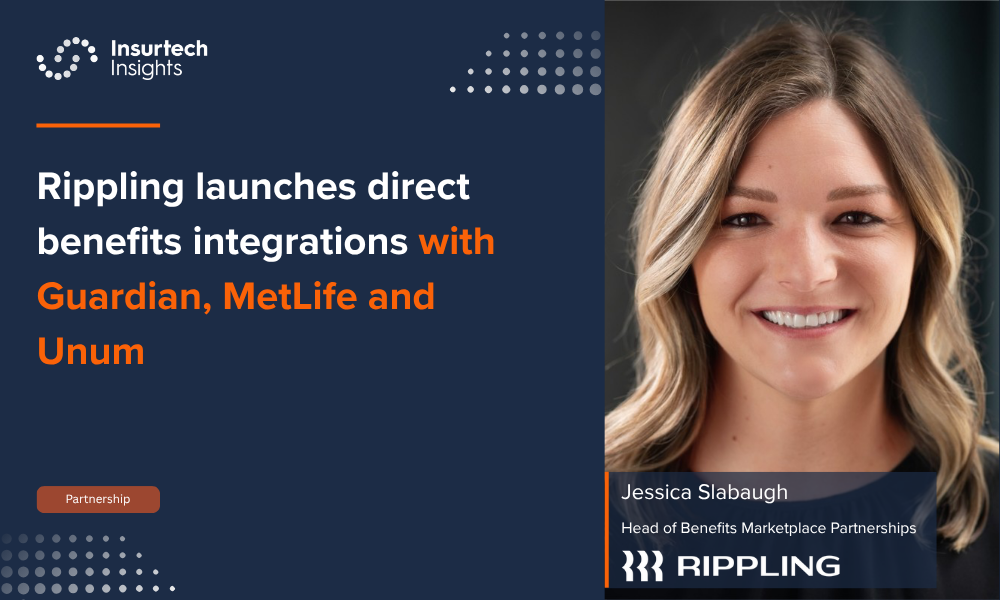
The workforce management platform Rippling has officially unveiled its Preferred Carrier Program, a landmark initiative designed to revolutionize the way employee benefits are administered by establishing direct, high-fidelity technical integrations with three of the insurance industry’s most prominent carriers: Guardian, MetLife, and Unum. This strategic collaboration marks a significant departure from traditional third-party benefits administration models, aiming to eliminate the pervasive issue of manual data entry while drastically improving the accuracy and speed of coverage for employees across the United States.
By creating a unified digital ecosystem where HR software and insurance providers communicate in real-time, Rippling is addressing a long-standing pain point for small to mid-sized businesses (SMBs) and large enterprises alike. The program is built on the premise that the "middleman" approach to benefits—which often relies on antiquated file transfers and manual reconciliation—is no longer viable in an increasingly digitized economy.
The Evolution of Benefits Administration: From Manual to Automatic
For decades, the exchange of data between employers and insurance carriers has been fraught with technical hurdles. The industry standard has long been the use of Electronic Data Interchange (EDI) files. While EDI represented an improvement over paper-based systems in the late 20th century, it remains a rigid and often slow method of communication. EDI files are typically sent in "batches," meaning that changes to an employee’s status—such as a new hire, a promotion, or a life event like a marriage—might not be reflected in the insurance carrier’s system for days or even weeks.
This lag creates a "coverage gap," where an employee may believe they are insured but find their claims denied at a pharmacy or doctor’s office because the carrier has not yet processed the enrollment file. Furthermore, manual data handling is prone to human error; a misspelled name or an incorrectly entered Social Security number can lead to months of administrative "rework" and reconciliation headaches for HR departments.
Rippling’s Preferred Carrier Program seeks to replace these legacy processes with modern API (Application Programming Interface) connectivity. Unlike traditional carrier connections that are often built unilaterally by software vendors, the integrations within this program are co-developed. This means that engineers from Rippling work directly with technical teams at Guardian, MetLife, and Unum to ensure that data flows seamlessly and follows shared operational standards.
Strategic Objectives and the Initial Rollout Phase
The primary objective of the Preferred Carrier Program is to create a "closed-loop" system for benefits management. In the initial phase, the program focuses on direct enrollment integrations. This ensures that when an employee selects a plan during open enrollment or a qualifying life event on the Rippling platform, that data is instantly transmitted to the carrier.
Key features of the initial rollout include:
- Automated Eligibility Tracking: The system automatically determines which employees are eligible for specific plans based on their location, job title, and employment status.
- Real-Time Enrollment Updates: Coverage selections are pushed to carriers immediately, reducing the time it takes for insurance cards to be issued.
- Synchronized Coverage Information: Any changes made within the Rippling HRIS (Human Resources Information System) are reflected in the carrier’s records without the need for manual intervention by HR administrators.
Beyond the technical integration, the program establishes shared service standards. This includes defined escalation paths for resolving data discrepancies and dedicated support teams to ensure that any issues are addressed with a level of urgency that traditional "ben-admin" providers rarely offer.
Voices from the Partnership: A Shared Vision for Modern HR
The leadership teams at Rippling and its partner carriers have emphasized that this program is as much about the employee experience as it is about administrative efficiency.
Jessica Slabaugh, Head of Benefits Marketplace Partnerships at Rippling, highlighted the collaborative nature of the initiative. “Customers using Preferred Carriers benefit from partnerships that are co-developed, held to shared operating standards, and designed to continuously deliver new capabilities over time,” Slabaugh stated. She noted that the program aims to create a more connected experience that evolves alongside the needs of the modern workforce.
The carriers involved—Guardian, MetLife, and Unum—are among the largest providers of dental, vision, life, and disability insurance in the country. Their participation signals a broader industry shift toward digital transformation.
Anna Roberts, Head of Digital Strategy and Offerings at Guardian, emphasized the benefits for the intermediary market. “By working closely together, we’re using real-time data exchange to simplify setup and management for employers and brokers, while supporting employee well-being by making benefits easier to access and use,” Roberts said.
MetLife’s Head of Regional Business, Bradd Chignoli, echoed these sentiments, focusing on the reduction of "friction" for growing businesses. “Collaborations like Rippling’s Preferred Carrier partnership help reduce friction and create more connected experiences for employees, making it easier for employers and brokers to support their people while staying focused on running and growing their business,” Chignoli remarked.
From a technical standpoint, Ray Russell, AVP of Platform Integration at Unum, pointed to the reliability of the new model. “That structure dramatically improves data accuracy, reduces rework, and gives us confidence that eligibility and enrollment changes are flowing correctly every time,” Russell said.
Implementation Timeline and Migration Strategy
Rippling has outlined a clear path for the adoption of the Preferred Carrier Program. Effective immediately, new Rippling customers who choose to implement benefits packages with Guardian, MetLife, or Unum will be onboarded directly through the new API-driven connections.
For the thousands of existing Rippling customers already using these carriers, the company has planned a phased migration process. Over the next 12 months, these accounts will be transitioned from legacy connection methods to the Preferred Carrier framework. This transition is intended to be "invisible" to the end-user, requiring minimal input from HR teams while delivering immediate improvements in data synchronization.
Supporting Data: The Cost of Administrative Inefficiency
The move toward automated benefits administration is supported by a growing body of data highlighting the costs of manual HR processes. According to research from the Society for Human Resource Management (SHRM), HR professionals spend an average of 20% to 30% of their time on administrative tasks that could be automated. For a mid-sized company, this represents thousands of dollars in lost productivity every month.
Furthermore, the "cost of error" in benefits administration is high. Inaccurate enrollment data can lead to overpayment of premiums or, conversely, the failure to provide coverage, which can result in legal liability for the employer. By utilizing direct API connections, Rippling claims it can reduce data discrepancies by over 90% compared to traditional manual or EDI-based systems.
The growth of the InsurTech market also provides context for this launch. The global InsurTech market was valued at approximately $5.4 billion in 2022 and is projected to grow at a compound annual growth rate (CAGR) of over 30% through 2030. Initiatives like the Preferred Carrier Program are at the forefront of this growth, as carriers seek to integrate more deeply with the software platforms where business owners already manage their operations.
Broader Impact on the Brokerage and Insurance Ecosystem
While the Preferred Carrier Program offers clear benefits to employers and employees, its impact on the insurance broker community is equally significant. Traditionally, brokers have had to spend a disproportionate amount of time troubleshooting enrollment issues and acting as a liaison between the client and the carrier’s back-office.
With the automation provided by Rippling, brokers can shift their focus from administrative firefighting to strategic consulting. They can spend more time analyzing plan designs, managing costs, and advising clients on how to build a more competitive benefits package to attract and retain talent in a tight labor market.
Moreover, this program sets a new benchmark for what is expected of an HRIS provider. As Rippling deepens its ties with major carriers, other platforms in the space—such as Gusto, Zenefits, and ADP—will likely face increased pressure to develop similar high-level partnerships. This competition is expected to accelerate the overall pace of innovation within the benefits administration sector.
Future Outlook: The Roadmap for Continued Automation
The launch of the Preferred Carrier Program is only the beginning of what Rippling and its partners describe as a long-term roadmap for innovation. Future phases of the program are expected to tackle even more complex areas of the benefits lifecycle.
One area of focus is "Plan Setup Automation." Currently, even with advanced software, setting up a new benefits plan often requires manual configuration of plan documents, rates, and rules. Rippling intends to automate this process, allowing employers to "push a button" to implement a new plan that is instantly recognized by the carrier.
Another future development involves "Evidence of Insurability" (EOI) and coverage approvals. For high-value life or disability insurance, carriers often require employees to answer health questions. By integrating this process directly into the enrollment flow via API, the time required for coverage approval can be reduced from weeks to minutes.
Conclusion: A New Standard for the Industry
The introduction of the Preferred Carrier Program by Rippling, in partnership with Guardian, MetLife, and Unum, represents a pivotal moment in the convergence of HR technology and insurance. By prioritizing co-developed, API-first integrations, these companies are moving the industry away from the error-prone "silos" of the past and toward a more integrated, transparent, and efficient future.
For employers, the program promises a reduction in administrative burden and a mitigation of compliance risks. For employees, it ensures that their benefits are active when they need them most. As the 12-month migration begins, the industry will be watching closely to see if this model becomes the new gold standard for benefits administration in the digital age. In an era where "the employee experience" is a top priority for businesses of all sizes, the elimination of administrative friction is no longer just a convenience—it is a strategic necessity.