The workforce management platform Rippling has officially unveiled its Preferred Carrier Program, a strategic initiative developed in collaboration with industry giants Guardian, MetLife, and Unum. This partnership marks a significant shift in the landscape of employee benefits administration, moving away from traditional, fragmented data management toward a unified, real-time API-driven ecosystem. By establishing direct, co-developed connections with these major insurance carriers, Rippling aims to eliminate the persistent administrative friction that has long plagued human resources departments, insurance brokers, and employees alike.
The initiative is designed to replace the antiquated methods of data exchange that have defined the insurance industry for decades. Traditionally, benefits administration has relied on Electronic Data Interchange (EDI) files—a technology dating back to the 1970s—or, in many cases, manual data entry into multiple disparate systems. These legacy processes are frequently characterized by delays, "broken" data transfers, and a high incidence of reconciliation errors. The Preferred Carrier Program seeks to resolve these issues by facilitating the automated exchange of employee eligibility, enrollment, and coverage information through deeply integrated application programming interfaces (APIs).
Addressing the Legacy Data Challenge in Benefits Administration
For decades, the "benefits bridge" between employers and insurance carriers has been fragile. When an employee is hired, terminated, or experiences a qualifying life event, the information must travel from the employer’s HR information system (HRIS) to the insurance provider. Under the traditional model, this often involves "batch processing," where data is collected and sent once a week or once a month. If a file contains a single formatting error, the entire transfer may fail, often without immediate notification to the employer.
The consequences of these technical failures are more than just administrative nuisances; they have real-world implications for employee wellness. A delay in data synchronization can result in an employee being unable to fill a prescription at a pharmacy or being denied coverage at a doctor’s office because the carrier’s system has not yet been updated to reflect their active status. By implementing real-time data exchange, Rippling and its partners are ensuring that coverage status is updated almost instantaneously, providing a seamless experience for the end-user.
Industry data suggests that administrative errors in benefits enrollment can lead to significant financial leakage. Some estimates indicate that up to 30% of monthly carrier invoices contain discrepancies due to "retroactive adjustments"—changes in employee status that were not communicated to the carrier in a timely manner. The Preferred Carrier Program aims to reduce these discrepancies to near zero by ensuring that the employer’s "source of truth" (Rippling) is always in lockstep with the carrier’s records.
A New Standard for Co-Developed Integrations
What distinguishes the Preferred Carrier Program from standard software-carrier connections is the depth of the partnership. In the typical "broker-tech" model, a software company might build a one-sided integration to push data toward a carrier. However, if the carrier makes an update to their internal systems, the integration often breaks.
Rippling’s new model is built on mutual accountability and co-development. Each integration within the program is built jointly by engineers from both Rippling and the respective insurance carrier. This collaborative approach ensures that the data mapping is precise and that both parties have a vested interest in maintaining the connection.
Furthermore, the program introduces shared operating standards and formal escalation processes. In the event of a data discrepancy, there is a pre-defined protocol for resolution, preventing the "finger-pointing" that often occurs between software vendors and insurance providers. This level of institutional cooperation is designed to provide employers and brokers with a higher degree of confidence in the integrity of their benefits data.
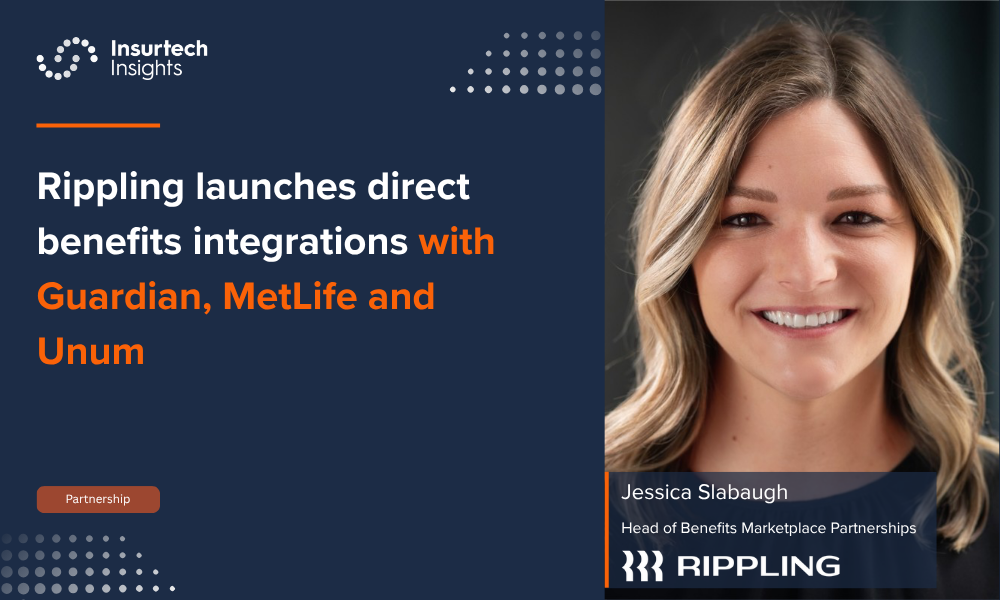
Jessica Slabaugh, Head of Benefits Marketplace Partnerships at Rippling, emphasized that this is not a static product but an evolving ecosystem. “Customers using Preferred Carriers benefit from partnerships that are co-developed, held to shared operating standards, and designed to continuously deliver new capabilities over time,” Slabaugh stated. This suggests that while the initial focus is on enrollment and eligibility, the infrastructure is being laid for more complex automations in the future.
Perspectives from Industry Leaders: Guardian, MetLife, and Unum
The involvement of Guardian, MetLife, and Unum—three of the largest and most influential insurance providers in the United States—underscores the industry-wide demand for modernization. Each carrier has expressed a commitment to reducing the "administrative tax" that small and mid-sized businesses (SMBs) pay when trying to offer competitive benefits packages.
Anna Roberts, Head of Digital Strategy and Offerings at Guardian, highlighted the benefits for the broader ecosystem, including brokers. “By working closely together, we’re using real-time data exchange to simplify setup and management for employers and brokers, while supporting employee well-being by making benefits easier to access and use,” Roberts noted. For brokers, who often spend a disproportionate amount of time troubleshooting data errors rather than providing strategic advice, this automation represents a significant productivity gain.
MetLife’s participation focuses heavily on the SMB market, where administrative resources are often scarce. Bradd Chignoli, Head of Regional Business at MetLife, observed that reducing friction allows business owners to focus on growth rather than paperwork. “Collaborations like Rippling’s Preferred Carrier partnership help reduce friction and create more connected experiences for employees, making it easier for employers and brokers to support their people while staying focused on running and growing their business,” Chignoli said.
Unum, a leader in disability and leave management, pointed to the technical reliability of the API model. Ray Russell, AVP of Platform Integration at Unum, stated: “That structure dramatically improves data accuracy, reduces rework, and gives us confidence that eligibility and enrollment changes are flowing correctly every time.” This "confidence" factor is critical for carriers, as it reduces the operational costs associated with manual audits and "re-work" caused by faulty data.
Implementation Timeline and Migration Strategy
The rollout of the Preferred Carrier Program is structured to ensure a stable transition for both new and existing users. New Rippling customers who select Guardian, MetLife, or Unum as their providers will be able to leverage the direct API connections immediately during their initial implementation phase.
For the thousands of existing Rippling customers already using these carriers, the company has announced a phased migration process. Over the next 12 months, these accounts will be transitioned from legacy connection methods to the new Preferred Carrier framework. This gradual approach is intended to mitigate the risk of data disruption during the switchover, allowing for thorough testing and verification at each stage of the migration.
This 12-month window reflects the complexity of the benefits landscape. Migrating thousands of groups—each with unique plan designs, contribution strategies, and eligibility rules—requires a meticulous technical execution. Rippling’s commitment to this timeline suggests a focus on long-term stability over a rushed deployment.
Broader Implications for the Insurtech and HR Tech Sectors
The launch of the Preferred Carrier Program is a bellwether for the broader digital transformation of the insurance industry. For years, the term "Insurtech" referred primarily to front-end consumer apps or niche underwriting tools. Now, the focus is shifting toward the "plumbing" of the industry—the underlying infrastructure that moves data between stakeholders.
Several key trends are reflected in this announcement:
- The Death of the EDI File: While EDI will not disappear overnight, the move toward real-time APIs is becoming the gold standard for high-growth HR tech platforms. APIs allow for bi-directional communication, meaning the carrier can send information back to the HRIS (such as approved coverage amounts or effective dates), creating a closed-loop system.
- The Rise of "Benefits-as-a-Service": By integrating so deeply with carriers, platforms like Rippling are effectively turning insurance products into programmable services. This opens the door for "just-in-time" benefits, where coverage can be adjusted or triggered automatically based on payroll or HR data.
- Consolidation of the Tech Stack: Employers are increasingly looking for "all-in-one" platforms that handle payroll, HR, and benefits in a single interface. Rippling’s ability to offer deep, native integrations with top-tier carriers strengthens its position against traditional legacy payroll providers who may still rely on third-party "integrators" or manual processes.
- Enhanced Employee Experience: In a competitive labor market, the "user experience" of benefits matters. When an employee can sign up for life insurance on their phone and receive a confirmation of coverage almost instantly, it reflects positively on the employer’s brand.
Future Outlook: Expanding the Benefits Lifecycle
The initial phase of the Preferred Carrier Program focuses on the "front end" of the benefits experience: setup, enrollment, and eligibility. However, the roadmap for the partnership suggests a much broader scope. Future developments are expected to automate the entire benefits lifecycle.
This could include the automation of Evidence of Insurability (EOI) processes, where employees applying for higher levels of coverage currently have to fill out separate medical questionnaires that are often processed manually. With deeper API integration, these health statements could be submitted and adjudicated digitally within the Rippling interface.
Additionally, the integration could extend into claims management and wellness programs. If a carrier knows through the API that an employee has qualified for a specific wellness incentive, that information could flow directly back into Rippling to trigger a payroll credit or a contribution to a Health Savings Account (HSA).
As Rippling continues to expand its "Preferred" network, the pressure will likely mount on other carriers to adopt similar API standards. In an era where data speed and accuracy are competitive advantages, the traditional "black box" of insurance administration is being forced open, promising a more efficient and transparent future for the modern workforce.