The workforce management platform Rippling has officially unveiled its Preferred Carrier Program, a strategic initiative designed to overhaul the traditional complexities of benefits administration. By establishing direct, co-developed integrations with three of the industry’s most prominent insurance providers—Guardian, MetLife, and Unum—Rippling aims to eliminate the persistent reliance on manual data entry and legacy file-transfer systems. This move represents a significant shift in the Insurtech landscape, moving away from the often-unreliable Electronic Data Interchange (EDI) files toward a more modern, API-first approach to employee benefits management.
The partnership is structured to address the systemic "friction" that has long plagued the human resources and insurance sectors. Traditionally, when an employee joins a company, changes their coverage, or experiences a qualifying life event, the data must travel from the employer’s HR information system (HRIS) to the insurance carrier. In many instances, this involves manual spreadsheets or antiquated batch-file transfers that are prone to errors, delays, and data mismatches. The Preferred Carrier Program seeks to resolve these issues by facilitating a real-time, automated exchange of information regarding employee eligibility, enrollment, and coverage details.
The Technical Shift: From Legacy EDI to Co-Developed APIs
At the heart of this announcement is a fundamental change in how software platforms and insurance carriers communicate. For decades, the industry standard has been the 834 EDI file, a format originally designed for healthcare data exchange that often requires custom configuration for every individual employer and carrier pairing. These files are typically sent in weekly or monthly batches, meaning that an employee’s coverage status might not reflect their actual choices for several days or even weeks.
Rippling’s new program diverges from this model by utilizing application programming interfaces (APIs) developed in direct collaboration with Guardian, MetLife, and Unum. Unlike standard integrations where a software provider might "scrape" data or build a one-sided connection, these integrations are built as joint ventures. This ensures that both the platform and the carrier are operating on the same logic and data standards.
The initiative includes shared service standards and established escalation processes. This means that if a data discrepancy occurs, there is a pre-defined pathway for resolution between Rippling and the carrier, rather than leaving the HR administrator or the insurance broker to navigate the conflict. This level of synchronization is intended to ensure that what an employee sees on their Rippling dashboard is an exact mirror of what is recorded in the carrier’s backend system.
Strategic Objectives and Executive Insights
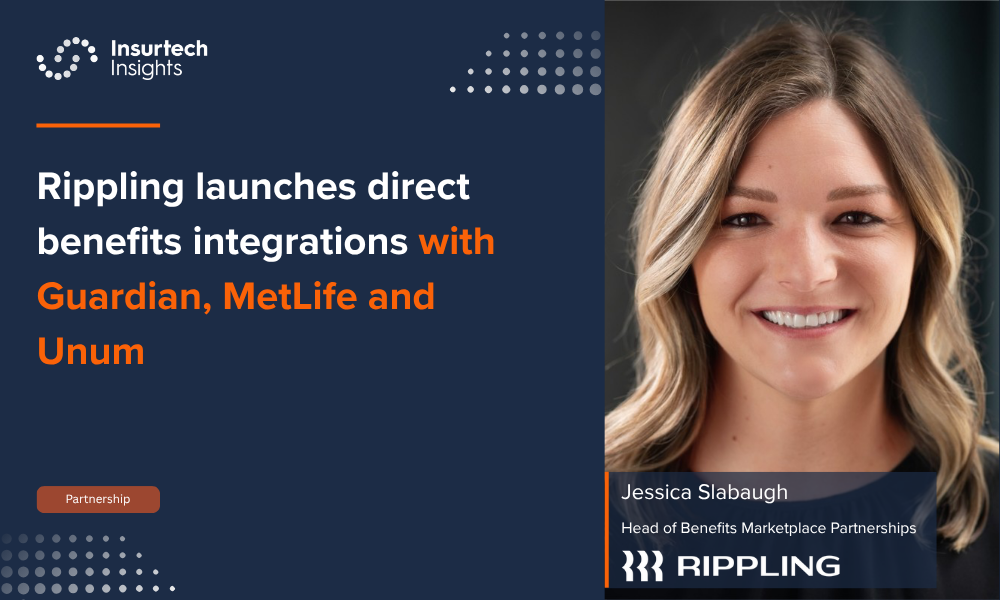
The leadership teams of the participating companies have emphasized that the program is not merely a technical upgrade but a strategic move to enhance the "user experience" for both employers and employees. Jessica Slabaugh, Head of Benefits Marketplace Partnerships at Rippling, noted that the program is designed for longevity and continuous improvement. According to Slabaugh, customers utilizing these preferred carriers will benefit from partnerships that are "held to shared operating standards and designed to continuously deliver new capabilities over time."
For the insurance carriers, the partnership offers a way to penetrate the small and mid-sized business (SMB) market more effectively. SMBs often lack the dedicated HR resources to manage complex benefits reconciliations, making them more likely to favor platforms that offer seamless automation.
Anna Roberts, Head of Digital Strategy and Offerings at Guardian, highlighted the impact on the broader ecosystem, including brokers. "By working closely together, we’re using real-time data exchange to simplify setup and management for employers and brokers," Roberts stated. She further emphasized that the ultimate goal is to support employee well-being by making benefits "easier to access and use," reducing the likelihood of coverage gaps or enrollment errors that could prevent an employee from receiving care.
MetLife’s participation underscores a commitment to reducing "administrative friction." Bradd Chignoli, Head of Regional Business at MetLife, explained that such collaborations allow employers and brokers to "stay focused on running and growing their business" rather than being bogged down by back-office administration. Similarly, Ray Russell, AVP of Platform Integration at Unum, pointed out that the direct API connectivity model gives the carrier "confidence that eligibility and enrollment changes are flowing correctly every time," which significantly reduces the need for operational "rework"—the costly process of fixing data errors after they have already affected billing or coverage.
Implementation Timeline and Migration Strategy
Rippling has outlined a clear roadmap for the rollout of the Preferred Carrier Program. Effective immediately, new Rippling customers who choose to implement benefits packages through Guardian, MetLife, or Unum will be eligible to utilize these direct API connections from day one. This provides an immediate competitive advantage for the three participating carriers when vying for the business of companies migrating to the Rippling platform.
For the thousands of existing Rippling customers who already utilize these carriers through older integration methods, the company has announced a phased migration process. This transition is expected to take place over the next 12 months. During this period, Rippling and the carriers will work to move existing data feeds over to the new API infrastructure, ensuring that historical data is preserved while upgrading the system to the new automation standards.
Supporting Data: The Cost of Administrative Inefficiency
The move toward automation in benefits administration is supported by a growing body of data highlighting the costs of manual processes. According to industry research, administrative errors in healthcare and benefits enrollment can cost U.S. companies billions of dollars annually in overpaid premiums, compliance penalties, and lost productivity.
A study by the Integrated Benefits Institute (IBI) suggests that poor health and the administrative burden of managing health-related benefits cost U.S. employers $575 billion a year. By automating the data flow, platforms like Rippling can significantly reduce "premium leakage"—a scenario where an employer continues to pay premiums for an employee who has left the company because the carrier’s records were not updated in a timely manner.
Furthermore, a survey by the Society for Human Resource Management (SHRM) found that HR professionals spend an average of 20% to 30% of their time on administrative tasks. For small business owners, this burden is even more pronounced. The Rippling Preferred Carrier Program is positioned as a solution to reclaim this time, allowing HR teams to focus on more strategic initiatives such as talent acquisition and culture building.
Broader Implications for the Insurtech and HR Tech Markets
The launch of this program is a clear indicator of the maturing "Workforce OS" (Operating System) category that Rippling has pioneered. By integrating HR, IT, and Finance into a single pane of glass, Rippling is positioning itself as the central nervous system of a company’s operations. The addition of deep-tier insurance integrations suggests that the future of HR tech is not just in "storing" employee data, but in "activating" it across a wide network of third-party service providers.
This development also puts pressure on other HR and payroll giants, such as ADP, Paychex, and Gusto, to deepen their own carrier relationships. While many platforms offer some level of integration, the "co-developed" nature of Rippling’s program sets a new benchmark for what constitutes a "seamless" connection.
From the perspective of the insurance industry, the partnership validates the ongoing digital transformation efforts of legacy carriers like MetLife and Guardian. These companies have historically been viewed as slow-moving giants, but their willingness to build custom API frameworks for a tech-forward platform like Rippling shows a strategic pivot toward "embedded insurance." In this model, insurance products are not sold in isolation but are integrated directly into the software tools that businesses use every day.
The Future of the Preferred Carrier Program
While the initial phase of the program focuses on direct enrollment and basic operational standards, Rippling has signaled that this is only the beginning. Future iterations of the program are expected to automate more complex portions of the benefits lifecycle.
Potential areas for expansion include:
- Plan Setup and Renewal: Automating the process of designing benefit plans and renewing them annually, which currently requires significant manual negotiation and data entry.
- Coverage Approvals: Using real-time data to provide instant approvals for supplemental insurance products that require evidence of insurability (EOI).
- Claims Integration: Although not currently part of the announcement, industry analysts suggest that the logical next step for API-driven benefits is to streamline the claims process, allowing carriers to proactively reach out to employees when the HRIS data suggests they might be eligible for a claim (e.g., disability or parental leave).
As the program evolves, it is likely that Rippling will expand the roster of "Preferred Carriers" to include other major players in the medical, dental, and vision spaces. However, by launching with Guardian, MetLife, and Unum, Rippling has secured partnerships with three of the most influential names in the ancillary benefits market, providing a strong foundation for its vision of a fully automated, error-free benefits ecosystem.
In conclusion, the Rippling Preferred Carrier Program represents a pivotal moment in the modernization of corporate benefits. By bridging the gap between HR software and insurance carriers with co-developed technology, the initiative promises to reduce the administrative "tax" on businesses, improve the accuracy of employee records, and ultimately ensure that benefits function as intended—as a reliable safety net for the modern workforce.