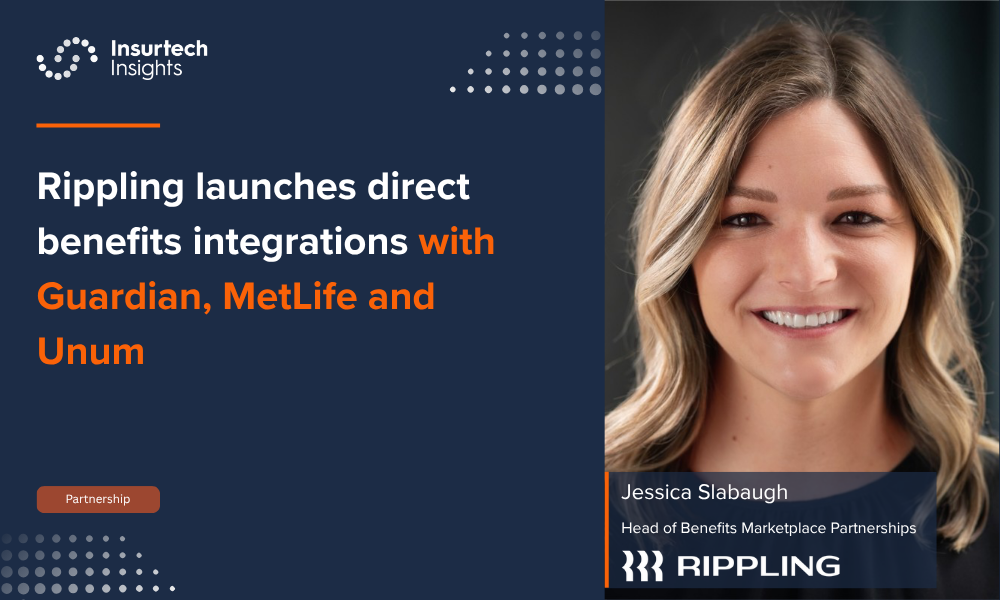
In a significant move toward the digital transformation of human resources and insurance technology, Rippling has officially unveiled its Preferred Carrier Program, a strategic initiative designed to automate and streamline the complexities of benefits administration. By establishing direct, co-developed integrations with three of the industry’s most prominent insurance providers—Guardian, MetLife, and Unum—Rippling aims to eliminate the persistent friction associated with manual data entry, reconciliation errors, and administrative delays that have long plagued the employer-sponsored benefits landscape. This program represents a shift away from traditional, siloed software connections toward a deeply integrated ecosystem where data flows seamlessly between HR platforms and insurance carriers in real time.
The launch addresses a critical pain point for businesses of all sizes: the "administrative gap" that occurs when employee information changes. Traditionally, when an employee is hired, terminated, or undergoes a qualifying life event, HR administrators must manually update records across multiple systems or rely on antiquated file-transfer protocols. The Preferred Carrier Program replaces these inefficient methods with automated data exchange, ensuring that employee eligibility, enrollment status, and coverage details are synchronized instantaneously across the Rippling platform and the carrier’s backend systems.
The Evolution of Benefits Administration: From EDI to API
To understand the impact of Rippling’s new program, it is necessary to examine the historical context of benefits administration. For decades, the industry standard for data exchange has been Electronic Data Interchange (EDI). While EDI was a breakthrough in the late 20th century, it is often criticized in the modern era for being slow, rigid, and prone to failure. EDI files are typically sent in "batches"—often weekly or bi-weekly—meaning that an employee who signs up for health insurance on a Monday might not see their coverage reflected in the carrier’s system until the following week or later.
Furthermore, EDI connections are notoriously fragile. A single formatting error in a text file can cause an entire batch to fail, leading to significant delays and requiring manual intervention from HR teams. Rippling’s Preferred Carrier Program bypasses these legacy constraints by utilizing Application Programming Interfaces (APIs). Unlike batch processing, APIs allow for "real-time" or "near-real-time" communication. When an action is taken in Rippling, the information is pushed directly to the carrier, providing a level of agility and accuracy that traditional systems cannot match.
Rippling’s approach is distinct because these integrations are not built in isolation. Typically, a software provider might build a "wrapper" around a carrier’s existing portal. In contrast, the Preferred Carrier Program involves co-development. Rippling and its partners—Guardian, MetLife, and Unum—have worked together to establish shared operating standards and dedicated escalation paths. This means that if a data discrepancy does occur, there is a pre-established framework for resolving it quickly, reducing the burden on the employer and the insurance broker.
Strategic Objectives and the Role of Key Partners
The primary objective of the program is to create a "connected benefits experience." For employers, this means less time spent on "paperwork" and more time focused on strategic human capital management. For employees, it means faster access to coverage and a more intuitive enrollment experience.
Jessica Slabaugh, Head of Benefits Marketplace Partnerships at Rippling, emphasized that the program is designed for longevity and continuous improvement. According to Slabaugh, customers utilizing the Preferred Carrier Program benefit from partnerships that are held to high operating standards and are specifically engineered to evolve. The initial phase focuses on the most critical aspects of the benefits lifecycle: enrollment and eligibility. However, the roadmap for the program includes expanding automation to cover plan setup, coverage approvals, and ongoing administrative tasks that occur throughout the plan year.
The involvement of Guardian, MetLife, and Unum provides the program with significant market weight. These carriers represent a substantial portion of the group insurance market in the United States, offering everything from life and disability insurance to dental and vision plans.
Anna Roberts, Head of Digital Strategy and Offerings at Guardian, noted that the partnership is a response to the growing demand for simplicity in the benefits space. By leveraging real-time data exchange, Guardian aims to simplify the management process for both employers and brokers. This, in turn, supports employee well-being by ensuring that benefits are accessible when they are needed most, without the hurdles of administrative lag.
MetLife’s participation underscores the program’s value for the small and mid-sized business (SMB) sector. Bradd Chignoli, Head of Regional Business at MetLife, highlighted that collaborations of this nature help reduce "friction" for companies that may not have the massive HR departments required to manage complex benefit portfolios manually. By automating these processes, SMBs can remain competitive in the labor market by offering robust benefits packages without the overhead of enterprise-level administrative costs.
Unum’s contribution focuses heavily on the technical reliability of the API model. Ray Russell, Assistant Vice President of Platform Integration at Unum, stated that the direct connectivity model provides a level of confidence that was previously unattainable. The structure ensures that enrollment changes flow correctly every time, dramatically reducing the "rework" that often follows manual data entry errors.
Data-Driven Insights: The Cost of Administrative Inefficiency
The move toward automation is supported by a growing body of data regarding the costs of HR administrative errors. According to industry research, the average cost of a manual data entry error in a corporate setting can range from a few dollars to hundreds of dollars, depending on the severity of the mistake and the time required to rectify it. In the context of insurance, an error in eligibility can lead to "premium leakage," where an employer continues to pay premiums for a terminated employee, or "uncovered claims," where an eligible employee is denied care because their enrollment was not processed correctly.
A study by the Integrated Benefits Institute (IBI) previously suggested that poor health and administrative friction can cost U.S. employers billions in lost productivity. By automating the flow of data, Rippling is essentially providing a safeguard against these financial risks. Furthermore, a survey of HR professionals found that nearly 60% of their time is spent on administrative tasks, leaving little room for culture-building or talent development. The Preferred Carrier Program is positioned as a solution to reclaim that time.
Implementation Timeline and Migration Strategy
Rippling has outlined a clear path for the rollout of the Preferred Carrier Program. Effective immediately, new Rippling customers who select Guardian, MetLife, or Unum as their insurance carriers will be eligible to utilize the direct API connections. This "API-first" onboarding process is expected to significantly shorten the time it takes for a new company to go live with its benefits package.
For existing customers who are currently using legacy connection methods with these carriers, Rippling has announced a phased migration process. Over the next 12 months, these accounts will be transitioned to the new Preferred Carrier infrastructure. This gradual approach is intended to ensure data integrity and prevent any disruption in coverage during the switch. Rippling’s internal teams will work alongside the carriers to manage the migration, providing a "white-glove" transition for employers and their brokers.
Broader Implications for the InsurTech and HR Tech Markets
The launch of the Preferred Carrier Program is a bellwether for the broader trends in the InsurTech and HR Tech industries. We are witnessing a convergence where the lines between "software" and "service" are blurring. Platforms like Rippling are no longer just repositories for employee data; they are becoming active participants in the delivery of financial and insurance products.
This shift has profound implications for insurance brokers. Traditionally, brokers spent a significant portion of their time managing "spreadsheet enrollment" and troubleshooting carrier feeds. With the advent of programs like Rippling’s, the broker’s role is evolving from an administrative intermediary to a strategic advisor. Brokers can now focus on plan design, cost containment strategies, and employee communication, confident that the underlying data infrastructure is robust and automated.
Moreover, this movement sets a new benchmark for other carriers and platforms. As MetLife, Guardian, and Unum demonstrate the benefits of deep API integration—such as higher customer retention and lower operational costs—other major insurers will likely feel pressure to develop similar "preferred" partnerships. This could lead to a standardized "API economy" within the insurance industry, ultimately benefiting the end-user: the employee.
Conclusion: A More Resilient Benefits Ecosystem
Rippling’s Preferred Carrier Program is more than just a technical update; it is a strategic realignment of how benefits are managed in the modern workplace. By prioritizing direct API connectivity and co-developed standards, Rippling and its partners are building a more resilient, accurate, and user-friendly benefits ecosystem.
As the 12-month migration period begins, the industry will be watching closely to see how these integrations perform during high-stress periods, such as the annual Open Enrollment season. If successful, the Preferred Carrier Program could serve as the definitive blueprint for the future of benefits administration, marking the end of the manual data era and the beginning of a truly connected HR landscape. For employers, the promise is clear: less time on the phone with carriers, fewer errors in the payroll system, and a more professional experience for their workforce. For the carriers, it is an opportunity to modernize their delivery systems and deepen their integration into the daily workflows of the companies they serve.