The regulatory landscape for financial institutions in France is undergoing a period of unprecedented transformation. As the nation prepares to align its long-standing national framework with the impending European Union Anti-Money Laundering (AML) package, the pressure on compliance departments has intensified. With the Autorité de contrôle prudentiel et de résolution (ACPR) maintaining rigorous oversight and the transition toward a centralized EU authority, the selection of robust, future-proof anti-money laundering (AML) software is no longer merely an operational choice—it is a strategic necessity for institutional survival.
Current French entities operate within a mature and highly structured regime, primarily governed by the Code monétaire et financier. This framework mandates stringent customer due diligence (CDD), beneficial owner identification (BOI), and the constant monitoring of financial activity. Central to this process is the reporting of suspicious activities to Tracfin, the French financial intelligence unit, as well as strict adherence to asset-freezing mandates enforced by the DG Trésor. However, the regulatory horizon is dominated by the July 10, 2027, application date of the EU’s new Anti-Money Laundering Regulation (AMLR), which will harmonize standards across the bloc and introduce the Anti-Money Laundering Authority (AMLA) based in Frankfurt.
The Chronology of EU Regulatory Convergence
The shift toward a unified European AML standard is not sudden; it is the culmination of years of legislative development aimed at closing gaps in the previous directive-based system. The timeline for this transition is critical for French firms:
- Pre-2024: Compliance is largely dictated by national implementations of EU Directives, leading to varying interpretations and enforcement levels across member states.
- 2024: Formal adoption of the EU AML package (Regulation (EU) 2024/1624), establishing the framework for a single rulebook.
- 2025–2026: Preparatory phase for firms to align legacy systems with the new technical standards required by the regulation.
- July 10, 2027: The AMLR becomes fully applicable, replacing the "patchwork" of national directives with direct, harmonized rules.
- 2028: AMLA begins direct supervision of high-risk cross-border financial entities, signaling a shift toward centralized EU oversight.
For French firms, the challenge lies in maintaining compliance with the ACPR’s current expectations—which are among the most stringent in Europe—while simultaneously building an infrastructure capable of absorbing the incoming EU requirements without necessitating a total technological overhaul.
Core Considerations for Software Procurement
Selecting the right compliance solution requires an evaluation of five key pillars: regulatory readiness, technical capability, data integrity, transparency, and jurisdictional security.
1. Integrating ACPR and Tracfin Reporting
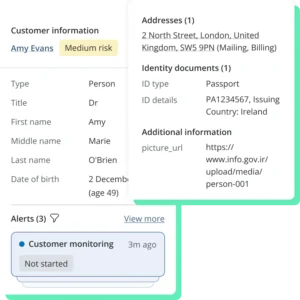
The ACPR requires that firms maintain not only a high level of vigilance but also an impeccable audit trail. Software must be capable of generating both "declaration de soupçon" (suspicious activity reports) and "declaration de déclaration" (suspicious transaction reports) with precision. Beyond reporting, the platform must facilitate efficient investigation. Analysts need tools that provide a 360-degree view of a customer’s risk profile, including automated alerts that prioritize high-risk activities, thereby reducing the "noise" that often plagues legacy monitoring systems.
2. Future-Proofing for the EU AML Package
The transition to the EU AMLR requires that systems move beyond local nuances to accommodate harmonized beneficial ownership and due diligence rules. Firms must prioritize vendors that offer "configurable compliance." As the definition of obligated entities expands, particularly regarding crypto-asset service providers (CASPs) under the Markets in Crypto-Assets (MiCA) regulation, software must support wallet screening and blockchain analytics. A vendor that cannot scale to meet these new definitions will become a liability by mid-2027.
3. The Transparency of AI
While behavioral machine learning and autonomous alert triage are standard in modern software, they present a significant challenge: the "black box" problem. The ACPR, in line with broader European trends toward ethical and explainable AI (XAI), expects firms to be able to justify why a specific transaction was flagged or why a risk score was assigned. Software must offer "human-in-the-loop" workflows that allow compliance officers to validate model outputs and document the rationale behind their decisions.
4. Data Breadth and Localized Sanctions
A platform is only as effective as the data it consumes. For French firms, this means access to high-quality, real-time intelligence on sanctions, politically exposed persons (PEPs), and adverse media. Crucially, the solution must reconcile international sanctions lists (EU and UN) with the French Registre national des gels. Relying on a tool that lacks deep, local-language intelligence or fails to update in near-real-time significantly increases the risk of inadvertent non-compliance with domestic asset-freezing orders.
5. Sovereignty and Data Residency
With the oversight of the CNIL and the strictures of the GDPR, data residency is paramount. While some global providers offer cloud-based solutions, French institutions often express a preference for EU-hosted data centers to ensure that sensitive personal information remains within the EEA. Furthermore, the Digital Operational Resilience Act (DORA) has elevated the standard for ICT third-party providers. A vendor is no longer just a software supplier; they are a critical operational partner whose own resilience and security protocols must be audited under DORA’s rigorous standards.
Analysis of Leading Compliance Solutions
The market for AML software is diverse, ranging from end-to-end platforms to specialized data providers.
- ComplyAdvantage: Positioned as a modular, SaaS-based platform, it is distinguished by its proprietary, real-time risk intelligence. Its ability to ingest global data and provide auditable AI agents makes it a strong contender for firms needing to balance high-speed monitoring with the transparency demanded by the ACPR.
- SAS: An incumbent in enterprise analytics, SAS is highly regarded for its sophisticated machine learning capabilities. However, its complexity often necessitates significant upfront investment and specialized technical staff, making it more suitable for large-tier banks than smaller institutions.
- Lucinity: An AI-native solution that integrates KYC, fraud, and AML into a unified workflow. Its "Luci" copilot is notable for its ability to generate narrative reports, which assists in reducing the administrative burden on compliance teams.
- Fenergo: Focused on the client lifecycle, Fenergo excels in the onboarding phase. Its expertise in managing complex beneficial ownership structures makes it a frequent choice for institutions dealing with high-net-worth clients or complex corporate entities.
- Napier AI and NICE Actimize: Both offer robust, enterprise-grade solutions. While NICE Actimize is favored for its deep integration into existing banking architecture, users often report that it can be rigid in its data models. Napier AI, conversely, is praised for its behavioral analytics but requires a steep learning curve for staff to fully utilize its automated screening features.
- LexisNexis Risk Solutions and LSEG (World-Check): These are primarily data powerhouses. While they provide the essential "fuel" for AML systems, they are often used in conjunction with other workflow tools to manage the end-to-end investigation process.
Measuring Success in a High-Stakes Environment
The effectiveness of an AML program is ultimately measured by its ability to prevent illicit activity without stifling legitimate business. Key performance indicators (KPIs) for French firms should include:
- Alert Precision: The ratio of true positives to false positives. A system that triggers too many false alerts consumes valuable human resources and increases operational costs.
- Time-to-Resolution: The average time taken to investigate and clear an alert. Efficiency is critical under the ACPR’s expectation for timely reporting.
- Audit Readiness: The speed and clarity with which a firm can present the "paper trail" for any given transaction during an inspection.
- Regulatory Coverage: The ability to map system capabilities directly to the requirements of the Code monétaire et financier and the upcoming EU AMLR.
Conclusion: The Path Forward
The regulatory environment in France is moving toward a future where compliance is continuous, data-driven, and highly transparent. The penalties for failure are substantial, as evidenced by recent ACPR enforcement actions where firms were fined hundreds of thousands of euros for weaknesses in their automated monitoring.
For financial institutions, the next two years represent a critical window for infrastructure investment. Choosing an AML partner is no longer just about meeting today’s regulatory requirements; it is about selecting a partner that can navigate the transition to the 2027 EU standards. As firms evaluate their options, they must weigh the agility of AI-native platforms against the established reliability of enterprise incumbents, all while ensuring that their data governance remains firmly within the bounds of French and EU law. By focusing on explainability, real-time data integration, and operational resilience, firms can turn the burden of compliance into a competitive advantage.