The Financial Action Task Force (FATF) concluded its October 2026 plenary session in Paris on October 30, marking a significant milestone in the organization’s ongoing effort to fortify the integrity of the global financial system. This three-day assembly served as the inaugural plenary under the leadership of the United Kingdom’s presidency, headed by Giles Thomson, who assumed the role from his Mexican predecessor in late June 2026. The meeting convened delegates from more than 200 jurisdictions and international observers, signaling a unified, albeit challenged, global approach to tackling money laundering (AML), terrorist financing (CFT), and proliferation financing (CPF). Notably, the plenary showcased the inaugural participation of Barbados, Namibia, and Thailand under the FATF Guest Initiative, an expansion intended to foster broader inclusivity in the development of international financial standards.
The Evolving Landscape of the Grey List
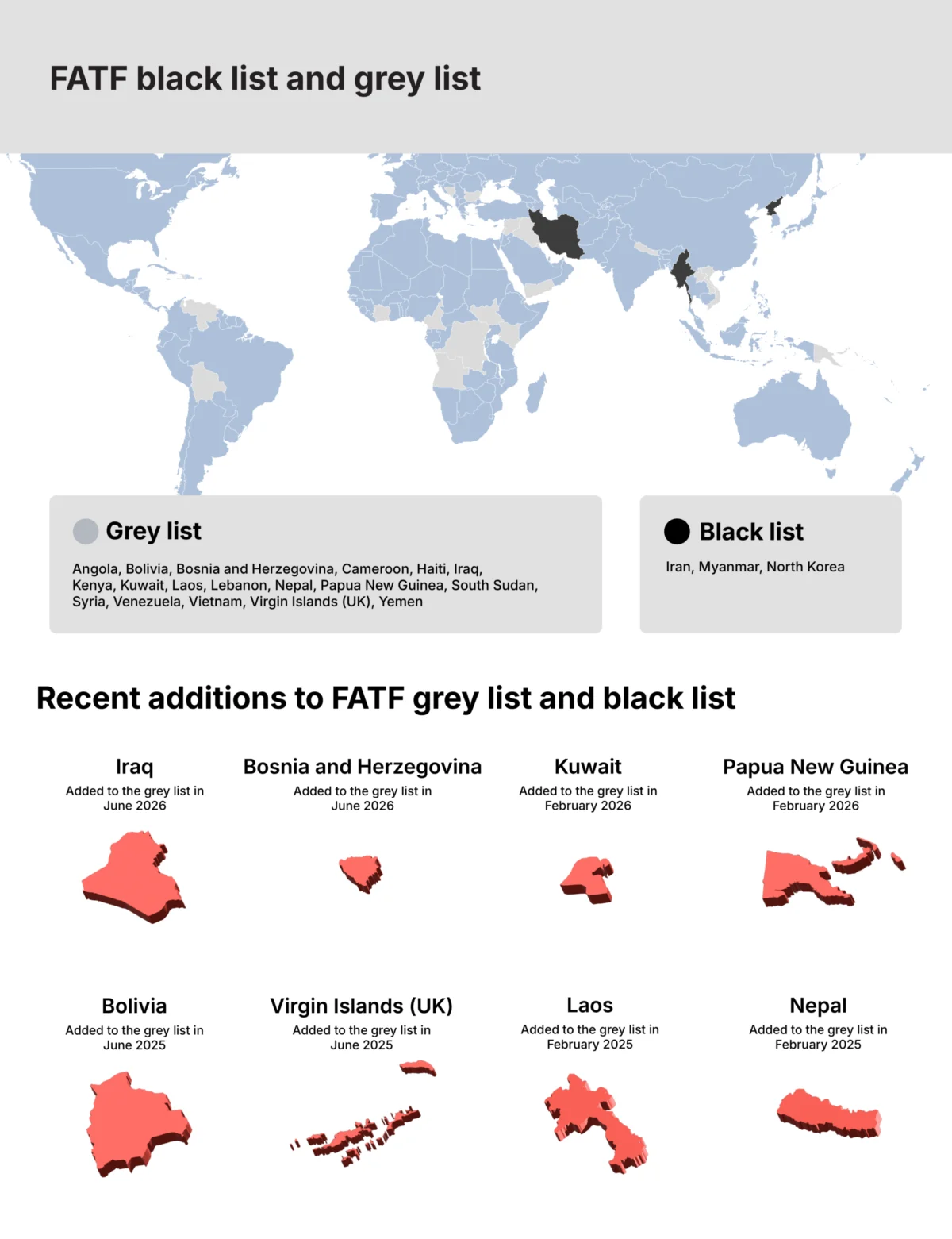
A central focus of the October 2026 session was the status of the "grey list"—formally categorized as jurisdictions under increased monitoring. These countries have entered into formal, time-bound commitments with the FATF to remediate strategic deficiencies in their regulatory frameworks. The plenary resulted in a notable reduction in the number of jurisdictions on this list, dropping from 22 to 18 following the successful completion of action plans by four nations: Bulgaria, Côte d’Ivoire, the Democratic Republic of the Congo, and Monaco.
Bulgaria, which had been under monitoring since October 2023, satisfied the FATF’s requirements by reforming its national AML/CFT strategy and enhancing beneficial ownership transparency. Crucially, the country implemented risk-based supervision across high-risk sectors, including virtual asset service providers (VASPs) and real estate, while simultaneously bolstering its capacity to prosecute large-scale corruption. Similar progress was observed in Côte d’Ivoire, where the strengthening of financial intelligence utilization by law enforcement proved instrumental in their removal. The Democratic Republic of the Congo’s exit from the list was attributed to the effective resourcing of its Financial Intelligence Unit (FIU) and the successful implementation of targeted financial sanctions. Monaco’s removal underscored the efficacy of its focused efforts on investigating money laundering linked to foreign tax crimes and increasing the seizure of illicit criminal assets.
Rising Concerns and Regulatory Warnings
While the plenary yielded positive exits, it also served as a stern venue for regulatory warnings. The FATF issued a pointed critique of Vietnam, which has remained on the grey list since June 2023. With all formal deadlines for its action plan having expired in May 2025, the organization signaled deep frustration regarding the lack of tangible progress. The FATF has effectively placed Vietnam on notice, stating that the February 2027 plenary will serve as a critical juncture for the nation to demonstrate substantial improvements or face further, potentially more severe, restrictive measures. For global financial institutions, this indicates a requirement for continued, and potentially intensified, enhanced due diligence (EDD) for transactions involving Vietnamese counterparties.
The Black List: A Persistent Standoff
The "black list"—the list of high-risk jurisdictions subject to a call for action—remains unchanged, with the Democratic People’s Republic of Korea (DPRK), Iran, and Myanmar continuing to bear the designation. The FATF reiterated its call for robust countermeasures against the DPRK and Iran, citing the persistent and escalating risks of proliferation financing.
Regarding Iran, the FATF noted that while there has been marginal technical progress, the core of its financial regulatory system remains fundamentally deficient, specifically regarding the lack of comprehensive criminalization of terrorist financing. Myanmar, currently subject to EDD rather than full countermeasures, finds itself in an precarious position. The FATF noted the prevalence of extensive illicit finance linked to fraud and cyber-scam operations within the country. While acknowledging the nascent steps taken by the authorities to establish anti-scam centers, the organization explicitly stated that it would evaluate the necessity of applying countermeasures by February 2027 should the current trends in illicit activity remain unaddressed.
Strategic Initiatives and the Rise of Cyber-Fraud
The plenary marked a proactive shift toward addressing the "crime-as-a-service" economy, particularly regarding the proliferation of scam compounds. The FATF approved a comprehensive report on the illicit financial flows stemming from these operations, which have emerged as one of the fastest-growing threats to global financial security. This report, scheduled for publication in early November 2026, is expected to provide law enforcement and financial institutions with a roadmap for identifying and dismantling the complex, cross-border business models that facilitate these scams.
Furthermore, the FATF has committed to accelerating the implementation of its standards regarding virtual assets. In response to the April 2026 Ministerial Declaration, the organization will launch a targeted review of jurisdictions with high volumes of virtual asset activity. This initiative is designed to close regulatory loopholes that criminal organizations exploit for sanctions evasion and money laundering. By introducing an accelerated follow-up process, the FATF aims to ensure that the regulatory environment for digital assets evolves as rapidly as the technology itself.
Mutual Evaluations and the Path Forward
The plenary also saw the adoption of mutual evaluation reports for Mexico and the United States. These reports represent a rigorous assessment of each nation’s effectiveness in combatting financial crime and their compliance with the FATF Recommendations. These evaluations are set to be released in December 2026, accompanied by a "Roadmap of Key Recommended Actions." Under the current evaluation cycle, nations are required to fulfill these recommendations within a three-year window, ensuring that the oversight process is not merely a diagnostic exercise but a catalyst for systemic change.
To further support member states, particularly those with limited technical capacity, the FATF has introduced a more tailored approach to mutual evaluations. This includes improved training for assessors to ensure that the risk-based approach (RBA) is implemented proportionately to a country’s specific risk profile. To cement this transition, the FATF will host a Learning and Development Forum in Dallas, Texas, in December 2026. This forum will bring together key stakeholders—including supervisors, FIUs, and private sector leaders—to establish a unified policy statement on the practical application of the RBA, which remains the cornerstone of modern AML/CFT compliance.
Broader Implications for the Global Compliance Community
The outcomes of the October 2026 plenary reflect a shifting regulatory environment characterized by two primary trends: the prioritization of speed in regulatory enforcement and an increased focus on the intersection of technology and crime. The emphasis on scam compounds and virtual assets indicates that the FATF is no longer focused solely on traditional banking vulnerabilities but is aggressively expanding its scope to include the digital and service-based architectures of modern criminal syndicates.
For compliance departments worldwide, these developments necessitate a pivot toward dynamic risk assessment. The ability to monitor, in real-time, the status of jurisdictions like Vietnam, or to align internal controls with the forthcoming FATF guidance on scam-related financial flows, will be essential for maintaining regulatory compliance. As the global network continues to mature, the distinction between "technical compliance" and "effective implementation" has become the primary metric by which jurisdictions are judged. The upcoming February 2027 plenary is already shaping up to be a critical checkpoint for the global community, as the FATF continues its transition toward a more proactive, risk-focused, and technologically-aware oversight body. The suspension of the Russian Federation remains in effect, serving as a reminder that geopolitical factors continue to influence the trajectory of global financial standard-setting, ensuring that the work of the FATF remains as politically complex as it is technically demanding.