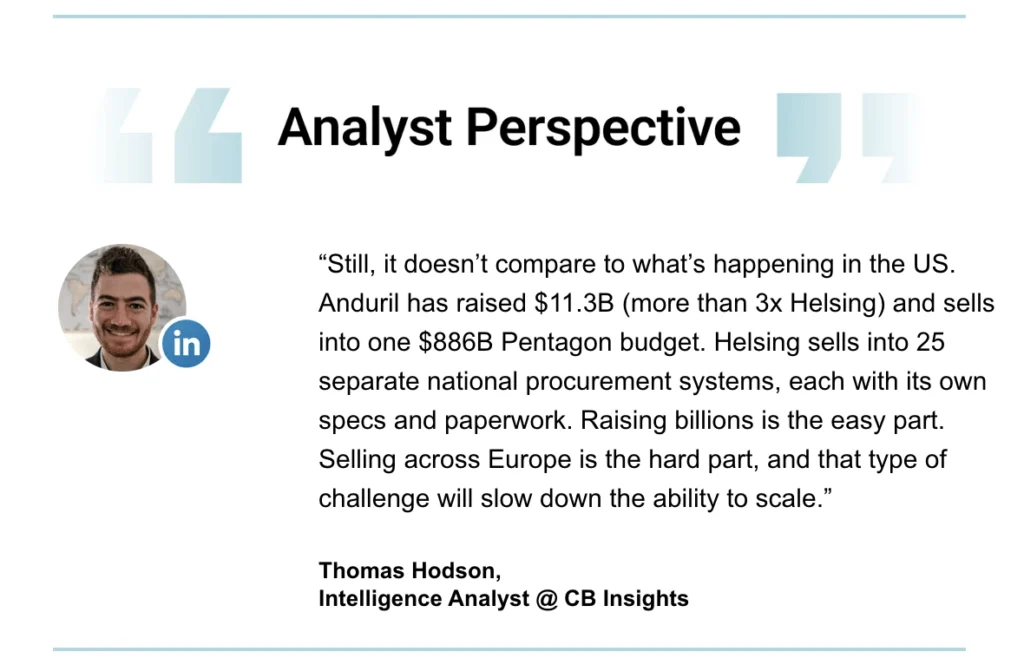
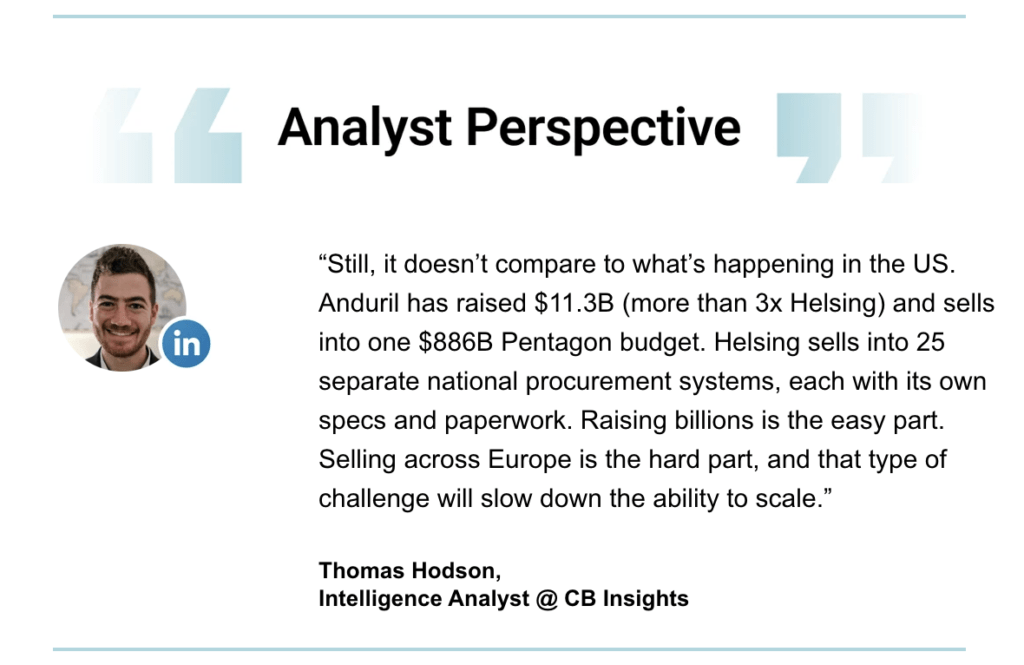
The European venture capital landscape is undergoing a significant transformation, evidenced by Helsing’s groundbreaking $1.8 billion Series E funding round. This monumental investment, which propels the German defense technology firm to an $18 billion valuation, solidifies it as the recipient of the largest private defense technology funding round in European history. The substantial capital infusion brings Helsing’s total funding to an impressive $3.3 billion, signaling a pivotal moment for the defense tech sector on the continent. This development is not merely a testament to Helsing’s individual success but reflects a broader, evolving sentiment within European venture capital towards historically overlooked sectors.
The strategic significance of this funding extends beyond its sheer magnitude. It underscores a palpable shift in investor appetite and a recognition of the critical importance of advanced technological solutions in the defense domain. For years, many European venture capital firms shied away from defense investments, citing a complex web of ESG (Environmental, Social, and Governance) constraints, limitations imposed by Limited Partners (LPs), and a prevailing cultural aversion that often perceived proximity to defense applications as a reputational risk. However, the geopolitical realities of the past few years have demonstrably altered this calculus. The increasing demand for sophisticated defense capabilities, driven by global security concerns, has spurred a reevaluation of investment strategies.
A Paradigm Shift in European Defense Tech Investment
The trajectory of European defense tech funding illustrates this dramatic shift. In 2025 alone, startups in this sector collectively raised $3.2 billion, representing a substantial 37% year-over-year increase. This figure is a remarkable threefold expansion compared to the investment levels observed just five years prior. Furthermore, the number of unique investors participating in European defense rounds has nearly tripled since 2020, indicating a widening and deepening pool of capital actively seeking opportunities in this space.
This surge in investment is not a spontaneous occurrence but rather a response to evolving global dynamics. The increased emphasis on national security, coupled with the rapid advancement of technologies such as artificial intelligence, cybersecurity, and autonomous systems, has created a fertile ground for innovation within the defense sector. Companies like Helsing, which are at the forefront of developing cutting-edge solutions, are now finding themselves at the nexus of technological advancement and urgent market demand.
Helsing’s Strategic Vision: Beyond Capital Infusion
While the $1.8 billion capital injection is undeniably a significant achievement, Helsing’s leadership has emphasized that the true value lies not solely in the funding itself, but in the strategic implications of navigating complex global procurement systems. The company’s stated objective is to successfully scale its operations across approximately 25 different national procurement systems. This ambition highlights a sophisticated understanding of the defense industry’s unique challenges, where market access is often dictated by intricate bureaucratic processes, stringent regulatory frameworks, and diverse national requirements.
Successfully penetrating multiple procurement systems requires more than just financial resources. It demands deep expertise in understanding and adapting to varying defense doctrines, procurement timelines, and political considerations of allied nations. Helsing’s focus on this aspect suggests a long-term strategy aimed at building a resilient and globally integrated defense technology enterprise. This approach contrasts with a purely capital-driven growth strategy, positioning Helsing as a company focused on sustainable market penetration and operational excellence within the defense ecosystem.
The Broader Context: Q2 2026 Venture Trends
The substantial funding secured by Helsing occurs against the backdrop of broader venture capital trends in the second quarter of 2026. This period saw a robust $212.9 billion in funding, marking it as the second-highest quarter on record. However, a closer examination reveals a narrative of significant concentration, with a substantial portion of this capital attributed to mega-rounds.
Specifically, the AI sector experienced a remarkable influx of investment, with Anthropic alone accounting for over a third of all mega-round dollars, securing a staggering $65 billion at a $965 billion valuation. This singular investment highlights the immense capital being channeled into leading AI companies. While mega-rounds collectively captured 81% of total funding in Q2 2026, a figure nearly matching the previous quarter’s record, the dependency on individual giants like Anthropic and, in the prior quarter, OpenAI, paints a picture of market dynamics heavily influenced by a few dominant players.
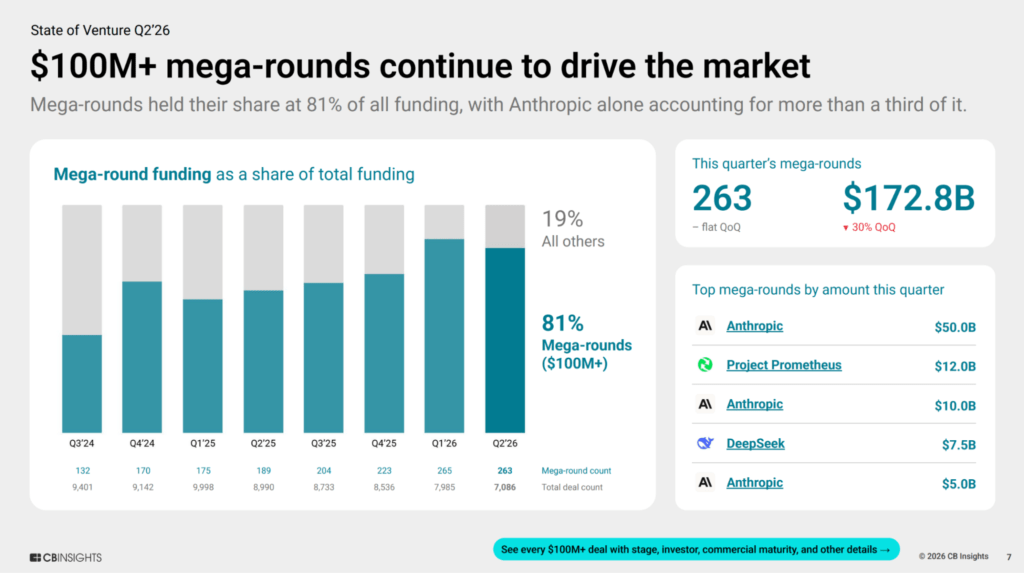
In contrast, for the majority of companies, the funding landscape in Q2 2026 presented a more constrained environment. The remaining companies were effectively splitting just 19% of the total capital raised. Compounding this challenge, deal counts reached a decade low, and exit activity declined for the second consecutive quarter. This bifurcated market suggests that while significant capital is available for category leaders and transformative technologies, emerging and mid-stage companies may face increased competition for funding.
The concentration observed in the Q2 2026 venture trends, with a significant portion of capital flowing into a select few companies, underscores the strategic importance of sectors like defense technology, where substantial, albeit more specialized, funding rounds are emerging. Helsing’s large Series E, therefore, stands out not only for its size but also for its positioning within a market segment that is experiencing renewed investor interest and strategic allocation of capital.
The Evolution of European Venture Capital and Defense Technology
The shift in European venture capital’s perception of defense technology is a nuanced development. Historically, the sector was viewed with caution due to its association with geopolitical instability and ethical considerations. However, a confluence of factors has led to a re-evaluation:
- Geopolitical Realities: The escalating global security challenges and the increased focus on European sovereignty have made defense capabilities a strategic imperative. This has naturally translated into greater government and private sector investment.
- Technological Advancements: The integration of AI, advanced materials, and sophisticated software into defense systems has attracted a new wave of tech-savvy entrepreneurs and investors. These innovations are seen as crucial for maintaining a technological edge.
- ESG Reinterpretation: While ESG remains a significant consideration, investors are increasingly recognizing that national security and defense capabilities can be framed within a broader ESG context, particularly concerning stability and the protection of democratic values. Furthermore, the concept of "dual-use" technologies, which have both civilian and military applications, has become a more palatable investment thesis.
- Government Support: European governments are actively promoting domestic defense industries, offering incentives, and streamlining procurement processes to foster innovation and enhance national security. This governmental backing provides a crucial layer of stability and future market assurance for investors.
Looking Ahead: Implications for the Defense Tech Ecosystem
Helsing’s substantial funding round and its strategic focus on market penetration have several key implications for the broader defense technology ecosystem:
- Validation of the Sector: This record-breaking round serves as a powerful validation for the European defense tech sector, signaling its maturity and potential for significant growth. It is likely to encourage further investment and attract more talent to the industry.
- Increased Competition and Innovation: The influx of capital will fuel further innovation, potentially leading to more advanced and cost-effective defense solutions. This increased competition will benefit national defense forces and allies seeking cutting-edge capabilities.
- Strategic Partnerships and Consolidation: With significant capital available, there is potential for increased strategic partnerships between defense primes, technology providers, and venture-backed startups. This could also lead to consolidation within the sector as companies seek to expand their offerings and market reach.
- Navigating Procurement Complexity: Helsing’s emphasis on mastering complex procurement systems highlights a critical challenge for all defense tech startups. Companies that can effectively navigate these pathways will have a distinct competitive advantage. This may spur the growth of specialized consulting services or internal expertise focused on government contracting.
- European Defense Autonomy: The rise of strong European defense tech companies like Helsing contributes to the broader goal of enhanced European defense autonomy, reducing reliance on external suppliers and fostering greater strategic independence.
The journey for companies like Helsing is far from over. The ability to translate technological prowess into tangible impact across diverse national defense frameworks will be the ultimate measure of success. However, this $1.8 billion Series E funding round marks a pivotal moment, not just for Helsing, but for the entire European defense technology landscape, signaling a new era of innovation, investment, and strategic ambition.
About HLTH USA 2026 and the Insights Hub
In related news, CB Insights is serving as the official Strategic Intelligence Partner for HLTH USA 2026. To facilitate meaningful connections and strategic planning for attendees, CB Insights has developed the Insights Hub, an interactive dashboard designed to highlight key companies and emerging trends shaping the healthcare industry. This initiative underscores CB Insights’ commitment to providing data-driven intelligence that empowers participants at major industry events. The Hub, powered by CB Insights’ extensive data on over 12,250 HLTH USA attendees, aims to transform the networking experience from serendipitous encounters on the show floor into a structured, pre-event strategic plan. It provides attendees with actionable insights to identify who to meet and why, thereby maximizing their conference engagement and fostering impactful collaborations. Registration for HLTH USA 2026 is currently open, with early bird pricing set to increase at the end of the month. Attendees can utilize the partner code H26PAR_CBI250 to receive a $250 discount.
Further CB Insights Research
CB Insights continues to provide in-depth analysis of key market trends. Their recent report, "State of Venture Q2 2026," offers a comprehensive breakdown of global venture capital activity, highlighting the concentration of funding in mega-rounds and the challenges faced by other segments of the market. Additionally, the "Top 100 European AI Aerospace & Defense Startups" market map provides valuable insights into the competitive landscape and key players within this rapidly evolving sector. For those interested in exploring the platform’s capabilities, CB Insights offers a free trial for new clients, enabling access to their comprehensive data and analytical tools.