The European venture capital landscape is witnessing a significant transformation, underscored by Helsing’s record-breaking $1.8 billion Series E funding round. This colossal investment, which propels the Munich-based defense technology firm to an $18 billion valuation, not only solidifies its position as a leader in the burgeoning defense tech sector but also marks the largest private funding round in European defense technology history. The substantial capital infusion, bringing Helsing’s total funding to an impressive $3.3 billion, arrives at a pivotal moment for European defense, reflecting a growing appetite for innovation and a recalibration of investment strategies within the continent.
A New Era for European Defense Tech Investment
The sheer magnitude of Helsing’s Series E round is a testament to the evolving sentiment surrounding defense technology investment in Europe. Just five years ago, securing such a significant sum for a defense-focused startup would have been an almost insurmountable challenge. Many European venture capital firms, bound by stringent ESG (Environmental, Social, and Governance) mandates, LP (Limited Partner) restrictions, and a prevailing cultural aversion to industries associated with weaponry, largely excluded defense from their portfolios. Proximity to defense systems was often perceived as a reputational risk, deterring investors.
However, the geopolitical realities of recent years, marked by increased global instability and a renewed focus on national security, have instigated a profound reevaluation of these investment paradigms. The success of Helsing signals a clear shift, with European defense tech startups collectively raising approximately $3.2 billion in 2025 alone. This figure represents a substantial 37% year-over-year increase and is roughly triple the investment volume seen just five years prior. Furthermore, the number of unique investors participating in European defense funding rounds has nearly tripled since 2020, indicating a broadening base of capital and a growing confidence in the sector’s potential.
Helsing: A Pioneer in AI-Powered Defense
Helsing’s core mission revolves around leveraging artificial intelligence and machine learning to enhance the capabilities of modern defense systems. The company focuses on developing advanced software solutions that can process vast amounts of sensor data in real-time, providing crucial insights for situational awareness, threat detection, and decision-making. This technological prowess is particularly relevant in today’s complex operational environments, where the speed and accuracy of information processing can be the difference between success and failure.
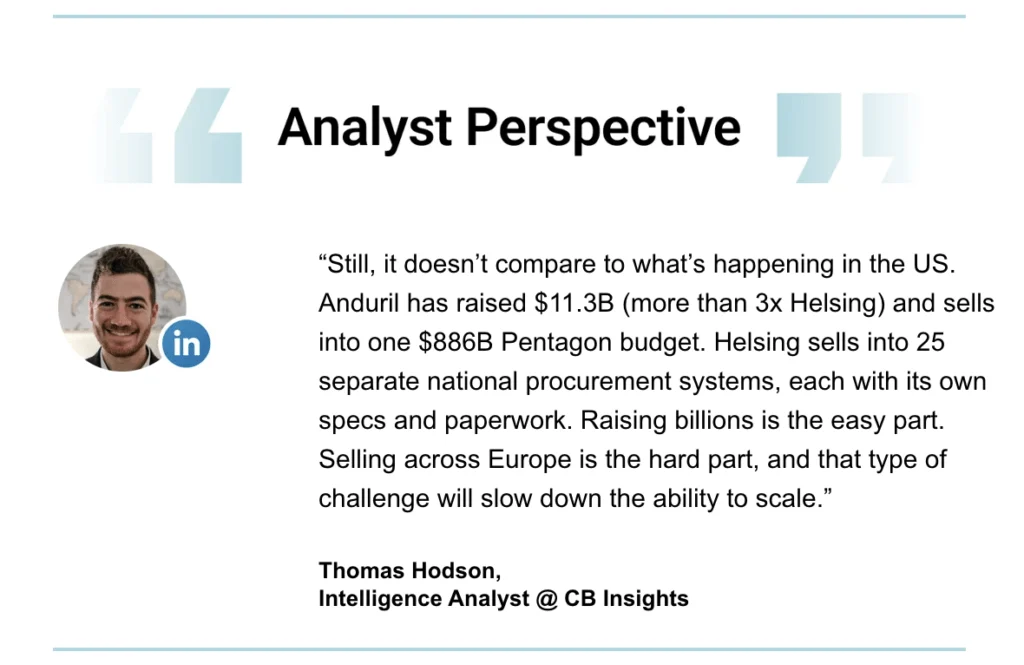
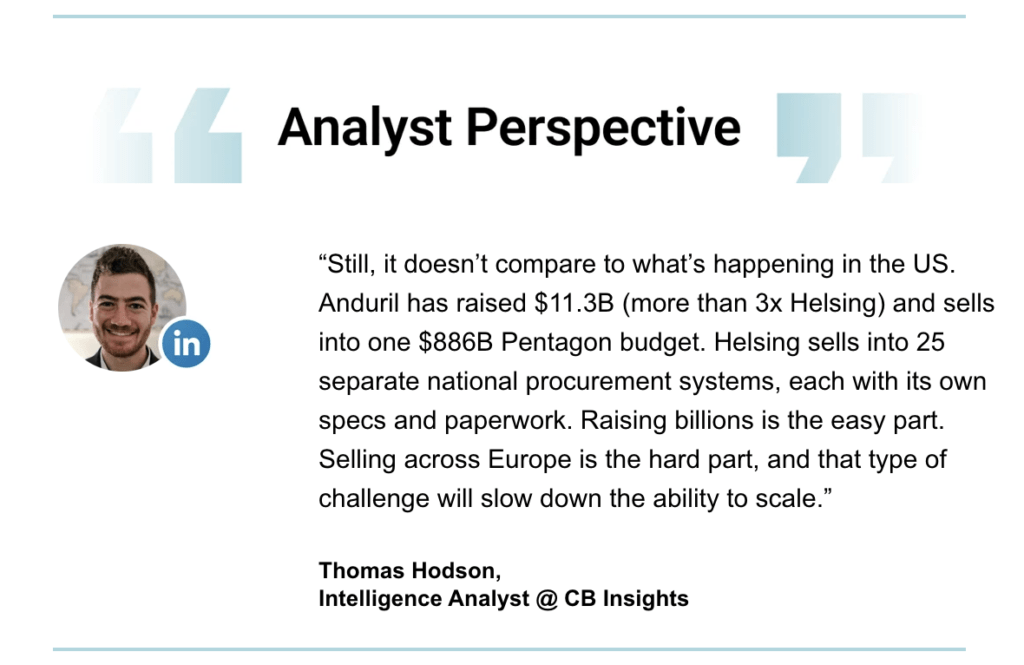
The company’s strategic approach emphasizes the development of modular, interoperable systems that can be integrated across a wide array of platforms and procurement systems. This adaptability is a key differentiator, allowing Helsing to cater to the diverse needs of multiple European nations, each with its own unique defense requirements and acquisition processes. By focusing on scaling its technology across these varied procurement frameworks, Helsing aims to achieve a more sustainable and impactful growth trajectory than solely relying on a single, massive capital injection without a clear path to integration.
Broader Market Trends: Concentration in Venture Funding
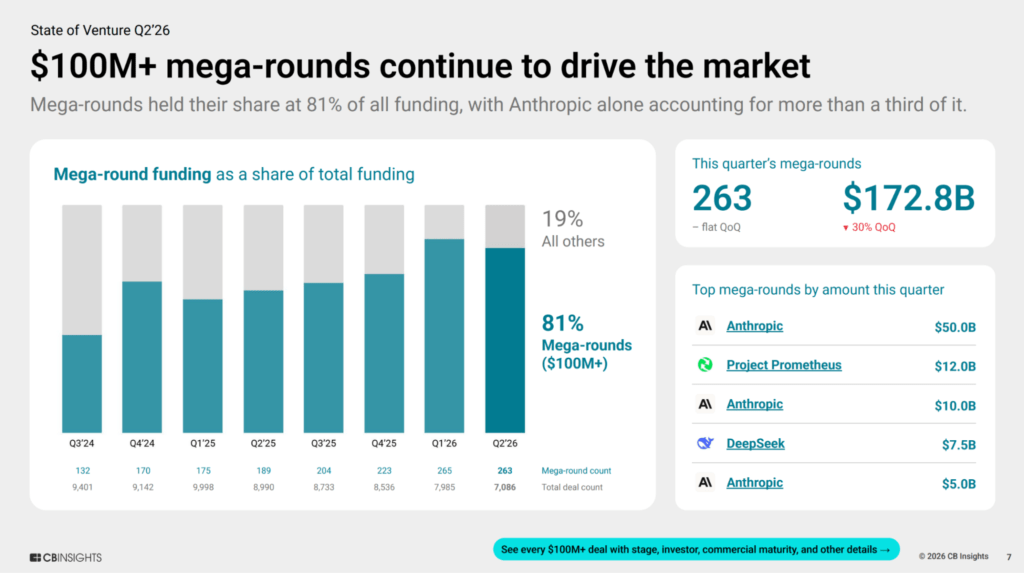
Helsing’s substantial funding round occurs against a backdrop of significant concentration within the broader venture capital market. Recent data reveals that the second quarter of 2026 saw a robust $212.9 billion in funding, marking one of the highest quarters on record. However, a closer examination of these figures reveals that this surge was heavily influenced by mega-rounds, with a significant portion of the capital attributed to a single entity.
Anthropic, an artificial intelligence research company, alone accounted for over a third of all mega-round funding, securing an astonishing $65 billion at a valuation of $965 billion. This singular investment dramatically skewed the overall funding tallies. Mega-rounds, defined as funding rounds exceeding $100 million, captured an impressive 81% of total funding in Q2 2026, nearly mirroring the record set in the previous quarter. While the prior quarter’s record was driven by the combined influence of Anthropic and OpenAI, the Q2 figures highlight an even greater reliance on Anthropic’s massive funding event.
This concentration has led to a situation where "everyone else is splitting 19 cents of every dollar raised," according to industry analysis. The overall deal count in venture capital has hit a decade low, and exit activity has declined for two consecutive quarters. This narrative of concentration suggests a bifurcated venture market: one segment dominated by colossal funding rounds for a select few AI powerhouses, and another where smaller rounds and deal volumes are becoming increasingly scarce.
The Strategic Importance of HLTH USA Partnership
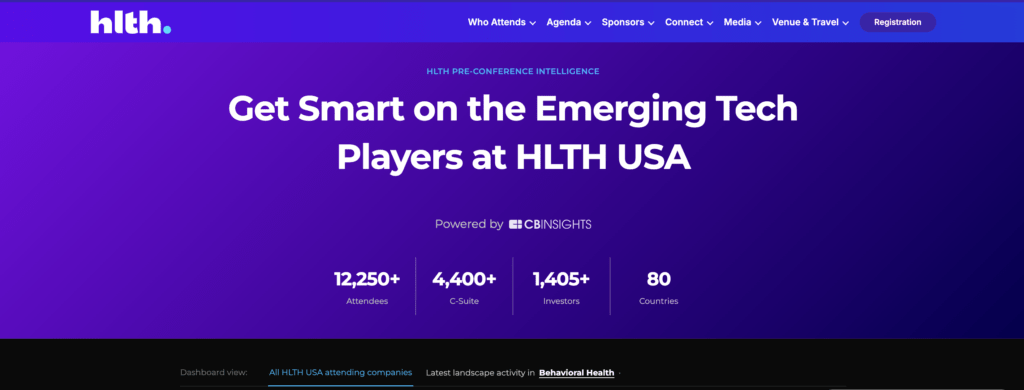
In parallel with these significant financial developments, CB Insights continues to foster strategic partnerships that leverage its data intelligence capabilities. The company has announced its role as the Official Strategic Intelligence Partner for HLTH USA 2026, a prominent healthcare innovation event. To support attendees, CB Insights has launched the "Insights Hub," an interactive dashboard designed to highlight key companies and emerging trends shaping the future of healthcare.
This initiative underscores CB Insights’ commitment to providing actionable intelligence to its clients and partners. The Insights Hub aims to transform the often-unstructured networking experience at large conferences into a more targeted and strategic endeavor. By analyzing data from over 12,250 HLTH USA attendees, the dashboard provides insights into potential connections and strategic alignments, enabling participants to pre-plan their engagement and maximize their ROI. Registration for HLTH USA is ongoing, with early bird discounts available using a partner code.
Implications for the Defense Industry and Venture Capital
Helsing’s monumental funding round has several profound implications. Firstly, it validates the strategic imperative for European nations to invest in advanced defense technologies and support domestic innovation. The ability to develop and procure cutting-edge solutions independently can enhance national security and reduce reliance on foreign suppliers. Secondly, it signals a broader acceptance and prioritization of defense technology within the European venture capital ecosystem. This shift could attract more capital and talent to the sector, fostering a virtuous cycle of innovation and growth.
The success of Helsing also highlights the potential for AI and software to revolutionize traditional defense industries. By focusing on data processing, situational awareness, and intelligent decision support, Helsing is positioning itself at the forefront of a new generation of defense capabilities. This approach offers greater agility, scalability, and cost-effectiveness compared to traditional hardware-centric defense procurement.
The stark contrast between the mega-rounds dominating AI and the challenges faced by other venture-backed companies also warrants attention. While Helsing’s funding is a significant achievement, it exists within a market where a few dominant players are attracting disproportionate capital. This concentration could potentially stifle competition and innovation in other sectors if capital becomes overly centralized. However, the specific nature of defense technology, with its unique market drivers and government-backed demand, may allow for sustained growth even within a more concentrated funding environment.
A Look Ahead
The future of European defense technology appears increasingly bright, with companies like Helsing leading the charge. The substantial investment in Helsing is not merely a financial transaction; it represents a strategic bet on the future of European security and technological sovereignty. As geopolitical tensions continue to shape global affairs, the demand for innovative defense solutions is likely to grow, further fueling investment in this critical sector.
For venture capitalists, the success of Helsing serves as a compelling case study, demonstrating the untapped potential within the defense tech market and the changing attitudes towards investing in this domain. The challenge for the broader venture ecosystem will be to navigate the current environment of capital concentration while ensuring that innovation is fostered across a diverse range of sectors, including those vital for national security and technological advancement.
The ongoing evolution of defense capabilities, driven by advancements in AI, data analytics, and cybersecurity, presents a fertile ground for further investment and innovation. Companies that can effectively bridge the gap between cutting-edge technology and the complex procurement processes of defense ministries are poised for significant growth. Helsing’s achievement is a powerful indicator that Europe is stepping up to meet these challenges, solidifying its position as a key player in the global defense technology arena.
For those seeking to understand the competitive landscape, CB Insights’ market map of the top 100 European AI aerospace & defense startups offers a comprehensive overview of the key players and emerging innovators in this dynamic sector. The continued growth and investment in companies like Helsing suggest a promising future for defense technology in Europe, driven by innovation, strategic investment, and a heightened awareness of global security needs.