The state of Iowa is preparing for a significant shift in its transportation landscape as a new legislative mandate prepares to increase the default speed limit on thousands of miles of rural roadways. Effective July 1, 2026, the default speed limit for any road not currently governed by a specific, pre-existing speed limit requirement will rise from 55 miles per hour to 60 miles per hour. This change, facilitated by the passage of Senate Bill 378, represents the first major adjustment to Iowa’s secondary and primary rural speed defaults in several decades, signaling a shift in how the state balances transit efficiency, modern vehicle capabilities, and public safety.
The transition was formalized when Governor Kim Reynolds signed Senate Bill 378 into law, which specifically targets modifications to Iowa Code 321.285(3). While the change appears straightforward on the surface, the legislation necessitates a comprehensive overhaul of various sections within Iowa Code 321. These adjustments are required to ensure that provisions relating to speeding violations, fine schedules, and law enforcement thresholds reflect the new 60-mph baseline rather than the long-standing 55-mph standard.
The Scope of the Change: Defining Default Roadways
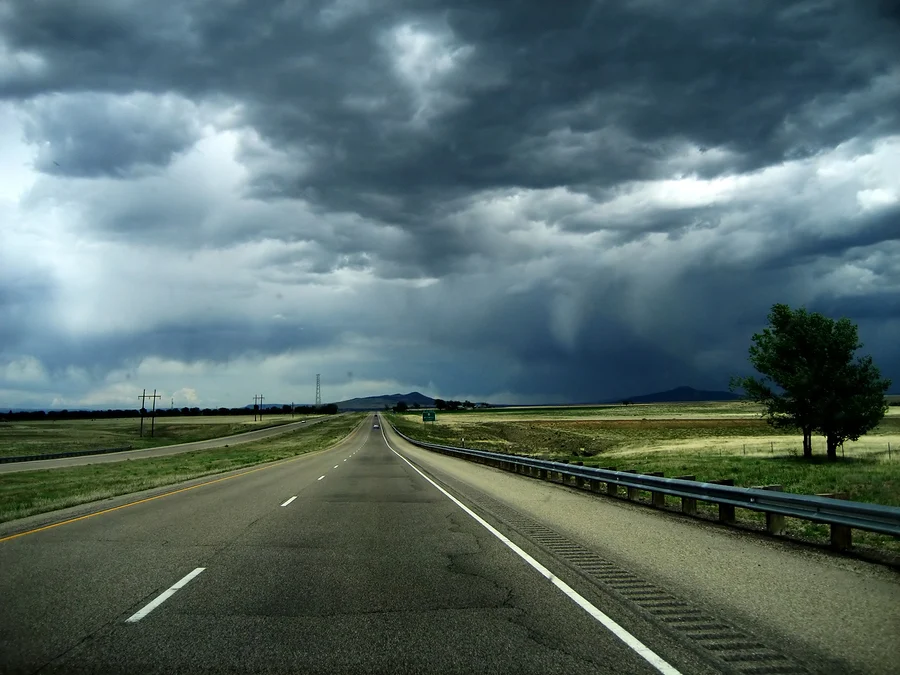
According to data provided by the Iowa Chapter of the American Public Works Association (APWA), the most common application of this default speed limit occurs on two-lane paved rural roadways. This includes a vast network of the state’s primary roadway system—those managed by the Iowa Department of Transportation (DOT)—as well as the extensive county roadway systems managed by local jurisdictions.
It is important to distinguish between "default" limits and "posted" limits established through specific traffic studies. Iowa DOT officials have clarified that while many multi-lane roadways and certain high-traffic two-lane stretches currently feature a 55-mph limit, these are often the result of rigorous engineering and traffic analyses. In cases where a 55-mph limit was established due to specific safety concerns, such as sharp curves, limited sight distances, or high intersection density, the limit will generally not be increased to 60 mph. The new law primarily affects those hundreds of miles of open rural highway where no specific engineering exception had previously lowered the limit below the statewide default.
Legislative Context and the Path to Senate Bill 378
The journey of Senate Bill 378 through the Iowa Legislature was marked by discussions regarding the modernization of state infrastructure laws. Proponents of the bill argued that modern automotive technology, including improved braking systems, tire quality, and electronic stability control, has made higher speeds safer than they were when the 55-mph limit was widely adopted. Furthermore, proponents noted that "speed creep" had already occurred, with traffic data suggesting that a significant majority of drivers on rural two-lane roads were already traveling at or near 60 mph.
By adjusting the legal limit to 60 mph, the state seeks to align the law with the "85th percentile rule"—a standard traffic engineering principle which suggests that speed limits should be set at the speed that 85 percent of people drive naturally under free-flowing conditions. This alignment is intended to reduce speed variance, which occurs when some drivers strictly adhere to a lower legal limit while others drive at a faster, more natural pace. Engineering studies often show that high variance in speed is a greater contributor to accidents than the absolute speed itself.
Logistical Challenges and Signage Infrastructure
The implementation of the new speed limit is not an overnight process, which explains the nearly two-year lead time before the law takes effect in the summer of 2026. The logistical undertaking is substantial, requiring the physical modification of thousands of traffic signs across all 99 Iowa counties.
The Iowa DOT has announced a strategy to update approximately 1,800 existing 55-mph signs on the state primary roadway system. To manage costs and maximize efficiency, the DOT plans to use aluminum overlays—metal panels that can be fastened directly over the "55" portion of existing signs to display "60." This method avoids the necessity of replacing the entire sign assembly, including the posts and the primary backing, which would be significantly more expensive.
The DOT estimates the initial cost for the state-managed portion of the project to be approximately $270,000. This figure covers the manufacturing of the overlays and the labor required for installation. Work is scheduled to begin on July 1, 2026, with the DOT prioritizing the state’s most heavily traveled primary roads to ensure the highest-volume corridors are updated first.
While the DOT manages state highways, the responsibility for updating signs on county roads falls to individual county governments. Iowa’s 99 counties manage a combined network of secondary roads that far exceeds the mileage of the state primary system. Consequently, county engineers and supervisors will need to budget for and execute their own signage updates in coordination with the 2026 deadline.
Safety Implications and Public Reaction
The increase to 60 mph has sparked a nuanced debate among safety advocates and transportation experts. Organizations such as the Insurance Institute for Highway Safety (IIHS) have historically cautioned against raising speed limits, citing the physical reality that higher speeds increase the kinetic energy involved in a crash, thereby increasing the likelihood of severe injury or fatality. Rural roads are already statistically more dangerous than urban interstates due to factors like unpaved shoulders, farm equipment ingress, and wildlife crossings.
Conversely, law enforcement perspectives often highlight that a 5-mph increase may bring legal standards into closer harmony with practical enforcement. When the limit is 55 mph, many officers may not issue citations until a driver reaches 62 or 63 mph. By raising the limit to 60 mph, the "buffer" may shift, but the law will more accurately reflect the actual flow of traffic, potentially allowing officers to focus on more egregious high-speed offenders.
Agricultural groups and rural commuters are expected to see the change as a benefit to efficiency. For a state like Iowa, where the movement of agricultural goods is a cornerstone of the economy, a 5-mph increase across long distances can result in measurable time savings for transport and logistics.
Comparison with Neighboring States
Iowa’s move to a 60-mph default aligns it more closely with several of its Midwestern neighbors. For example:
- Missouri: Generally maintains a 60-mph limit on many of its rural lettered mounds and two-lane highways.
- Nebraska: Features a 65-mph limit on many of its non-interstate state highways, with 60 mph common on secondary links.
- Illinois: Primarily maintains a 55-mph limit on rural two-lane roads, though discussions regarding increases have surfaced periodically in the state legislature.
- Minnesota: Has transitioned many of its two-lane highways from 55 mph to 60 mph over the last decade following extensive safety and speed studies conducted by MnDOT.
By moving to 60 mph, Iowa reduces the disparity for interstate travelers crossing borders, creating a more uniform driving experience across the region.
Economic and Environmental Considerations
Beyond safety and logistics, the speed limit increase carries economic and environmental implications. Higher speeds generally result in lower fuel efficiency for internal combustion engines due to increased aerodynamic drag. For the average passenger vehicle, the fuel economy penalty for moving from 55 mph to 60 mph is relatively minor, but for heavy-duty trucking and agricultural machinery, the cumulative increase in fuel consumption across thousands of miles can be significant.
However, these costs are often weighed against the "value of time." In economic modeling, reducing transit time for workers and goods is viewed as a productivity gain. For rural Iowans who may commute 30 to 50 miles one way to work or regional trade centers, the 5-mph increase represents a marginal but consistent improvement in daily quality of life.
Timeline of Implementation
The timeline for the transition is structured to allow for maximum transparency and preparation:
- July 2024 – June 2025: Budgetary planning for state and county departments to allocate funds for signage overlays and labor.
- Late 2025: Manufacturing of the 1,800+ aluminum overlays and procurement of materials by county engineers.
- Spring 2026: Public awareness campaigns to notify drivers of the impending change to Iowa Code 321.
- July 1, 2026: The law officially takes effect. DOT crews and county workers begin the physical process of updating signs, starting with high-priority primary routes.
- Late 2026: Expected completion of signage updates across the majority of the state’s primary and secondary systems.
Conclusion
The shift from 55 mph to 60 mph marks a new chapter in Iowa’s approach to rural transit. By updating the default limit, the state acknowledges the reality of modern driving habits and vehicle technology while attempting to maintain a framework of safety and order. While the $270,000 price tag for state signage is a notable expenditure, the long-term goal is a more efficient, consistent, and legally coherent roadway system. As July 1, 2026, approaches, Iowa drivers will need to remain cognizant of the transition, and the Iowa DOT will continue to monitor traffic data to ensure that this increase in speed does not come at an unacceptable cost to public safety on the state’s vital rural corridors.