The financial technology (FinTech) sector has undergone an extraordinary transformation over the past decade, revolutionizing how individuals and businesses interact with financial services. Once cumbersome processes, like loan applications demanding in-person meetings and reams of physical paperwork, have been digitized, now often completed within minutes on a smartphone. Account verification, once a multi-day ordeal, is near-instantaneous, and decisions that previously took days are delivered almost immediately. This acceleration has fundamentally reshaped consumer expectations, making convenience and speed not just desirable features, but assumed standards in the digital financial landscape. However, as the industry matures, a critical dimension has emerged that is far from assumed: safety.
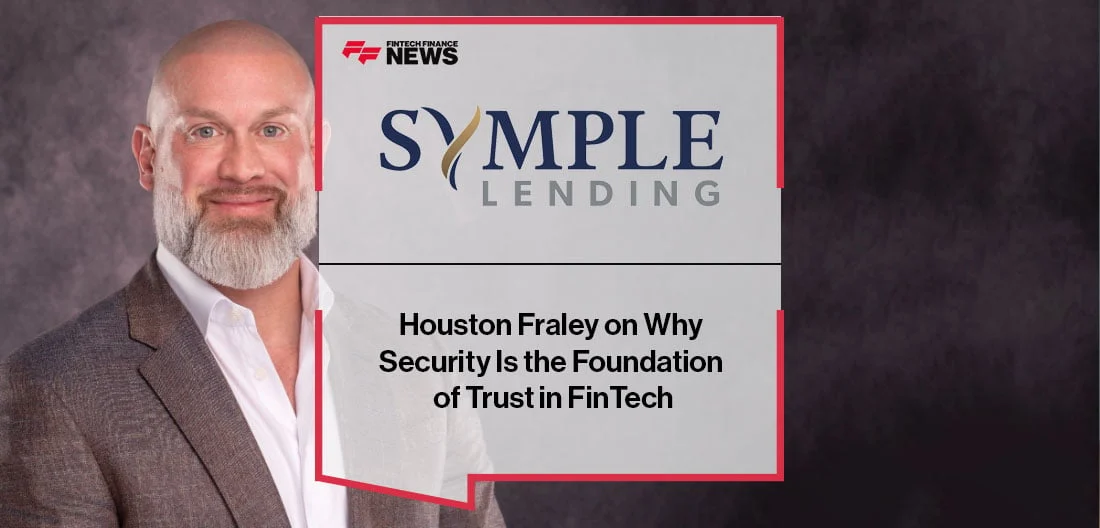
Houston Fraley, CEO of Symple Lending, a prominent voice in the FinTech space, posits that the long-term viability and success of FinTech companies will increasingly hinge not on their ability to deliver ever-faster services, but on their capacity to instill a profound sense of security and protection in their users. "In financial technology, security is not a feature," Fraley emphasizes. "It is the foundation. If consumers are unsure about how their data is protected, nothing else matters." This assertion cuts to the core of FinTech’s future, highlighting a shift in focus from pure innovation to robust, trustworthy infrastructure.
The FinTech Revolution and its Parallel Risks
The journey of FinTech has been one of relentless innovation. From the early days of online banking to the proliferation of mobile payment apps, digital lending platforms, robo-advisors, and blockchain-based solutions, the industry has consistently pushed the boundaries of traditional finance. This growth has been astronomical, with market analyses consistently projecting continued expansion. For instance, reports indicate the global FinTech market size, valued at hundreds of billions of dollars, is expected to grow at a compound annual growth rate (CAGR) well into double digits over the next several years, driven by increasing smartphone penetration, demand for digital payments, and the unbanked/underbanked population.
Early adopters were primarily drawn to the sheer usability and efficiency offered by digital finance. The ability to access financial services from anywhere, at any time, via mobile devices, coupled with simplified interfaces and expedited approval processes, fueled initial enthusiasm. This demographic prioritized accessibility and speed, often accepting nascent security protocols as a trade-off for convenience.
However, this initial exuberance has been tempered by a series of high-profile incidents and a growing awareness among the general populace about the inherent risks of digital data. The digital convenience, while transformative, has also concentrated vast amounts of sensitive personal and financial data into centralized systems, making them lucrative targets for cybercriminals.
The Evolving Threat Landscape: A More Cautious Consumer Emerges
The watershed moment for many consumers, and indeed for the broader financial industry, was the Equifax data breach in 2017. This incident exposed the personal information of approximately 147 million people in the United States, alongside millions more in Canada and the UK. The breach unveiled the profound vulnerability of personal financial records and underscored the intricate link between identity security and the potential for long-lasting, devastating consequences for individuals. Victims faced years of credit monitoring, identity theft concerns, and the arduous task of rebuilding trust in institutions designed to protect their most sensitive data.
The financial ramifications of such breaches are equally significant, extending far beyond immediate remediation costs. IBM’s 2023 Cost of a Data Breach Report revealed that the global average cost of a data breach reached an unprecedented $4.45 million, marking the highest level recorded to date. This figure encompasses expenses related to detection and escalation, notification, lost business, and post-breach response. Financial services firms, by virtue of the high-value data they possess—ranging from bank account details and credit scores to investment portfolios and personal identifiers—remain prime targets for sophisticated cyberattacks, consistently facing sustained and evolving threats.
This succession of events has fundamentally altered consumer behavior. Fraley observes that consumers are no longer passive recipients of financial services but active participants in the discussion around data security. "Consumers are paying attention now," he explains. "They understand that digital access requires responsibility on both sides. If a platform cannot clearly explain how it protects data, people hesitate." This hesitation, while not always generating sensational headlines, can quietly decelerate adoption rates, erode brand confidence, and ultimately hinder the growth trajectories of FinTech companies that fail to prioritize security.
The Strategic Imperative of Robust Security Frameworks
For FinTech companies navigating this complex environment, implementing robust security frameworks is not merely a compliance exercise but a strategic imperative. These frameworks provide structured approaches to managing and mitigating cybersecurity risks, ensuring data integrity, confidentiality, and availability.
Widely recognized benchmarks for structuring internal controls include:
- SOC 2 (Service Organization Control 2): Developed by the American Institute of CPAs (AICPA), SOC 2 reports assess an organization’s systems based on the Trust Services Criteria (security, availability, processing integrity, confidentiality, and privacy). Achieving SOC 2 compliance demonstrates a commitment to robust internal controls regarding customer data.
- ISO 27001: An international standard for information security management systems (ISMS), ISO 27001 provides a framework for organizations to manage the security of assets such as financial information, intellectual property, employee details, and information entrusted by third parties. Its comprehensive approach covers organizational structure, policies, planning, implementation, and review.
- NIST Cybersecurity Framework (CSF): Developed by the National Institute of Standards and Technology, the NIST CSF provides a set of guidelines to help organizations improve their ability to prevent, detect, and respond to cyberattacks. It is structured around five core functions: Identify, Protect, Detect, Respond, and Recover.
These standards mandate rigorous controls across various domains, including advanced encryption protocols to safeguard data in transit and at rest, stringent access management procedures to ensure only authorized personnel can access sensitive information, continuous monitoring for anomalous activities, and regular, proactive evaluations of system vulnerabilities.
Cybersecurity experts consistently emphasize that security is not a static state but an ongoing process. Bruce Schneier, a renowned security technologist and author, famously articulated that "security is a process, not a product." His argument underscores the necessity for organizations to continuously reassess their risk posture, adapt to emerging threats, and avoid relying on one-time solutions that quickly become obsolete. Fraley echoes this sentiment from an operational perspective: "The technology changes quickly. Our responsibility is to make sure protections evolve just as quickly." This adaptive approach is crucial in an industry characterized by rapid technological advancement and an equally rapid evolution of cyber threats.
Automation: Efficiency’s Engine Requires Strong Guardrails
Automation serves as the backbone of much of FinTech’s vaunted efficiency. Algorithms are deployed to verify identities, conduct sophisticated credit risk assessments, process vast amounts of documentation, and execute transactions at speeds unimaginable in traditional banking. When properly designed and implemented, automation significantly reduces the potential for human error, increases operational consistency, and scales financial services to a broader audience.
However, the concentration of data within these highly automated systems, while enabling efficiency, also presents inherent risks that demand meticulous oversight. The very speed and interconnectedness that define FinTech can, without proper safeguards, amplify the impact of a security lapse. Fraley cautions against complacency: "Automation should make systems stronger. It should not introduce shortcuts that weaken oversight." The allure of speed must never overshadow the imperative of security. This means that while algorithms accelerate processes, human oversight, continuous auditing, and robust exception handling mechanisms must be integrated into automated workflows to prevent vulnerabilities from being exploited.
Transparency and Trust: Communicating Security Effectively
Beyond implementing robust security practices, FinTech companies bear the crucial responsibility of effectively communicating these practices to their user base. The typical lengthy privacy disclosures, often replete with technical jargon and legalistic phrasing, rarely inspire confidence. Instead, they frequently overwhelm and deter users, leaving them with more questions than answers.
Clarity, not complexity, is the key. Customers are not necessarily seeking every intricate technical detail of encryption algorithms, but they do demand clear, concise answers to fundamental questions: Who has access to my information? How is it encrypted and protected? What measures are in place to prevent unauthorized access? And crucially, what is the protocol if a breach or security incident occurs?
"People do not need every technical detail," Fraley states. "But they deserve clarity. They should know who has access to their information and how it is safeguarded." This transparency builds trust by demystifying complex security measures and empowering consumers with knowledge about how their data is handled.
Katie Moussouris, founder of Luta Security and a prominent advocate for structured vulnerability disclosure and responsible reporting practices, has consistently argued for the importance of clear communication channels. She emphasizes that robust mechanisms for identifying, reporting, and addressing security weaknesses are essential. Such transparency, she maintains, strengthens institutional accountability over time, fostering an environment where vulnerabilities are seen as opportunities for improvement rather than weaknesses to be concealed.
Tangible forms of transparency can include prominently displayed security certifications (like SOC 2 reports or ISO 27001), clear and easy-to-understand explanations of multi-factor authentication standards, well-defined breach notification procedures, and readily accessible customer support channels for security concerns. Each of these elements contributes to reinforcing stability and confidence in the platform.
Security by Design: Building Trust from the Ground Up
In the earlier developmental stages of digital products, security was often treated as an add-on, layered onto platforms only after core features and functionalities had been established. This reactive approach has repeatedly proven to be perilous, leading to costly retrofits, delayed launches, and significant security vulnerabilities.
Fraley unequivocally rejects this outdated methodology: "Security cannot be an afterthought. If it is bolted on at the end, you are already behind." The modern imperative is "security by design" (or "privacy by design," a related concept). This philosophy advocates for integrating authentication controls, anomaly detection systems, granular access permissions, and other critical security measures from the very inception of the product development cycle.
Security by design necessitates a collaborative approach, requiring seamless coordination among engineering teams, compliance officers, legal departments, and executive leadership. It moves security beyond a siloed oversight function to a foundational principle embedded in every stage of planning, development, testing, and deployment. This proactive strategy not only reduces the likelihood of critical vulnerabilities but also streamlines the development process by addressing security concerns early on.
Regulatory agencies play a vital role in establishing baseline standards for data protection and responsible governance. Bodies such as the Consumer Financial Protection Bureau (CFPB) in the U.S., alongside federal banking regulators like the Office of the Comptroller of the Currency (OCC) and the Federal Reserve, promulgate regulations intended to safeguard consumer data and ensure financial institutions operate ethically and securely. Internationally, regulations like the General Data Protection Regulation (GDPR) in Europe and the California Consumer Privacy Act (CCPA) in the U.S. have set high bars for data privacy, influencing FinTech operations globally.
While Fraley acknowledges the necessity of regulatory compliance, he views it as a minimum threshold. "Meeting regulatory requirements is expected," he asserts. "Going beyond them is what builds trust." This "beyond compliance" mindset involves proactive measures such as engaging in independent penetration testing, commissioning third-party security audits, and implementing ongoing, rigorous employee training programs on cybersecurity best practices and data handling protocols. These supplementary efforts demonstrate a deeper commitment to security, transcending mere obligation to foster genuine trust.
The Economic and Reputational Stakes: Trust as a Strategic Asset
The FinTech sector is increasingly competitive, with a multitude of players vying for market share. While user experience, innovative features, and competitive pricing remain central to differentiation, security has rapidly ascended to become a paramount factor shaping consumer perception and choice.
"When people feel confident that their information is protected, they engage more freely," Fraley observes. "That confidence leads to stronger relationships." This sentiment is strongly supported by broader market research. The annual Edelman Trust Barometer, a global survey of trust and credibility, consistently highlights that trust is a significant driver of purchasing decisions, customer loyalty, and brand advocacy across industries. In financial services, where the handling of personal data carries profound, long-term implications for individuals, these factors are particularly potent, often determining whether customers remain engaged with a platform over time or seek alternatives. Confidence, once established, tends to compound, fostering deeper engagement and loyalty. Conversely, skepticism, once sown, can rapidly erode confidence and lead to customer attrition.
Looking Ahead: Innovations and Enduring Vigilance
The FinTech landscape is characterized by continuous innovation, with emerging technologies promising to further enhance both efficiency and security. Artificial intelligence (AI) and machine learning (ML) tools are rapidly improving fraud detection capabilities, enabling platforms to identify irregular behavioral patterns and transactional anomalies with far greater speed and accuracy than traditional, rule-based review processes. Biometric authentication methods, such as fingerprint and facial recognition, are becoming increasingly commonplace across financial platforms, offering enhanced security and convenience over traditional passwords.
These technological advancements hold immense potential to strengthen digital defenses when deployed thoughtfully and ethically. However, they also introduce new complexities and raise critical questions regarding the secure storage of biometric data, the potential for algorithmic bias, and the overarching privacy safeguards required for these advanced systems.
"The landscape changes constantly," Fraley reiterates, underscoring the perpetual nature of cybersecurity. "We have to stay vigilant. Security is not something you solve once; it’s an ongoing commitment." This means FinTech companies must invest not only in cutting-edge technology but also in continuous research, threat intelligence, and a culture of security awareness.
Digital finance continues its trajectory of expanding access to financial services and streamlining decision-making for millions globally. Its sustained growth and societal impact, however, are inextricably linked to its credibility. For Houston Fraley and industry leaders like him, the underlying principle is clear and practical: while innovation can accelerate progress and unlock new possibilities, it is trust that ultimately determines sustainability. Security, meticulously implemented, continuously updated, and communicated with transparent clarity, is the bedrock upon which that indispensable trust is built and maintained.