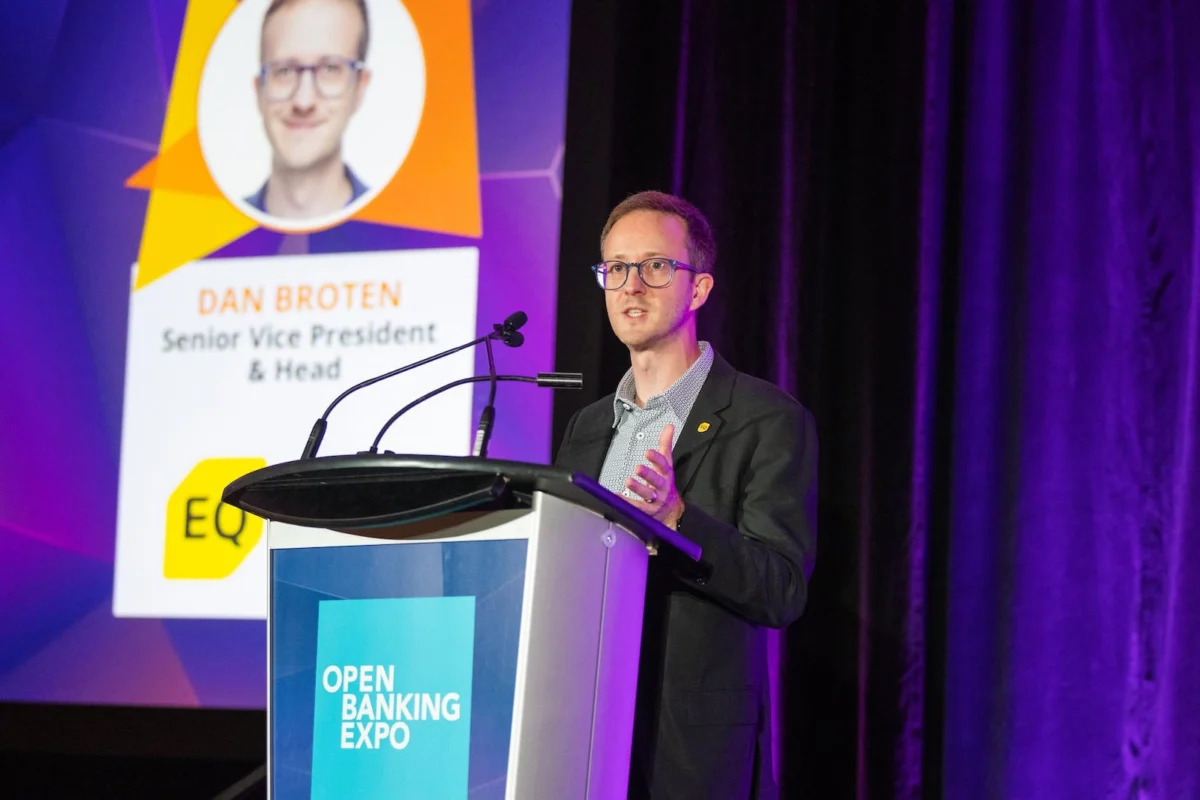
The transition from conceptual design to practical delivery has become the defining challenge for Canada’s financial sector as it moves toward a regulated Consumer-Driven Banking framework. Speaking at the Open Banking Expo Canada on March 5, Dan Broten, Senior Vice President and Head of EQ Bank, delivered a keynote address titled “Finishing takes leadership: Delivering Consumer-Driven Banking with urgency and confidence.” His presentation signaled a pivotal moment for the industry, moving away from high-level policy debates and toward the technical and legislative grit required to modernize the nation’s financial plumbing.
Broten’s address underscored a fundamental shift in the Canadian discourse. For years, the domestic financial industry has been mired in discussions regarding the necessity of Open Banking. However, Broten noted that this era of skepticism has largely concluded. The focus has now migrated to the practical construction of a system designed to serve unique national interests while fostering a more competitive and secure environment for consumers.
The Shift from Policy Concept to Economic Infrastructure
In his remarks on the Main Stage, Broten characterized the current phase of Consumer-Driven Banking not merely as a regulatory update, but as the construction of essential national economic infrastructure. He argued that the debate is no longer about whether the framework should exist, but how it must be built to ensure it is safer, more competitive, and aligned with the interests of the Canadian public.
The "Consumer-Driven Banking" terminology—Canada’s preferred phrasing for Open Banking—reflects a focus on consumer empowerment. By allowing individuals and small businesses to securely share their financial data with accredited third-party service providers, the framework aims to break down the silos of the traditional "Big Six" banking model. Broten emphasized that the practical work now involves building the technical standards and legal guardrails that will define how data moves across the ecosystem.
This transition is critical because, in the absence of a formal framework, a practice known as "screen scraping" has become the de facto standard. Screen scraping requires consumers to share their login credentials with third-party apps, which then "scrape" data from bank portals. This method is widely considered insecure and inefficient. Broten’s call for urgency is rooted in the need to replace these risky practices with a secure, API-based (Application Programming Interface) system that provides consumers with granular control over their data.
A Legacy of Leadership: Remembering Andrew Moor
Broten’s presentation carried a poignant weight as he began by honoring the memory of Andrew Moor, the late President and Chief Executive Officer of EQ Bank. Moor, who passed away unexpectedly in June 2025, was a towering figure in the Canadian fintech and banking space and a perennial presence at the Open Banking Expo.
Describing Moor as "one of the most thoughtful stewards" in the industry, Broten reflected on Moor’s philosophy that innovation and safety are not mutually exclusive. Moor championed the idea that competition and stability could reinforce one another if structured correctly. He viewed the modernization of financial infrastructure as a "generational task" rather than a short-term political goal.
This legacy of stewardship continues to inform EQ Bank’s approach to the current transition. Moor’s belief that progress only matters if it strengthens consumer confidence serves as a compass for the industry. Broten reminded attendees that the ultimate goal of these technical reforms is to improve the lived experience of the Canadian consumer, ensuring they have access to better financial tools without sacrificing the stability for which the Canadian banking system is globally renowned.
The Economic Imperative and the Cost of Delay
One of the central themes of Broten’s address was the high cost of procrastination. He cautioned that every month of delay in implementing the framework leaves consumers exposed to the status quo and prevents Canadian innovators from competing on a level playing field.
The economic imperative is clear: while Canada has deliberated, other jurisdictions have surged ahead. The United Kingdom, Australia, and the European Union have already established mature Open Banking ecosystems. More recently, the United States has made significant strides with the Consumer Financial Protection Bureau (CFPB) moving forward with Section 1033 of the Dodd-Frank Act, which mandates that financial institutions make data available to consumers in a standardized format.
Broten noted that Canada’s status as a "late mover" offers a unique opportunity to learn from the mistakes and successes of these other markets. However, he warned that this advantage is only valuable if decision-making accelerates. The struggle for Canadian fintechs is particularly acute; without a regulated framework, many startups face barriers to entry, high costs for data access, and a lack of clear rules that hinder investment and scalability.
Technical Pillars: Security, Liability, and Digital Identity
For the ecosystem to succeed, Broten identified several key components that must be finalized. Chief among these is a strong trust framework. This framework must be underpinned by consistent technical standards and a clear liability structure. One of the primary concerns for both large banks and small fintechs has been "who is responsible" when something goes wrong. Broten argued that clear rules around accountability are essential to driving adoption and maintaining public trust.
Data mobility was also highlighted as a critical enabler of competition. If consumers can easily move their data between institutions, they can more effectively shop for better interest rates, lower fees, and tailored financial advice. This mobility is expected to lower the barrier for consumers to switch banks, forcing incumbents to innovate and improve their service offerings.
Furthermore, Broten identified Digital Identity as a key piece of the puzzle. He suggested that Consumer-Driven Banking, when paired with a robust digital identity framework, creates a "possibility of more coherent system-wide defense." By verifying identities more securely and efficiently, the financial system can better combat fraud and streamline the "Know Your Customer" (KYC) processes that are often a point of friction in digital banking.
Chronology of Canada’s Open Banking Journey
The path to Consumer-Driven Banking in Canada has been long and characterized by multiple rounds of consultation. To understand the urgency expressed by Broten, it is necessary to look at the timeline of development:
- 2018: The federal government first announces its intention to review the merits of Open Banking.
- 2019: An Advisory Committee on Open Banking is established to conduct consultations with stakeholders across the country.
- 2021: The Advisory Committee releases its final report, recommending a hybrid model where the government sets the rules and the industry leads the implementation.
- 2022: Abraham Tachjian is appointed as the Open Banking Lead to develop the "Made-in-Canada" framework.
- 2023: The Fall Economic Statement formally commits the government to introducing legislation for a Consumer-Driven Banking framework.
- 2024: Budget 2024 outlines the legislative roadmap, identifying the Financial Consumer Agency of Canada (FCAC) as the primary oversight body for the framework.
- 2025: The industry enters the "delivery phase," focusing on the technical standards and the implementation of Bill C-69.
Implications for the Financial Ecosystem
The shift toward a formal framework has broad implications for various stakeholders. For the "Big Six" banks, it represents a transition from a closed garden to a more transparent environment. While this introduces competitive pressure, it also offers these institutions a chance to modernize their legacy systems and offer new value-added services to their customers.
For fintech companies, the framework is a lifeline. It provides a legal right to access data, which reduces the reliance on screen scraping and allows for the development of more sophisticated financial management tools, lending platforms, and payment solutions.
For the consumer, the impact is multifaceted. In the short term, it means better security for their data. In the long term, it promises a more dynamic financial market where products are tailored to individual needs. For example, a consumer could use a third-party app to aggregate all their accounts, analyze their spending habits, and automatically move money to the highest-yield savings account or the lowest-interest debt option.
Conclusion: A Call for Collaborative Action
Broten concluded his session with a call for genuine collaboration. He emphasized that building a unified, secure, and competitive-friendly ecosystem requires the coordinated efforts of regulators, financial institutions, technology providers, and policymakers. The design must be practical, secure, and scalable to meet the demands of a modern economy.
As Canada moves into the execution phase, the industry’s ability to act with "disciplined speed" will determine whether it can close the gap with international peers. The work of constructing this national economic infrastructure is well underway, but as Broten reminded the audience at the Open Banking Expo, the true measure of success will be the tangible outcomes delivered to Canadian citizens. The "design" is largely complete; the "delivery" is the task at hand.