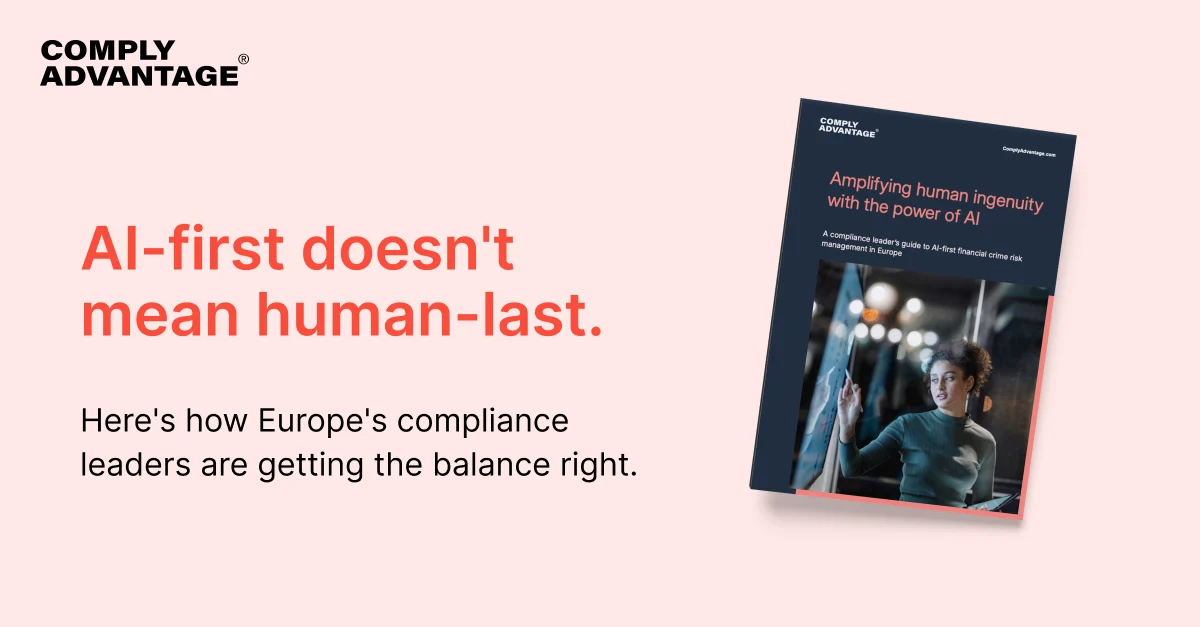
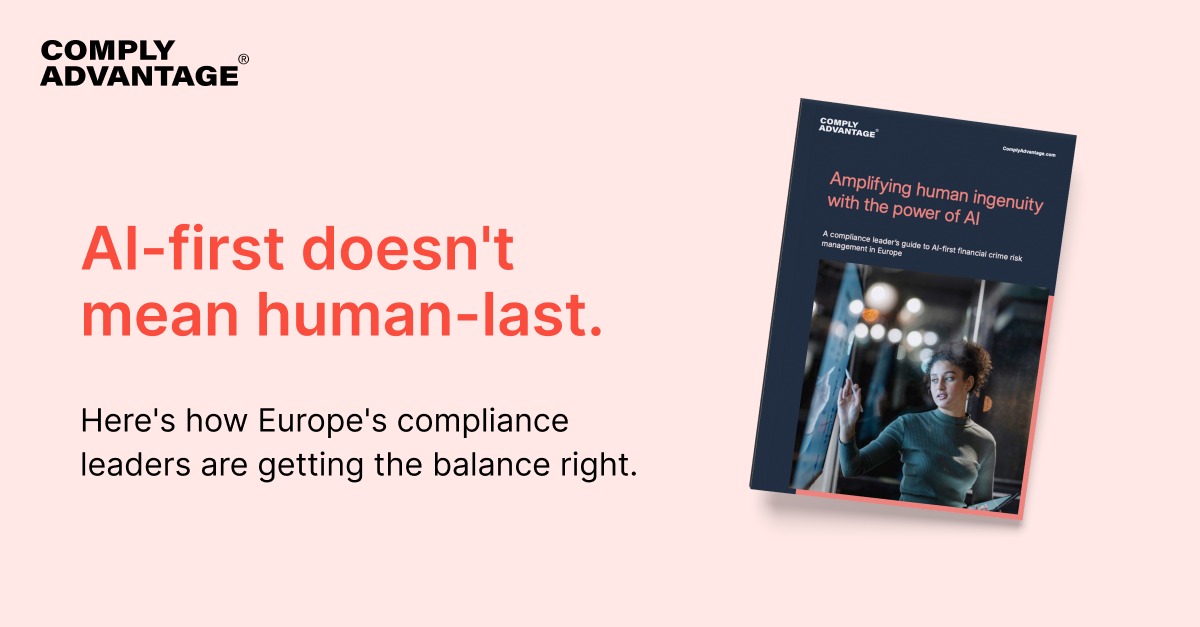
The landscape of global financial regulation is currently undergoing a seismic shift as institutions grapple with the dual-edged sword of artificial intelligence. In a comprehensive new guide released by ComplyAdvantage, a leading provider of AI-driven financial crime risk data and detection, industry experts are outlining a roadmap for European compliance leaders to navigate this transition. The guide, titled "Amplifying human ingenuity with the power of AI," is the culmination of insights gathered from the "Future of Compliance Europe" summit. It argues that the integration of machine learning and large language models is no longer an optional upgrade for financial institutions but a fundamental necessity for survival in an era where criminal syndicates are leveraging the same technologies to bypass traditional safeguards.
The Emergence of a Technological Arms Race
Financial crime is being fundamentally reshaped by artificial intelligence on both sides of the law. On the offensive, bad actors are utilizing generative AI to scale phishing attacks, create sophisticated deepfakes for identity fraud, and automate the laundering of illicit funds through complex global networks. These attacks move at a velocity that legacy systems—often reliant on rigid, rules-based logic—are unable to absorb or mitigate effectively.
Conversely, compliance teams are adopting AI at an unprecedented rate to close this vulnerability gap. The report suggests that the central question facing the industry has shifted. It is no longer a matter of whether to implement AI, but rather how to implement it with precision. The focus for 2025 and beyond is on identifying where the technology genuinely adds value, determining which decisions can be safely delegated to algorithms, and ensuring that human judgment remains the central pillar of the risk management framework.
Background and Context: The Future of Compliance Europe Summit
The guide draws heavily from the discussions held at the Future of Compliance Europe summit, a high-level gathering of Chief Compliance Officers (CCOs), regulators, and technology innovators. The event served as a forum to discuss the unique challenges facing the European market, which is currently navigating one of the most complex regulatory transformations in history.
With the recent finalization of the EU AI Act and the establishment of the Anti-Money Laundering Authority (AMLA) in Frankfurt, European firms are under immense pressure to modernize. The summit highlighted a growing consensus: the "black box" approach to AI—where decisions are made without transparency—is incompatible with the stringent audit requirements of European regulators. Instead, the industry is moving toward "Explainable AI" (XAI), which allows compliance officers to trace the logic of an automated decision back to its source.
A Chronology of Compliance Evolution
To understand the current urgency, it is necessary to examine the evolution of anti-money laundering (AML) and "Know Your Customer" (KYC) protocols over the last three decades.
- The Manual Era (Pre-2000s): Compliance was largely a manual process, involving physical document verification and ledger checks. This was slow but manageable in a less digitized global economy.
- The Rules-Based Era (2000s – 2010s): Following the 9/11 attacks and the subsequent Patriot Act in the U.S. and similar directives in Europe, automation began to take hold. Systems were built on "if-then" logic. For example, if a transaction exceeded $10,000, it was flagged. However, these systems were notorious for producing high volumes of "false positives," overwhelming compliance departments with irrelevant alerts.
- The Big Data Transition (2010s – 2022): Financial institutions began integrating larger datasets, including sanctions lists and PEP (Politically Exposed Persons) screenings, into their digital workflows. Machine learning began to be used for pattern recognition, but it remained a peripheral tool rather than a core driver.
- The Generative AI Revolution (2023 – Present): The advent of large language models (LLMs) and advanced neural networks has enabled real-time behavioral analysis. We are now in an era where systems can analyze the "intent" behind transactions, rather than just the numerical values.
The Four Disciplines of Modern AI Compliance
The ComplyAdvantage guide identifies four specific disciplines that distinguish the strongest compliance programs. These disciplines treat AI not as a simple procurement decision—like buying a piece of software—but as a design discipline that requires continuous refinement.
1. Data Integrity and Governance
AI is only as effective as the data it consumes. The guide emphasizes that top-tier firms are prioritizing the "cleaning" of their internal data architecture. In the context of financial crime, this means ensuring that customer profiles are unified and that historical transaction data is accurately labeled. Without high-quality data, AI systems can develop "hallucinations" or biases that lead to missed risks or discriminatory flagging of legitimate customers.
2. Explainability and Regulatory Alignment
For European leaders, the ability to explain an AI’s output to a regulator is paramount. The guide outlines how firms are moving away from opaque models toward those that provide a clear rationale for every risk score. This is particularly relevant under the EU AI Act, which categorizes certain financial risk assessment tools as "high-risk," requiring rigorous documentation and human oversight.
3. Human-in-the-Loop (HITL) Design
A recurring theme of the guide is that AI should amplify human ingenuity, not replace it. The most effective systems are designed to handle the "drudge work"—such as scanning millions of news articles for adverse media or cross-referencing sanctions lists—while escalating complex cases to human investigators. This "human-in-the-loop" model ensures that moral and ethical judgment remains the final arbiter in high-stakes decisions.
4. Continuous Iteration and Model Monitoring
The financial crime landscape is dynamic. As soon as a new detection model is deployed, criminals begin looking for ways to circumvent it. The guide advocates for a "DevSecOps" approach to compliance, where AI models are constantly monitored, tested against new threat vectors, and updated in real-time. This shifts compliance from a reactive "check-the-box" activity to a proactive, iterative strategy.
Supporting Data: The Economic Stakes of Financial Crime
The necessity for these AI advancements is underscored by recent economic data. According to the United Nations Office on Drugs and Crime (UNODC), it is estimated that between 2% and 5% of global GDP is laundered annually—amounting to as much as $2 trillion. In Europe alone, the cost of financial crime compliance for banks and fintechs is estimated to exceed €100 billion per year, with a significant portion of that budget spent on manual labor to investigate false positives.
Furthermore, a 2024 industry survey indicated that over 70% of compliance professionals believe that AI will be "essential" to their operations within the next 24 months. However, only 35% reported that their current infrastructure is fully prepared to integrate advanced AI tools, highlighting a significant "readiness gap" that the ComplyAdvantage guide seeks to bridge.
Official Responses and Industry Perspectives
While the guide itself serves as a strategic manual, industry leaders have voiced both optimism and caution regarding this transition. Vatsa Narasimha, CEO of ComplyAdvantage, has previously noted that the goal of technology in this sector is to "reduce the friction" between legitimate commerce and the necessary barriers against illicit activity.
Regulators at the European Central Bank (ECB) have also signaled a shift in tone. While previous years were defined by skepticism toward "automated decision-making," recent statements suggest a more pragmatic approach. European regulators are increasingly encouraging the use of "RegTech" (Regulatory Technology) to improve the efficiency of the financial system, provided that the governance frameworks are robust enough to prevent algorithmic errors.
Analysis of Broader Impact and Implications
The shift toward AI-driven compliance has implications that extend far beyond the walls of bank compliance departments.
For the Workforce: There is a growing demand for a new type of professional: the "Compliance Technologist." This role requires a hybrid of legal knowledge and data science proficiency. As AI takes over routine screening tasks, the human role will shift toward high-level investigative work, requiring deeper analytical skills and a more nuanced understanding of geopolitical risks.
For Financial Inclusion: One of the unintended consequences of legacy compliance systems is "de-risking," where banks exit entire markets or customer segments because they are too expensive to monitor. AI has the potential to reverse this trend. By making the monitoring of high-volume, low-value transactions more cost-effective, AI can help financial institutions serve marginalized populations without compromising on security.
For Global Security: Financial crime is often the lifeblood of human trafficking, terrorism, and environmental crimes. By increasing the efficacy of AML programs through AI, the global financial system can more effectively "choke off" the funding for these activities. The guide from ComplyAdvantage suggests that when human ingenuity is amplified by AI, the result is not just a more efficient bank, but a safer global society.
Conclusion
"Amplifying human ingenuity with the power of AI" serves as a critical manifesto for the modern compliance era. It acknowledges that while the threats posed by AI-enabled criminals are significant, the potential for AI to fortify the global financial system is even greater. By focusing on the four disciplines of data integrity, explainability, human-centric design, and continuous iteration, European compliance leaders can transform their departments from cost centers into strategic assets. As the industry moves toward 2026, the success of these programs will ultimately depend on how well they balance the speed of the machine with the wisdom of the human.