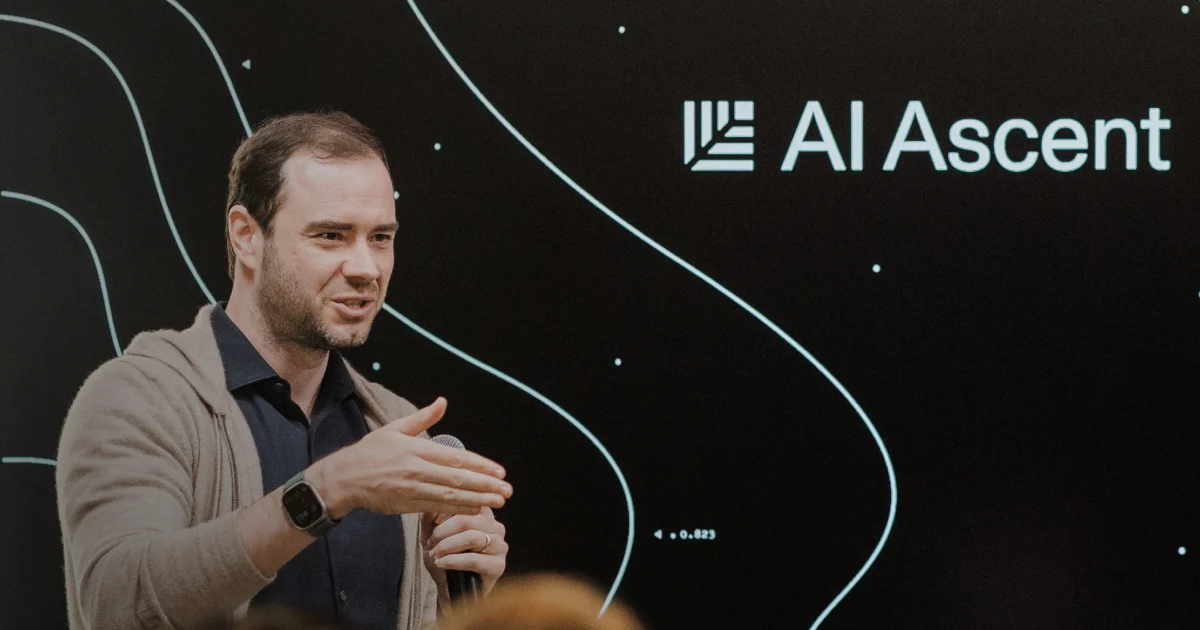
San Francisco, CA – May 8, 2026 – The fourth annual AI Ascent, hosted by venture capital firm Sequoia Capital on April 20th, convened over 150 distinguished founders and researchers at the forefront of artificial intelligence. This year’s gathering, widely considered the most significant to date, served as a pivotal forum for discussing the accelerating pace of AI innovation and its profound implications across industries. The event, held in San Francisco, featured a curated lineup of luminaries, including Demis Hassabis (DeepMind/Google AI), Andrej Karpathy (formerly OpenAI), Greg Brockman (OpenAI), Boris Cherny (Anthropic), Dmitri Dolgov (Waymo), and Jim Fan (Nvidia), among many others.
The Dawn of a Computational Revolution
Sequoia partner Pat Grady set the stage for the day’s discussions by framing the current moment as a fundamental shift in computation. He drew a powerful analogy, stating, "AI is a revolution in computation. Not faster horses, but cars. And the cars have arrived." Grady’s pronouncements underscored the transformative potential of AI, moving beyond incremental improvements to entirely new paradigms of problem-solving and capability.
For entrepreneurs building on the foundational models developed by leading AI labs, Grady offered a strategic framework: "get MAD." This acronym encapsulates three critical pillars for success in the current AI landscape: moats built from the customer back, design for affordance, and exploit the diffusion gap. Building moats from the customer back emphasizes the importance of developing defensible business models that are deeply integrated with user needs and workflows, rather than relying solely on the underlying technology. Design for affordance, a concept borrowed from user experience design, suggests that AI systems should be intuitive and easy to interact with, making their capabilities readily accessible and understandable. The diffusion gap refers to the often-significant lag between the cutting-edge capabilities of advanced AI models and their widespread adoption and deployment within established enterprises, particularly the Fortune 500. This gap presents a fertile ground for innovation and value creation.
2026: The Year of the Agent
Sonya Huang, another Sequoia partner, boldly declared 2026 the "year of agents," a sentiment that resonated throughout the event. She elaborated on the confluence of factors that have brought this paradigm shift to fruition, identifying three essential ingredients: sophisticated AI models, versatile AI tools, and robust AI harnesses. The recent advancements in large language models (LLMs) and other foundational AI architectures have provided the cognitive engine. The development of specialized tools, ranging from sophisticated APIs to task-specific software, has enabled these models to interact with and manipulate the digital and physical world. Finally, the emergence of sophisticated "harnesses" – frameworks and platforms for orchestrating and managing AI agents – has made it possible to deploy them reliably and at scale. This convergence, Huang argued, is poised to unlock a new era of autonomous and intelligent systems capable of performing complex tasks with minimal human intervention.
A Cognitive Revolution on Par with the Industrial Revolution
Konstantine Buhler, a Sequoia partner, presented a compelling historical parallel, drawing a direct line between the current AI surge and the Industrial Revolution. He posited that the "cognitive revolution" unfolding now will mirror the arc of the Industrial Revolution but with amplified speed and scale. Just as the Industrial Revolution fundamentally reshaped manual labor, AI is poised to revolutionize cognitive work. This implies a broad societal and economic transformation, affecting a vast array of professions and industries that have traditionally relied on human intellect and decision-making. The implications are far-reaching, suggesting a need for proactive adaptation in education, workforce development, and economic policy to navigate this profound shift.
A Spectrum of Cutting-Edge Discussions
The discussions at AI Ascent IV spanned an impressive breadth of topics, reflecting the multifaceted nature of AI research and development. Sessions explored the long-term vision for agent-based AI systems, delving into the potential endgame for robotics and the integration of AI into physical tasks. The logistical and infrastructural challenges of scaling AI were also a key focus, with a speculative yet grounded discussion on the feasibility of data centers in space, driven by the immense computational demands of future AI models and the need for global connectivity.
Further sessions addressed the critical frontier of data efficiency, exploring novel techniques for training and deploying AI models with less data, a crucial factor for sustainability and accessibility. The underlying scientific principles driving neural networks also came under scrutiny, with researchers presenting new insights into the emergent behaviors and capabilities of these complex systems. This included discussions on interpretability, the quest to understand how and why AI models make specific decisions, and the development of more robust and reliable AI architectures.
Supporting Data and Emerging Trends
The rapid evolution of AI is supported by significant, quantifiable advancements. In the past year alone, the performance benchmarks for key AI tasks, such as natural language understanding and image generation, have seen substantial improvements. For instance, metrics like the GLUE and SuperGLUE benchmarks for language understanding have continued to climb, with leading models now achieving human-level or near-human-level performance on many of these tasks. The generative AI market, estimated to be worth billions of dollars, is projected to grow exponentially in the coming years, fueled by increasing investment and broader adoption across industries.
The energy consumption of AI, a growing concern, was implicitly addressed through discussions on data efficiency. While training massive models can be energy-intensive, the development of more efficient algorithms and specialized hardware is a critical area of research. For example, Nvidia’s recent announcements regarding their next-generation AI accelerators promise significant performance gains with improved energy efficiency.
Timeline of AI Ascent and its Predecessors
AI Ascent IV builds upon a foundational history of fostering dialogue within the AI community.
- AI Ascent I (2023): Focused on establishing the foundational principles of the current AI wave, emphasizing the breakthroughs in large language models and their immediate potential. Key themes included the democratization of AI tools and the early explorations into AI agents.
- AI Ascent II (2024): Explored the burgeoning ecosystem of AI startups and the initial applications of generative AI across creative industries and software development. Discussions centered on the challenges of scaling AI products and the emerging regulatory landscape.
- AI Ascent III (2025): Witnessed a deeper dive into the commercialization of AI, with a greater emphasis on enterprise adoption and the integration of AI into core business processes. The ethical considerations and the responsible development of AI became more prominent topics.
- AI Ascent IV (2026): Marked a significant shift towards the operationalization and advanced capabilities of AI, particularly the rise of AI agents and the exploration of next-generation AI frontiers, including robotics and distributed AI systems.
Reactions and Inferred Implications
While specific direct reactions from all attendees were not publicly documented in the provided context, the caliber of participants and the nature of the discussions strongly suggest a prevailing sentiment of optimism tempered with strategic foresight. The presence of leaders from major AI research labs like DeepMind, OpenAI, and Anthropic, alongside key figures from companies like Waymo and Nvidia, indicates a shared understanding of the industry’s trajectory.
The advice from Grady regarding "moats," "affordance," and the "diffusion gap" is likely to inform strategic decisions for countless startups and established companies alike. For founders, it signals a need to move beyond simply leveraging existing AI models and to instead focus on building unique value propositions and customer-centric solutions. For larger enterprises, it highlights the imperative to accelerate AI adoption and to bridge the gap between cutting-edge research and practical implementation.
The declaration of 2026 as the "year of agents" by Huang suggests a significant acceleration in the development and deployment of autonomous AI systems. This has profound implications for productivity, automation, and the nature of work itself. Companies that can successfully integrate AI agents into their operations are likely to gain significant competitive advantages.
Buhler’s comparison to the Industrial Revolution serves as a stark reminder of the scale of change anticipated. This necessitates a proactive approach to societal adaptation, including rethinking education systems to equip future generations with the skills needed to thrive in an AI-augmented world, and developing policies that address potential economic disruptions and ensure equitable distribution of the benefits of AI.
The Broader Impact and Future Outlook
AI Ascent IV has firmly positioned artificial intelligence not as a nascent technology, but as a mature and rapidly advancing force reshaping the global landscape. The insights shared underscore a future where AI is not merely a tool but an integral partner in human endeavors, driving innovation across science, business, and society.
The emphasis on customer-centric moats, intuitive interfaces, and the exploitation of the diffusion gap points towards a market that will increasingly reward practical, deployable AI solutions that solve real-world problems. The rise of AI agents promises a future of enhanced automation and efficiency, potentially freeing up human capital for more creative and strategic pursuits.
However, this transformative era also presents challenges. As AI capabilities expand, so too do the considerations around ethics, governance, and the societal impact of widespread automation. The discussions at AI Ascent IV, while forward-looking, implicitly highlight the ongoing need for responsible development and deployment strategies to ensure that AI benefits humanity as a whole. The event’s success in gathering such a concentrated group of influential figures suggests that the dialogue surrounding these critical issues will continue to shape the trajectory of AI for years to come. The full suite of videos from AI Ascent IV is available on Sequoia Capital’s YouTube channel, offering further insights into these pivotal discussions.