The rapid evolution of artificial intelligence has transitioned from simple text generation to the development of sophisticated autonomous agents capable of executing complex workflows. Central to this shift is the Model Context Protocol (MCP), an open-standard initiative designed to solve the "last mile" problem of AI integration. By providing a universal interface for connecting large language models (LLMs) to external data sources, databases, and software tools, MCP is fundamentally changing how AI agents interact with the digital ecosystem.
The Problem of Fragmentation in AI Development
Historically, the integration of AI models into enterprise software stacks has been a labor-intensive, bespoke process. Every time a developer wanted to give an AI agent access to a new repository, a proprietary database, or a web search engine, they were forced to write custom middleware or "glue code." This fragmentation created significant technical debt, limited the portability of agents, and hindered the scalability of AI-driven automation.
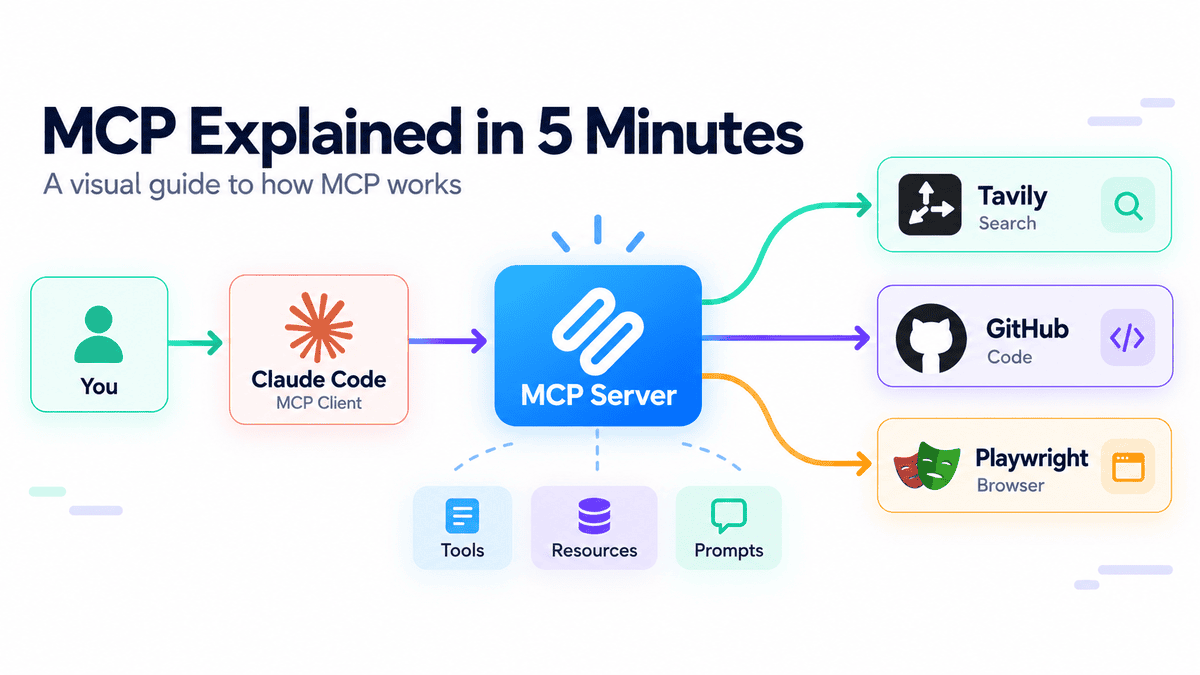
The Model Context Protocol emerges as a standardized bridge. Rather than building unique adapters for every service, developers can now build to a single specification. An AI application acting as an "MCP Host" can communicate with any "MCP Server," allowing for immediate, standardized access to the server’s tools, resources, and prompts. This architectural shift mirrors the historical move toward standardized protocols like HTTP or USB, which enabled the rapid expansion of the internet and hardware peripherals, respectively.
Chronology and the Evolution of MCP
The genesis of MCP can be traced to the industry’s broader push toward agentic workflows in late 2024 and 2025. As companies like Anthropic, OpenAI, and Google raced to deploy agents capable of real-world tasks, the need for a non-proprietary, vendor-neutral standard became undeniable.
- Initial Specification (Late 2024): The framework was introduced to facilitate basic tool-calling, focusing on allowing models to trigger functions in external systems.
- Refinement and Adoption (Early 2025): Early adopters began integrating MCP into developer-centric tools, most notably Claude Code, which served as a primary proving ground for the protocol.
- The July 2026 Specification (Current Standard): The recent update marked a pivot toward a stateless architecture. By decoupling the session state from the protocol, the 2026 update allows for significantly improved performance in cloud-native environments, enabling servers to scale horizontally without the complexities of maintaining active socket connections for every request.
Understanding the Architecture: How it Works
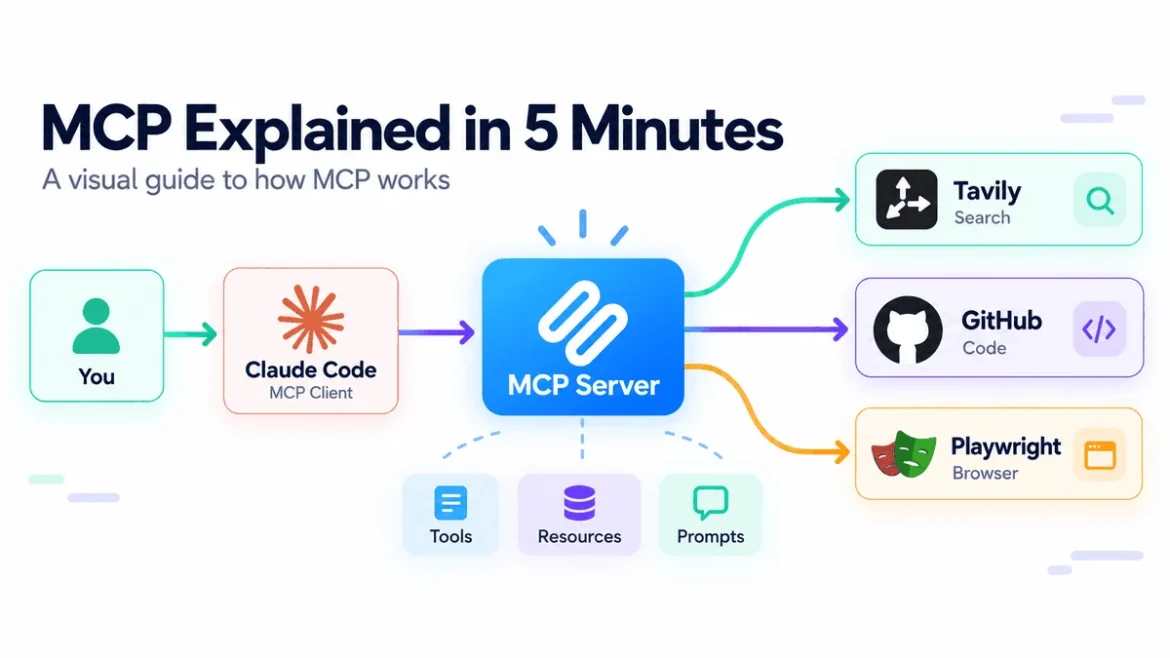
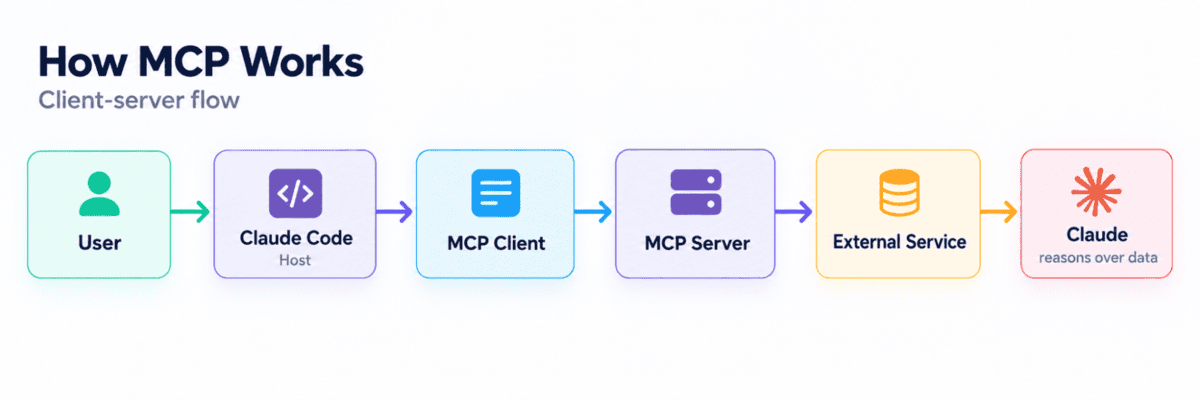
At its core, MCP operates on a client-server architecture. The "Host" is the primary application—the LLM environment—which utilizes an "MCP Client" to connect to one or more "MCP Servers." These servers serve as gateways to specific capabilities.
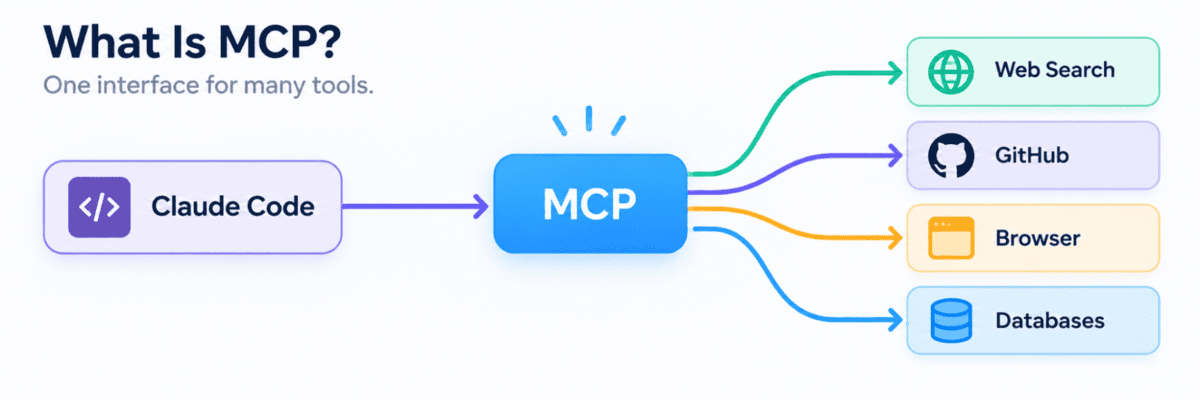
The protocol defines three primary primitives:
- Tools: Executable functions that the model can invoke to perform tasks, such as running a database query or triggering a browser action.
- Resources: Data streams or content that the model can read, such as log files, documentation, or codebase snippets.
- Prompts: Pre-defined interaction templates that ensure the model interacts with the tool in a consistent, optimized manner.
Crucially, MCP does not perform the reasoning. The intelligence remains within the LLM. The protocol merely provides the "eyes and hands" for the agent, standardizing the format through which the model discovers capabilities and processes the output.
Practical Implementation in Modern Workflows
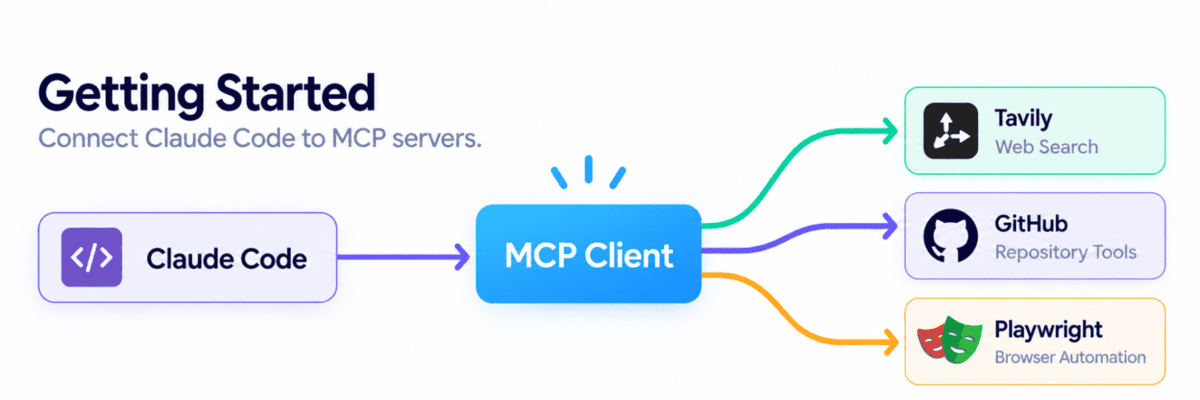
To illustrate the efficacy of MCP, consider the integration of three distinct service types within the Claude Code environment. Each demonstrates a specific facet of the protocol’s utility.
Web Research via Tavily
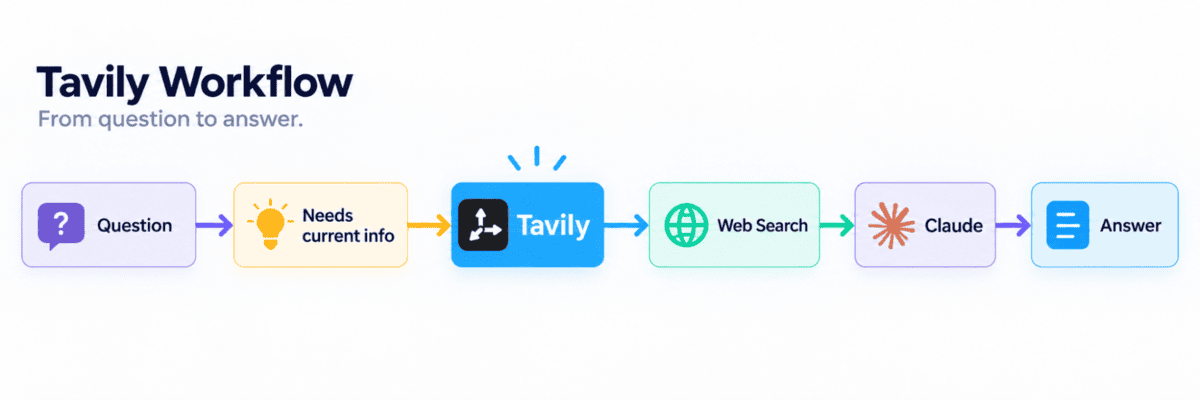
By connecting to the Tavily MCP server, an AI agent gains real-time access to the internet. Unlike a model’s training data, which is static, the Tavily integration allows the agent to perform live research, crawl web pages, and extract data. This is particularly vital for tasks requiring up-to-date information, such as summarizing the latest release notes for a programming framework like PyTorch.
Repository Operations via GitHub
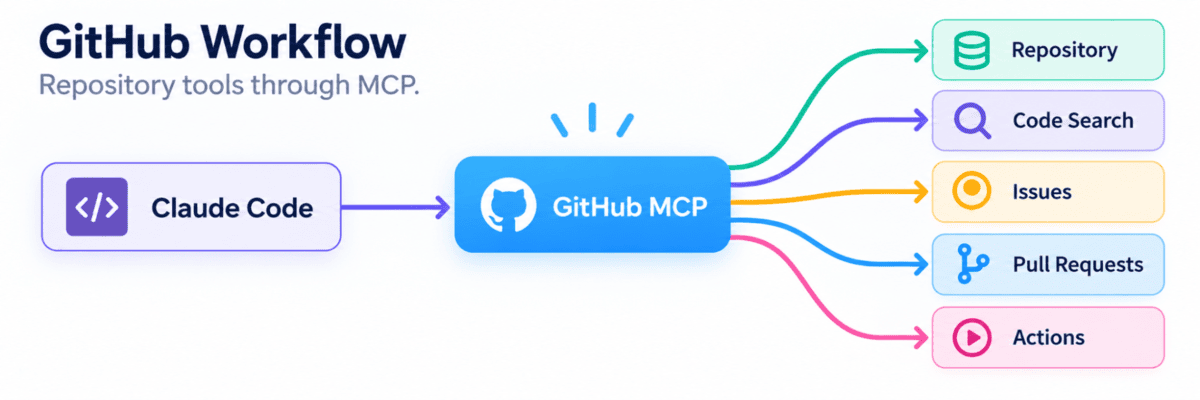
The official GitHub MCP server transforms the platform into an interactive workspace for the agent. By passing a Personal Access Token (PAT), the agent gains the ability to navigate complex repository structures, review pull requests, and identify missing test coverage. This reduces the cognitive load on human developers, who no longer need to manually copy-paste code snippets into the chat interface; the agent simply fetches the context it requires.
Browser Automation via Playwright
The Playwright MCP server extends the agent’s reach to the browser itself. By providing a structured accessibility snapshot of a webpage, the server allows the agent to interact with UI elements—clicking buttons, filling forms, and verifying workflows—much like a human user. This is transformative for quality assurance and automated testing, where an agent can now autonomously navigate a local staging environment to verify features.
Analysis of Implications
The shift toward a stateless, standardized protocol like MCP has profound implications for the AI industry.
1. Reduced Integration Costs: For enterprises, the cost of AI deployment is no longer tied to the number of custom integrations required. If a tool is MCP-compliant, it is instantly available to any MCP-enabled host. This effectively creates an "app store" ecosystem for AI tools.
2. Improved Security and Governance: Centralizing tool access through a standard protocol allows organizations to implement fine-grained access control. Rather than providing broad API access, administrators can use MCP servers as policy enforcement points, limiting what an AI agent can read or execute based on the specific server permissions.
3. Accelerated Innovation: By lowering the barrier to entry, developers can focus on creating more powerful agentic logic rather than spending time on plumbing. This is expected to increase the density of agentic tools available on platforms like GitHub and NPM, further accelerating the capabilities of autonomous systems.
Official Perspectives and Industry Reaction
While industry-wide adoption is still in its nascent stages, early signals from the developer community suggest high levels of support for the standardization of MCP. Proponents argue that by keeping the protocol open, the industry avoids a "walled garden" scenario where different AI providers require proprietary tool integrations.
The transition to a stateless architecture in the 2026 specification was largely driven by the demand from cloud infrastructure providers. Companies deploying agents at scale require the ability to spin up and down instances of MCP servers without managing persistent session state, which was a significant bottleneck in earlier iterations.
Looking Ahead
As the MCP ecosystem matures, the focus will likely shift toward security auditing and discovery mechanisms. With the ability to connect to hundreds of different tools, the need for a robust registry or marketplace where developers can vet MCP servers for security and reliability will become paramount.
Furthermore, as agents become more autonomous, the "human-in-the-loop" aspect of MCP will likely evolve. Future versions of the protocol may include standardized request-approval flows, ensuring that high-stakes actions—such as committing code to a production repository or deleting data—require explicit, standardized human authorization through the MCP interface.
The Model Context Protocol represents a necessary maturation of the AI industry. By moving away from custom, fragile integrations and toward a shared, extensible language for interaction, the AI field is laying the groundwork for more reliable, scalable, and capable agents. For developers, the message is clear: the era of building custom bridges is ending, and the era of plug-and-play agentic intelligence has begun.