
Published August 19, 2026, the ongoing transformation of the artificial intelligence sector has reached a critical strategic milestone. The competitive frontier for generative AI and enterprise applications has decisively expanded beyond user interfaces, streamlined workflows, and aggressive go-to-market strategies. Industry leaders, tech executives, and venture capital firms are signaling a profound shift: the ultimate battleground is no longer merely the software wrapper or the application layer, but the very core of machine intelligence itself.
This shifting paradigm has sparked intense debate across the global technology ecosystem. Prominent industry figures have increasingly cautioned against total reliance on third-party frontier labs. Recently, Palantir CEO Alex Karp publicly urged enterprises to "own the means of production." Shortly thereafter, Microsoft CEO Satya Nadella echoed a similar sentiment, warning that purchasing off-the-shelf intelligence from a frontier lab carries a hidden, compounding toll—requiring companies to pay twice, once through steep financial subscription models and a second time through the surrender of the proprietary knowledge and domain-specific telemetry they must reveal to make those models functionally useful.
These high-level warnings have galvanized a growing movement of software companies, legal-tech pioneers, and developer platforms to vertically integrate. Rather than acting purely as tenants renting general-purpose cognitive capabilities from a handful of dominant foundation model labs, ambitious modern enterprises are beginning to shape, tune, and govern their own model weights.
The Genesis of the Movement: Inside the Sequoia AI Stack Summit
To better understand this inflection point, venture capital firm Sequoia recently convened an exclusive gathering of prominent AI founders, technical architects, and builders in Silicon Valley. The gathering served as a crucible for discussing the practicalities and philosophies of owning an independent AI stack.

The event featured a comprehensive suite of industry leaders offering perspectives from across the engineering spectrum. Harvey, a specialized legal AI platform, presented the customer-centric viewpoint on why customized intelligence is becoming paramount for vertical software applications. Meanwhile, technical building-block providers such as Mercor, LangChain, Trajectory, and Fireworks brought deep operational insights into the mechanics of the modern post-training stack.
Out of these collaborative sessions, a cohesive and actionable enterprise playbook began to emerge. The consensus among the builders was unanimous: while frontier APIs and foundational models remain indispensable for broad, generalized workloads, relying exclusively on them creates a structural ceiling for domain-specific products. Consequently, a growing cohort of companies is actively building out internal capabilities to train, fine-tune, and optimize models tailored directly to their unique business workflows.
Why Now? The Convergence of Open-Weight Maturity and Independent Infrastructure
The strategic pivot toward owning the intelligence layer is not happening in a vacuum; it is driven by two monumental developments in the broader AI landscape over the preceding months.
First, the open-weight frontier has evolved at a velocity that far outpaced early industry expectations. Historically, attempting to build atop open models felt like running on a treadmill. Engineering teams would spend months fine-tuning an open-source model, only for a major laboratory to release a superior baseline that rendered months of localized effort obsolete. However, with the maturation of highly capable open-weight models—such as the recent rollouts of Kimi K3 and GLM 5.2—the performance gap between proprietary closed models and open alternatives has narrowed significantly. Organizations can now start from a baseline sitting remarkably close to the technological frontier.
Second, the independent post-training and infrastructure stack has matured into a robust, enterprise-ready ecosystem. Through infrastructure pioneers like Mercor and Fireworks, organizations of varying sizes can now access end-to-end tooling that historically required the massive research budgets of elite labs. This includes sophisticated pipelines for supervised fine-tuning, preference optimization, synthetic data generation, rigorous evaluation harnesses, and online production learning. Armed with these tools, open models can frequently outperform generalized frontier models when deployed within targeted, specialized domains.

The Four Pillars Driving the Migration to Owned Intelligence
While renting general intelligence from external labs offers a rapid path to market deployment, organizations across multiple sectors are discovering distinct operational friction points that necessitate a shift toward ownership. Industry analysts point to four primary catalysts: cost containment, latency optimization, data sovereignty, and strategic autonomy.
1. Cost and Margin Protection (AI COGS)
As artificial intelligence products scale and capture significant market share, the underlying cost of goods sold (COGS)—driven primarily by high-volume API inference—begins to severely compress operating margins. When inference expenses scale in direct proportion to customer usage, relying entirely on commercial third-party APIs can inhibit long-term profitability. Transitioning specialized workloads to smaller, distilled, and self-hosted models provides enterprises with a sustainable mechanism to protect their unit economics.
2. Speed and Latency Demands
In domains where milliseconds matter—such as real-time code generation, tab-autocomplete extensions, or automated cybersecurity threat detection—the sheer size of massive, general-purpose frontier models can introduce unacceptable latency. Highly optimized, smaller custom models tailored to specific codebases or security protocols frequently outpace monolithic models, providing the instantaneous response times required by professional end-users.
3. Proprietary Data and Competitive Secrecy
The lifeblood of a superior AI application is the continuous feedback loop generated by user interactions, domain-specific nuances, and rigorous evaluation metrics. Companies operating in heavily regulated industries—such as healthcare, legal services, and finance—often prefer that sensitive customer interactions and proprietary corrections remain strictly within internal walls, mitigating data leakage risks associated with third-party cloud training pipelines.
4. Controlling Strategic Destiny
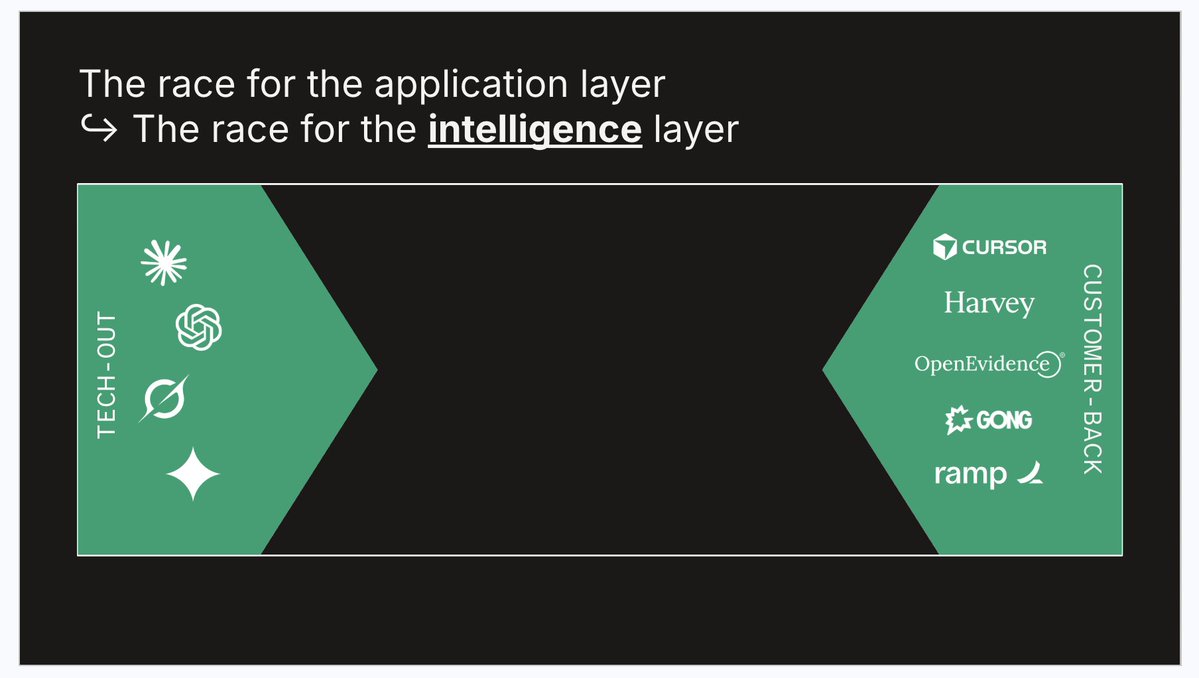
The historical boundaries separating the application layer from the intelligence layer are rapidly dissolving. Foundation labs are increasingly pushing upward into end-user products, while specialized application companies are moving downward into the training loops that define how those products think. For enterprises aiming to secure long-term defensibility, controlling the core intelligence and learning loop is becoming just as vital as owning the user interface.
The Zero-to-One Roadmap for Owning Your AI Stack
For organizations that have weighed the strategic trade-offs and decided to construct an in-house intelligence capability, the immediate challenge lies in execution. Industry leaders at the Sequoia summit outlined a structured, four-step technical and organizational roadmap to transition from zero to one.
Building the Right Team
Experts emphasize that owning enterprise intelligence should not be relegated to a generic platform or IT infrastructure team. Successfully driving this initiative requires a dedicated, nimble unit operating on the offense—focused on designing rigorous evaluations, shaping proprietary data pipelines, experimenting with open-weights, and tuning execution harnesses. Notably, industry pioneers like legal-tech leader Harvey have demonstrated that high-impact AI research and fine-tuning can be accomplished with remarkably lean teams working in close collaboration with ecosystem partners.
Establishing Rigorous Evaluation Frameworks (Evals)
A central tenet of modern AI engineering is that evaluation must precede optimization. As Gabe Pereyra of Harvey famously noted, "If you don’t have a good benchmark, you can’t train models."
An evaluation framework consists of a standardized collection of tasks designed to measure system competence, complete with prompts, contextual data, and automated or human-in-the-loop graders. While early-stage evaluations often begin as subjective "vibe-checks" by company founders, scaling requires transforming these qualitative assessments into repeatable, automated benchmarks. Harvey, for instance, constructed its proprietary Legal Agent Benchmark by translating real-world legal workflows into more than 1,200 distinct agent tasks spanning 24 practice areas, evaluated against over 75,000 expert-authored rubrics. Maintaining a robust evaluation suite allows engineering teams to make objective, data-driven decisions when selecting or fine-tuning models.
Mastering Harness and Context Engineering
An enterprise AI agent generally comprises three distinct components: the underlying model, the operational context, and the software harness. The harness governs the product logic surrounding the model—handling dynamic routing, retrieval-augmented generation (RAG), tool calling, short-term memory, fallback protocols, and operational tracing.

As Harrison Chase of LangChain observed, the primary function of the harness is to supply the model with the exact context it needs at the precise moment it is required. A well-engineered harness enables developers to dynamically route tasks to the most cost-effective or performant model, apply consistent evaluation metrics across diverse model architectures, and maintain full inspectability over the agent’s execution path.
Executing Targeted Post-Training
Post-training methodologies must be selected based strictly on the specific behavioral or cognitive deficiency an enterprise is attempting to correct. Technical leaders, including Lin Qiao, have categorized these interventions:
- Retrieval and Context: If the model is simply missing factual knowledge, expensive post-training is unnecessary; standard RAG or enriched context injection is sufficient.
- Supervised Fine-Tuning (SFT): Employed when the model’s output formatting, tone, or structural behavior requires alignment with professional standards.
- Preference Tuning: Utilized to refine product taste and stylistic nuances.
- Reinforcement Learning (RL): Applied when the model must significantly enhance its mastery over highly specialized, multi-step problem-solving tasks.
- Distillation: Deployed when a large, highly capable model needs to be compressed into a faster, more economical footprint without sacrificing domain accuracy.
Closing the Loop with Online Production Learning
The final phase of the technical journey involves establishing a continuous production feedback loop. As Arjun Karanam pointed out during discussions on agent longevity, even the most brilliant foundational model deployed into a corporate environment is akin to an elite intellectual experiencing their first day on the job; they possess raw intelligence, but lack institutional experience.
Agents generate valuable experiential data during everyday operations. Every execution path—encompassing the context reviewed, tools invoked, outputs generated, and subsequent user edits or retries—forms a discrete "trajectory." By capturing these trajectories using production monitoring tools like LangChain’s LangSmith, organizations can convert real-world operational failures directly into new evaluation benchmarks, feed missing information into memory systems, and refine harness logic for continuous improvement.
Implications and the Broader Outlook
The conscious choice by enterprises to own portions of their intelligence stack introduces a fundamental strategic trade-off. Relying exclusively on the closed-model ecosystem provides a high operational floor with minimal friction, but ultimately imposes a restrictive performance ceiling. Conversely, adopting an open, self-governed intelligence stack requires higher initial technical investment and introduces a lower operational floor during the early phases of experimentation—yet it unlocks a vastly superior performance ceiling and long-term business defensibility.

Industry analysts suggest that the future of the enterprise AI landscape will not be winner-take-all. Foundation labs will undoubtedly continue to construct massive, generalized cognitive engines that serve as the foundational bedrock for millions of applications. However, parallel to this, the most successful product companies are increasingly cultivating their own specialized, domain-obsessed models tailored precisely to the unique contours of their industries.
As more organizations take direct ownership of their machine intelligence, the broader software ecosystem is poised to enter a phase characterized by heightened specialization, fierce technical differentiation, and a resurgence of independent enterprise individuality.