Although Cameron McCord was not physically present at Edwards Air Force Base on May 21, 2025, the events unfolding on the tarmac in the Mojave Desert that day would forever be etched in his memory. For AJ Piplica, CEO of Hermeus, it was a company-defining moment. After years of relentless effort, Piplica and his team were poised to conduct a critical flight test of their new hypersonic airplane engine. The day’s agenda included a high-speed taxi test followed by, if all went well, an actual liftoff – a dual feat that would have been considered extraordinary just a few years prior.
The pressure was immense. The prospect of a failed test loomed large, not only for its impact on future fundraising but also for the sheer audacity of attempting both taxi and takeoff within a tightly constrained two-hour window. "Our data from the taxi needed to give us confidence that we’re not taking a dumb risk by attempting takeoff and landing," Piplica explained. "And that’s a huge amount of data to review, that historically took weeks, if not months, to parse between high-speed taxi and first flight." The limited timeframe amplified the stakes, demanding unprecedented efficiency in data analysis.
This is where McCord’s company, Nominal, stepped in. After years of grappling with a fragmented and inadequate suite of data review tools ill-suited for hardware testing, Hermeus had recently adopted Nominal’s platform. Nominal’s singular focus was on streamlining hardware testing for real-world deployment. While Hermeus had seen success with the platform in preliminary Hardware-In-the-Loop (HITL) tests at their Atlanta facility, applying it in the field, under the scrutiny of the Air Force, with such high stakes and limited time, was an entirely new challenge.
As the Hermeus aircraft began its smooth, sub-liftoff speed taxi down the runway, a torrent of data streamed through Nominal’s platform. Real-time insights into the health of critical systems—brakes, actuators, avionics, electronics, and control surfaces—were meticulously collected. Terabytes of information painted a vivid, immediate picture of the system’s condition. By the time the plane completed its taxi and was towed back to the runway’s starting point, the data review was already concluded. "Data review was done by the time we’d towed the airplane back to the other end of the runway," Piplica recalled. "Everybody was thumbs up, so we concluded that, and we were at a safe level of risk to attempt a flight." Minutes later, the Quarterhorse Mark One, Hermeus’s groundbreaking aircraft, was airborne for the first time. Upon its successful landing, Piplica captured the moment, texting a photo to McCord with the simple, yet profound, message: "Hey, we got it back."
A Legacy of Service and Innovation
Cameron McCord’s involvement in the Hermeus success story is deeply rooted in a lifelong commitment to service, a value instilled in him from a young age. While not directly present at Edwards Air Force Base, his journey to co-founding Nominal is a testament to how a dedication to serving a greater good can translate into groundbreaking technological advancement.
McCord’s upbringing was steeped in stories of service. His grandfather, a quintessential member of the Greatest Generation, was fast-tracked through the Naval Academy during World War II, witnessing the Japanese surrender and experiencing the dawn of the nuclear age. He even piloted the longest flight in recorded history over the South Pole. His father, a federal attorney for the Department of Justice, and his mother, a special needs teacher, consistently emphasized the importance of contributing positively to the world. For McCord, inspired by his grandfather and extended family’s naval service, this meant a path within the Armed Forces.
He pursued this calling through ROTC at MIT, where he also earned degrees in Nuclear Engineering and Physics, with a minor in Political Science—a deliberate choice to bridge technical expertise with real-world impact. While diligently fulfilling his military training and academic demands, McCord observed a burgeoning entrepreneurial spirit among his peers. He frequently encountered fraternity brother Jason Hoch, a computer science prodigy, working tirelessly on projects at all hours. Though McCord couldn’t fully immerse himself in such pursuits at the time, he filed away this admiration for his classmates’ drive to build and create, anticipating a future where he could explore it himself.
Upon graduating, McCord joined the USS Helena, SSN-725, as the newest officer on a state-of-the-art submarine. He quickly learned that authority was earned, not granted. "You just start from scratch with first principles—how do you build trust, rapport, and respect with these people where everything you were is stripped away to zero?" he reflected. Through thoughtful leadership, meticulous attention to detail, and a genuine commitment to understanding the complex machinery and the crew’s reliance on him, McCord gained the respect of his sailors. This dedication to mastering complexity would soon be tested in a high-stakes scenario.
Navigating Crisis: A Test of Leadership
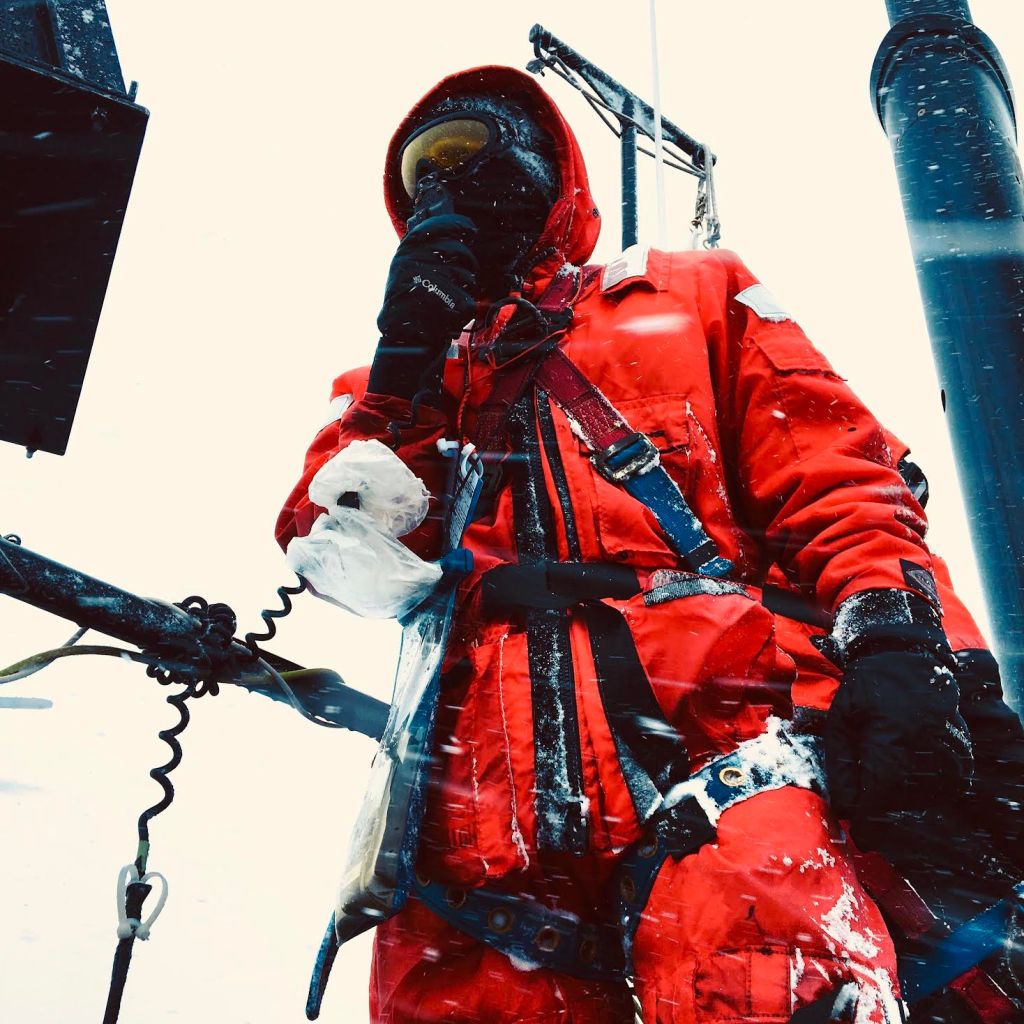
During a clandestine mission in the North Atlantic, a fellow sailor fell gravely ill, exhibiting symptoms of appendicitis. The ship’s sole medically trained officer was not equipped for emergency surgery. With the submarine deep underwater and time of the essence before a potential rupture, McCord was tasked with navigating the vessel through treacherous Nordic fjords to reach the Norwegian coast guard.
The conditions were dire: temperatures hovered around zero, and a blizzard rendered visibility near zero, creating turbulent waters. Despite the extreme adversity, McCord drew upon his extensive training and his commitment to his crew. "Because of my familiarity by then with all of the complexities of the submarine, I was able to gut into how to do this," he stated. He skillfully maneuvered the submarine, performing "unnatural things" to navigate the fjords and facilitate the sailor’s extraction. The sailor was successfully transferred to the Norwegian coast guard and rushed to a hospital, his condition later confirmed to be stable via a WhatsApp message.
During his remaining two years on the submarine, McCord sought to stay abreast of technological advancements. He dedicated his free time to self-study, Coursera-ing courses on Artificial Intelligence from Stanford in 2015-2016. This autodidactic pursuit highlighted a stark contrast between cutting-edge AI concepts and the aging technology he encountered daily in the submarine’s control room. "Learning AI, and then going into the control room where you have 1970s software, old hardware—it was a crazy cognitive dissonance."
As his five-year tenure on the submarine neared its end, McCord recognized that his path to impact might diverge from the long-term military careers of his predecessors. "The military allowed them to make a huge impact on the world over 30 or so years," he observed. "But in today’s world, technology seemed like the way to make that impact. I wanted to use service-aligned technology, but I was not cool with the idea of having to wait 30 years."
This desire for accelerated impact led him to an exceptional opportunity: a role as one of the Navy’s liaisons to the House of Representatives from 2017 to 2019. This position provided him with an intimate understanding of the legislative process and the intricate interplay of personalities and politics within Washington D.C. While his official duties involved advocating for the Navy, McCord also cultivated a reputation as a go-to resource for members of Congress and their staff seeking to understand emerging technologies. He offered a low-threat avenue for them to learn about subjects like LLMs, cybersecurity, and the technical implications of proposed legislation. His expertise culminated in an invitation to contribute to the House Armed Services Committee’s 2020 report on the future of warfare, a document that represented some of the earliest governmental analysis of AI’s impact on conflict.

The Genesis of Nominal: Addressing a Critical Gap
In 2020, McCord transitioned to the private sector, joining Anduril’s drone defense system engineering team. During field tests in California’s Central Valley, he encountered firsthand the significant challenges in hardware testing. The process of collecting, organizing, and analyzing the vast amounts of telemetry, sensor data, logs, video, and images generated during these multi-day tests was cumbersome and inefficient, relying on outdated tools like MATLAB and antiquated graphing software. "None of this was production scale. And none of this was modern in any sense," McCord stated.
He recognized a critical disconnect: while the software world embraced rapid iteration and advanced tooling, hardware testing remained mired in the past. This observation was particularly striking given Anduril’s substantial resources and talent. "If Anduril, a company with all the venture dollars in the world and incredibly smart people had challenges getting this right, what is like at old organization X or massive company Y?" he mused. This problem became an obsession, fueling a drive to find a better solution.
McCord’s initial attempts to address this gap involved leveraging emerging data technologies, but he found that tools designed for business intelligence or data marketing were ill-equipped for the high-frequency sensor data generated by robotic hardware systems. After fifteen months at Anduril, he decided to pursue the problem head-on. He pitched his concept for improving hardware testing to Josh Wolf at Lux Capital, offering his expertise as a part-time entrepreneur-in-residence in exchange for opportunities to pressure-test his thesis with hardware CTOs.
Co-enrolled at Harvard Business School for his MBA during the COVID-19 pandemic, McCord effectively "moonlit" for Lux Capital. The unique circumstances of remote learning allowed him to seamlessly transition between his academic and entrepreneurial pursuits. It was at Harvard that he met Bryce Strauss, a fellow aerospace enthusiast and kindred spirit. Their initial coffee meeting evolved into a nearly three-hour discussion, marked by a shared frustration over the inefficiencies of post-test analysis and data review across various hardware domains—from aircraft and cars to nuclear reactors and drones. "Every person that builds hardware does this thing," McCord noted. "And we’re like, if we could just make that process 10 times better, we think we can build something valuable here."
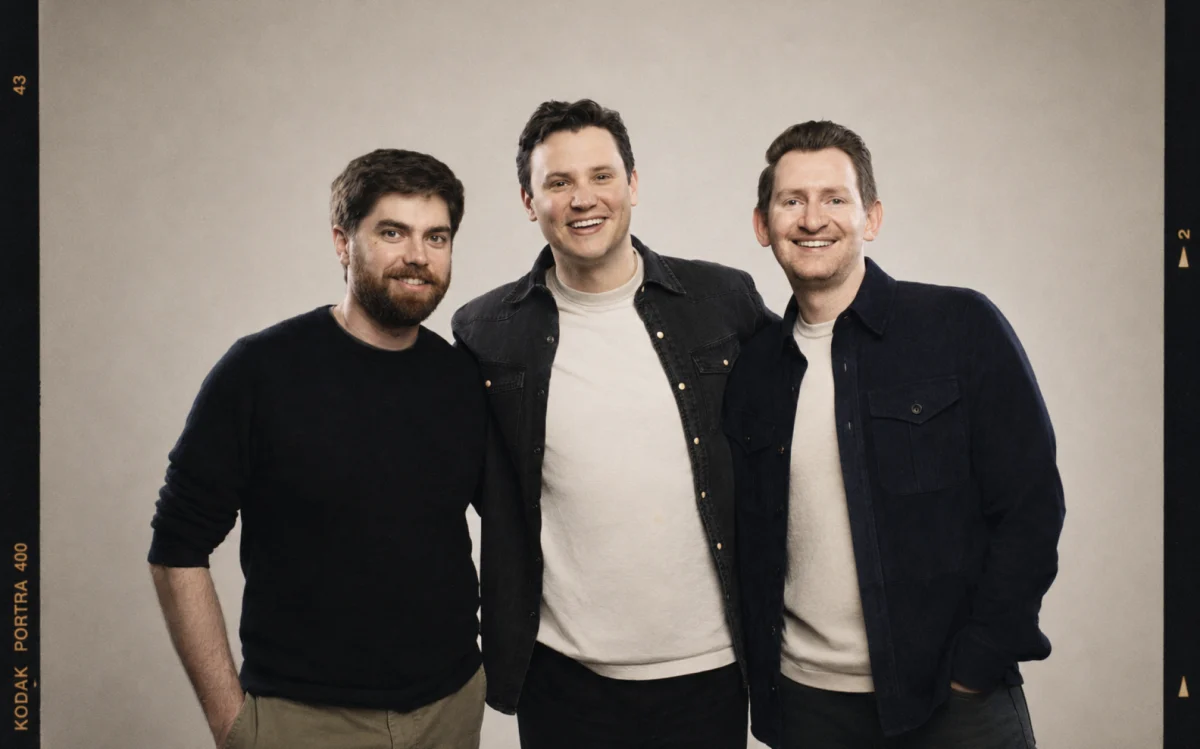
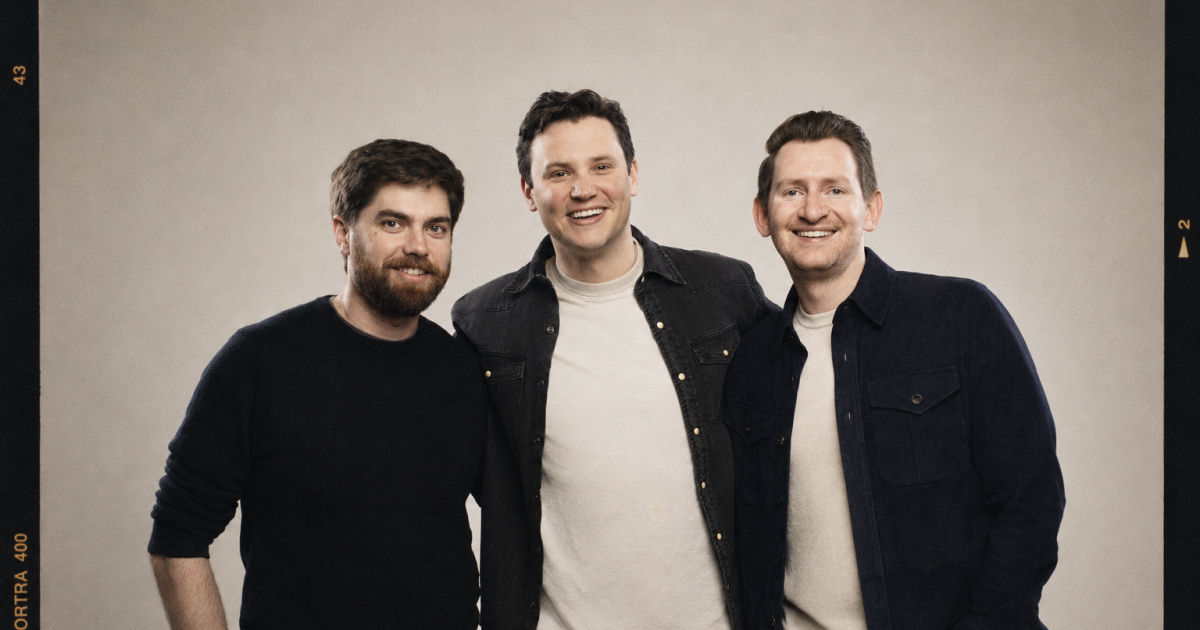
Strauss was convinced of the venture’s potential and insisted they launch a company together. They then sought a third co-founder, a software expert. McCord immediately thought of Jason Hoch, his former MIT classmate, whom he considered the most brilliant software engineer he had ever met. Strauss, drawing on his aerospace background, conceived the company name "Nominal," a nod to the phrase "all systems nominal," commonly used during rocket launches to signify that all is functioning correctly. Thirty days before their graduation, Lux Capital provided Nominal with its initial investment.
Building a Platform for Hardware Innovation
Six months into their co-founding journey, McCord, Hoch, and Strauss faced their first major test. Traveling to Los Angeles to demo an early prototype of Nominal’s hardware-in-the-loop (HITL) testing system to a potential satellite company client, they encountered a critical bug. "There’s a bug," Hoch announced from the backseat of their rental car, identifying an issue with the time synchronization of disparate data sources. With only 20 minutes before their pitch, Hoch worked furiously to resolve the problem en route.
Despite the eleventh-hour fix, the demo was a success. Strauss showcased the platform’s ability to rapidly manage and interpret satellite test data, effectively synchronizing telemetry, engine health, and computational speeds. The satellite company, though not immediately signing a paid contract, agreed to an unpaid pilot program, a decision that proved invaluable. "They took a bet on us and they let us learn with them, frankly, which is more valuable than anything," McCord stated.
This validation spurred the hiring of four additional engineers. During the latter stages of COVID-19 in late 2021, the team operated with a hybrid remote and in-person model, converging in Austin every other week for intensive build sessions. As the company grew to approximately 40 employees, these Austin reunions became less frequent. McCord himself maintained a base in Washington D.C., leveraging his public sector connections to foster private sector customer growth. It was during this period that he met AJ Piplica for coffee, an encounter that would prove pivotal. Piplica, having experienced the challenges of data silos and manual data handling within NASA and the Department of Defense, recognized Nominal’s transformative potential for all hardware development. "Any organization that’s taking data out of the real world, which is, like, every major company in the world could benefit from this," Piplica observed. "Yeah, robotics and AI are cool, but what’s actually cool is when you put them together. That nexus between the digital and the physical world is what really unlocks a huge amount of growth for humanity."
A Hardware Renaissance and Nominal’s Ascent
In January 2025, just ten days before his wedding, McCord received a call from Alfred Lin, a partner at Sequoia Capital. Nominal was preparing for another fundraising round to fuel its expansion. Lin, who had previously deferred investing in Nominal’s Series A round due to a need for more evidence supporting McCord’s hypothesis, now recognized the significant tailwinds accelerating the company’s growth. "We are living through a hardware renaissance, and we were looking for a new platform that supports modern hardware engineers on this journey," stated Sequoia partner Anas Biad.
McCord, while eager to partner with Sequoia, prioritized his wedding. He proposed a meeting in San Francisco immediately following his honeymoon in New Zealand. True to his word, McCord flew directly from his honeymoon to meet with Lin and Biad. The Sequoia partners were impressed by McCord but emphasized the need for thorough product due diligence. For days, Anas Biad conducted extensive customer outreach, a process McCord found both grueling and affirming. "There was something pretty powerful in having Sequoia come back and be like, we spoke to 20 customers. People really did love the product," McCord recounted. Ten days after their meeting, McCord received a term sheet from Sequoia.
As of March 2026, the geopolitical landscape had shifted dramatically with the commencement of the war with Iran and the announcement of the first casualties. This reality weighed heavily on McCord, particularly in relation to his chosen field of impact. "I’m obviously reading about those casualties and I’m thinking, could it have been prevented? Could Nominal’s technology in some way, shape, or form, have improved the hardware they were using and helped prevent their deaths? I have no idea," he admitted.
McCord acknowledges that the current global conflicts have underscored the critical importance of hardware manufacturing. "I don’t like that there’s a global land conflict in Ukraine and a war in Iran, but the reality is that it’s happening," he stated. "And I think it is pushing everyone to rethink and say, ‘Hey, building physical things is critical.’"
This heightened focus on hardware development presents a silver lining, enabling innovations beyond defense. Nominal is actively expanding its capabilities for teams developing rockets, medical devices, water desalination technologies, and electric vehicles. The company’s rapid growth reflects this macro shift. By May 2026, Nominal had achieved unicorn status, serving 75 global customers across aerospace, defense, energy, and transportation. Its team is expanding, and its product offerings are continuously evolving to empower anyone to build hardware efficiently and intelligently. Nominal is integrating AI to accelerate data collection and analysis and enable edge computing for systems operating beyond connectivity range, a crucial capability for aeronautics and astronautics.
McCord views service as an ongoing commitment, the urgency instilled by his parents having intensified over time. He often applies what he calls the "grandpa test": "I basically ask myself all the time, ‘how will I feel when I’m old and sitting in my chair and the grandkids are around?’" he explained. "I think I will look back very fondly if Nominal played a part in moving the physical ambitions of humanity forward. We talk about flying cars, but yes, there’s also defense, and advanced energy, and compute to power this next generation of AI. There’s advanced transportation, mobility, and water purification. There’s so much we want to do." Nominal’s journey, from addressing a critical gap in hardware testing to becoming a unicorn company, exemplifies how a deep-seated will to serve, combined with technological innovation, can indeed propel humanity’s physical ambitions forward.