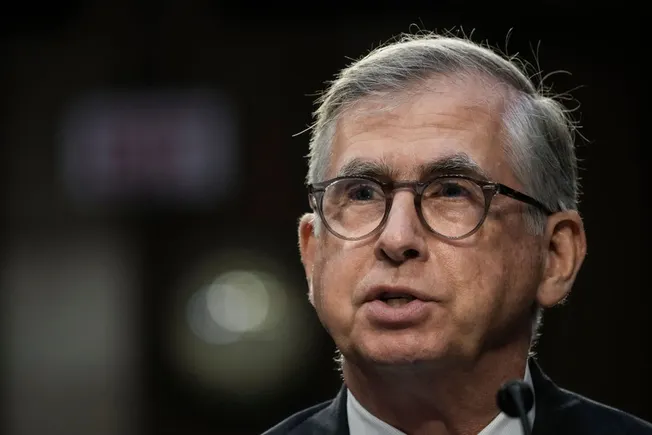
The leadership of Truist Financial Corporation is set to undergo a significant shift as incoming Chief Executive Officer Mike Lyons prepares to inject a fresh wave of energy into the Charlotte, North Carolina-based bank’s strategic pursuit of enhanced performance and accelerated growth. Outgoing CEO Bill Rogers, who has steered the $550 billion-asset lender since 2021, expressed confidence on Friday that Lyons, whose tenure officially begins September 1, will bring a vital combination of "acceleration, assurance, and intensity" to the bank’s core objectives. This transition marks a pivotal moment for Truist, a super-regional bank formed through the 2019 merger of BB&T and SunTrust, as it navigates a dynamic financial landscape and strives to bolster profitability and expand its market presence.
Rogers, after leading Truist through its formative years and integration phase, will transition to the role of Executive Chairman. This strategic move will see him remain involved with the bank’s governance and strategic direction through April 2027, at which point he plans to retire. The succession plan, which has been in development for over a year, reflects a deliberate effort to identify a leader equipped to guide Truist into its next chapter.
A New Vision for Truist: The Lyons Appointment
The selection of Mike Lyons as the next CEO has been met with anticipation from industry analysts, many of whom have characterized him as a "welcome outsider" poised to offer a much-needed "fresh perspective." Lyons brings a wealth of experience from his previous roles, most notably as the CEO of payments technology firm Fiserv and, prior to that, as president of PNC Bank. His background is seen as particularly relevant for a financial institution aiming to innovate and adapt in an era increasingly defined by digital transformation and evolving customer expectations.
During Truist’s second-quarter earnings call, Rogers elaborated on the board’s decision-making process, highlighting Lyons’ proven track record. "Mike’s an accomplished and respected financial services leader with a proven ability to drive growth, improve performance and create long-term shareholder value," Rogers stated. "Throughout the selection process, it was clear to our board that he’s the right leader for his future." This endorsement underscores the board’s conviction that Lyons possesses the strategic acumen and leadership capabilities to steer Truist toward its ambitious financial targets.
Strategic Alignment and the Succession Journey
Rogers emphasized that a strong alignment exists between Lyons and the Truist board regarding the bank’s future opportunities. The succession planning process was meticulously designed to ensure a smooth transition, considering not only Rogers’ timeline but, more importantly, the optimal timing for the company’s strategic evolution. The board’s search for a successor prioritized candidates with a deep understanding of the bank’s core operations, coupled with a forward-looking perspective on technology, payments, and emerging industry trends – a profile that Lyons, in Rogers’ view, fits "perfectly."
The bank’s long-term financial aspirations, including a target of achieving a 16% to 18% return on tangible common equity, were a key point of discussion. When UBS analyst Erika Najarian inquired about Lyons’ expectations for meeting these ambitious goals, Rogers expressed unwavering confidence. "Mike came in here to lead and run a high-performing company, and I don’t think there’ll be any doubt on that," he affirmed. This statement signals a clear mandate for Lyons to focus on driving operational efficiency and shareholder returns.
Navigating Talent Dynamics in a Competitive Market
The appointment of an outsider CEO, while often viewed as a catalyst for change, can sometimes create uncertainty within an organization, particularly among existing top talent. Najarian raised this point, questioning how Truist’s employees have been reassured amidst the leadership transition. Rogers acknowledged the ongoing effort to retain and motivate employees, stating, "We re-recruit everyone every day. We’re on that journey." He also highlighted the importance of clarity, noting that the definitive timeline for his departure and Lyons’ arrival now provides "a lot of certainty," which can be a significant factor in employee retention.
This focus on talent management is particularly critical in a competitive banking hub like Charlotte. The city has become a significant financial center, attracting and expanding operations for major players such as JPMorgan Chase, Citi, and Sumitomo Mitsui Banking Corporation. In this environment, retaining skilled professionals is paramount for maintaining a competitive edge. Rogers reiterated this sentiment, asserting that "The best thing for top performers is an incredible platform, career opportunity and a lot of certainty."
Rogers further illustrated the leadership transition using a relay race analogy, describing the handover as passing a baton to enable the new leader to "run the last lap at a lot of speed." While he remained measured in detailing Lyons’ specific strategic initiatives, the underlying message conveyed a sense of preparedness and momentum. Wells Fargo analyst Mike Mayo offered a concise observation on the delicate nature of such transitions, quipping, "Hopefully, no one drops the baton."
Truist’s Financial Performance and Outlook
The leadership transition occurs against a backdrop of solid financial performance for Truist. In the second quarter, the bank reported a net income jump of approximately 27% year over year, reaching $1.5 billion. This growth was supported by a 5.5% increase in revenue, which totaled $5.3 billion. Despite these positive results, Truist has slightly adjusted its full-year revenue growth guidance downwards, from an earlier projection of 4% to a revised range of 3.5% to 4%. This recalibration reflects the prevailing economic uncertainties and the bank’s prudent approach to forecasting.
On the deposit front, Truist is observing a continuing trend of customers seeking higher yields. Chief Financial Officer Mike Maguire noted that while average deposits increased by 1.1% year over year to $405 billion, there has been a discernible shift towards interest-bearing products. The cost of average interest-bearing deposits rose by 1 basis point from the previous quarter to 2.1%, and the average total deposit cost increased by 1 basis point to 1.56%. Rogers characterized this deposit migration as a reflection of "client behavior rather than competitive pressure," indicating a broader market trend where depositors are actively optimizing their returns. This behavior, while increasing funding costs, also demonstrates a degree of customer engagement with the bank’s product offerings.
Implications of the Leadership Change
The incoming leadership of Mike Lyons signifies more than just a change in personnel; it represents a strategic pivot for Truist. His background in technology and payments, coupled with a reputation for driving performance, suggests a renewed emphasis on digital innovation and operational efficiency. Analysts will be closely watching how Lyons leverages his expertise to address the bank’s profitability targets and growth initiatives.
The departure of Bill Rogers marks the end of a significant chapter for Truist, a period characterized by the monumental task of integrating two large banking entities. His continued role as Executive Chairman will provide a valuable layer of continuity and institutional knowledge during the transition. The success of this handover will hinge on the seamless collaboration between Rogers and Lyons, ensuring that Truist capitalizes on its established strengths while embracing new strategies for future success.
The competitive landscape in the banking sector, particularly in key financial centers, demands agility and a forward-thinking approach. Truist’s ability to attract and retain top talent, optimize its product offerings, and adapt to technological advancements will be critical determinants of its performance in the coming years. The arrival of Mike Lyons is a clear signal that the bank is prepared to embrace these challenges with a renewed sense of purpose and a focus on delivering enhanced value to its clients and shareholders. The coming months will be crucial in observing how Lyons’ leadership shapes Truist’s strategic direction and its ability to navigate the evolving demands of the financial industry.