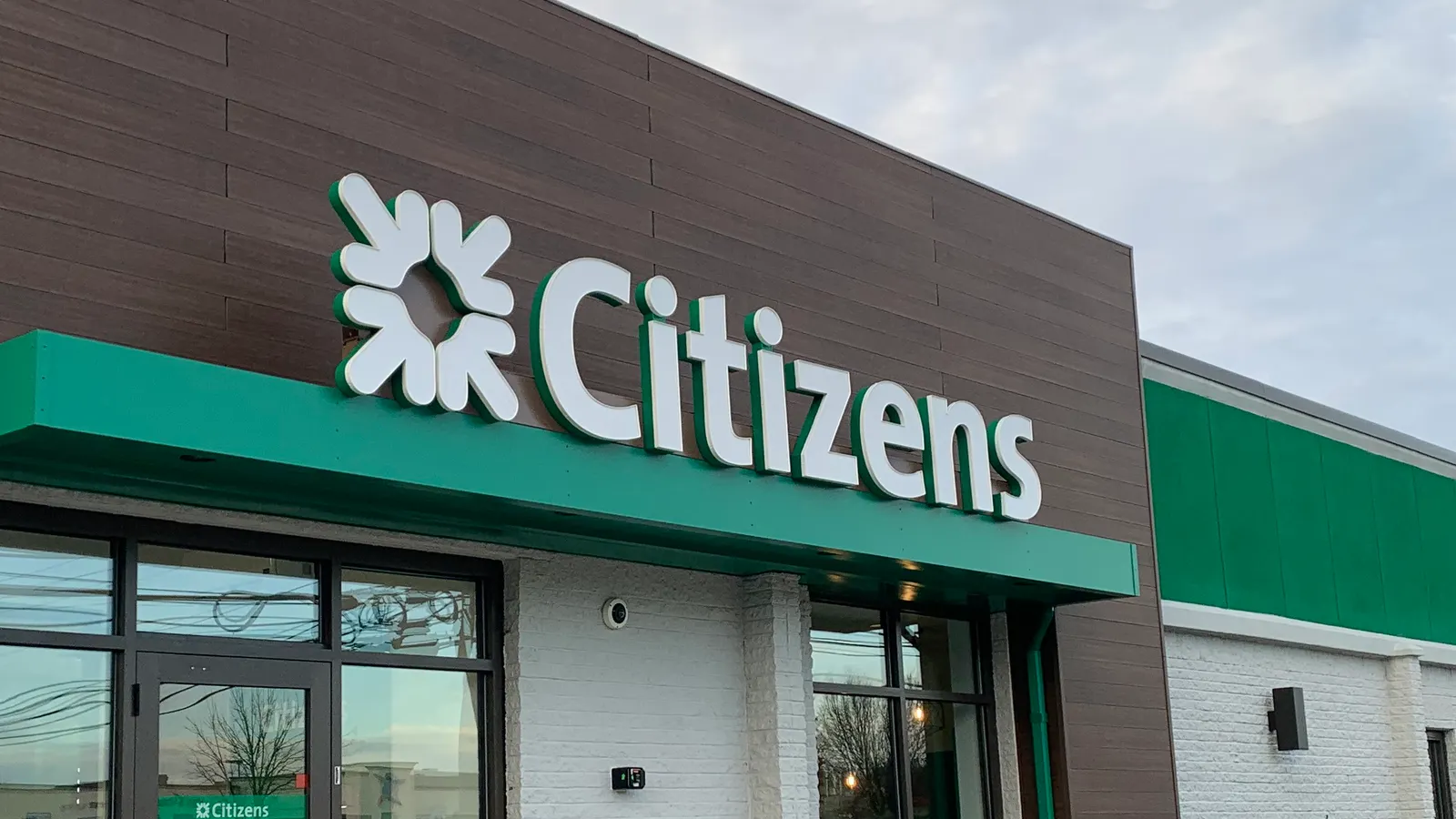
Citizens Bank announced a significant strategic pivot this week, revealing plans to close between 100 and 120 of its supermarket-based branches while simultaneously launching 50 to 60 new, standalone locations. This ambitious reconfiguration of its physical footprint signals a decisive shift away from transactional convenience towards a more advisory-centric model, emphasizing private banking, wealth management, and small business services. The announcement was made on Thursday during the bank’s second-quarter earnings presentation, a move that underscores the evolving landscape of retail banking and the pursuit of higher-margin business lines.
The strategic realignment is not an isolated development but rather a culmination of recent pronouncements from top Citizens executives. This "careful investment in physical locations and in people," as described by Citizens CEO Bruce Van Saun, is intended to drive deposit growth without the substantial capital expenditure and inherent risks associated with opening entirely new branches in unfamiliar markets. Van Saun articulated this vision during a conference call on Thursday, emphasizing that the bank’s existing 14-state footprint offers ample opportunity for expansion and deepening customer relationships.
This strategy stands in contrast to the expansionist approaches of some other regional banks. For instance, Ohio-based institutions Huntington and Fifth Third Bank recently broadened their operational reach by acquiring Texas-headquartered lenders. Citizens, however, is opting for a more concentrated approach, reinforcing its existing markets and optimizing its branch network for future growth.
The bank’s commitment to transforming its physical presence was foreshadowed as early as April 2025, when Nuno Dos Santos, Citizens’ head of branch distribution, highlighted the bank’s "aggressive" stance on reinvesting in its existing locations. This reinvestment is translating into a tangible redesign of its branches.
Reshaping the Branch Experience: From Transactions to Relationships
The new or renovated Citizens branches are significantly smaller than their predecessors. Previously occupying around 7,000 square feet, these modern hubs will now span approximately 2,000 to 3,000 square feet. This reduction in size reflects a deliberate move away from transaction-heavy environments. Instead, the redesigned spaces are optimized for in-depth, private conversations between bankers and clients, fostering a more personalized and advisory-driven customer experience.
Brendan Coughlin, President of Citizens, elaborated on this transformation in March, telling Banking Dive that the bank was preparing for "surgery around some of our legacy markets," particularly in New England. This "surgery" involves reorienting the branch network to cater more effectively to the mass-affluent customer segment and above. The goal is to create "more impressive" branches, strategically located and adequately staffed to meet the sophisticated needs of these higher-value clients.
Citizens is not alone in targeting the mass-affluent demographic. Other prominent regional banks, such as Truist and Regions, have also publicly declared their intentions to pivot towards serving this lucrative segment. Truist, for example, has outlined plans for opening 100 new branches and renovating 300 existing ones, with a focus on leveraging artificial intelligence and enhancing customer experience in the Southeast, specifically targeting mass-affluent customers. Regions Bank, meanwhile, has been investing in upskilling its small business bankers to strengthen relationship management for both small and medium-sized businesses (SMBs) and mass-affluent clients.
Furthermore, the trend of discontinuing in-store branches is not unique to Citizens. Huntington’s acquisition of TCF in 2021 led to the closure of nearly 100 branches housed within Meijer grocery stores in Michigan. Similarly, People’s United Bank, prior to its acquisition by M&T, closed 140 branches located inside various Stop & Shop supermarkets. Major players like U.S. Bank and PNC have also undertaken similar initiatives, divesting from grocery store branch locations.
Financial Projections and Performance Indicators
Citizens projects that this comprehensive branch retooling will not impede its ambitious financial targets. The bank anticipates reaching a return on tangible common equity (ROTCE) of 16% to 18% by the end of 2027. This forward-looking projection underscores the confidence management has in the new strategy’s ability to drive profitability.
The bank’s recent financial performance, as detailed in its second-quarter earnings statement released concurrently with the branch strategy announcement, indicates a positive trajectory. Citizens reported a ROTCE of 13.9% in the second quarter, an increase from 12.2% in the preceding three months. This upward trend in profitability is a key indicator of the bank’s improving financial health and operational efficiency.
Beyond ROTCE, Citizens demonstrated robust growth in its bottom line and revenue. The bank’s profit surged by 35% year-over-year in the second quarter, reaching $587 million. Concurrently, revenue experienced a significant 12% year-over-year increase, totaling $2.3 billion. These figures suggest that the bank’s current strategies, even before the full impact of the branch consolidation, are yielding positive financial results.
Broader Industry Trends and the Future of Retail Banking
The strategic moves by Citizens reflect a broader metamorphosis occurring within the retail banking sector. The proliferation of digital banking channels has fundamentally altered customer behavior, diminishing the reliance on traditional branch transactions for everyday banking needs. This shift has compelled financial institutions to re-evaluate the purpose and design of their physical branches.
The move towards specialized, advisory-focused branches is a response to the need to provide tangible value beyond what can be accessed through a mobile app or online portal. For mass-affluent and high-net-worth individuals, as well as small business owners, personalized financial advice, tailored investment strategies, and dedicated relationship managers are crucial differentiators. These are services that are best delivered through in-person interactions in a conducive environment.
The consolidation of less productive, transactional branches, particularly those in high-traffic retail environments like supermarkets, allows banks to redeploy capital and resources towards these more strategic locations. This redeployment can involve investments in technology within the new branches, enhanced training for staff, and the development of sophisticated digital tools to support the advisory services offered.
Potential Implications and Challenges
The success of Citizens’ strategy hinges on several critical factors. Firstly, the bank must effectively execute the physical transformation of its branches, ensuring the new locations are not only well-designed but also strategically situated to attract the target customer segments. Secondly, the recruitment and training of staff will be paramount. The new model requires a shift from transactional tellers to skilled financial advisors and private bankers capable of building strong client relationships and offering sophisticated financial solutions.
The emphasis on private banking and wealth management also introduces a heightened level of competition. The mass-affluent and high-net-worth segments are highly sought after by a multitude of financial institutions, including large national banks, independent wealth management firms, and boutique advisory services. Citizens will need to articulate a compelling value proposition to attract and retain these clients.
Furthermore, the bank must ensure that its digital channels remain seamless and integrated with its in-person services. Customers expect a unified banking experience, regardless of the channel they choose to interact with. A disconnect between digital offerings and branch services could undermine the overall customer experience.
The closure of branches, while strategically sound for the bank’s long-term goals, can also present challenges. Community members who rely on the convenience of in-store branches may experience disruption. Citizens will likely need to engage in proactive communication and offer alternative solutions to mitigate any negative impacts on these customers. The bank’s commitment to reinvesting in its existing footprint, rather than exiting markets entirely, suggests an understanding of this need for continuity.
A Calculated Reinvestment in Core Strengths
In essence, Citizens’ strategic overhaul represents a calculated reinvestment in its core banking competencies. By shedding less profitable, transaction-oriented supermarket branches and cultivating more sophisticated, advice-driven standalone hubs, the bank is positioning itself to capture a larger share of the higher-value financial services market. This move acknowledges the changing dynamics of the banking industry and demonstrates a forward-thinking approach to client engagement and revenue generation. The success of this ambitious plan will be closely watched by industry observers as a bellwether for the future of regional banking strategies.