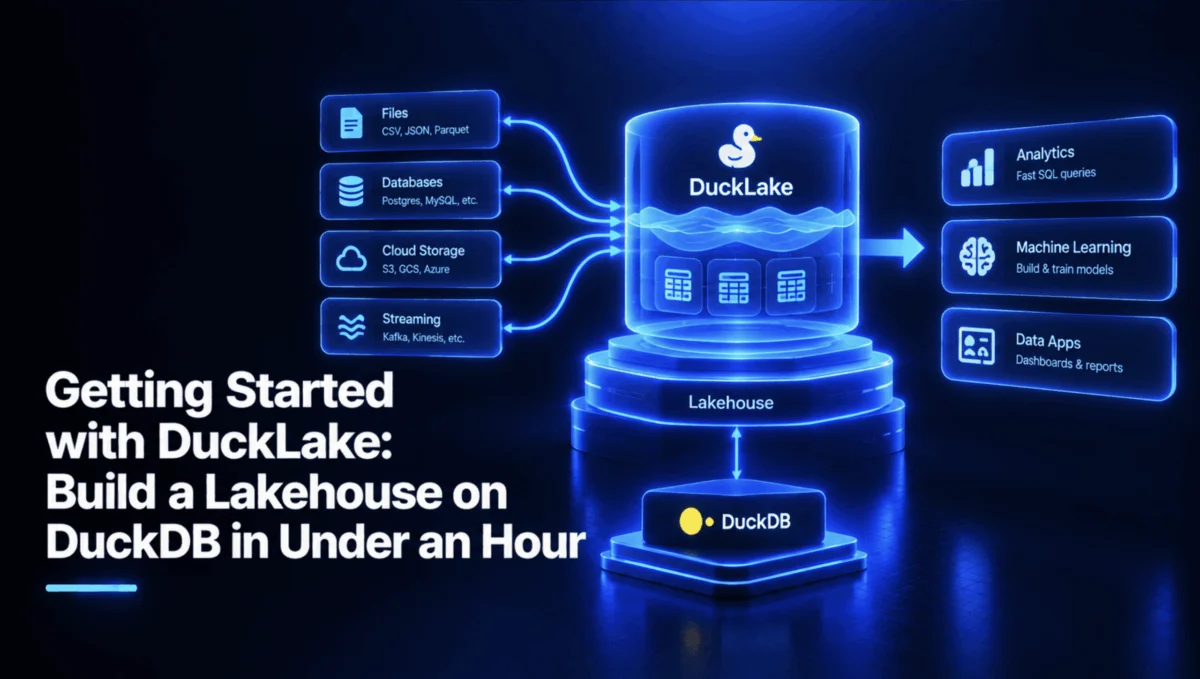
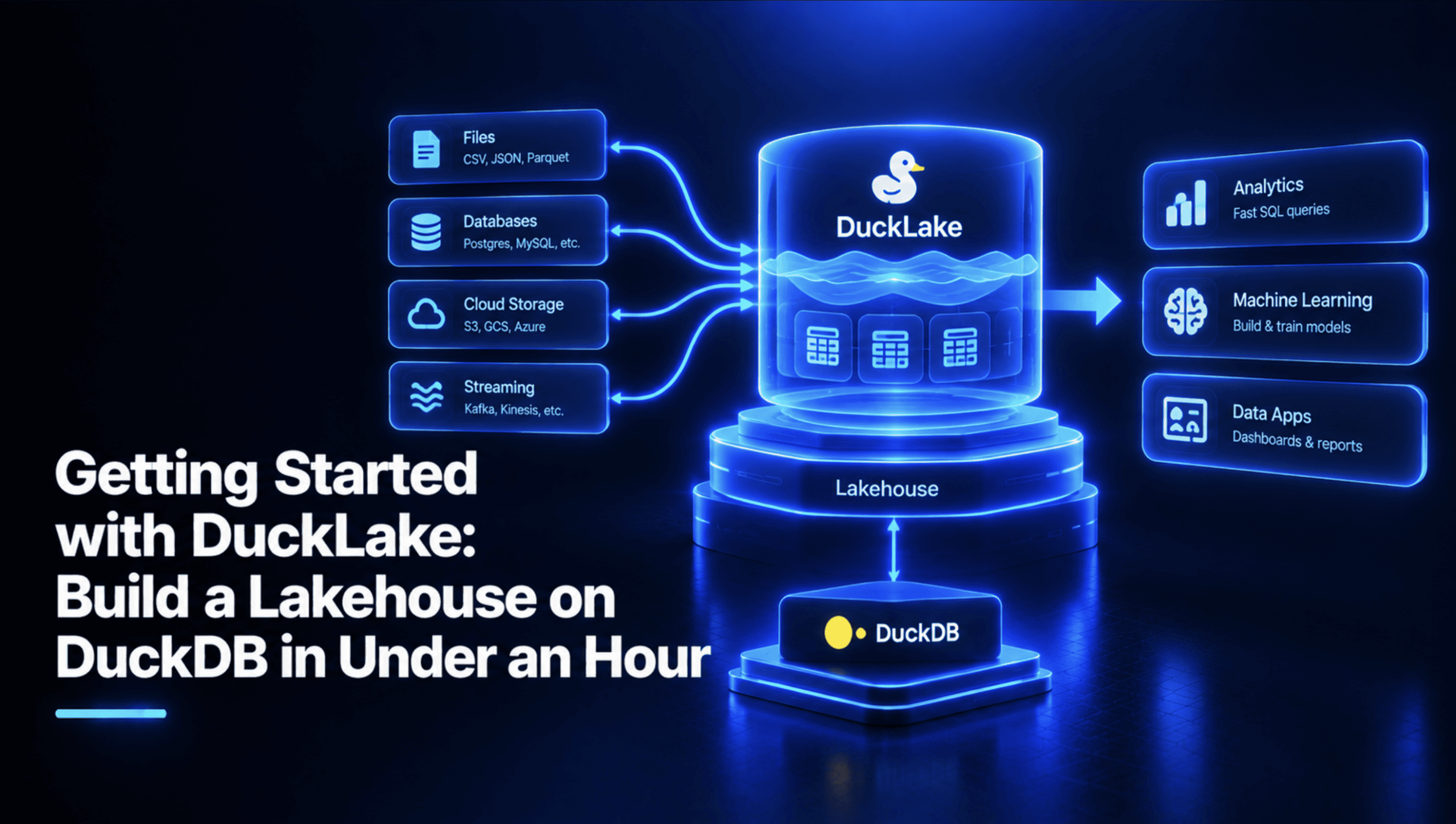
The release of DuckLake 1.0 in April 2026 marked a significant shift in the landscape of data architecture, offering a lightweight, open-source lakehouse table format designed to bridge the gap between simple local storage and enterprise-grade data management. Developed by the team behind DuckDB, DuckLake represents an architectural pivot that separates table metadata—stored within a traditional SQL catalog—from the actual data, which resides in Apache Parquet files. This approach allows developers to leverage the familiar power of SQL for transactional operations, such as time travel and schema evolution, without the complexity often associated with older lakehouse formats like Apache Iceberg or Delta Lake.
The Architectural Framework of DuckLake
At its core, DuckLake operates on a decoupled architecture. While many modern data lakehouse formats embed their metadata within the same storage layer as the data, DuckLake offloads this responsibility to a relational database. This catalog maintains the state of the table, including schemas, snapshots, and file statistics, using ACID-compliant transactions. By utilizing a SQL database—such as DuckDB for local development, SQLite for small-scale applications, or PostgreSQL for multi-user production environments—DuckLake ensures that data integrity is maintained through primary key constraints and transactional consistency.
The design philosophy behind DuckLake is predicated on the idea that finding and organizing files should be as simple as executing a SQL query. Because it avoids the overhead of managing complex metadata files on cloud object storage, the system achieves significant performance gains for smaller to medium-sized analytical workloads. It is important to note, however, that the platform intentionally omits support for certain traditional database features, such as primary key enforcement, foreign keys, or UNIQUE and CHECK constraints, to maintain compatibility with the underlying Parquet storage and the flexibility of the lakehouse paradigm.
Chronology and Development Roadmap
The journey toward DuckLake 1.0 was characterized by a push for stability and developer accessibility. Following several experimental iterations, the 1.0 release solidified the specification, providing a guarantee of backward compatibility that encouraged early adoption in the engineering community.
- Pre-April 2026: Development phase, focusing on the DuckDB extension architecture and the integration of the SQL-catalog-based metadata model.
- April 13, 2026: Official launch of DuckLake 1.0, introducing the stable specification and the fundamental
AT (VERSION => n)time-travel syntax. - August 26, 2026: DuckDB Labs announced a strategic partnership with AWS, signaling a potential expansion of DuckLake’s capabilities toward cloud-native storage optimization.
- Future Outlook (2027 and beyond): The development roadmap for v2.0 highlights the inclusion of Git-like branching and incremental materialized views, aimed at bringing professional-grade CI/CD workflows to data lake management.
Practical Implementation and Workflow
For developers and data engineers, the implementation process is streamlined to prioritize speed and ease of integration. The foundational workflow requires only a Python environment and the duckdb package (v1.5.2 or newer). Upon the initial execution of a DuckLake-enabled script, the system automatically fetches the necessary ducklake extension.
The process begins with the creation of raw data, typically in Parquet format, which serves as the base layer. Using a centralized helper module—often termed common.py in development environments—engineers can establish a persistent connection to the catalog database. By attaching a local folder as a "lake," developers can treat a directory of Parquet files as a structured SQL table.
One of the most notable features of this system is its approach to snapshotting. Every modification, whether it is an INSERT, UPDATE, or ALTER TABLE operation, creates a distinct snapshot. This versioning is the mechanism that enables the platform’s "time travel" functionality. By querying the lake.snapshots() function, users can track the history of the dataset and revert to previous states with high precision. This is particularly useful for debugging or correcting accidental deletions, as the system retains the underlying Parquet files until explicit maintenance—such as the CHECKPOINT command—is performed to clear stale data.
Data Maintenance and Performance Considerations
While DuckLake simplifies the lakehouse experience, it necessitates a disciplined approach to maintenance. Because every write operation generates new files, unmanaged datasets can suffer from "file bloat," where performance degrades due to the overhead of reading thousands of small, fragmented files. The ducklake_merge_adjacent_files function is designed to mitigate this by consolidating small, adjacent files into larger, more efficient Parquet blocks.
Furthermore, the system employs "data inlining" by default. For very small writes, the data is stored directly within the catalog database rather than creating a new file, which reduces latency for low-volume updates. For larger operations, the data is flushed to the storage layer, ensuring that the catalog remains performant. Engineers must be aware that the choice of catalog database significantly impacts the architecture’s scalability. While the DuckDB-based file catalog is ideal for individual workstations and local analytical tasks, migrating to a PostgreSQL catalog is a prerequisite for any environment requiring concurrent multi-user access.
Analysis: Implications for the Data Engineering Landscape
The emergence of DuckLake represents a broader trend in data engineering: the commoditization of the "lakehouse" architecture. Historically, setting up a lakehouse required significant investment in infrastructure, specialized knowledge of metadata formats, and high-latency management processes. DuckLake democratizes this by making the technology accessible to any engineer with basic Python and SQL skills.
From a business perspective, the implications are profound. Organizations can now maintain high-performance, version-controlled data lakes without the burden of complex cloud vendor lock-in or the high costs of managed big-data services. The ability to use standard SQL to perform complex schema evolutions—renaming columns or adding fields without rewriting massive datasets—significantly reduces the time-to-market for data-driven features.
However, users must exercise caution regarding the limits of the platform. DuckLake is not a replacement for high-concurrency OLTP databases. It is an analytical engine built for throughput and versioning, not for row-level locking or high-frequency transactional integrity. As DuckDB Labs continues its integration with major cloud providers, it is likely that DuckLake will evolve into a more robust toolset capable of handling petabyte-scale data, yet its core strength—simplicity—remains its most valuable asset.
Final Technical Overview
To successfully deploy DuckLake, one must adhere to a structured lifecycle:
- Environment Setup: Ensure dependencies, specifically DuckDB v1.5.2+, are installed.
- Catalog Initialization: Establish a connection to the SQL catalog and define the data path.
- Data Ingestion: Load initial Parquet data using standard SQL
COPYorCREATE TABLEsyntax. - Version Management: Utilize snapshots to track changes, ensuring that critical milestones are "marked" via the metadata catalog.
- Routine Maintenance: Implement scheduled merges and snapshot expirations to maintain storage efficiency and prevent performance degradation.
As the industry moves toward more decentralized data management, tools that prioritize developer experience and open standards are gaining traction. By bridging the simplicity of local file management with the power of ACID-compliant SQL catalogs, DuckLake is well-positioned to become a standard tool in the modern data stack, particularly for teams that value agility and rapid iteration. Whether one is building a prototype on a laptop or transitioning to a multi-user PostgreSQL-backed lake, the underlying mechanics remain consistent, ensuring a smooth path to scalability. With version 2.0 on the horizon, the focus on features like branching and incremental views promises to further narrow the gap between specialized big-data platforms and accessible, local-first analytical solutions.