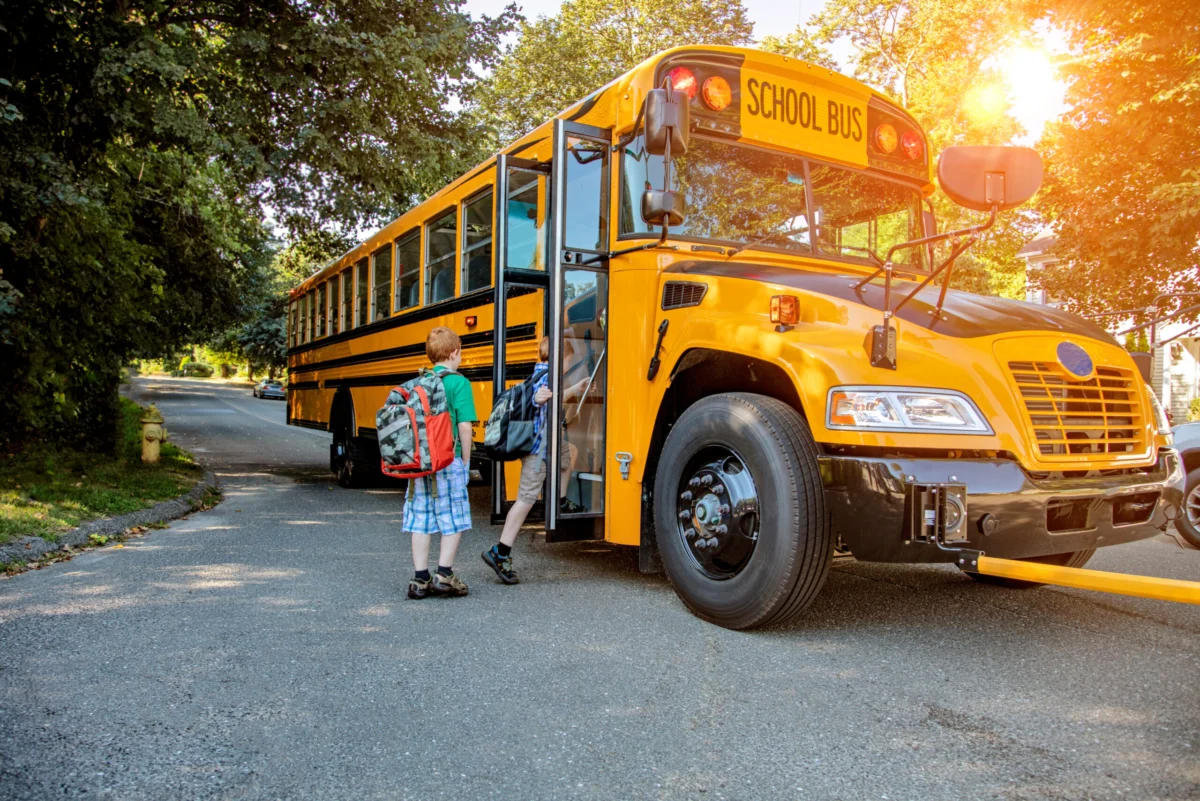
The debate surrounding the United States’ approach to timekeeping has reached a critical juncture, as a comprehensive new study from the University of Washington (UW) sheds light on the unintended, potentially hazardous consequences of adopting permanent daylight saving time (DST). Published October 29 in the journal Current Biology, the research suggests that while the legislative push for “more sunshine” in the evening is popular, it would force American schoolchildren to endure at least 2 billion additional commutes in total darkness, significantly increasing safety risks and disrupting the delicate biological rhythms of the nation’s youth.
The findings arrive at a time when the “Sunshine Protection Act”—a federal bill aimed at eliminating the biannual ritual of “falling back” and “springing forward”—remains stalled in the U.S. Senate. Although the legislation secured approval from the House of Representatives, the newfound data regarding school safety has introduced a significant hurdle, forcing lawmakers to re-evaluate whether the convenience of extended evening light outweighs the danger posed to students during the morning hours.
The Chronology of a Controversial Policy
To understand the current impasse, one must look at the recent history of time legislation in the United States. For decades, the biannual clock change has been a source of public frustration, with critics citing everything from agricultural inconvenience to mental health struggles as reasons to abolish the practice. In 2022, momentum shifted dramatically when the U.S. Senate unanimously passed the Sunshine Protection Act, signaling a desire for a uniform, year-round daylight saving schedule.
Following the federal lead, nineteen states—including Washington, Florida, and California—have passed their own local measures or resolutions supporting the permanent adoption of DST. These state-level laws are largely conditional, designed to trigger automatically should Congress pass the federal mandate. However, the initial optimism surrounding these measures has cooled as scientific bodies and public safety advocates have begun to scrutinize the physical reality of the winter months. By shifting the clocks permanently forward, sunrise in many regions would be delayed by a full hour, moving the start of the day into deeper darkness for millions of children who travel to school during the winter months from November through March.
Quantifying the Danger: The Data Behind the Commute
The research team at the University of Washington, led by senior author and biology professor Horacio de la Iglesia, sought to quantify the impact of this legislative shift. By analyzing school enrollment data, precise school start times, and geographic coordinates across 14 of the 19 states that have signaled support for permanent DST, the researchers created a model of the proposed national schedule.
The results are stark. In Washington state alone, the change would result in nearly 35 million additional school commutes occurring in darkness. The data reveals an even more dramatic impact in states like Georgia, which would see approximately 71 million additional dark trips. When extrapolated to the national level, the researchers calculated that at least 2 billion more trips to school would occur before sunrise.
Perhaps most alarming is the correlation between light levels and traffic safety. The study cites existing traffic data confirming that fatal crashes involving school-aged pedestrians are roughly twice as likely during dark morning hours compared to periods of daylight. By pushing sunrise later into the morning, the legislation would effectively place a larger share of the student population on the roads during the most statistically dangerous time of day for pedestrian transit.
Regional Variations and Vulnerable Districts
The impact of permanent DST is not uniform across the United States. Geography plays a defining role in how the clock shift would affect local communities. Schools located near the western edges of time zones, such as those in the rural reaches of Washington state or western corridors of the Midwest, are particularly vulnerable. In these regions, the sun already rises significantly later than in the center or eastern portions of a time zone.
Districts that mandate early start times for secondary students—a practice often employed to facilitate school bus logistics or extracurricular scheduling—would face the most acute risks. In states like Mississippi and Alabama, where average school start times often fall before 8:00 a.m., the current number of dark commutes is estimated at approximately 2 million per state. Under a permanent DST regime, that figure is projected to balloon to over 20 million per state.
The research team, which included undergraduate students and high school researcher Daniel Zhang, emphasized that their projections might be conservative. "For the estimation, we assumed students would be leaving home around 8:00 a.m.," noted co-author Rodríguez Ferrante. "That’s quite late for many districts, especially those that offer early-morning breakfast programs or athletics. Consequently, our calculation is likely an underestimation of the real number of children exposed to dark commutes."
The Conflict with Biological Rhythms
Beyond the immediate physical safety risks of traffic accidents, the study highlights a profound concern regarding adolescent health. The scientific community has spent years advocating for later school start times to align with the natural, delayed biological clocks of teenagers. By pushing the clock forward, the policy creates a "double-bind" for students: they are forced to wake up earlier relative to the sun, which can disrupt circadian rhythms, hinder sleep quality, and diminish the morning sunlight exposure necessary for mental well-being and alertness.
Professor de la Iglesia was blunt in his assessment of the legislative intent versus the biological reality. "It’s called the ‘Sunshine Protection Act’ because you get an extra hour of light at the end of the day. But you will take that hour from the morning. You could call it the ‘Sunshine Destruction Act,’" he stated. He argues that the policy creates an inequitable burden, as lower-income students who rely on walking or public transit are disproportionately exposed to the risks of early-morning darkness.
Policy Implications and the "Standard Time" Alternative
The legislative debate has led some proponents of permanent DST to suggest that if the change is enacted, school districts should simply shift their start times one hour later to compensate for the delayed sunrise. However, this proposal faces significant practical and logistical resistance.
Adjusting school start times would necessitate a chain reaction of changes across the broader economy. If schools start an hour later, parents’ work schedules, daycare availability, and public transportation routes would all require similar adjustments. As de la Iglesia noted, shifting the entire societal clock to accommodate a later sunrise essentially defeats the purpose of abandoning the biannual change. "If you do that, you will end up going to work later… you will miss the opportunity to enjoy your evening light," he explained. "Essentially, we’re just going to be realigning everybody to solar time. That, by definition, is Standard Time."
The findings underscore a fundamental tension in modern public policy: the desire for an improved quality of life—in this case, perceived as longer, brighter evenings—versus the maintenance of public safety and biological health. While the convenience of a consistent clock is widely supported by the public, the specific data regarding the “dark commute” phenomenon suggests that the cost of such consistency could be far higher than lawmakers initially anticipated.
As the Senate continues to deliberate, the scientific community is urging a more cautious approach. The University of Washington study provides a clear, data-driven argument that the “cost” of permanent daylight saving time is not just a matter of preference, but a measurable risk to the safety and health of the nation’s children. Whether legislators will prioritize the popular appeal of evening sunshine over the mounting evidence of morning danger remains to be seen. In the meantime, the study stands as a significant, evidence-based warning that in the quest for more light, we may be creating more darkness for the most vulnerable among us.