The global software development industry is experiencing a profound paradigm shift. For decades, the fundamental constraint of software engineering was human capacity: the number of developers a company could employ, the hours they could spend at their keyboards, and the speed at which human minds could conceptualize and type lines of syntax. Today, that constraint has evaporated. Coding agents and autonomous large language models (LLMs) now generate code at a velocity and volume that entirely outstrips the capacity of human review teams and legacy infrastructure systems.
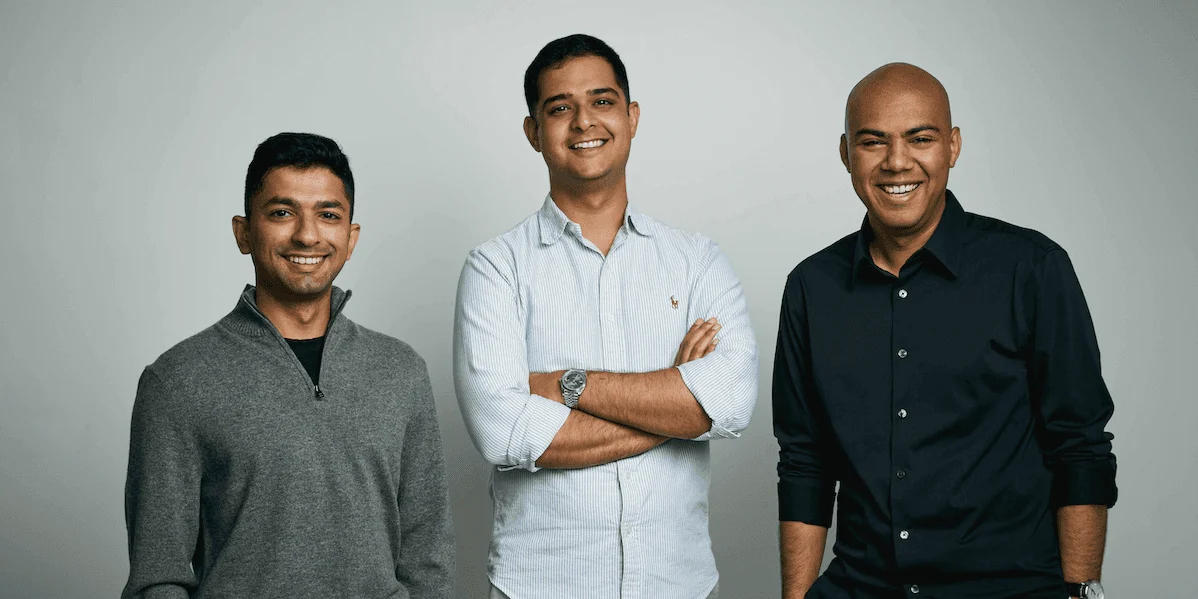
As the bottleneck in software creation shifts definitively from writing code to validating it, infrastructure startup Blacksmith has emerged as a critical player in the ecosystem. Founded in 2024 by Aditya Jayaprakash (JP), Aayush Shah, and Aditya Maru, Blacksmith is building the underlying architecture required to process, test, and verify code at agent speed. The company has announced the close of its Series C funding round—led by venture capital backers who recognize the impending infrastructural crunch—to scale its operations as demand for high-speed continuous integration (CI) reaches unprecedented levels.
The Scale of the AI Coding Boom and the CI Bottleneck
To understand the urgency driving Blacksmith’s growth, one must examine the operational data emerging from pioneers in agentic engineering. Last month, artificial intelligence research and development firm Anthropic published a comprehensive operational analysis detailing the strain placed on its internal systems as its engineering teams scaled their use of coding agents.
According to Anthropic’s engineering reports, developers utilizing autonomous and semi-autonomous AI tools began shipping roughly eight times as much code per quarter compared to previous human-only baselines. This exponential output triggered a cascading effect across downstream infrastructure. The company’s internal test suite grew tenfold in size, while the volume of continuous integration (CI) jobs—the automated background builds and test suites that evaluate every single code modification before it is approved for production—skyrocketed by 25 times over a six-month period.
Anthropic’s leadership noted that while their organization is operating at the bleeding edge of AI adoption, they are merely serving as an early indicator for the broader software industry. Their advisory to peer enterprises was explicit: engineering organizations must prepare for a twenty-fivefold increase in CI workloads within the span of just two quarters.
This staggering multiplier stems from the fundamental nature of how AI systems write software. Unlike human engineers who typically craft finished, polished blocks of code designed for immediate review, coding agents operate through iterative trial and error. An autonomous agent will generate dozens of potential solutions—producing patches, diagnostic tests, database migrations, and throwaway branch iterations—running each candidate against a test suite until a viable solution emerges.
While this agentic loop empowers single developers to direct fleets of parallel AI workers around the clock, it floods version control and testing pipelines with an unprecedented volume of transient data. Simultaneously, this code must be rigorously verified, as AI-generated programming introduces complex security vulnerabilities. Because modern language models can write sophisticated logic, the security flaws they inadvertently introduce can be equally sophisticated and dangerous. Thus, the very systems designed to catch bugs and secure production environments are buckling under the exact weight they were meant to support.
From Autocomplete to Autonomous Agents: The Chronology of Blacksmith
The genesis of Blacksmith is rooted in the foresight of its three co-founders, who anticipated the architectural strain of AI-generated code long before it became a mainstream industry crisis. JP, Aayush, and Maru trace their professional and academic relationship back to their undergraduate years at the University of Waterloo. Following graduation, they honed their expertise in hyper-performant distributed systems through engineering stints at high-growth technology companies including Cockroach Labs and Faire.
In 2024, as the software landscape was transitioning from simple inline autocomplete tools to early-stage coding assistants, the trio recognized that the bottleneck in software development would inevitably migrate from code authoring to code verification. They founded Blacksmith with the foundational thesis that the sheer volume of code requiring compilation, testing, and validation would soon expand by orders of magnitude.
While the broader technology sector experienced its awakening regarding agentic coding strains later on, Blacksmith had already spent years engineering a modern infrastructure stack from the bare metal up. Initially targeting the immediate pain point of slow CI execution times, the company developed a solution that allows engineering teams to integrate its platform via a simple one-line modification to their existing workflow configuration files.
By restructuring how compute resources and test execution are handled under the hood, Blacksmith enabled developers to accelerate their CI pipelines by an average factor of two, while simultaneously reducing associated compute costs by approximately 60%. Rather than relying on rigid, legacy cloud configurations, Blacksmith’s proprietary architecture was specifically designed to absorb sudden, massive demand spikes from enterprise customers, operating with increasing speed and cost-efficiency as total network scale expands.
Explosive Enterprise Adoption and Market Trajectory
The market response to Blacksmith’s infrastructure has been rapid and expansive. Driven by the acute need to prevent CI bottlenecks from halting development pipelines, the company has experienced explosive growth throughout the current fiscal cycle.
Customer acquisition metrics underscore this trajectory. Over the past twelve months, the total number of enterprise organizations utilizing Blacksmith has surged from approximately 700 to more than 10,000. This influx of active users has translated into historic usage volumes. Weekly CI jobs processed through Blacksmith’s infrastructure escalated from 5 million to an astonishing 90 million.
Concurrently, the company’s Annual Recurring Revenue (ARR) has multiplied 17-fold over the same period. Highlighting the mission-critical nature of the service, Blacksmith’s largest enterprise customers are now allocating upwards of $1 million annually to maintain and scale their testing infrastructure on the platform.
Industry Implications and the Road Ahead
The successful completion of Blacksmith’s Series C funding round marks a critical milestone not only for the startup, but for the wider software development ecosystem. As venture capital firms and enterprise CTOs alike evaluate the long-term ROI of generative artificial intelligence, the consensus has shifted toward infrastructure investments that solve real-world operational bottlenecks.
Industry analysts point out that generative AI investments will yield diminishing returns if companies cannot safely and efficiently process the code their models produce. Without high-throughput, cost-effective CI infrastructure, engineering teams risk drowning in their own automated productivity, forced to slow down AI deployment cycles simply because their testing pipelines cannot keep pace.
With a talent-dense engineering team and a rapid expansion of its workforce, Blacksmith is positioning itself as the foundational layer for the agentic software era. The company has announced that several major product launches and architectural enhancements are slated for release in the coming months.
As the software industry transitions into an era where machines write the vast majority of application code, the ultimate differentiator will not be how fast a model can type, but how reliably infrastructure can prove that the resulting code is secure, functional, and ready for production. Through its high-performance validation stack, Blacksmith is building the highway upon which the future of software development will travel.