The artificial intelligence landscape is undergoing a monumental architectural shift, transitioning rapidly from simple conversational chatbots to autonomous agents capable of sustained, complex problem-solving. For the better part of the decade, interacting with generative AI has meant a transactional, human-in-the-loop paradigm: a user types a prompt into a dialogue box, waits for a response, and subsequently refines the query. While this model has revolutionized text generation, software development, and creative arts, it fundamentally constrains the computer’s capacity to execute independent, long-form logic.
Enter autonomous AI agents—systems designed to pursue multi-step objectives, run iterative diagnostics, self-correct errors, and execute tasks across hours, days, or even months without human intervention. Yet, as developers rush to deploy these ambitious workloads, a glaring bottleneck has emerged: the existing cloud and inference infrastructure is fundamentally unequipped to handle them. Traditional inference platforms are architected around short, stateless, and high-concurrency requests. They penalize latency, struggle with unpredictable compute scaling over extended periods, and price out tasks that require billions of tokens of context.
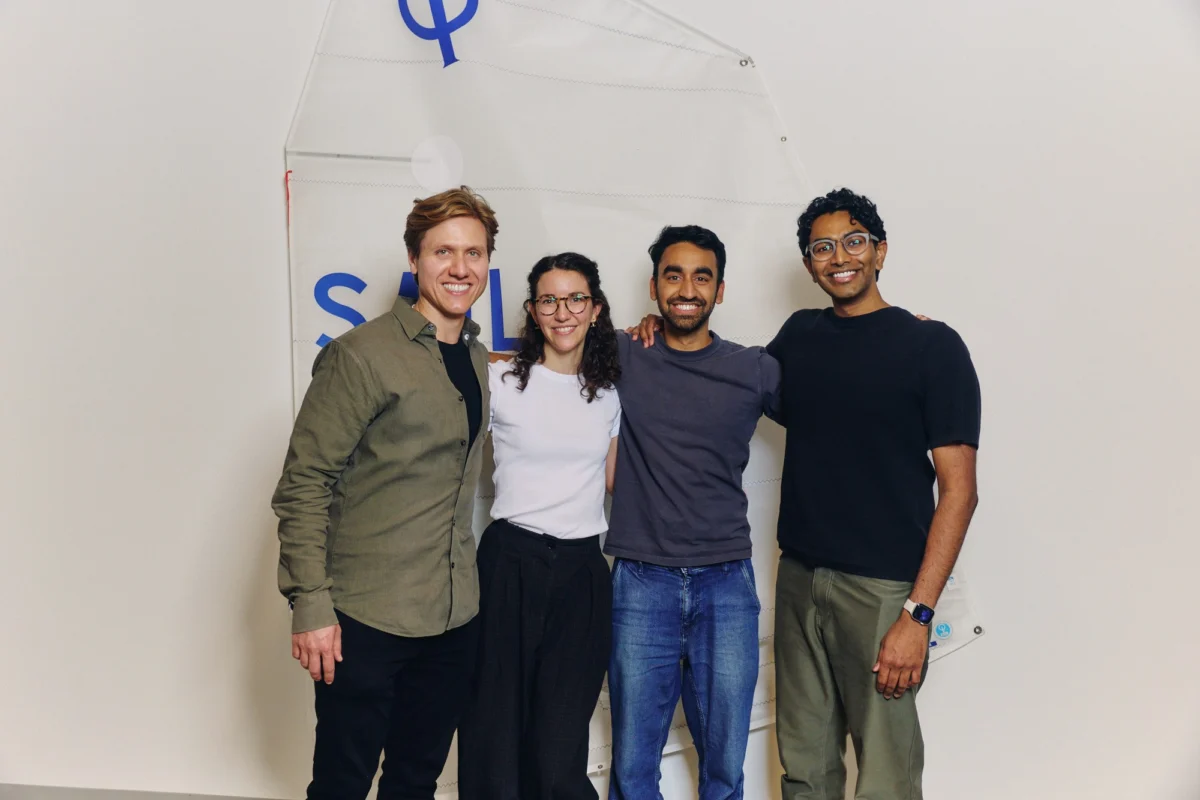
Addressing this critical market gap, an emerging infrastructure startup named Sail has officially stepped into the spotlight with a purpose-built platform designed to run autonomous AI agents ambitiously, economically, and at scale. Founded by industry veterans with deep roots in silicon optimization and hyperscale systems engineering, Sail is attempting to rewrite the economic and technical rules of AI inference.
A New Paradigm for AI Infrastructure
At its core, Sail’s mission is anchored in a straightforward philosophical premise: intelligence must become radically abundant. To achieve this, the company believes that the traditional boundaries of AI compute—namely, exorbitant token costs, strict hardware dependencies, and rigid session limits—must be dismantled.
Autonomous agents do not operate in seconds; they operate in epochs. A software-engineering agent might spend forty-eight hours analyzing a legacy codebase, compiling binaries, encountering runtime errors, and rewriting its own code to fix bugs. A supply-chain intelligence agent might continuously monitor global logistics manifests, pricing fluctuations, and regulatory updates across millions of web pages simultaneously. These tasks require persistent memory, massive context windows, and compute runtimes that span weeks.
Current cloud computing paradigms make such workloads prohibitively expensive. Sail aims to solve this structural inefficiency by overhauling the two foundational pillars of AI compute: the inference stack and the agent workspace environment.
Reengineering the Inference Stack
The traditional economics of large language model (LLM) inference are notoriously fragile. Cloud providers rely heavily on homogeneous, top-tier GPU clusters, passing the high capital expenditure costs down to the developer in the form of rigid, premium pricing per token. Sail approaches this challenge with a radically utilitarian engineering philosophy: "There are no bad chips, only bad prices."
Rather than depending exclusively on the newest, most expensive enterprise-grade accelerators, Sail has completely deconstructed the traditional inference stack to optimize for price-performance elasticity. By building a software layer capable of intelligently distributing computational workloads across diverse, heterogeneous providers, Sail ensures that processing pipelines never stall.
Crucially, the platform capitalizes on underutilized data center capacity—computing clusters that are frequently left idle because they are considered too small, too old, or too unconventional for mainstream enterprise workloads. Furthermore, the Sail engineering team acts as an early adopter of emerging hardware accelerators as they hit the market, rapidly integrating them into their proprietary engine to find productive, cost-effective uses for silicon that might otherwise sit dormant.
This diversified, hardware-agnostic orchestration yields profound economic implications. By aggressively squeezing maximum efficiency out of every available chip, Sail dramatically lowers the cost of token generation. This reduction allows agents to "think" longer, process deeper context windows, and consume billions of tokens on a single complex task without triggering unsustainable cloud bills.

Sailboxes: Immortal Workspaces for Autonomous Agents
While optimizing the underlying inference engine solves the cost of raw intelligence, running agents that persist over extended timelines requires an entirely different species of computing workspace. In response, Sail has developed "Sailboxes"—persistent, scalable development and execution environments built explicitly for long-running AI workloads.
Unlike traditional virtual machines or ephemeral serverless functions that incur heavy charges or terminate automatically after brief periods of inactivity, Sailboxes are designed to be virtually immortal. A Sailbox fluidly scales CPU, memory, and storage resources in real time to match the exact behavioral needs of the agent running inside it.
Crucially, Sail’s architecture introduces intelligent cost-mitigation for periods of latency. When an autonomous agent is temporarily idle—such as waiting for an external event, processing a slow network request, or executing a long-running tool call—the user is billed almost nothing for that downtime. This addresses one of the primary financial deterrents of long-form automation, allowing enterprises to maintain always-on agents without paying peak-hour rates for idle cycles.
Current enterprise deployments of Sailboxes showcase the versatility of this architecture. Clients utilize the platform for continuous, automated security vulnerability assessments, real-time web-scale monitoring of physical consumer products, and complex automated logic pipelines. To stress-test their own infrastructure, the Sail team even hosts an automated chess leaderboard inside the office powered entirely by Sailboxes—a system that has run uninterrupted for months, featuring continuous algorithmic matches against human and machine opponents.
Leadership and Technical Pedigree
The ambition of Sail’s technical roadmap is directly informed by the deep-domain expertise of its founding team, who bring decades of experience from the bleeding edge of hardware acceleration and distributed systems.
Co-founder Neil Movva began his career at NVIDIA, where he specialized in pushing graphics processing units to their absolute physical limits. He subsequently transitioned to Apple, optimizing performance for successive generations of proprietary AI accelerators, before returning to the GPU ecosystem at Together AI. His co-founder, Samir Menon, also hails from Apple, where he engineered ultra-reliable, fault-tolerant infrastructure capable of supporting billion-user scale.
This intersection of hardware-level GPU optimization and hyper-reliable software systems engineering forms the bedrock of Sail’s competitive advantage. Operating with a performance-engineering culture that treats milliseconds and megabytes as critical variables, the team is aggressively scaling its operations to meet surging enterprise demand.
Industry Implications and the Road Ahead
The debut of specialized infrastructure platforms like Sail signals a maturing AI market. As enterprises move past the proof-of-concept phase of generative AI deployment, the primary constraints are shifting away from model capability and toward operational economics and infrastructure durability.
If autonomous agents are to become the standard operating system for enterprise software, logistics, research, and creative production, the underlying utility grid must evolve. By decoupling agent runtimes from the limitations of traditional cloud pricing and short-session architectures, Sail is attempting to build the foundational rails for the next era of computing.
Backed by strategic partners who have supported the vision from its inception, Sail is rapidly expanding its team, optimizing its inference stack, and onboarding new enterprise customers. As the industry prepares for a future defined by autonomous, tireless machine labor, platforms that make intelligence abundant and accessible will dictate the pace of global innovation. The infrastructure for the agentic economy is finally taking shape—and the race to deploy autonomous scale is officially underway.