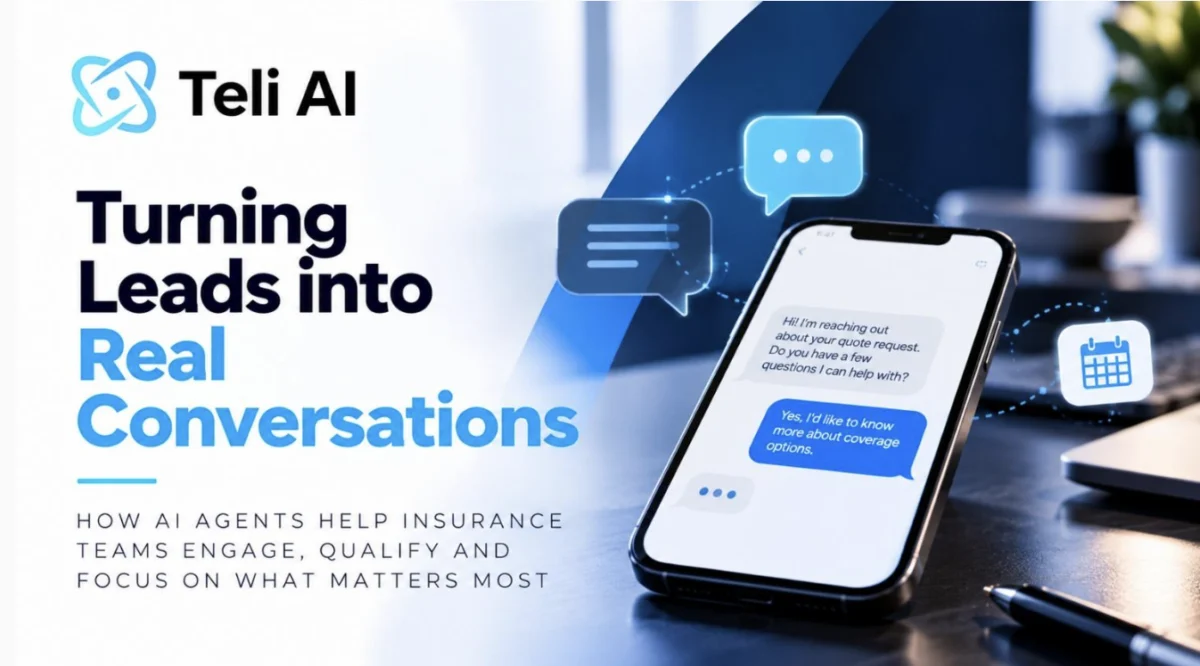
The modern insurance distribution ecosystem has achieved unprecedented efficiency in the upstream generation of consumer interest. Over the past decade, carriers, independent agencies, and digital brokerages have injected billions of dollars into digital marketing, search engine optimization, programmatic advertising, and sophisticated lead-generation funnels. Yet, this massive capital expenditure has exposed a critical operational bottleneck that continues to plague profit margins across the sector: the chasm between generating a digital hand-raiser and converting that raw interest into a productive, human-led sales conversation.
While acquisition channels excel at capturing an initial online inquiry, the subsequent operational reality often involves friction, latency, and diminished conversion rates. Industry data consistently indicates that the window of opportunity to engage an online insurance shopper is measured in minutes, if not seconds. When a prospective buyer submits their contact information to compare auto, home, life, or commercial policies, they are actively evaluating their options. If an agency fails to respond instantaneously, the prospect frequently moves on to a competitor or loses momentum entirely.
Historically, solving this latency problem required scaling internal call centers or deploying armies of appointment-setters, both of which introduce high labor costs and significant administrative overhead. Furthermore, licensed insurance agents—whose highest-value skill sets involve complex risk assessment, empathetic client consultation, and closing high-stakes policies—found themselves bogged down by the mundane mechanics of chasing unresponsive leads, making repetitive outbound calls, and filtering out unqualified prospects.
It is within this systemic friction point that artificial intelligence is beginning to redefine the distribution landscape. Rather than attempting to supplant the nuanced advisory role of the licensed human agent, emerging technology stacks are focusing squarely on the critical whitespace that exists between the initial lead capture and the final sales pitch. A prominent development in this space is the recent integration of TELI AI into the InsurTech Express community, highlighting a broader industry shift toward intelligent, automated pre-qualification and lead nurturing.
The Evolution of Lead Management and the Speed-to-Lead Imperative
To understand the current reliance on AI-driven intermediaries, one must examine the evolution of insurance distribution over the past twenty years. In the early days of internet-driven insurance sales, aggregators and lead vendors sold lists of names, phone numbers, and email addresses to agencies. Agents would manually dial these lists hours or even days later, resulting in notoriously low contact rates—often hovering in the single digits for cold or warm leads.
As consumer expectations shifted toward instant gratification, driven by advancements in e-commerce and on-demand services, the insurance industry recognized the absolute necessity of speed-to-lead. Studies conducted by various insurance marketing institutes have repeatedly demonstrated that contacting a lead within the first five minutes increases the likelihood of conversion by several orders of magnitude compared to waiting even thirty minutes.
Despite this well-documented metric, human operational constraints made sub-five-minute responses nearly impossible to maintain consistently around the clock. Call center agents take breaks, shift changes occur, and weekend inquiries frequently languish until Monday morning. Consequently, millions of dollars in marketing spend evaporate simply because prospective buyers cool down before a human being can establish contact.
Enter conversational artificial intelligence and autonomous voice and text agents. Modern platforms are no longer restricted by the rigid, frustrating phone trees of the past, which often drove customers away in frustration. Today’s AI engines leverage advanced natural language processing (NLP) and large language models (LLMs) to engage prospects across multiple communication channels simultaneously, responding to inquiries within fractions of a second, 24 hours a day, 365 days a year.
Technological Capabilities: How Autonomous AI Intermediaries Function
The integration of artificial intelligence into the pre-sale workflow represents a sophisticated orchestration of messaging protocols, CRM integrations, and real-time data processing. Platforms designed for this specific niche, such as TELI AI, operate by immediately intercepting incoming leads from web forms, landing pages, or digital advertisements.
Upon receiving a prospect’s data, the AI initiates a natural, conversational dialogue via SMS text messaging or voice calls. Unlike static automated responders that send a generic "Thank you for your inquiry" email, an intelligent agent can ask contextual questions, address immediate policy concerns, gather missing underwriting data, and answer frequently asked questions regarding deductibles, coverage limits, and carrier options.
Crucially, the technology performs rigorous lead qualification. It assesses whether the prospect meets specific carrier guidelines, verifies their immediate intent to purchase, and determines their readiness to speak with a human professional. Once these criteria are successfully met, the AI can seamlessly execute a live transfer, connecting the warm, informed prospect directly to a licensed agent’s phone, or automatically schedule a calendar appointment at a time convenient for the buyer.
Beyond handling fresh inquiries, these platforms address another chronic pain point for insurance agencies: the dormant database. Most agencies sit on thousands of historical leads, past quotes that failed to convert, and existing policyholders whose renewal dates are approaching. Historically, re-engaging these legacy lists required manual calling campaigns that yielded marginal returns relative to the labor invested. Autonomous AI agents can systematically reactivate these dormant assets at scale, initiating personalized check-ins via text or voice, updating policy information, and surfacing renewal opportunities without consuming internal human capital.
Strategic Implications: Refocusing Human Capital on High-Value Sales
The overarching thesis behind deploying AI in the middle of the funnel is not labor replacement, but rather labor optimization. In the traditional agency model, licensed producers spend a staggering percentage of their working hours on administrative friction—dialing disconnected numbers, leaving voicemails, sending repetitive follow-up emails, and weeding through unqualified inquiries from shoppers who were merely browsing.
By delegating these early-stage engagement and nurturing tasks to artificial intelligence, insurance organizations unlock substantial efficiency gains. Licensed agents are transformed from administrative telemarketers into specialized consultants who only enter the sales pipeline when a prospect is educated, qualified, and primed for a conversation.
This division of labor aligns the cost structure of the agency more closely with revenue generation. Human agents focus exclusively on building rapport, conducting sophisticated risk analyses, recommending tailored coverages, and closing deals—activities that require emotional intelligence, professional licensing, and deep industry expertise. Meanwhile, the AI handles the tireless, high-volume grunt work of initial outreach and qualification.
Financial analysts tracking the insurtech sector note that this operational refinement directly impacts agency profitability. Lower customer acquisition costs (CAC), higher conversion rates from existing marketing spend, and increased policy retention through proactive renewal campaigns combine to create a more resilient business model, particularly in margin-compressed lines like personal property and casualty insurance.
Industry Reactions and the Broader InsurTech Landscape
The formal admission of AI-focused infrastructure providers into established industry networks, such as the inclusion of TELI AI within the InsurTech Express community, underscores a broader institutional validation of these technologies. Industry associations and technology forums are increasingly pivoting away from generalized automation toward hyper-specific use cases that solve acute operational bottlenecks.
Technology consultants observe that insurance executives are becoming more discerning in their software investments. The initial wave of insurtech hype—characterized by broad promises of total automation and the complete elimination of human intermediaries—has given way to a pragmatic appreciation for collaborative intelligence. Agencies and carriers are no longer asking how they can remove the agent from the equation; instead, they are actively seeking tools that empower their human workforce to operate at peak efficiency.
Market research firms project continued robust growth in conversational AI deployment across financial services and insurance through the remainder of the decade. As natural language models become more adept at handling complex compliance requirements, state-specific insurance regulations, and nuanced consumer queries, the boundary between human and machine interaction in the pre-sale phase will continue to blur, even as the final transaction remains firmly anchored by licensed professionals.
Future Outlook: The Next Frontier in Distribution Efficiency
As the insurance industry absorbs these technological advancements, the definition of a competitive distribution model is undergoing a permanent transformation. Agencies that successfully bridge the gap between lead generation and human engagement will inevitably capture a disproportionate share of the market, leaving competitors who rely on legacy manual processes at a severe disadvantage.
The core question facing insurance executives is no longer whether artificial intelligence has a place in their distribution strategy, but rather how seamlessly they can integrate intelligent agents into their existing workflows to protect their marketing investments and empower their sales teams. By ensuring that human agents enter the conversation precisely when the prospect is ready, the industry is discovering a sustainable path forward that marries digital speed with human trust.