The implementation of a more stringent blood alcohol concentration (BAC) threshold for motorists in Utah has yielded a measurable and sustained decline in alcohol-involved traffic collisions, according to a comprehensive long-term study published by the Insurance Institute for Highway Safety (IIHS). By lowering the legal limit for impaired driving from 0.08% to 0.05% in December 2018, Utah became a pioneer in American traffic safety policy, standing alone among the 50 states in enforcing this stricter standard. The IIHS findings suggest that the legislative change has successfully curbed the frequency of alcohol-related incidents, providing a data-driven blueprint for other jurisdictions grappling with the persistent public health crisis of impaired driving.
A Legislative Milestone: The Path to 0.05%
The journey toward a lower BAC threshold in the United States has been a protracted evolution of traffic safety standards. Throughout the 1980s, states began adopting "per se" laws, which categorize driving with a BAC above a specific limit as a criminal offense regardless of the driver’s observable behavior or coordination. During this era, thresholds were often as high as 0.15%, reflecting a significantly more permissive societal approach to alcohol consumption and vehicle operation.
It was not until 2005 that the 0.08% BAC threshold became the nationwide standard, driven largely by federal pressure. The U.S. Department of Transportation mandated that states adopt this limit as a prerequisite for receiving federal highway funding, effectively forcing national uniformity. However, safety advocates and the National Transportation Safety Board (NTSB) long argued that 0.08% was insufficient to address the subtle but lethal impairment caused by alcohol.
In 2013, the NTSB formally recommended that states lower their limits to 0.05%. The agency cited extensive international evidence, noting that countries such as Australia, Japan, and several European nations had already adopted the 0.05% limit and observed immediate, significant reductions in traffic fatalities. The scientific consensus, according to the NTSB, is that impairment—specifically the degradation of depth perception, peripheral vision, and reaction time—begins well before a driver reaches the 0.08% threshold.
Methodology and Data Analysis
The recent IIHS study, conducted by Senior Research Scientist Angela Eichelberger and independent researcher Scott Tippetts, scrutinized the first four years of data following the implementation of Utah’s law on December 30, 2018. The researchers employed a rigorous methodology to account for the complexities of crash reporting.
Unlike earlier, preliminary studies that relied exclusively on police-reported alcohol involvement, this analysis utilized a broader dataset. The researchers incorporated crashes where alcohol was later confirmed through toxicology reports, as well as incidents where drivers refused BAC testing, which is often a strong indicator of impairment. Furthermore, the study used single-vehicle nighttime crashes as a "proxy" for alcohol-involved incidents, a common practice in traffic safety research to account for underreporting.
To isolate the effect of the law, the researchers compared Utah’s performance against three control states—Arizona, Idaho, and Colorado—all of which maintained the 0.08% limit throughout the study period. This comparative approach allowed researchers to account for regional trends in driving behavior and public safety.
Factoring in Complexity: Religion, Publicity, and the Pandemic
The study faced several analytical hurdles. Utah is a unique case study; the state has historically maintained one of the lowest rates of alcohol-involved crashes in the United States, largely due to a significant portion of the population abstaining from alcohol for religious reasons. This "baseline" effect meant that there was less room for improvement compared to states with higher rates of impaired driving.
Additionally, the legislative process itself may have altered behavior before the law officially took effect. The 0.05% policy was passed with significant public attention more than a year before it was enacted. Researchers noted that this "publicity effect" may have served as a deterrent, causing drivers to adjust their habits well in advance of the December 2018 start date.
Finally, the study period was bisected by the COVID-19 pandemic. During the pandemic, the United States experienced a nationwide surge in alcohol consumption and an accompanying spike in traffic fatalities. Because Utah’s law remained in effect throughout this volatile period, researchers had to disentangle the impact of the law from the broader societal shifts caused by the pandemic. Even when accounting for these variables, the results remained statistically significant. When compared to the control group of states, where alcohol-involved crashes actually rose during the same timeframe, the relative share of alcohol-involved crashes in Utah dropped between 12% and 21%.
Official Perspectives and Scientific Rationale
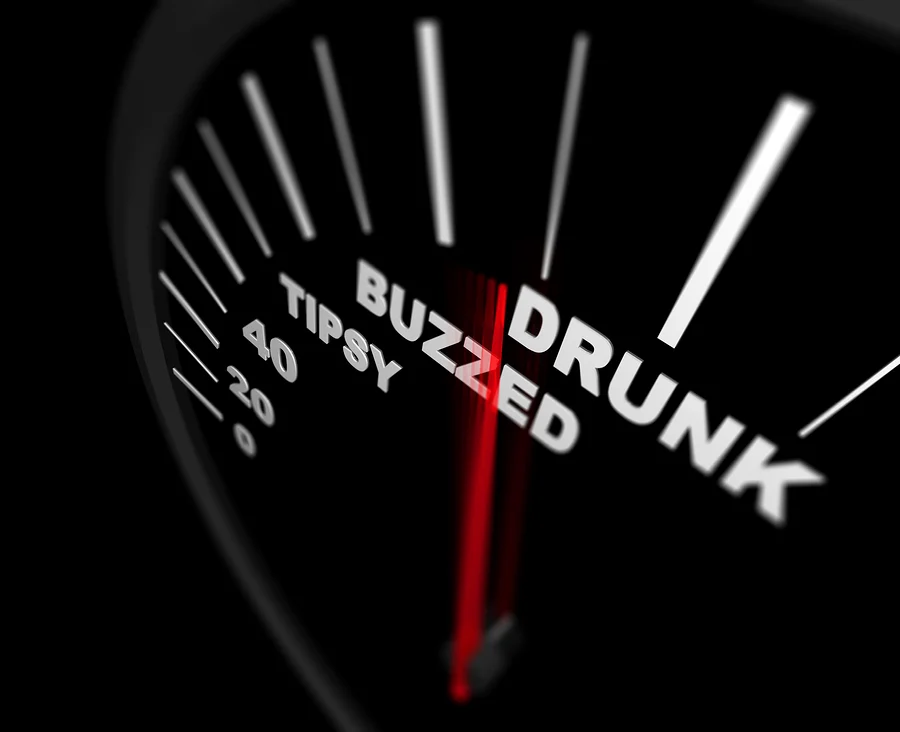
IIHS President David Harkey has been a vocal proponent of the 0.05% threshold, framing the issue as a matter of scientific reality rather than policy preference. "Crash risk increases with the amount of alcohol in your system, but it spikes noticeably at 0.05%," Harkey stated following the release of the report. "A lower limit is grounded in science and also sends a message that buzzed driving is drunk driving, as the slogan goes."
From the perspective of public safety advocates, the 0.05% law is not merely about criminalizing an additional glass of wine; it is about calibrating the law to match human biology. At a 0.05% BAC, a driver’s ability to multitask—a requirement for safe navigation—is measurably compromised. By lowering the limit, the state effectively creates a broader safety margin, discouraging individuals from attempting to drive after reaching a point where their cognitive functions are impaired.
Broader Implications for National Policy
The success observed in Utah presents a compelling case for other states to reconsider their own thresholds. With over 10,000 lives lost annually in the U.S. due to alcohol-related crashes, the potential impact of a nationwide shift to 0.05% could be profound. However, the path to adoption remains fraught with political challenges.
Critics of lower BAC limits often cite concerns regarding the economic impact on the hospitality industry and the potential for increased police burden. Opponents argue that law enforcement should focus on "high-risk" offenders—those with a BAC of 0.15% or higher—rather than targeting social drinkers who may not be dangerously impaired.
Despite these arguments, the IIHS report serves as a foundational piece of evidence for proponents of stricter regulation. By demonstrating that a lower BAC limit can lead to a sustained reduction in crashes—even in a state with unique cultural demographics—the research challenges the assumption that the 0.08% limit is the optimal threshold for modern traffic safety.
Future Outlook
As the debate continues, the Utah experiment provides a real-world look at the efficacy of proactive traffic safety legislation. The data suggests that when a state signals a change in its tolerance for impaired driving, the public responds. Whether other states will follow Utah’s lead remains to be seen, but the IIHS study ensures that the discussion will no longer be based solely on theory.
The report concludes that policymakers must utilize every available tool to combat the epidemic of impaired driving. As technology, public education, and legislative reform intersect, the 0.05% BAC limit stands out as one of the most promising, albeit underutilized, strategies for reducing the toll on American roadways. The findings from Utah provide not just a success story, but a roadmap for a future where traffic fatalities are viewed as a preventable tragedy rather than an inevitable cost of modern life. Moving forward, the focus will likely shift to how these findings can be scaled to larger, more diverse states, and whether the federal government will eventually revisit the 0.08% standard in light of this compelling new evidence.