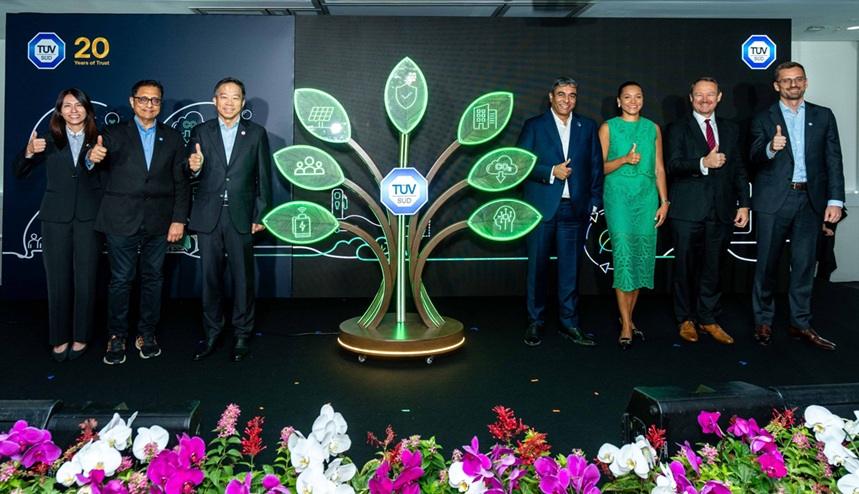
Germany-based technical services giant TÜV SÜD has officially inaugurated its Global Decarbonisation Centre of Excellence (CoE) in Singapore, marking a significant milestone in the global effort to standardize and professionalize carbon markets. Supported by a substantial $24 million investment and backed by the Singapore Economic Development Board (EDB), the center aims to serve as a cornerstone for digital carbon verification and infrastructure development across the ASEAN region. This initiative arrives at a critical juncture as global regulators, investors, and industrial players grapple with the complexities of achieving net-zero targets while ensuring the credibility of emissions reduction claims.
Strategic Context and Industry Evolution
The establishment of the CoE is not an isolated event but rather the latest move in a deliberate strategy by TÜV SÜD to consolidate its position as a global leader in climate assurance. The move follows the company’s strategic acquisition of SustainCERT in July 2026, a move that bolstered its capabilities in climate impact verification. By integrating SustainCERT’s technological prowess with its own long-standing reputation for rigorous testing and certification, TÜV SÜD is addressing the "credibility gap" that has historically plagued the voluntary carbon market (VCM).
For years, the carbon market has been hampered by concerns regarding the transparency of methodologies, the potential for double counting of credits, and the inconsistency of monitoring, reporting, and verification (MRV) protocols. The new CoE aims to replace these manual, often fragmented processes with a digital-first approach—commonly referred to as dMRV (digital Monitoring, Reporting, and Verification)—which leverages satellite imagery, IoT sensors, and blockchain technology to provide immutable evidence of carbon sequestration and emission reductions.
A Chronology of Strategic Moves
The path to this launch reflects a broader industry trend of professionalizing the sustainability service sector:
- Early 2026: Market reports signal a surge in demand for high-integrity carbon credits, particularly in the energy and manufacturing sectors of Southeast Asia.
- July 2026: TÜV SÜD completes the acquisition of SustainCERT, signaling a shift toward tech-enabled climate verification.
- August 2026: Preparatory discussions between TÜV SÜD and the Singapore EDB intensify, focusing on Singapore’s role as a regional green finance hub.
- September 9, 2026: The official launch of the $24 million Global Decarbonisation Centre of Excellence in Singapore.
The Five Pillars of the CoE
The center’s mandate is expansive, designed to tackle the multifaceted challenges of the transition to a low-carbon economy. TÜV SÜD has structured the CoE around five strategic areas:
- Article 6 Implementation: Supporting governments and private entities in aligning their projects with the international regulations set forth under Article 6 of the Paris Agreement.
- Advanced Climate Assurance: Developing and scaling dMRV frameworks to ensure that every carbon credit issued carries a verifiable audit trail.
- Energy Transition and Alternative Fuels: Providing technical advisory services for the shift to hydrogen, ammonia, and other low-carbon energy carriers, which are vital for hard-to-abate industrial sectors.
- Supply Chain Integrity: Assisting corporations in mapping their Scope 3 emissions and ensuring that decarbonization efforts within supply chains are verifiable and aligned with global standards.
- Capacity Building: Creating educational and operational frameworks for regional governments and industrial stakeholders to foster a standardized approach to climate reporting.
Economic and Market Implications
The $24 million investment underscores Singapore’s growing status as an international nexus for carbon services. By providing a "trusted base," the CoE is expected to attract further capital into the region. The EDB’s involvement is particularly telling; the Board has been actively courting sustainability-focused firms to bolster the nation’s "Green Plan 2030."
From a market perspective, the arrival of such a center could lower the barrier to entry for smaller project developers. Currently, the cost of rigorous verification often keeps small-scale, high-quality projects out of the international market. If the CoE can streamline the dMRV process, it could increase the liquidity of the regional market, allowing for a more efficient flow of capital from institutional investors to legitimate climate projects.

Leadership Perspectives
Reflecting on the launch, Png Cheong Boon, Chairman of the EDB, highlighted the importance of trust in the carbon economy. "The launch of TÜV SÜD’s first Global Decarbonisation CoE is a strong vote of confidence in Singapore as a stable and trusted base for companies looking to grow and serve the region," he stated. "Singapore is committed to being a trusted carbon services and trading hub, where the integrity of carbon credits is underpinned by rigorous standards, transparent data, and world-class verification services."
Patrick Vollmer, CEO and Chairman of the Board of TÜV SÜD, echoed this sentiment, emphasizing the human and corporate demand for clarity. "As governments, businesses, and investors seek confidence that emissions reductions are credible, transparent, and independently assured, we are building on our strengths to accelerate decarbonization and advance trusted climate solutions from Singapore for Asia and the world," Vollmer noted.
Fact-Based Analysis: Why Digitalization Matters
The shift toward "digitalization" in the carbon market is not merely a branding exercise; it is an operational necessity. Traditional verification relies on site visits and manual audits, which are time-consuming and prone to human error. Digital platforms allow for near-real-time monitoring. For instance, in nature-based solutions, such as reforestation or mangrove restoration, satellite data combined with machine learning can calculate carbon sequestration rates with significantly higher precision than traditional field sampling.
However, the challenge remains in interoperability. Different carbon registries often use disparate data standards. By aiming to bring project developers, verification bodies, and registries onto a single digital platform by 2030, the CoE is attempting to solve the "silo problem." If successful, this ecosystem could serve as a global blueprint for how independent assurance should function in the post-Paris Agreement era.

Broader Impact on the ASEAN Region
Southeast Asia holds significant potential for nature-based carbon projects, yet it has faced criticism over the quality of its credits. The presence of a major global auditor like TÜV SÜD, combined with the support of the Singaporean government, provides a layer of institutional legitimacy that is likely to boost the prices of high-quality credits originating from the region.
Furthermore, the CoE’s focus on the "blue economy"—projects involving oceans and coastal ecosystems—is particularly relevant to the ASEAN geography. These projects often have complex verification needs, and the CoE’s specialized focus on methodologies for these areas could provide a new revenue stream for the region’s coastal economies while simultaneously protecting vital biodiversity.
Looking Toward 2030
The 2030 target set by the CoE for a fully integrated, robust carbon market ecosystem aligns with the deadlines for many national NDCs (Nationally Determined Contributions). As the world approaches the end of the decade, the demand for "audit-ready" climate data will only increase. With the establishment of this hub, TÜV SÜD is positioning itself not just as a provider of services, but as a standard-setter for the architecture of the future carbon economy.
In conclusion, the launch of the Global Decarbonisation Centre of Excellence represents a maturation of the carbon market. By moving from a period of unregulated, experimental growth to a phase of professionalized, tech-driven assurance, the industry is signaling that it is ready to be taken seriously as a mechanism for global climate action. For stakeholders in the energy, finance, and manufacturing sectors, the developments emerging from this Singapore-based center will likely serve as a vital bellwether for the future of environmental integrity.