For the past decade, neobanks have carved out a significant niche by convincing consumers that the traditional physical branch model was an outdated relic. Now, a new paradigm shift is underway, as these digital-first financial institutions are discovering that much of the legacy backend infrastructure, too, can be rendered obsolete. The catalyst for this profound transformation is the rapid maturation and institutional adoption of stablecoins, which are quickly evolving from niche speculative tokens into the foundational settlement layer for a new era of digital finance.
The Ascent of Stablecoins: A Market Overview and Institutional Embrace
The stablecoin market has demonstrated explosive growth, crossing an unprecedented $318.6 billion in market capitalization by April 2026, with industry analysts projecting it could exceed $1 trillion by late 2026 or early 2027. This remarkable expansion is not merely speculative; it reflects a fundamental shift in how value is transferred and settled globally. Transaction volumes soared to over $33 trillion in 2025 alone, underscoring their utility as robust settlement infrastructure rather than just trading instruments.
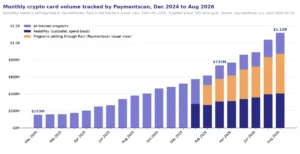
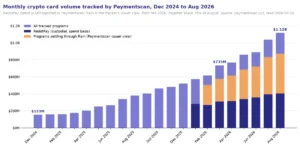
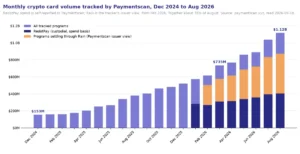
Major financial players are not merely observing this trend; they are actively acquiring and integrating stablecoin technology. Payments giant Visa reported a stablecoin-linked card spend hitting an impressive $4.5 billion annualized run rate by January 2026. Not to be outdone, Mastercard announced its acquisition of BVNK, a prominent stablecoin infrastructure firm, for a staggering $1.8 billion in March 2026. This followed Stripe’s significant $1.1 billion acquisition of Bridge in February 2025. These strategic moves by established payment networks signal a clear intent: stablecoins are no longer an experiment but a core component of their future growth strategies, particularly for cross-border commerce and B2B flows where traditional card rails often face limitations.
The growth trajectory of the stablecoin market in 2025 was particularly steep, increasing by approximately 50% from $205 billion in January to over $306 billion by year-end. This surge was propelled by a confluence of factors, including newfound regulatory clarity and a growing institutional appetite. The bipartisan GENIUS Act, signed into US law on July 18, 2025, established the first comprehensive federal regulatory framework for payment stablecoins, providing much-needed certainty. Simultaneously, the European Union expanded the enforcement of its Markets in Crypto-Assets (MiCA) regulation, and Hong Kong introduced its own Stablecoin Ordinance. These regulatory developments worldwide provided a critical foundation for institutional players to move beyond treating stablecoins as a curiosity and begin building robust financial products and services on top of them.
Currently, Tether’s USDT continues to dominate the market with roughly $183 billion in circulation, representing about 58% of the total market share. Circle’s USDC holds the second position, buoyed by its successful IPO and a reputation for compliance, with a market capitalization between $75 billion and $79 billion. Other significant players include Sky’s USDS at approximately $8.7 billion and DAI at $4.7 billion. Newer entrants are rapidly gaining traction, such as World Liberty Financial’s USD1, valued at around $4.2 billion, and BlackRock’s BUIDL, which is approaching $3 billion, highlighting the dynamic and competitive nature of the stablecoin ecosystem.
However, the market is not without its cautionary tales. Ethena’s USDe, for instance, experienced a dramatic decline from $14.8 billion in October 2025 to under $6 billion by April 2026, a 60% drop that mirrored a broader pullback in the crypto market. This serves as a stark reminder for neobanks that stablecoin selection is paramount. Algorithmic and synthetic models carry inherently different risk profiles compared to fiat-backed alternatives, and these differences can manifest rapidly and severely during periods of market volatility.
Reinforcing the importance of sound backing, the Federal Reserve published a detailed note in April 2026, analyzing stablecoin growth through the lens of financial stability. Their findings indicated that stablecoins with more secure, liquid reserve compositions consistently demonstrated stronger adoption rates relative to their peers. This suggests a clear market preference for transparency, conservative backing, and stability over high-yield offerings or unproven innovation. For neobanks evaluating which stablecoins to integrate, this signal is invaluable.
This parallel evolution is set against the backdrop of a burgeoning global neobanking market, projected to reach $552 billion in 2026, a substantial increase from $382.8 billion in 2025. The increasing convergence of these two rapidly expanding markets points towards a future where stablecoins are not just an optional add-on but a fundamental infrastructural component for neobanks.
Regulatory Milestones Paving the Way
The current surge in stablecoin adoption by financial institutions is inextricably linked to a maturing global regulatory landscape. For years, the lack of clear guidelines hampered mainstream integration, but 2025 and 2026 have marked a turning point.
The GENIUS Act: A US Framework for Stability
The most pivotal piece of legislation is undoubtedly the GENIUS Act, signed into law on July 18, 2025, with strong bipartisan support (68-30 in the Senate, 308-122 in the House). This landmark legislation established a federal regulatory framework for payment stablecoins in the United States, providing a clear path forward for issuers and integrators alike.
At its core, the GENIUS Act restricts stablecoin issuance to highly regulated entities: insured depository institutions and nonbank issuers that secure approval from either the Office of the Comptroller of the Currency (OCC) or relevant state regulators. A cornerstone of the Act is the stringent reserve requirement: stablecoins must be backed 1:1 with highly liquid assets, specifically US dollars, short-term US Treasuries, or equivalent low-risk instruments. To ensure transparency and accountability, issuers are mandated to provide monthly public disclosures of their reserve compositions and undergo regular audits by registered accounting firms.
Perhaps most significantly, the GENIUS Act explicitly carves out payment stablecoins from the definitions of "security" under federal securities laws and "commodity" under the Commodity Exchange Act. This crucial distinction resolves a long-standing regulatory ambiguity, removing compliant stablecoins from the jurisdiction of the Securities and Exchange Commission (SEC) and the Commodity Futures Trading Commission (CFTC). For neobanks, this means that integrating USDC, USDT, or other compliant stablecoins no longer operates in a regulatory gray zone within the US. The Federal Deposit Insurance Corporation (FDIC) has already initiated rulemaking to establish application procedures for banks seeking to issue stablecoins through subsidiaries, further cementing the defined, albeit still finalizing, compliance path.
MiCA and the Global Regulatory Patchwork
Across the Atlantic, the European Union’s Markets in Crypto-Assets (MiCA) framework continues to shape the stablecoin landscape. Its full authorization deadline for stablecoin issuers hits July 1, 2026, after which non-compliant issuers face potential delisting from EU markets. This has spurred a race for compliance among fintechs and neobanks operating in the region. MiCA differentiates between e-money tokens (EMTs) and asset-referenced tokens (ARTs), each with specific regulatory requirements designed to ensure stability and consumer protection. Furthermore, starting in March 2026, certain stablecoin custody and transfer services within the European Economic Area (EEA) may necessitate both MiCA authorization and a separate PSD2 license. While this dual-licensing requirement presents a barrier to entry, it also provides a competitive advantage to neobanks that have proactively navigated these complexities.
Beyond the US and EU, the regulatory map for stablecoins is diverse. Hong Kong’s Stablecoin Ordinance mandates licensing through its Monetary Authority. Singapore, the United Arab Emirates, and several other jurisdictions are developing or have implemented their own distinct approaches, ranging from specific licensing regimes to integration into existing financial services regulations. For a neobank with global ambitions, a nuanced, jurisdiction-by-jurisdiction regulatory strategy is indispensable, moving beyond a single, universal playbook.
Transforming Global Payments: The Cross-Border Imperative
For neobanks, the most immediate and impactful application of stablecoins lies in revolutionizing cross-border payments. The traditional correspondent banking networks, epitomized by SWIFT, are notoriously slow, expensive, and opaque. Transfers can take days to settle, incur fees that often reach 6-7% (including hidden FX markups and intermediary charges), and offer limited real-time visibility into a payment’s status.
Stablecoins offer a streamlined alternative, compressing this entire process into three efficient steps: converting sender funds to stablecoins (on-ramp), transferring them via blockchain rails (near-instant, 24/7, global), and converting them to local currency or delivering them to a destination wallet (off-ramp). Network fees are typically minimal, often just a few cents, and settlement occurs in minutes, sometimes even seconds.
The economic benefits are becoming increasingly clear. A September 2025 EY survey revealed that organizations leveraging stablecoins reported cost savings upward of 10% on their payment operations. The impact on remittances and peer-to-peer (P2P) payments is particularly striking, reaching a $19 billion annualized run rate by August 2025. Platforms like Sling, which utilize stablecoins, show average transfer sizes around $47, a significant contrast to the $250 average for traditional remittance providers. This lower average size indicates a crucial demographic shift: small, frequent, and practical transfers by freelancers, gig workers, and diaspora communities who previously found the costs of traditional bank wires prohibitive.
For neobanks, the strategic advantage extends beyond mere margin improvements; it’s a powerful tool for customer retention. By natively handling remittances and cross-border payouts, a neobank eliminates the need for users to resort to external services like Wise or Western Union. The payment remains within the neobank’s application, keeping the user within its ecosystem. This trend is also extending to enterprise treasury management. SpaceX, for instance, reportedly converts Starlink customer payments into stablecoins for efficient treasury management across its extensive global operations. Companies such as Deel and Flywire have integrated stablecoin rails for cross-border payroll, with 226 new businesses adopting stablecoins for payroll and related use cases in 2025 alone.
The addressable market for this transformation is immense. Non-G20 corridors alone account for over $17.9 trillion in cross-border payment flows annually. Projections suggest that stablecoins could capture anywhere from 3% to 20% of this volume in the coming years, depending on regulatory momentum and infrastructure maturity. Even at the conservative end of that spectrum, a 3% capture would translate to over $500 billion in annual stablecoin-settled cross-border volume, representing a massive opportunity for early-adopting neobanks.
Beyond Payments: Embedded Wallets and New Revenue Streams
The utility of stablecoins for neobanks extends beyond cross-border payments to creating enriched, unified user experiences through embedded wallets. A significant portion of neobank users already interact with cryptocurrencies or reside in regions with volatile local currencies, creating a strong demand for dollar-denominated stability. By embedding native stablecoin wallets, neobanks can offer a seamless experience: traditional fiat accounts seamlessly integrated with stablecoin balances, all accessible within a single application.
This integration is already a reality. Hybrid neobanks such as Revolut, Wirex, Xapo, Kast, and Bleap exemplify this model, combining traditional banking functionalities with comprehensive crypto capabilities. Users can hold, swap, and spend digital assets alongside their fiat currencies, all managed from a unified interface. The custody models vary, ranging from fully custodial solutions managed by the neobank to hybrid and even self-custodial setups, offering flexibility to users based on their preference for control and security.
Industry polling consistently supports this user demand. A remarkable 77% of respondents indicated they would open a stablecoin wallet if offered by their primary bank or fintech app. Furthermore, half of current stablecoin holders reported increasing their allocations over the past year, with many expressing a willingness to convert or spend their holdings rapidly as merchant acceptance expands.
For neobanks operating custodial stablecoin wallets, the compliance landscape is manageable. Existing Know Your Customer (KYC), Anti-Money Laundering (AML) monitoring, transaction screening, and geographic controls can be extended to stablecoin operations. The key difference lies in the backend settlement, which utilizes blockchain rails instead of traditional ACH or SEPA networks, a technical distinction that remains largely invisible to the end-user.
The revenue potential from embedded stablecoin wallets extends beyond simple transaction fees. Neobanks can generate new income streams through yield-sharing on idle stablecoin balances, for instance, by offering access to tokenized treasury products. Card-linked spending with stablecoin balances and fees associated with on-ramping (fiat to stablecoin) and off-ramping (stablecoin to fiat) also contribute to a diversified revenue model. Moreover, the burgeoning market for tokenized real-world assets (RWAs) backed by stablecoins, which reached $12.7 billion in 2025 and is projected to skyrocket to $1-4 trillion by 2030, presents a massive future opportunity. Neobanks that build robust stablecoin wallet infrastructure now will be strategically positioned with existing rails when tokenized asset distribution scales, securing a competitive edge in an evolving financial landscape.
Agile Expansion: Breaking Down Market Entry Barriers
For neobanks, traditional international expansion is a capital-intensive and time-consuming endeavor. It typically necessitates securing local banking licenses, forging partnerships with incumbent financial institutions, and undertaking expensive infrastructure builds, all while navigating complex regulatory landscapes. Stablecoins significantly reduce several of these formidable barriers.
Through self-custodial or hybrid wallet models, neobanks can launch a suite of products—including payments, cards, savings, and lending—without the direct burden of holding customer funds. Users manage their own cryptographic keys for certain activities, thereby reducing the neobank’s custody obligations and potentially qualifying them for streamlined regulations in various jurisdictions. Local off-ramps, facilitated through payment partners, handle the conversion to fiat currency, while stablecoins serve as the efficient and cost-effective bridge currency.
This agile expansion model is gaining considerable traction, particularly in high-growth regions. Countries like Brazil, Mexico, Nigeria, Turkey, and the Philippines are witnessing a discernible shift in remittance flows from traditional bank wires to neobank-to-stablecoin rails. The underlying pattern is clear: consumers in economies grappling with volatile local currencies are actively seeking access to dollar-denominated stability. A neobank equipped with stablecoin infrastructure can meet this demand without the need to acquire a costly and complex US banking license.
In Europe, the MiCA framework adds another strategic dimension. With its full authorization deadline looming on July 1, 2026, neobanks that have already aligned their stablecoin products with MiCA requirements gain a significant first-mover advantage over competitors still scrambling to achieve compliance. The additional requirement, starting March 2026, for certain stablecoin custody and transfer services in the EEA to hold both MiCA authorization and a separate PSD2 license, while a barrier, also serves to consolidate the market, reducing competition for those who have successfully navigated the dual-licensing process.
The Practicalities and Pitfalls of Integration
While the strategic advantages of stablecoins are compelling, the practical realities of integration present their own set of challenges. The pitch is undeniably attractive: lower fees, instant settlement, 24/7 availability, and no banking hours. However, the actual implementation is considerably more complex than a typical pitch deck might suggest.
The frontend experience—designing intuitive wallet interfaces, streamlined onboarding flows, and user-friendly transaction experiences—is generally the easier part. Where integration projects often encounter significant hurdles is on the backend, particularly concerning accounting and reconciliation. When a neobank accepts stablecoin deposits, these transactions must seamlessly flow through the same rigorous subledger, enterprise resource planning (ERP) systems, and reporting infrastructure as traditional fiat transactions. The added complexity arises from multi-chain support, as stablecoins operate across various blockchains such as Ethereum, Solana, Base, Polygon, and Tron. This necessitates integrating multiple data sources into a single, cohesive accounting system. Furthermore, establishing robust integrations with exchanges and various custodial wallet providers (e.g., Fireblocks, BitGo, Anchorage) and ensuring real-time reconciliation across all these disparate systems introduces an operational complexity that is often underestimated.
Neobanks that are successfully navigating this landscape typically make shrewd build-versus-partner decisions early in the process. Rather than attempting to build intricate in-house infrastructure for stablecoin transfers and deposits, many opt to leverage APIs from specialized providers like Bridge (now part of Stripe). Others partner with firms such as Crossmint, which offers comprehensive solutions handling licensing, AML screening, and Travel Rule compliance natively. The common thread among these successful implementations is the strategic abstraction of blockchain complexities behind user-friendly APIs, allowing internal engineering teams to focus their resources on product differentiation rather than on the underlying settlement plumbing.
Furthermore, a robust risk management framework is indispensable. This includes diligently monitoring smart contract risk, actively tracking peg stability, ensuring sufficient liquidity for conversions, and meticulously managing counterparty exposure. While these are manageable risks rather than existential threats, they demand dedicated operational processes and expertise that most neobanks do not possess out-of-the-box. Ignoring these aspects can lead to significant financial and reputational repercussions.
Leading the Charge: Industry Adoption and Key Players
The integration of stablecoins into neobanking is no longer a theoretical concept; it is actively being implemented across the industry by a diverse range of players.
At one end of the spectrum are crypto-native neobanks such as Bleap and Gnosis Pay. These platforms were built from inception with stablecoin settlement as their core architecture, often running USDC-native accounts that enable instant global transfers. Some even offer yield-bearing digital dollar products backed by tokenized treasuries, leveraging their architectural advantage without the burden of retrofitting legacy systems.
In the middle are hybrid platforms like Revolut, Wirex, and Xapo, which operate across both fiat and crypto domains. They have incrementally added stablecoin support, utilizing it internally for efficient FX and global settlements. Externally, they offer crypto custody and yield-bearing products to their customer base. Revolut, for example, serves over 40 million customers, providing features that traditional banks struggle to match in terms of cost and efficiency. Similarly, PayPal has expanded its PYUSD stablecoin to 70 global markets, allowing its vast existing user base to access stablecoin-powered international transfers without needing to switch applications.
A growing segment comprises infrastructure-focused neobanks like Dakota. Dakota recently raised $12.5 million in a Series A funding round led by CoinFund and is strategically pivoting to become a stablecoin platform specifically for businesses. It offers APIs for custody, cross-border treasury operations, and international payouts, utilizing Bridge’s APIs for transfers and deposits and even issuing its own DKUSD stablecoin, while actively pursuing licensing across both US and EU jurisdictions.
Traditional financial incumbents are also making their move, often through strategic acquisitions. Mastercard’s $1.8 billion deal for BVNK and Stripe’s $1.1 billion acquisition of Bridge are the two largest stablecoin-related acquisitions to date. These moves unequivocally signal that established payment networks view stablecoins not as a threat, but as complementary to their existing card rails, particularly for enhancing cross-border commerce and B2B flows where card penetration has historically been limited.
The bulk of this activity is concentrated on a handful of blockchain networks. Solana, Base, and Tron currently handle the majority of stablecoin settlement volume, with Tron being particularly dominant for USDT transfers in emerging markets due to its low fees. Ethereum and its Layer 2 solutions, such as Polygon and Arbitrum, primarily serve institutional use cases requiring higher security and programmability. The choice of blockchain is a critical strategic decision, as it impacts transaction costs, speed, and the specific markets a neobank can effectively serve.
Strategic Considerations for Neobanks
Before committing substantial engineering and compliance resources, neobanks must undertake a thorough evaluation process to ensure a strategic and successful stablecoin integration.
First and foremost, customer demand signals are paramount. High remittance volumes within existing customer segments strongly indicate cross-border payment potential. Frequent external wallet activity suggests that users are already engaging with stablecoins elsewhere and would likely prefer to do so within their trusted neobank app. A/B testing and direct customer surveys can provide invaluable validation of willingness to use stablecoin-denominated products.
Next, a comprehensive regulatory mapping is essential. While the GENIUS Act provides clarity in the US, it covers only one jurisdiction. MiCA governs Europe, and Hong Kong, Singapore, the UAE, and numerous other regions each have their distinct regulatory frameworks. A neobank with global aspirations requires a detailed jurisdiction-by-jurisdiction analysis covering licensing requirements, reserve mandates, and any restrictions on yield-bearing products. It’s crucial to note that the GENIUS Act explicitly prohibits stablecoin issuers from paying yield directly on holdings, although platforms distributing stablecoins are not subject to the same restriction, a nuance that significantly impacts product design.
The build-versus-partner decision is usually straightforward for most neobanks: begin with partners. Infrastructure providers such as Bridge (now Stripe), Crossmint, and Fireblocks offer robust APIs that handle critical functions like custody, compliance, and multi-chain settlement. Building these complex capabilities in-house only makes strategic sense when the stablecoin product itself is intended to be a core differentiator, rather than merely an added feature.
Accounting and reconciliation is an area where integration projects frequently encounter bottlenecks. Ensuring compatibility with existing ERP systems, ingesting multi-chain data efficiently, and achieving real-time reconciliation between on-chain and off-chain systems must be scoped early in the planning process. Specialized partners like Bitwave, which processes billions in stablecoin transactions for major enterprises including Coinbase, offer expertise in this critical layer.
Finally, risk management demands its own dedicated operational framework. Smart contract risk, the stability of the stablecoin’s peg, liquidity for large-scale conversions, and counterparty exposure all require rigorous processes and continuous monitoring. The Federal Reserve’s April 2026 note underscored this point, highlighting that even stablecoins with conservative reserve compositions introduce new interconnection risks between traditional finance and digital asset ecosystems. This is a tangible concern that must be thoroughly integrated into any integration plan, rather than dismissed as a hypothetical.
The Road Ahead: Evolution and Competition
The trajectory for stablecoins and neobanks points towards an inevitable convergence. Stablecoin market capitalization is projected to exceed $1 trillion by late 2026 or early 2027, driven by burgeoning demand from corporate treasuries seeking 24/7 settlement capabilities and the accelerating tokenization of real-world assets. Concurrently, the global neobanking market is on track to reach $552 billion, while regulatory frameworks continue to mature across major financial hubs.
The competitive landscape warrants a candid assessment. Traditional banks are experiencing a steady outflow of deposits, and cross-border settlements are increasingly migrating onto blockchain rails. In some contexts, innovative tokenized treasury products are beginning to offer compelling alternatives to traditional savings accounts. However, incumbent financial institutions are far from passive observers. JPMorgan’s proactive deposit token initiatives and Interactive Brokers’ launch of USDC-funded brokerage accounts in January 2026, facilitated through a partnership with Zerohash, demonstrate that established players are also moving on-chain. This means the window for neobanks to differentiate themselves solely through stablecoin integration is narrowing, not widening.
The Federal Reserve’s financial stability note provides a crucial counterweight to unbridled optimism. While stablecoins with safer reserve compositions are indeed growing faster, their widespread adoption deepens the interconnections between traditional finance and digital asset markets. This introduces systemic risks that were non-existent when stablecoins constituted a mere $50 billion niche. Furthermore, compliance remains a significant challenge; banks typically allocate 10-15% of their headcount to KYC/AML compliance efforts and still manage to detect only approximately 2% of illicit financial flows. Integrating stablecoin rails does not inherently simplify this complex problem.
For neobanks, the fundamental question at this juncture is no longer whether to integrate stablecoins, but when and how. A strategic, phased approach – perhaps beginning with a high-volume cross-border corridor, piloting a wallet in a market with clear demand, or leveraging partner integrations to manage the initial compliance burden – allows a neobank to test the economic viability and operational complexities before committing to a full-scale infrastructure build. Ultimately, the winners in this evolving landscape will not necessarily be those with the most advanced blockchain engineering capabilities, but rather those that make astute, informed decisions about what capabilities to build in-house and what to strategically outsource or skip altogether.