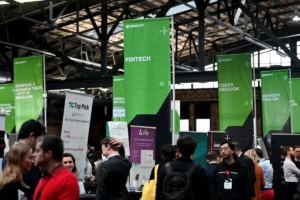
San Francisco is poised to host a pivotal examination of the financial industry’s ongoing revolution as TechCrunch Disrupt 2026 dedicates an entirely new platform, the Smart Money Stage, to the intricate interplay of fintech, payments, and artificial intelligence. Scheduled from October 13 to 15 at the Moscone Center, this focused stage will gather an esteemed lineup of industry leaders from companies like Circle, Robinhood, American Express, Plaid, and Airwallex, among others, to dissect the profound shifts in how money is conceived, moved, and managed in the digital age. The event promises to offer deep insights into the mechanics of stablecoins and instant payment systems, the burgeoning role of AI agents in financial decision-making, and the formidable challenge of constructing robust, regulated financial infrastructure for an increasingly globalized economy.
The Evolving Landscape of Money and Finance
For centuries, money’s definition remained largely stable, primarily comprising physical currency and bank deposits. However, the last two decades have witnessed an unprecedented acceleration in its evolution, driven by technological advancements and shifting consumer behaviors. From the advent of online banking to the proliferation of mobile payment apps and the emergence of cryptocurrencies, the financial ecosystem has undergone a dramatic metamorphosis. This transformation has not only reshaped traditional banking services but also spawned an entirely new sector: fintech. The Smart Money Stage aims to capture this dynamic shift, providing a critical forum for discussing the innovations and challenges at the forefront of this financial revolution.
TechCrunch Disrupt, a cornerstone event in the global startup calendar, has historically served as a launchpad for groundbreaking technologies and a bellwether for emerging trends. Its decision to introduce a dedicated Smart Money Stage for 2026 underscores the immense significance of fintech and its related disciplines. This move reflects a broader industry recognition that financial innovation is no longer a niche concern but a central pillar of technological progress, impacting everything from individual savings to international trade. The conference, known for its rigorous agenda and opportunities for networking, will provide attendees with a comprehensive view of the forces driving financial change, beyond superficial trends to the core technological and regulatory complexities.
A Deep Dive into Key Sessions and Industry Leaders
The programming for the Smart Money Stage is meticulously curated to address the most pressing topics facing the financial sector today. Each session brings together a diverse group of experts, offering multiple perspectives on the challenges and opportunities inherent in this new financial paradigm.
The Future of Money Movement: Stablecoins, Instant Payments & What’s Next
This session is set to explore how stablecoins and instant payment systems are fundamentally altering the global flow of capital. Stablecoins, cryptocurrencies designed to minimize price volatility by pegging their value to a stable asset like the U.S. dollar, have emerged as a significant force in digital finance. With a global market capitalization exceeding tens of billions of dollars and daily transaction volumes often rivaling traditional payment rails, stablecoins like USDC (issued by Circle) are increasingly being utilized for cross-border remittances, decentralized finance (DeFi) applications, and efficient settlement between businesses. Their promise lies in offering near-instantaneous, low-cost transfers, bypassing the often slow and expensive correspondent banking networks.
Alongside stablecoins, instant payment systems are gaining traction worldwide. Initiatives like FedNow in the United States, SEPA Instant in Europe, and India’s Unified Payments Interface (UPI) are transforming domestic payment landscapes by enabling real-time, 24/7/365 fund transfers. These systems aim to improve liquidity, accelerate economic activity, and provide greater convenience for consumers and businesses alike. The panel will delve into a comparative analysis of these new payment infrastructures against traditional banking systems, discussing where private networks and governmental initiatives like FedNow fit into the broader ecosystem. Regulatory frameworks, which often struggle to keep pace with technological innovation, will also be a central point of discussion, exploring how they might shape the future trajectory of payments and what challenges remain in achieving widespread adoption and interoperability.
The discussion will feature Nikhil Chandhok, Chief Product & Technology Officer at Circle, a company at the forefront of stablecoin innovation with USDC. His insights will illuminate the operational and strategic considerations behind building a globally recognized digital dollar. Rodney Robinson, Co-founder and CEO of TabaPay, Inc., will provide a perspective on payment processing infrastructure and how new technologies integrate with existing financial networks. Completing the panel, Lotti Siniscalco, General Partner at Emergence, will offer a venture capital viewpoint on identifying and investing in disruptive payment technologies, providing crucial context on market trends and investment priorities. The implications of these developments are vast, promising to reduce friction in global commerce, enhance financial inclusion, and potentially redefine national monetary policies.
Winning the Modern Financial Consumer
The session on "Winning the Modern Financial Consumer" will spotlight the rapidly evolving expectations and behaviors of individuals regarding their financial services. Modern consumers demand seamless, personalized, and mobile-first experiences across all financial touchpoints, from daily payments to complex investment strategies. Robinhood, a company that famously disrupted the brokerage industry with its commission-free trading model, serves as a prime example of adapting to and anticipating these shifts. With a market capitalization that has, at times, soared past $90 billion, Robinhood has expanded far beyond its initial trading app roots to encompass a comprehensive financial platform offering investing, banking, credit, crypto trading, and even prediction markets.
Abhishek Fatehpuria, Head of Product at Robinhood, will share his expertise on how technology and changing consumer preferences are reshaping financial services. His presentation will likely cover the strategic decisions behind Robinhood’s expansion, the importance of intuitive user experience, and the complexities of building trusted products that can withstand massive user growth and regulatory scrutiny. The discussion will also touch upon the broader trend of financial "super apps," where a single platform integrates a multitude of financial services, aiming to become the primary financial hub for users. This session will offer critical lessons for founders and operators seeking to build scalable, consumer-centric financial products in a fiercely competitive market, emphasizing the delicate balance between innovation, user engagement, and robust compliance frameworks.
AI, Trust & Verification in Financial Services
As Artificial Intelligence transcends its role in content generation to become an agent capable of taking autonomous action, financial companies are grappling with fundamental questions of trust, oversight, and security. The "AI, Trust & Verification in Financial Services" panel will address how AI agents are transforming financial workflows, from automated customer service and personalized financial advice to sophisticated fraud detection and risk assessment. The ethical dimensions of deploying AI in sensitive financial contexts will be a key discussion point, particularly concerning the need for transparency, explainability (XAI), and the continued importance of human judgment in critical decision-making processes.
The panel will also explore how companies are currently approaching privacy, fraud prevention, and identity verification in an AI-powered world. AI’s capabilities in analyzing vast datasets can significantly enhance Know Your Customer (KYC) and Anti-Money Laundering (AML) processes, identify fraudulent patterns with greater accuracy, and offer more robust identity verification solutions, potentially leveraging biometrics and behavioral analytics. However, these advancements also introduce new risks, including algorithmic bias, data security vulnerabilities, and the potential for sophisticated AI-driven cyberattacks.
Featuring Hannah Bozian, VP, Agentic Partnerships & Strategy at American Express, attendees will gain insight into how established financial institutions are integrating AI into their operations, fostering partnerships, and managing the associated risks. Pedro Sanzovo, Head of Fraud and Identity at Plaid, will contribute his expertise on how AI enhances data security and privacy in the realm of financial data connectivity. Victoria Zuo, Partner at QED Investors, will offer a venture capitalist’s perspective on the investment landscape for AI-driven fintech solutions, highlighting the criteria for identifying promising startups and the future trajectory of AI in finance. The implications of this convergence are profound, promising increased efficiency and personalized services while demanding rigorous ethical guidelines and regulatory oversight to mitigate potential misuse and ensure consumer protection.
Building the Infrastructure for Global Commerce
The session "Building the Infrastructure for Global Commerce" will tackle the inherent limitations of traditional financial systems, which were not designed to accommodate the complexities and speed requirements of today’s global businesses. Legacy systems often involve high transaction fees, slow settlement times, lack transparency, and struggle with multi-currency management, posing significant hurdles for companies engaged in international trade and cross-border operations.
Airwallex, a company now valued at $11 billion by its investors, stands as a prime example of innovation in this space. It is actively building an AI-native financial operating system designed to empower companies to move money across borders seamlessly, manage global finances efficiently, and embed financial products directly into their own platforms. This approach addresses the pain points of international commerce by offering integrated solutions for payments, collections, treasury management, and expense management, all powered by advanced AI algorithms for optimization and risk management.
Jack Zhang, Founder & CEO of Airwallex, will provide a firsthand account of how AI is fundamentally reshaping the global payments landscape. He will elaborate on the strategic decisions and technological innovations required to build regulated financial infrastructure capable of supporting millions of businesses worldwide. His insights will be invaluable for entrepreneurs and executives looking to understand the intricacies of scaling global fintech solutions, navigating diverse regulatory environments, and leveraging AI to create competitive advantages. The session will highlight the potential for such infrastructure to democratize global trade, allowing small and medium-sized enterprises (SMEs) to compete more effectively on an international stage, thereby fostering greater economic integration and efficiency.
Broader Implications and the Road Ahead
The discussions at the Smart Money Stage at TechCrunch Disrupt 2026 extend beyond technological specifics to encompass the broader societal, economic, and regulatory implications of the evolving financial landscape. The rapid pace of innovation in fintech, particularly concerning stablecoins and AI, places immense pressure on regulatory bodies worldwide to adapt. Regulators face the delicate task of fostering innovation while simultaneously ensuring consumer protection, maintaining financial stability, and preventing illicit activities. The need for international cooperation on regulatory frameworks for digital assets and cross-border payments is becoming increasingly critical to avoid regulatory arbitrage and ensure a level playing field.
Furthermore, the convergence of fintech, payments, and AI is reshaping the competitive dynamics within the financial industry. Traditional banks and financial institutions are responding to the rise of agile fintech startups through various strategies, including acquisitions, strategic partnerships, and the development of their own in-house innovation labs. This blend of competition and collaboration is driving further innovation, pushing all players to enhance their digital offerings and improve customer experiences.
The future of work in finance is also being profoundly impacted. As AI and automation take over routine tasks, the demand for new skill sets—including data science, AI ethics, cybersecurity, and digital product management—is rapidly increasing. This necessitates a proactive approach to workforce retraining and education to ensure that the financial sector remains robust and adaptable. Finally, these innovations hold immense potential for promoting financial inclusion, extending access to affordable financial services to unbanked and underbanked populations globally, thereby contributing to broader economic empowerment and poverty reduction.
For founders, operators, investors, and anyone seeking to navigate the complexities of modern finance, the Smart Money Stage offers an unparalleled opportunity to gain "signal, not spin." It’s a chance to hear directly from the architects and thought leaders shaping the future of money, understand the underlying technological and market forces, and identify the next wave of innovation. Beyond the dedicated stage, Disrupt 2026 offers extensive networking opportunities, side events, and a comprehensive lineup of speakers across various tech sectors, making it an essential three-day sprint at the heart of the startup community. As the current pricing window for tickets is closing soon, prospective attendees are encouraged to secure their spot to be part of this crucial conversation and prepare for the next year of financial innovation.